
Indoor Disconnect Switch with Voltage Indicator: Key Benefits
2026-11-18 17:19:42
An indoor disconnect switch with a voltage indicator gives technicians a local isolation point and a visual cue about whether voltage may be present on the circuit. The key benefits are faster status checks, a clearly defined point for servicing, and simpler standardization across projects. The indicator never replaces a circuit breaker, a test instrument, or lockout/tagout. Below, I show how the GN19-12 high voltage disconnect switch from Xi'an Xikai applies these ideas at 12 kV, with 400 A to 1250 A ratings and a manual mechanism, and explain what to check before you buy.
What Is an Indoor Disconnect Switch with a Voltage Indicator?
Isolation Is Not Overcurrent Protection
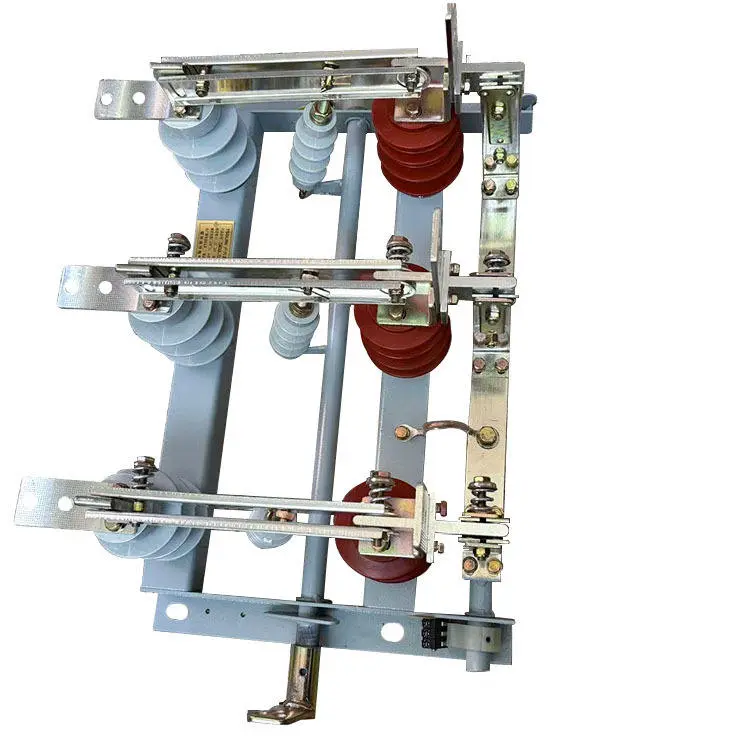
An indoor disconnect switch separates equipment from its power source so people can work safely downstream. IEC 62271-102 describes a disconnector as a device that provides an isolating distance in the open position and switches only negligible current. It cannot interrupt fault current, so it does not replace a circuit breaker or fuse. The GN19-12 is an off-load switch. Operators open the circuit breaker first, then operate the disconnect, because opening under load creates a dangerous arc that can damage equipment. A mechanical locking interlock prevents misoperation, and the switchgear design should also interlock the switch with the breaker.
What the Voltage Indicator Shows?
The voltage indicator is a visual aid. Depending on the design, it signals that electrical potential may be present on the circuit it monitors. The GN19-12 offers a voltage indicator type alongside the pollution and high-altitude types. A lit indication tells you to treat the circuit as live. A dark indication does not prove the circuit is dead, because an indicator can fail or monitor only part of the circuit. NFPA 70E requires a qualified person to verify the absence of voltage with a properly rated test instrument, and OSHA lockout/tagout rules govern control of hazardous energy. I treat the indicator as an early warning that supports those steps, never a substitute.
Where These Switches Are Used?
Inside 12 kV fixed metal-enclosed switchgear such as XGN2-12 and GG-1A, the GN19-12 acts as the main isolation component. It creates a safe boundary for servicing vacuum circuit breakers in compact internal spaces. Metallurgy, mining, and chemical plants use it to sectionalize power lines during shift changes or equipment replacement. Indoor distribution substations use it to isolate a single feeder for fault repair without shutting down the entire grid. At low voltage, an indoor disconnect switch also serves HVAC units, motors, pumps, and control cabinets, though those products follow different ratings. A qualified electrician should install either type and verify it with approved tests.
Key Benefits of an Indoor Disconnect Switch with Voltage Indicator
Faster Visual Status Checks
A visible indicator shortens the first step of every service call. A technician looks at the cabinet front and sees whether the circuit may still carry voltage, which removes some unnecessary troubleshooting steps. On a long row of panels, that quick look helps crews decide where to start. The open-blade position gives a second visual reference where the cabinet design allows viewing of the isolating distance. Faster checks improve the maintenance workflow and can reduce the time a feeder stays out of service. Crews still complete the full verification sequence afterward, because the indicator is supplementary. Together, these habits keep maintenance consistent from panel to panel.
A Defined Isolation Point for Servicing
A disconnect creates one clearly defined point where a circuit separates from its source. Add labeling, lockout/tagout, and a voltage test, and crews repeat the same safe sequence on every job. On the GN19-12, the manual lever mechanism gives the operator direct control of the blade position. Contact quality matters too. Electrolytic copper blades, usually silver-plated, typically keep contact resistance below 50 μΩ, which limits heating at rated current. If operating effort concerns you in a tight cabinet, send us the drawing, and our engineers will review the mechanism arrangement. That local isolation point is the core value of any indoor disconnect switch.
Standardization and Lifecycle Value
Procurement teams save time when one product family covers several feeders. The GN19-12 offers four current ratings, 400 A, 630 A, 1000 A, and 1250 A, at 12 kV. Standard units suit altitudes up to 1,000 m, and the high-altitude type reaches 4,000 m. A pollution type covers contaminated sites. Using one switch family across a project of five to fifty sets simplifies spare-part planning, installer training, and repeat orders. Lifecycle value then comes from stable contact resistance, a mechanism that operates dependably, and a clear maintenance routine, not from unit price alone. Fewer variants also keep replacement planning simple for every indoor disconnect switch in a substation.
How an Indoor Disconnect Switch Works and Which Configuration Fits
Main Components and Operating Principle
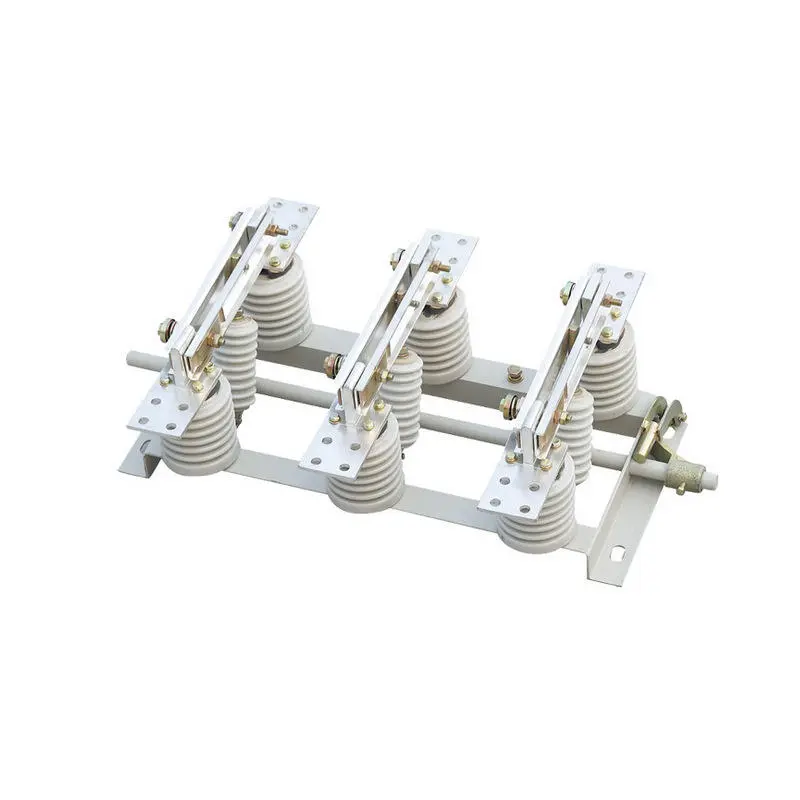
The GN19-12 uses a rotary blade structure. Post insulators, made of epoxy resin or ceramic, hold the conductive blades on a galvanized steel chassis. The blades are electrolytic copper, usually silver-plated to lower contact resistance and prevent oxidation-induced overheating. When the operator moves the manual lever mechanism (CS6-1 type), the blades rotate away from the fixed contacts and open the current path. A mechanical locking interlock guards against misoperation. Low-voltage units add an enclosure, handle, terminals, and sometimes fuse holders, but the principle matches: open the path, create a gap, and show status. Overcurrent protection still comes from the upstream breaker or fuse.
Fused, Non-Fused, and Breaker Pairing
Low-voltage models come fused, which combine isolation with replaceable protection, or non-fused, which rely on upstream protection. The GN19-12 belongs to the isolation-only group. The circuit breaker interrupts load and fault current, and the GN19-12 provides the isolating gap for safe servicing. Buyers sometimes ask whether a disconnect can replace a breaker. It cannot, because it has no fault-breaking capability. Duty class matters too. An HVAC-rated AC disconnect differs from a general-purpose indoor disconnect switch in switching duty, enclosure construction, and certification, so read each data sheet against the application. Pole count also changes the design, so confirm it early.
GN19-12 Options for Project Needs
Xi'an Xikai offers the GN19-12 in pollution, high-altitude, and voltage indicator types. The pollution type suits industrial zones with contaminated air. The high-altitude type serves sites up to 4,000 m, while standard units cover up to 1,000 m, the normal altitude in IEC 62271-1 service conditions. The voltage indicator type adds the visual cue described earlier. The options sit on the same 12 kV rating, 400 A to 1250 A current choices, and manual mechanism. To match an option to your site, tell us the altitude, contamination level, and cabinet type. Our team then checks whether your indoor disconnect switch order needs one option or a mix across feeders.
Ratings, Installation, and Environment for an Indoor Disconnect Switch
Matching Voltage and Current Ratings
Every indoor disconnect switch selection starts with system voltage. The GN19-12 fits 12 kV systems, so it does not replace the low-voltage 30 A, 60 A, or 100 A disconnects used on HVAC equipment. Next, read the feeder's full-load and continuous current, then choose 400 A, 630 A, 1000 A, or 1250 A. The highest rating is not always right; load data, conductor size, and applicable regulations should drive the choice. Check fault levels too. The GN19-12 is typically rated for a short-time withstand current of 20 kA to 31.5 kA for 4 seconds and a peak withstand current of 50 kA or 80 kA. Compare those values with your short-circuit study, and confirm the voltage indicator suits the same circuit.
Cabinet Fit and Installation
Cabinet fit decides many switchgear projects. Request the outline drawing and compare it with the compartment width and depth, the blade swing, and the lever position. In compact cabinets, check phase clearances and leave room for the operator's hand. Send us your cabinet drawing before ordering so our engineers can review the fit. During installation, follow the National Electrical Code (NFPA 70), the project specification, and the manufacturer's wiring diagram. A qualified electrician should mount the switch securely, tighten terminals to the specified torque, connect grounding, apply labels, and test switching and indication. Common errors include wrong ratings, loose terminals, reversed connections, and relying on the indicator alone to confirm de-energization.
Indoor or Outdoor Conditions
An indoor disconnect switch is designed for controlled conditions, compact dimensions, accessibility, and panel integration. Outdoor versions need stronger protection against rain, condensation, ultraviolet exposure, corrosion, dust, and temperature swings. Do not place an indoor unit in an exposed location just because the project is industrial. The GN19-12 suits IP2x indoor environments, such as switch rooms and substation buildings, and tolerates the vibration and dust common in mining and metallurgy. Choose the pollution type for contaminated air, and the high-altitude type above 1,000 m, where thinner air raises flashover risk. In uncertain spaces, such as utility rooms or semi-enclosed areas, ask the supplier for enclosure ratings and environmental specifications.
Standards, Procurement, and Maintenance for an Indoor Disconnect Switch
Standards and Supplier Evaluation
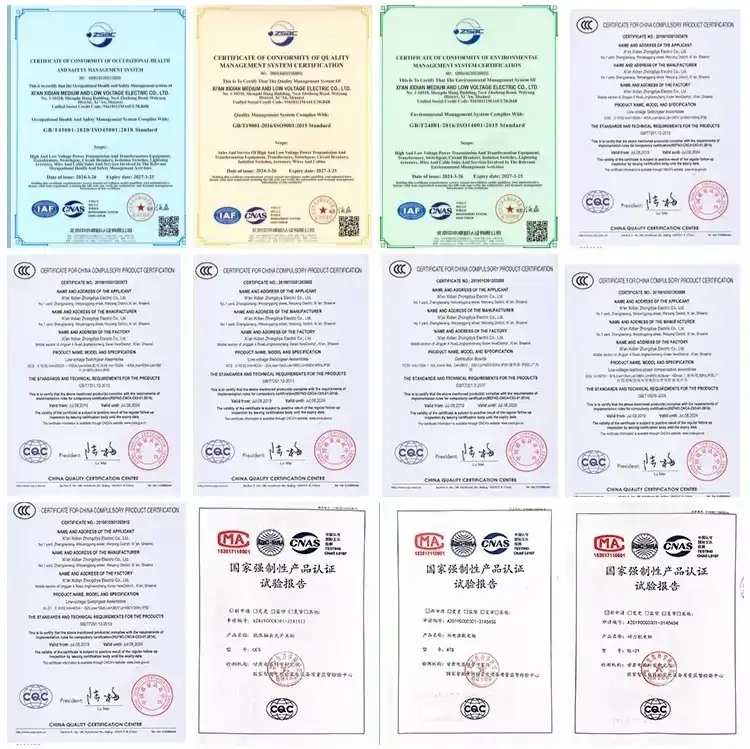
The GN19-12 is designed to meet IEC 62271-102 and GB 1985. For United States projects, ask the engineer of record which standards the specification requires, since IEEE C37 series standards, such as IEEE C37.30.1 for AC high-voltage air switches above 1,000 V, and local authority rules may apply. Low-voltage assemblies should carry applicable UL or recognized certification. Then evaluate the indoor disconnect switch supplier: review quality systems, test reports, traceability, engineering support, and production continuity. Xi'an Xikai manufactures medium- and low-voltage equipment in seven product categories, 34 series, and more than 100 variants, and its products serve State Grid systems, steel and metallurgy, petrochemicals, rail transportation, and renewable energy. Treat certification records as purchasing requirements, not optional extras.
Acceptance Tests and RFQ Checklist
Before you accept a batch, check these items against the data sheet:
- Contact loop resistance: Measure the resistance across the closed contacts with a micro-ohm meter, and record each pole against the manufacturer's specification. The typical value is below 50 μΩ. High resistance points to weak contact pressure or insufficient silver plating, and it can lead to overheating and thermal runaway under rated load.
- Insulation and mechanical tests: Confirm a 42 kV power-frequency withstand for one minute across the open gap, to earth, and between poles, plus a 75 kV peak lightning impulse test. Add a mechanical operation test that checks for binding, blade misalignment, and loose linkages. Ask the supplier for the report that matches your batch.
- RFQ details: Send the voltage, current rating, short-circuit level, option type, altitude, contamination level, cabinet drawing, quantity, delivery location, and documentation needs. Complete data lets our team confirm dimensions, drawings, and lead time in one reply, and flag any cabinet-fit issue before production. We also check that the voltage indicator suits your circuit.
Pricing for an indoor disconnect switch varies with rating, option, quantity, and destination, and these checks catch problems before installation.
Maintenance and Safety Practices
Inspect each indoor disconnect switch annually or after every 100 mechanical operations. Clean the insulators, grease the mechanical linkages, tighten bolts, and repeat the contact resistance test. Overheating usually comes from surface oxidation, spring fatigue that reduces contact pressure, or poor alignment. Fixes include cleaning contacts, applying conductive contact grease, and re-torquing or replacing springs. Treat every circuit as energized until a qualified person confirms otherwise with a rated test instrument, and follow lockout/tagout. Never bypass or operate a damaged unit. If mechanical, thermal, or insulation integrity is in doubt, replace the part instead of modifying it in the field.

Conclusion
An indoor disconnect switch with a voltage indicator provides a defined isolation point and a quick visual status cue, but it never replaces a circuit breaker, a rated test instrument, or lockout/tagout. The GN19-12 applies this principle at 12 kV with 400 A to 1250 A ratings, a manual mechanism, and a mechanical interlock, and it comes in pollution, high-altitude, and voltage indicator types. Selection depends on system voltage, load current, fault level, cabinet dimensions, and site conditions such as altitude and contamination. Acceptance checks on contact resistance, withstand voltage, and mechanical operation confirm quality, while regular inspection keeps contacts and linkages in working condition. Matching these factors to project data, rather than price alone, produces a switch that fits the cabinet and supports safe servicing.
FAQ
1. Does the voltage indicator replace a voltage test?
No. The indicator is a visual aid, and it may monitor only part of the circuit. A qualified person must verify de-energization with a properly rated test instrument and follow lockout/tagout before work begins. Treat every circuit as energized until that test says otherwise.
2. Can an indoor disconnect switch replace a circuit breaker?
No. A disconnect provides isolation, while a breaker or fuse interrupts fault current. The GN19-12 is an off-load switch, so open the circuit breaker first. Opening it under load creates a dangerous arc that can damage equipment and injure people.
3. Can I use the GN19-12 above 1,000 m?
Standard units suit altitudes up to 1,000 m. Above that height, choose the high-altitude type, which Xi'an Xikai offers for sites up to 4,000 m, because thinner air raises flashover risk. Include the site altitude in your request.
4. What does an accurate quotation require?
An accurate indoor disconnect switch quotation needs the voltage, current rating, short-circuit level, option type, altitude, contamination level, cabinet drawing, quantity, and delivery location. Equipment ratings, local regulations, and manufacturer instructions determine the final selection.
Request an Indoor Disconnect Switch Quote from Xi'an Xikai
Xi'an Xikai supports project teams that need an indoor disconnect switch supplier with cabinet-fit review, drawings, and documentation. Send your voltage, current, option type, altitude, and cabinet drawing to serina@xaxd-electric.com, amber@xaxd-electric.com, or luna@xaxd-electric.com. Our plateau-type equipment meets operating needs up to 4,000 meters, and our team can confirm lead time for your batch. Visit xaxd-electric.com for details on the GN19-12 high voltage disconnect switch.
References
1. NFPA 70E: Standard for Electrical Safety in the Workplace, 2024
2. OSHA 3120: Control of Hazardous Energy (Lockout/Tagout), 2002
3. IEC 62271-102: High-voltage switchgear and controlgear – Part 102: Alternating current disconnectors and earthing switches, 2018
4. IEC 62271-1: High-voltage switchgear and controlgear – Part 1: Common specifications for alternating current switchgear and controlgear, 2017
5. IEEE Std C37.30.1: IEEE Standard Requirements for AC High-Voltage Air Switches Rated Above 1000 V, 2011
6. NFPA 70: National Electrical Code, 2023