
40.5kV Outdoor Vacuum Circuit Breaker: Ratings and Applications
2026-10-28 17:27:59
The 40.5kV outdoor vacuum circuit breaker is a weatherproof medium-voltage switching apparatus for making, carrying and breaking load and fault current in 33kV and 35kV networks. Its placement is determined by its ratings, rated voltage, rated current, short-circuit breaking capability, creepage distance etc. Applications include outdoor substations, overhead feeders, mining supplies, railroad power, and renewable energy gathering sites. This tutorial describes how the breaker works, how to understand the ratings, and how to specify a breaker. We also illustrate how the ZW7-40.5 from Xi'an Xikai manages dust, cold and seismic stresses.
How a 40.5kV Outdoor Vacuum Circuit Breaker Works and What Its Ratings Mean
What Is a 40.5kV Outdoor Vacuum Circuit Breaker?
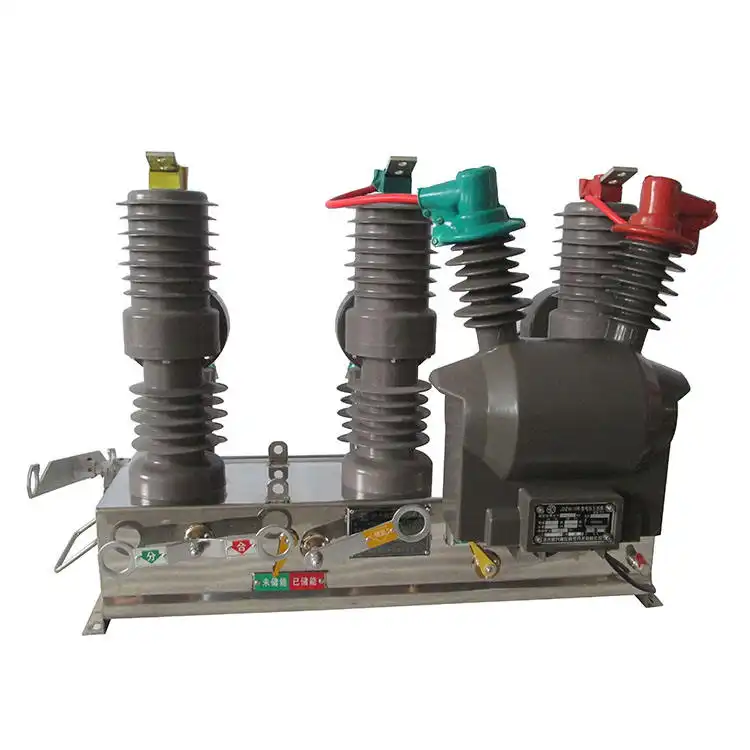
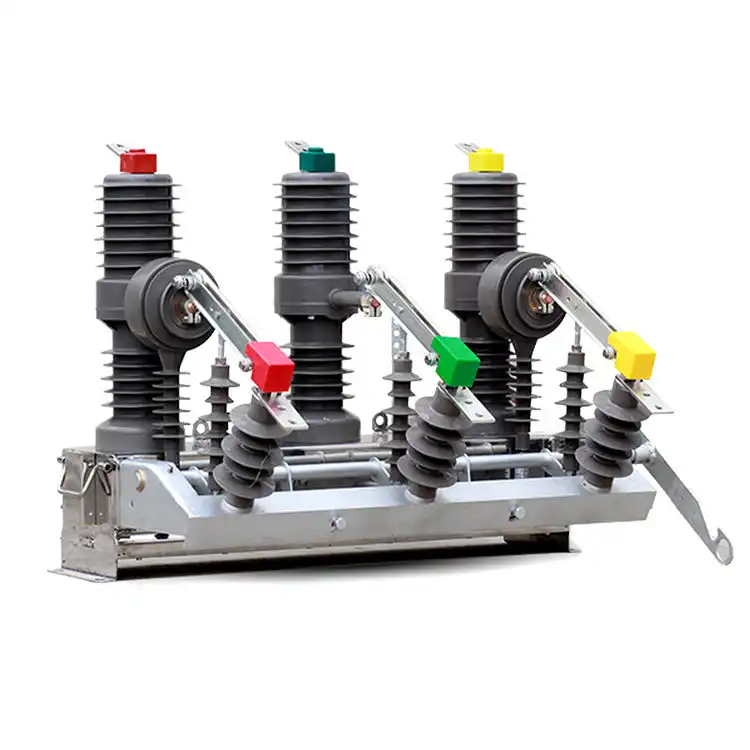
An outdoor vacuum circuit breaker is a medium voltage safety device for installations that will be exposed to the elements. The 40.5 kV class is normally used for 33 kV and 35 kV systems, depending on the greatest system voltage and insulation requirements. It requires weather-resistant insulators, sealed terminals and a covered control compartment to function in rain, dust, sunshine, temperature fluctuations and dampness. The primary assembly consists of vacuum interrupters, working mechanism, porcelain or polymer insulators, current transformers, control wire and auxiliary connections. Also motor charging, joining and remote control may be included. These pieces are equally as vital as the interrupter. This device is outside.
How Does a 40.5kV Outdoor Vacuum Circuit Breaker Work?
The contacts within each vacuum interrupter remain closed while the machine is not in operation and current flows via the main leads. If a fault occurs, the trip coil is energized by the safety switch. The coil releases the spring-loaded mechanism and the connections break. As soon as the current ceases, the brief vacuum arc extinguishes since it has no gas to maintain it. Then the contact gap rapidly regains insulating strength. The breaker may be opened and closed manually , electrically , or remotely via SCADA . The reopen settings on overhead lines must be consistent with the logic, dead time and utility operations of the relays. This collaboration may help to prevent short-term difficulties from escalating into long-term breakdowns.
40.5kV Outdoor Vacuum Circuit Breaker Ratings and Technical Specifications
Ensuring the voltage class of 40.5kV is only the beginning. Also studied by engineers are the rated normal current, the creating and breaking currents for short circuits, the short-time withstand current, the operating sequence, and the mechanical and electrical endurance. These values for AC circuit breakers are determined in IEC 62271-100. Common service conditions are defined in IEC 62271-1. These include a usual altitude ceiling of 1,000 m and a maximum ambient temperature of 40 °C. The IEC recommends 31.5kA breaking current however the quantity you require will depend on your fault-level analysis. You should also utilize the correct amount of insulation for your temperature, pollution, humidity and exposure to lightning. Not what the market claims, but the model datasheet and type test results.
Applications, Advantages, and Alternatives for Outdoor Vacuum Circuit Breakers
Applications of 40.5kV Outdoor Vacuum Circuit Breakers
Some places you might find these breakers are in outdoor substations, distribution substations, overhead lines, transformer links, and medium-voltage systems in factories. When they are combined with protection relays, SCADA, current transformers, and voltage transformers, they can be used as incoming, outgoing, bus-section, or transformer feeder breakers. They are often put in by EPC companies in water treatment plants, petrochemical sites, mine power supplies, railroad traction supplies, wind or solar collection networks, and water treatment plants. For lines that get hit by lightning, wind-blown debris, or trees, automatic reclosing can help if the type and driver allow it. For each site, the choice should be based on the load profile, fault level, climate, and number of maintenance staff.
Key Advantages and Limitations of Outdoor Vacuum Circuit Breakers
Vacuum interruption fixes problems fast, doesn't need much regular upkeep, and gets rid of the need for SF6 gas as an arc-extinguishing agent. Outdoor designs keep oil from leaking and gas handling from having to be done, and they allow for operation from a distance. There are still limits. It may cost more to buy than simple load-break switches, and you can't tell by looking at a sealed interrupter what kind of condition it is in. For contact travel, mechanism adjustment, and insulation coordination to work right, they need to be designed correctly and checked regularly. An international study by CIGRE looked into why high-voltage circuit breakers rated at least 72.5 kV fail in use and found that the main causes of these failures were the working mechanisms and control circuits. That's why we should pay close attention to system quality.
40.5kV Outdoor Vacuum Circuit Breaker vs. Alternative Solutions
The right switching device relies on the site and role of the network. An outdoor vacuum circuit breaker can interrupt faults more effectively and protect in more ways than most load-break switches. For some pole-mounted feeders, a small recloser works, but for a substation bay, you usually need a breaker with current transformers and relay interfaces. The outdoor model of the vacuum breaker has weather-rated insulation and enclosures, so you don't have to build a switchgear. When used with SF6 breakers, vacuum technology gets rid of the need to handle and monitor interrupting gasses. It's not enough to compare the first buy price; you should also look at interruption performance, testing, maintenance, service support, installation cost, and working life.
ZW7-40.5 Outdoor Vacuum Circuit Breaker from Xi'an Xikai
ZW7-40.5 Ratings and Design Features
The ZW7-40.5 outdoor vacuum circuit breaker has the following main features and specs:
- Ratings and rules: There is a frequency of 50Hz, a rated voltage of 40.5kV, and rated currents of 1250A, 1600A, and 2000A in the ZW7-40.5. These are the standards: IEC 62271-100 and IEEE C37.04. You can get current transformers that are mounted in the middle or on the side; just let us know if you need them. Find out what the breaking current is on the datasheet.
- Modular system with springs: The mechanism can be used in a wider range of project settings thanks to its flexible design. The unit stays small because the part that has been shrunk down has a more clear and logical structure. Spring operation works well in places where a simple mechanism that stores energy is easier to check out on regular visits. Parts can be changed out on the spot.
- Porcelain with reinforced columns and large creeps: Because the bracket beam structure is strengthened, it is very resistant to earthquakes. Large creepage distance porcelain sleeves make it easier for them to keep surfaces clean in dusty, coastal, or industrial air where contamination can cause flashover. IEC 60815-1 tells you how to choose creepage based on the level of pollution at your site. Please share the pollution class.
These features take care of the three main concerns that EPC teams have: the dependability of the mechanism, contamination, and ground movement.
Handling Cold, Condensation, and Pollution at Remote Sites
Most of the time, outdoor sites have to deal with changes in temperature, condensation, and ice. When it's cold, grease on moving parts can get thicker, and water in a control box can spread across insulation. In IEC 62271-1, there are minimum ambient temperature classes for colder sites. In the RFQ, you should list your lowest site temperature. Please let us know if the outdoor vacuum circuit breaker has the right lubricant, cabinet heating, and seals for that temperature. Describe the level of pollution at the site so that we can match the large-creepage porcelain sleeve to it. Xi'an Xikai also makes tools for plateaus that can work at heights of up to 4,000 meters, which is useful for projects in mountains and high plateaus.
Quality Control and Testing Before Shipment
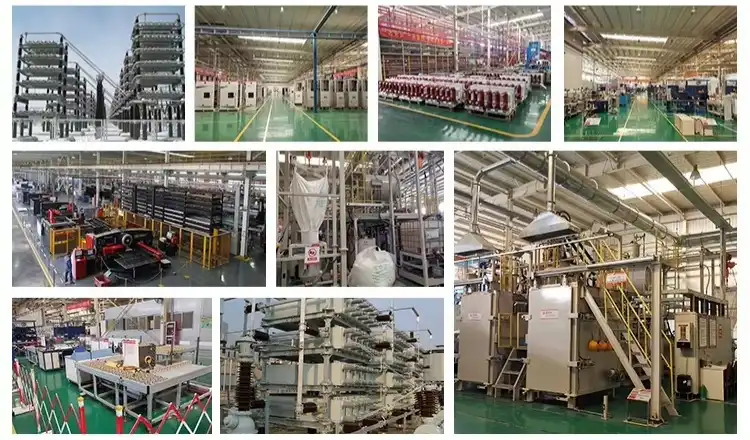
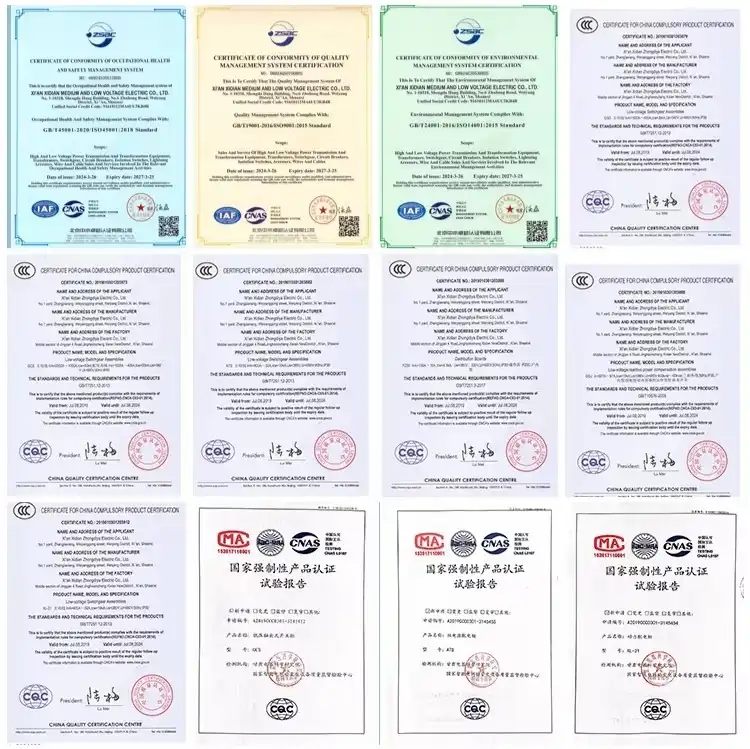
Robotic welding and automated assembly are used to make the ZW7-40.5 outdoor vacuum circuit breaker in line with ISO 9001, ISO 14001, and ISO 45001 management systems. Some of the most important tests we do on our parts are mechanical longevity (10,000+ actions), salt spray, UV exposure, and thermal cycling. These are the standards: IEC 62271-100 and IEEE C37.04. You can ask for type-test reports, routine-test certificates, and factory acceptance test procedures along with your quote. Our goods are used by State Grid for projects and systems in power engineering, steel, petrochemicals, rail transportation, and clean energy. Our team offers technical support and spare parts logistics 24 hours a day, seven days a week, which is important when a site is far from the factory.
Selecting, Installing, Maintaining, and Purchasing an Outdoor Vacuum Circuit Breaker
How to Choose the Best 40.5kV Outdoor Vacuum Circuit Breaker
Start with the study of the network. Before you ask for quotes, make sure you know the system's voltage, frequency, continuous current, prospective fault current, grounding arrangement, and protection philosophy. Once that is done, match the job to the setup. Insulation coordination and easy upkeep are usually top priorities for substations. On the other hand, overhead lines may need to be able to reclose, be controlled from a distance, and have overvoltage protection. You should look at choices like charging for motors, interlocks, anti-pumping, current transformers, and communication interfaces. Last but not least, look at the total cost of ownership, guarantee, spare parts, commissioning help, shipping performance, and type tests. It usually costs more in the end to pay less for a quote that leaves these things out.
Installation Requirements and Commissioning
The planning of an installation includes things like the size of the foundation, the mechanical mounting, the connections between the conductors, the clearances, earthing, the control wiring, and getting to the equipment for use. The support structure needs to be able to handle wind, vibration, and earthquake loads in the area. It also needs to meet the approved design for phase-to-phase and phase-to-earth clearances. Technicians check the main connections, CT polarity, phase sequence, control power, trip and stop circuits, and interlocks before turning the power on. During commissioning tests, things like time, manual and electrical operation, coil checks, safety tests, and insulation resistance are often checked. Every result should be written down in the project approval file. That record will be used as a starting point for future maintenance and any talk about the guarantee.
Outdoor Vacuum Circuit Breaker Maintenance Guide
Follow the manufacturer's instructions to set maintenance times based on turning on and off regularity, fault operations, climate, pollution, and corrosion risk. Insulators, terminals, fasteners, earthing, cabinet sealing, lubrication, and the operation counter should all be checked on a regular basis. From time to time, tests are done to check the operating time, contact travel, spring charging, trip and close coils, and auxiliary switches. In a sealed interrupter, you can't see the wear on the contacts, so keep track of how far they move and how far they move beyond the limits given in the manual. Check the control power and interlocks if closing doesn't work. If the door won't open, check the trip circuit. Right away, look into any strange noises, slow operation, flashover marks, or rising resistance of the outdoor vacuum circuit breaker.
How to Specify and Purchase a 40.5kV Outdoor Vacuum Circuit Breaker
A full RFQ stops rewrite rounds. Divide your information into three parts:
- Data about the site and the network: Give the location of the project, its lowest and highest temperatures, its height, its level of pollution, its wind and earthquake risk, its voltage, frequency, constant current, breaking and making abilities, and its working sequence. Cleary say 50Hz or 60Hz, because most US networks run at 60Hz and the ZW7-40.5 is listed as running at 50Hz.
- Setup: Write down the control voltages, motor charging needs, needs for re-closing, CT or VT interfaces, communication needs, arresters, quantity, and where the delivery needs to go. Tell us if you need current transformers that are mounted in the middle or on the side. Make a list of the SCADA and relay connections you want so the control wiring fits your security plan.
- Documents: Ask for the design specifications, drawings, wiring diagram, type-test reports, routine-test certificates, manuals, FAT procedures, warranty terms, list of spare parts, and shipping paperwork. By looking over these papers early on, design institutes and bid teams can make sure they are compliant before the order is placed. For every quote, ask for them.
We can confirm the configuration and plan delivery for orders of more than one unit when we have all the data.
Conclusion
An outdoor vacuum circuit breaker keeps 33kV and 35kV networks safe by cutting off load and fault current in a sealed vacuum interrupter. How reliable it is depends on how well its values match the spot. Rated voltage, frequency, breaking capacity, insulation level, operating sequence, and environmental limits like temperature, pollution, altitude, and seismic load are the main things that are checked. With vacuum technology, you don't have to handle SF6 and do as much regular maintenance. However, you still need to check the quality of the mechanism and the coordination of the insulation through type tests, routine tests, and datasheets. It has a rating of 40.5kV and 50Hz and can handle 1250A, 1600A, or 2000A. The ZW7-40.5 has a modular spring system, a strengthened column structure, and large-creepage porcelain. The investment is safe for as long as it is used thanks to clear RFQ data, correct installation, and regular upkeep.
FAQ
1. Which systems suit a 40.5kV class breaker?
This class is used by a lot of 33kV and 35kV circuits. Before you place your order, make sure you know the highest system voltage, insulation level, potential problem current, and utility needs. The voltage class does not guaranty that it will work with your network. Plus, for a US project, make sure the owner says IEEE C37.04 ratings.
2. What ratings does the ZW7-40.5 offer?
With a frequency of 50Hz and rated currents of 1250A, 1600A, and 2000A, the ZW7-40.5 can handle a lot of power. As a first step, please let us know in your first message if your network works at 60Hz.
3. Does an outdoor vacuum circuit breaker need SF6 gas?
Not at all. Since the arc goes out inside the sealed vacuum interrupter, SF6 gas is no longer used as an interrupting medium in the design. So, gas monitoring and gas handling are no longer on the list of things that need to be fixed for the outdoor vacuum circuit breaker.
4. What should I send for a quotation?
Send the fault level, voltage, frequency, rated current, lowest and highest site temperatures, altitude, pollution level, CT needs, amount, and shipping location. Review time is cut down and changes are avoided when data is complete. The place can also be shown in pictures or drawings.
Request a 40.5kV Outdoor Vacuum Circuit Breaker Quotation from Xi'an Xikai
Tell Xi'an Xikai about your voltage, frequency, rated current, fault level, site conditions, and quantity. They make an outdoor vacuum circuit breaker with equipment that can work at elevations of up to 4,000 meters. The ZW7-40.5 setup will be made to fit your project by our team. Send emails to serina@xaxd-electric.com, amber@xaxd-electric.com, or luna@xaxd-electric.com, or go to xaxd-electric.com for more information.
References
1. IEC 62271-100: High-voltage switchgear and controlgear – Part 100: Alternating-current circuit-breakers, International Electrotechnical Commission, 2021
2. IEC 62271-1: High-voltage switchgear and controlgear – Part 1: Common specifications for alternating current switchgear and controlgear, International Electrotechnical Commission, 2017
3. IEEE C37.04: IEEE Standard for Ratings and Requirements for AC High-Voltage Circuit Breakers with Rated Maximum Voltage Above 1000 V, Institute of Electrical and Electronics Engineers, 2018
4. IEC TS 60815-1: Selection and dimensioning of high-voltage insulators intended for use in polluted conditions – Part 1, International Electrotechnical Commission, 2008
5. IEEE 693: Recommended Practice for Seismic Design of Substations, Institute of Electrical and Electronics Engineers, 2018
6. CIGRE Technical Brochure 510: Final Report of the Second International Enquiry on High Voltage Circuit-Breaker Failures and Defects in Service, CIGRE, 2012