
What Does 10kV outdoor line compensation Actually Do?
2026-10-27 17:16:26
If you manage a distribution network—especially one covering long rural feeders or areas with heavy motor loads—you've likely dealt with sagging end-of-line voltage and rising energy losses. 10kV outdoor line compensation is the field-deployable answer to both problems. By mounting reactive power compensation devices directly on 10kV overhead lines, these systems inject capacitive reactive power at the exact point where it's needed, correcting power factor locally, lifting terminal voltage, and cutting I²R losses—without waiting for correction to travel back from a substation. The result is a measurable improvement in grid stability and energy efficiency across your entire feeder.
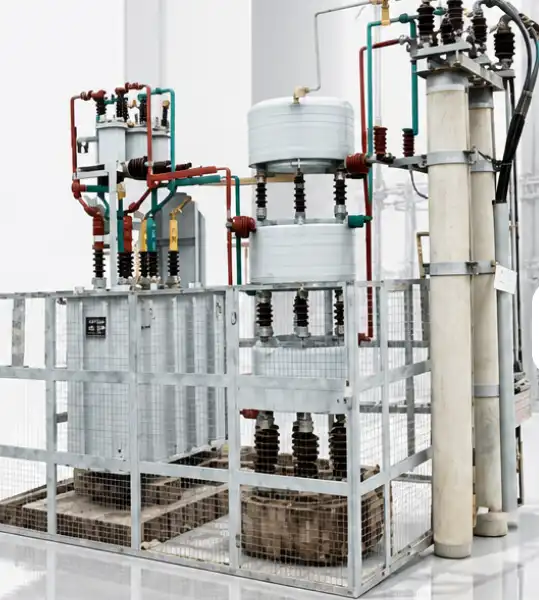
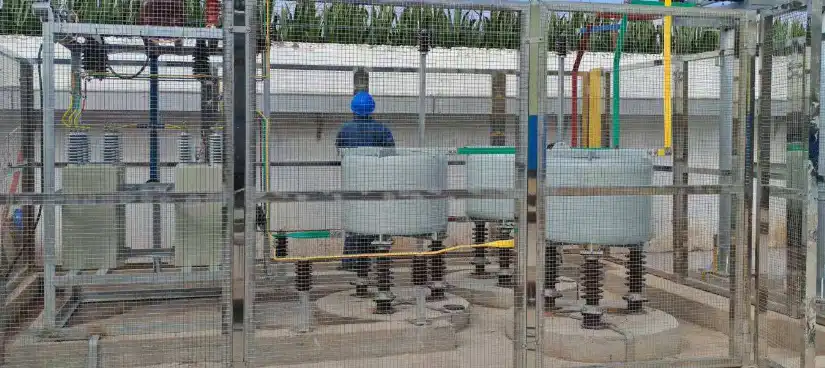
Understanding 10kV Outdoor Line Compensation: Principles and Functions
What the Technology Actually Does
A distribution feeder that carries inductive loads like motors, transformers, and irrigation pumps always draws reactive current that is behind the load. Along the whole length of the line, that current heats the wires and lowers the voltage every kilometer. Outdoor devices that are placed on poles break this loop by making capacitive reactive power at the load end of the feeder, which is where the voltage problem is worst.
Core Electrical Parameters
The outdoor line compensation equipment made by Xi'an Xikai can handle rated voltages of 6kV, 10kV, and 35kV, and each bank can handle 1 to 100 Mvar. The systems are meant to have a power factor of ≥0.95 when they are working normally. All-film dielectric capacitors have loss rates below 0.2 W/kvar, and series detuning reactors (6% or 13% impedance) keep the structure from resonating with the 5th- and 7th-order harmonics that are common in most industrial grids.
How Outdoor Units Differ from Indoor Installations
With indoor compensation banks inside substations, reactive power is fixed all in one place. Outdoor pole-mounted units, on the other hand, are put in place at the 2/3-point characteristic location along a feeder to get rid of "low voltage at line end," which happens a lot in rural networks longer than 10 km. This spread-out placement cuts down on line losses a lot more than just fixing them at the substation, and it doesn't need any new substation equipment.
Technical Insights: Installation, Maintenance, and Performance Optimization
Site Assessment and Installation Protocol
Engineers check the feeder's load profile, line length, and current power factor at several measurement places before adding an 10kV outdoor line compensation outdoor reactive power compensation bank. The compensation device is mounted on a special pole frame and has a built-in PT (potential transformer) so it can power itself when there is no other supply, which is often the case for country lines that are far away. All containers with an IP65 rating are made of 304 stainless steel, which keeps the inside parts safe from salt mist, UV light, and constant humidity.
Maintenance-Free Design for Harsh Conditions
The switching mechanism has vacuum contactors that are designed to work in a controlled zero-crossing mode. This gets rid of the inrush current transients that damage capacitors and shorten their life. Mechanical longevity rates are usually higher than 10,000 actions, and battery packs are sealed at the plant. Even though the design is meant to have a maintenance-free service life, it is still recommended that the vacuum switch contacts be inspected visually once a year and the integrity of the capacitors checked according to IEC 60871 tolerances.
Smart Monitoring and Remote Control
Modern outdoor line compensation controllers have GPRS/4G communication modules that work with DNP3.0 and IEC 60870-5-104 protocols. This makes it possible to fully integrate SCADA. Voltage and current are sampled in real time, and the controller uses automatic multi-step switching logic to match the output of the compensation to the demand of the load. This stops over-compensation during off-peak hours, which can raise the voltage at the terminals dangerously above normal levels.
Comparing 10kV Outdoor Line Compensation Solutions: Making the Right Choice
Outdoor vs. Indoor Compensation: Where Each Belongs
It saves money to use capacitor banks in substations when most of the load is close to the source. As the feeder length goes up, they work less well because the reactive current that hasn't been adjusted still runs through most of the line. This problem can be fixed by putting adjustment capacity in the outdoor feeder, which is where power loss actually happens. It is common for 15–30% less technical line losses to happen in State Grid technical improvement projects for companies that are in charge of rural grids or long farm feeders.
Capacitor Banks vs. Static Var Generators
For loads that change slowly and predictably, fixed or switched capacitor banks are still the most cost-effective way to fix steady-state reactive power. Static Var Generators (SVG) can react in milliseconds and work well in places where the load changes quickly, like steel mills, wind farm interconnection points, or feeder segments that serve big variable-speed drives. Many teams that buy things choose a mixed method that combines switched capacitor banks for base-load adjustment with a smaller SVG stage for quick response to changes in load.
Selecting the Right Supplier
A trustworthy outdoor reactive power compensation supplier should show standard lightning impulse withstand voltage (BIL) test results of 75 kV or 95 kV, as well as certifications for salt-mist and rain-tightness and field installations that have been done in similar weather conditions. As the load increases, modular design saves the initial investment by letting the capacity grow without having to replace the whole assembly. Xi'an Xikai makes systems that meet these needs for voltage ranges from 6kV to 35kV.
Procurement and Supplier Guide for 10kV Outdoor Line Compensation Equipment
Key Evaluation Criteria for Procurement Teams
Finding 10kV outdoor line compensation outdoor line compensation for bulk utility purchases (usually between 50 and 300 units per tender cycle) requires more than just looking at unit price. The total cost of ownership over a 20-year work life is directly affected by the following:
- Environmental certification: Confirm IP65 enclosure rating, operating temperature range from -40°C to +55°C, and altitude rating. Xi'an Xikai's plateau-rated equipment meets operational requirements at altitudes up to 4,000 meters.
- Anti-theft design: Pole-mounted equipment in remote areas faces physical security risk. Tamper-resistant fasteners, lockable enclosures, and remote alarm outputs on communication modules are practical countermeasures.
- Communication compatibility: Verify that SCADA protocol support (DNP3.0 or IEC 60870-5-104) matches your existing dispatch system before ordering.
These criteria are important because a cheap unit that breaks down within three years costs a lot more to replace, loses productivity, and requires more work than it saved in the first place. When buyers ask for factory acceptance test results that include BIL testing, capacitance measurement, and vacuum switch durability, the risk after installation is greatly reduced.
Quality Assurance and Standards Compliance
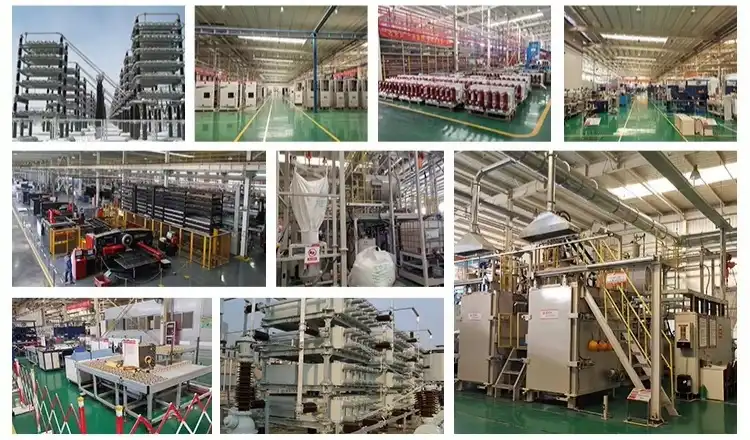
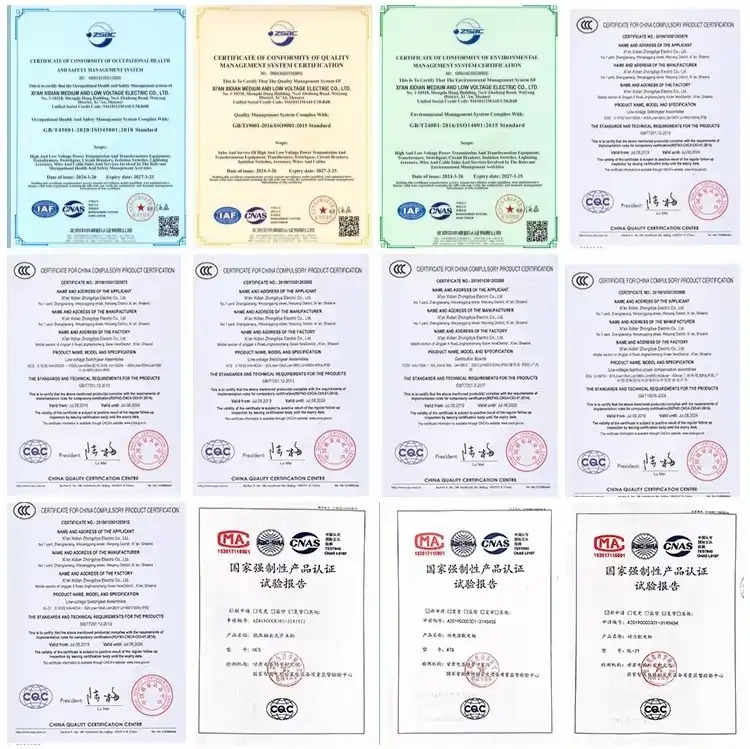
The outdoor line compensation goods made by Xi'an Xikai meet the technical requirements of IEC 60871 (shunt capacitors), GB/T 11024 (Chinese national standard for power capacitors), and the State Grid. There are five types of tests that must be done as part of factory quality control. These are lightning impulse withstand, capacitance and loss tangent measurement, vacuum switch mechanical endurance, IP rating rain-tightness simulation, and harmonic overload thermal stability verification.
After-Sales Support Framework
Xi'an Xikai offers a warranty, spare parts, remote diagnostic support through a communication interface linked to SCADA, and help with setting up the equipment on-site. Utility operation and repair teams are trained in how to set up controller parameters, read trouble codes, and safely switch between systems. This organized after-sales model cuts down on unplanned downtime and makes equipment last much longer than the minimum design life.
Conclusion
10kV outdoor line compensation Outdoor line compensation on 10kV and 22kV distribution networks directly fixes the two most common performance issues on long rural feeders: end-of-line voltage that stays low and high I²R losses caused by reactive current that isn't corrected. Utilities can get back voltage cushion, lower technical losses, and ease transformer loads without having to build new substation infrastructure by putting compensation capacity at the right place on the feeder. The technology works because it goes after the source of the problem. If the device is properly chosen, set up, and backed by reliable remote monitoring, it can work for 20 years or more with little to no maintenance.
FAQ
1.How does the system prevent harmonic resonance?
Series reactors with 6% or 13% impedance are factory-installed to detune the compensation circuit, keeping it away from the 5th and 7th harmonic frequencies that dominate most distribution networks. This structural detuning prevents resonance without requiring software adjustment.
2.Does the unit need a separate power supply?
No. A built-in PT draws operating power directly from the 10kV line, eliminating the need for an external auxiliary supply—a practical requirement for remote rural installations where low-voltage auxiliary power is unavailable.
3.What is the expected service life?
Xi'an Xikai's outdoor reactive power compensation units are designed for 20+ years of field service. Stainless steel enclosures and silicone rubber insulation maintain structural integrity across desert, coastal, and sub-zero climates.
4.Can the system integrate with existing SCADA?
Yes. Communication modules support GPRS/4G with DNP3.0 and IEC 60870-5-104 protocols, compatible with most utility SCADA and EMS platforms in current use.
5.What happens if the capacitor bank over-compensates?
The intelligent controller monitors terminal voltage continuously and steps down compensation capacity automatically when voltage rises above the set threshold, preventing dangerous voltage swells during light-load periods.
Partner with Xi'an Xikai for Your Next Outdoor Line Compensation Project
Over 40 countries have bought high-voltage electrical tools from Xi'an Xikai Medium & Low Voltage Electric Co., Ltd. for more than 30 years. As a qualified maker and seller, we offer 10kV outdoor line compensation systems that can handle rated voltages from 6kV to 35kV and have a modular capacity range of 1 to 100 Mvar per bank. Every unit comes with full factory test paperwork and our organized program to help customers after the sale. Get in touch with our team to talk about your feeder specs and tender needs:
References
1. IEC 60871-1: Shunt Capacitors for A.C. Power Systems Having a Rated Voltage Above 1 kV — Part 1: General, International Electrotechnical Commission, 2014.
2. IEEE Std 1036-2010: IEEE Guide for Application of Shunt Power Capacitors, Institute of Electrical and Electronics Engineers, 2010.
3. Kundur, P. Power System Stability and Control, McGraw-Hill, 1994.
4. Hingorani, N. G., & Gyugyi, L. Understanding FACTS: Concepts and Technology of Flexible AC Transmission Systems, IEEE Press, 2000.
5. Dugan, R. C., McGranaghan, M. F., Santoso, S., & Beaty, H. W. Electrical Power Systems Quality, 3rd ed., McGraw-Hill, 2012.
6. State Grid Corporation of China. Technical Specification for Distribution Network Reactive Power Compensation Devices (Q/GDW 10370), State Grid Press, 2016.