
Outdoor Vacuum Circuit Breaker Maintenance: A Practical Checklist
2026-10-28 17:28:04
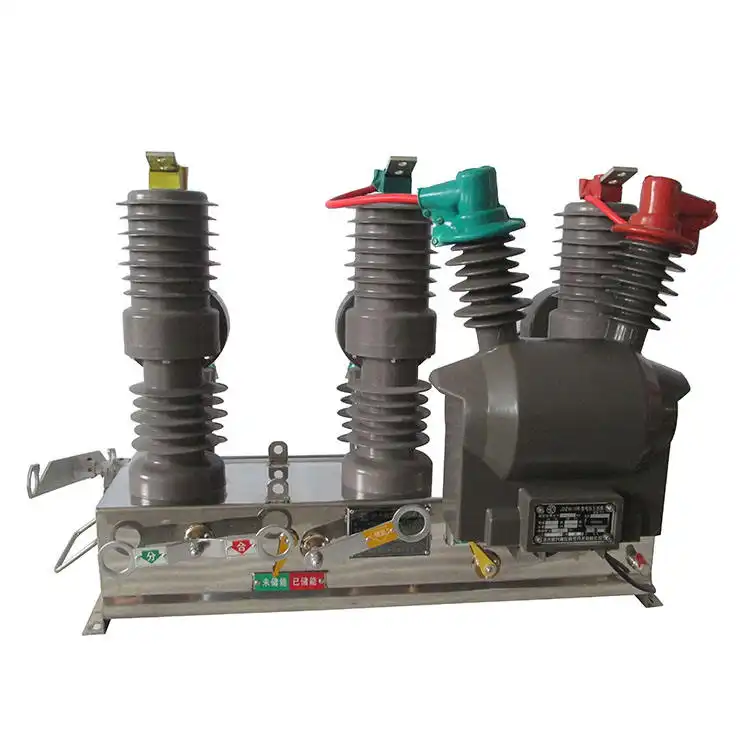
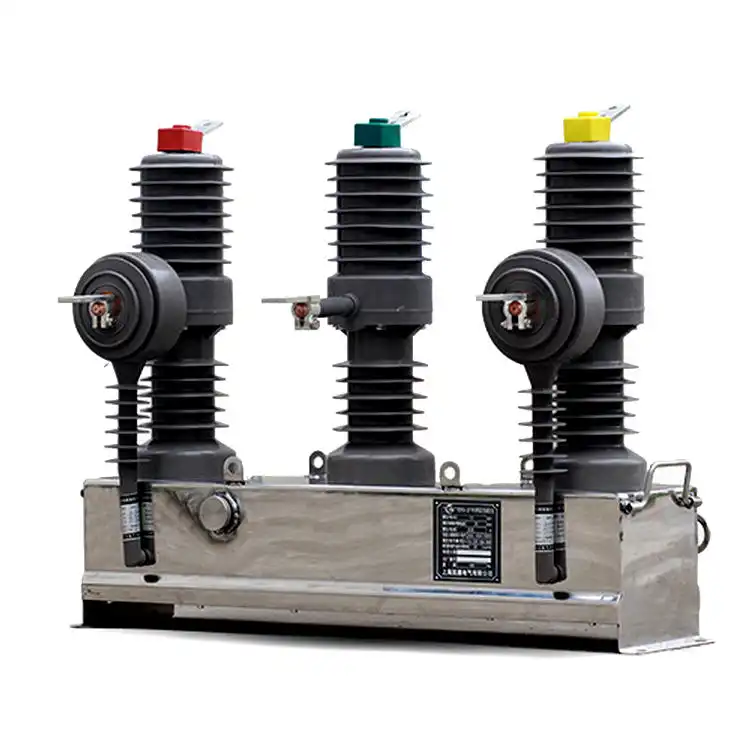
A good maintenance schedule for an outdoor vacuum circuit breaker has five stages. Make a work plan. Examine the body and mechanism. Test the main circuit and controls. Put the unit into service after any repair. Make a record of each outcome. For a 40.5kV outdoor vacuum circuit breaker, I examine insulators, mechanism lubrication, contact resistance, insulation resistance and trip and shut circuits before returning the device to operation. These readings may be affected fast by rain, ice, dust and salt, therefore a documented checklist helps ensure consistency for each visit. This handbook provides you a realistic example in the shape of the ZW7-40.5 and gives you a field ready order of action, common error indications and spare-part guidance.
Plan Outdoor Vacuum Circuit Breaker Maintenance Before You Touch the Equipment
Planning beforehand means less chance of things going wrong on site and losing power.
Set the Interval by Service Conditions
Not every location can afford the same break time. According to NFPA 70B (2023), your equipment maintenance should not be scheduled on the date but also on how it operates, and its importance. When I choose an outdoor vacuum circuit breaker, I consider the pollution level, salt in the air, height, and temperature variations. I also look at how frequently they trip and the number of difficulties they have had in the past. A line that is not very full should be examined more regularly than a feeder that operates every day in a dusty mine, in a clean dry region. First examine the maintenance plan. If it is damaged or shows evidence of wet insulators, corrosion or contamination, schedule the necessary corrective work again. Write out why each update was made to the record so the following expert can comprehend.
Review the Technical Records
After reading the breaker nameplate data, wire layout, factory test report, and service documents, I headed to the project site. With these documents I can begin to compare things. They give the control voltage, the mechanism type, the rated voltage and the rated current. ZW7-40.5 may be used for four different voltages: 40.5kV, 50Hz; 1250A, 1600A, 2000A. A US project team, while designing the system, should validate the 50Hz rate against the system frequency. It is not enough to measure the operation duration and the contact resistance only once. And you should also be looking at prior readings. The reason is that the sluggish trend wears things out faster.
Prepare Tools, Test Gear, and Spare Parts
Don’t wait until the power is off to make sure you have the correct equipment for each outside vacuum circuit breaker. My list includes a multimeter, a torque wrench, a micro-ohmmeter, an insulation tester, manufacturer-approved cleaning materials and the grease they recommend using. If the facility is far from a service center, you must provide additional gates, control fuses, seals and coils to trip and shut them. Losing a little piece in a hidden base is the highest cost, since it takes days to get back. Bring safety devices, wire sets, and the safe-work method required by NFPA 70E (2024) or your utility standards.
Inspect the Outdoor Vacuum Circuit Breaker Body and Operating Mechanism
You can find a lot of bad code before a test set does.
Check the Frame, Porcelain, and Terminations
After grounding and isolating, step three is to walk around the outdoor vacuum circuit breaker. Check the finishes, base bolts, support frame, and support frame for rust and hardware that isn't strong. Next, look for cracks, chips, dirt tracks, and other damage on the porcelain. Things stay cleaner on the ZW7-40.5 because it has a big creepage distance porcelain plate. But porcelain that gets dirty from dust, fog, or buildup from factories still needs to be cleaned. It can stand up to strong shocks because its bracket column structure is better. Even so, you should check the bolts on the brackets after a big shake. Watch out for spots of color on the ends of wires, bus connections, and grounding points. If you see any, it means they are too hot. Tighten them to the level of pressure written in the directions.
Service the Spring Mechanism and Lubrication
As the temperature changes, the grease thins out in hot weather and thickens up in cold weather. Pay close attention to how it does its job. You need to use both your hands and the motor to work the breaker. You should also listen for grinding, hesitating, or incomplete travel. Check the springs, shafts, tie-rods, pins, fasteners, and charging motor for wear, corrosion, or signs of sticking. The ZW7-40.5 has a spring-loaded modular system that makes it easy to change parts while the machine is still running. First, get rid of any old oil or dust, and only use the oil that came with the machine. Rust can also form inside the mechanism box if there is water there. Check your system's heaters, seals, and drain paths.
Verify Interlocks, Indicators, and Timing
It is best to check all of the interlocks (mechanical and electrical), the anti-pumping feature, and the open/closed signs at the same time. A person could get lost if one of the signs is broken. The breaker has to be in the same place for both the local and remote commands to work. At what point do you connect a circuit breaker tester? The process will tell you. Note the times it opens and shuts, as well as the overtravel, bounce, and touch trip. Look at the numbers and the report from the plant. Overtravel needs extra care because it gets smaller as the contacts wear out. You can tell before something goes wrong if a value changes over time. Write down the date, temperature, and humidity of each trace so that readings from later on make sense.
Test the Outdoor Vacuum Circuit Breaker Main Circuit and Controls
Tests that use electricity can show you numbers that you can't see with your own eyes.
Run the Outdoor Vacuum Circuit Breaker Contact Resistance Test
This test looks at how the power moves between the two poles. You should keep track of each step during your repair tests. If you want to test DC, you should use a micro-ohmmeter that can handle at least 100A. Check each reading against the report from the factory, the maker's limit, and the other two poles. The value is likely weak or has a dirty contact surface or a broken contact if it is high or going up. It can get hot when the load is put on it. First, clean the outsides and put the pieces back together. Then take the test again. The interrupter assembly needs to be checked by a skilled person if the reading stays high.
Check Insulation Resistance and Vacuum Integrity
If the maker lets you, use the test voltage to find the insulation resistance between the ground and the phase, between the phases, and across the open contacts. Keep an eye on the temperature and humidity. Damp air can hide a problem. You should test the clay after it has dried. Techs can't fix vacuum interrupters while they're on the job because they are sealed. Sometimes, the pressure inside should be less than 1.33×10^-3 Pa, and the manufacturer's resist test method is used to make sure of this in the field. If the test for an outdoor vacuum circuit breaker fails, the interrupter needs to be looked at more closely and sometimes needs to be replaced.
Test Trip Circuits, Coils, and Auxiliary Contacts
Even if the switch works, the circuit that handles it will still not work. To make sure everything is okay, check the control fuses, the anti-pumping circuit, the undervoltage release, the trip coil and close coil, the control voltage, and the auxiliary contacts. There should be a match between the open, closed, spring-charged, warning, and local/remote signs and the state of the breaker. After that, make sure that each of the overcurrent, earth-fault, SCADA, and remote terminal units is connected to a clean wire. Lightning and switching events put the most stress on grounding paths and gears that stop lightning. Check to see if the grounding connections and surge-protection components are intact and free of loose connections. It is possible to know about a broken trip path before the break does.
Commission and Troubleshoot Your Outdoor Vacuum Circuit Breaker
There is a right way to find mistakes and put things back together.
Complete Pre-Energization and Functional Checks
When you put an outdoor vacuum circuit breaker outside, it's helpful to do more than just watch it work. Check the wiring, safety settings, covers, temporary grounds, control voltage, torque marks, and room for people before you turn it on. This will help you figure out what step it is and how it works. Do controlled local, remote, manual, and protection-trip actions. Know how the transformers, breakers, reclosers, and fuses all work together. Make sure the limits for power reaction, working time, pole simultaneity, and insulation resistance are correct before the tests start. After that, the team can check the outcomes against a written rule. The report that has been signed should be kept with the building plans.
Find the Cause When the Breaker Will Not Close or Trip
Check the basics first. If the breaker doesn't close, check the spring charge, switch voltage, active interlocks, and reasoning for stopping pumping. We need to test the closing coil to do this. The spare contacts, the relay output, the trip coil, and the friction in the mechanism should all be checked to see if it trips. The linkage won't move, the control voltage is low, or the coil is broken. All of these things can go wrong. Take a look at these first. Don't push on something that is stuck. Check the lockout and make sure you let go of the springs the right way. If you can't figure out what's wrong, call the person who made it. This list of steps will help you fix an outdoor vacuum circuit breaker more quickly and safely.
Respond to Overheating, Noise, and Flashover
Something is likely getting too hot because of a weak joint or a high contact resistance. You can be sure with the help of an ohmmeter and a thermal scan. Is the joint moving slowly or making strange noises? It could be worn out, dirty or dry grease, rust, or something else. If there is more than one flashover or the insulation test fails, the porcelain should be cleaned and the arrester should be checked for damage. If it's hard to fix, the main current path, the mechanism, the power, and then the insulation should be in that order. Talk to the person who made it if the numbers are too high or too low. People and the network should not guess.
Schedule Maintenance and Choose a Maintainable Outdoor Vacuum Circuit Breaker
The cost of upkeep starts as soon as you buy the product, so the plan you choose and the product you buy go hand in hand.
Use a Checklist by Frequency
For each outdoor vacuum circuit breaker, I split the work into four beats. They check for rust, contamination, too much heat, and water getting in when someone comes by often. As a normal part of fixing machines, timing, operation, lubrication, and interlock tests are done. Grounding, arresters, secondary contacts, vacuum integrity, and insulation resistance are all tested for electrical work that is done once a year or more often. First, I read the record, check the poles and porcelain, and measure the resistance and time. Then I put the circuit back together after a short-circuit. Keep track of all the results because trends can help you figure out what to do next.
Stock Replacement Parts and Know When to Replace
Motors, springs, position switches, control fuses, seals, bushings, arresters, and trip and close coils are some of the most common parts that can be used instead of outdoor vacuum circuit breakers. You can find the right part faster by sorting by model, control voltage, mechanism type, and production revision. It makes sense to fix problems with coils, joints that are too loose, and seals that are worn out. Things that are rusty, break often, have old parts, or have a vacuum interrupter that doesn't work right make it more likely that something bad will happen. A modular system like the one in the ZW7-40.5 can speed up this job because it only needs to redo parts of the drive instead of the whole thing.
See How the ZW7-40.5 Fits a Maintenance-First Purchase
It's called the ZW7-40.5 outdoor vacuum circuit breaker and it's made by Xi'an Xikai. The unit can handle 1250A, 1600A, or 2000A of power and is designed to work with 40.5kV systems at 50Hz. The thin and small structure is more bendable because of the spring-operated modular mechanism. If there is an earthquake, the strengthened bracket shaft will hold up better, and the big creepage distance porcelain sleeve will keep dirt out better. Two CT configurations are available, depending on the system requirements specified for the project. IEC 62271-100 and IEEE C37.04 were used to make the plan. In the plant, the goods go through more than 10,000 steps, such as being hit with UV light, salt spray, and different temperatures.
Confirm Compliance and Documentation
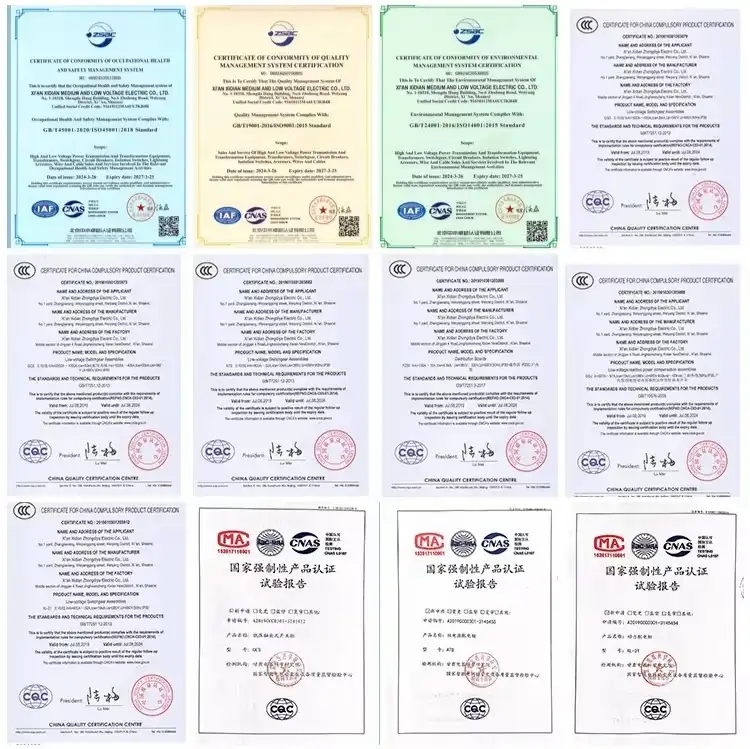
You can look at more than just prices when you shop around. Aside from type tests and regular tests, you should also ask for wiring diagrams, maintenance instructions written in the language of your project, warranty terms, and information on where to get extra parts. When you compare an SF6 circuit breaker to an outdoor vacuum circuit breaker, look at how often it needs to be serviced. Since the interrupter is sealed, only the outside can be fixed in the field. The vacuum design keeps the SF6 gas clean. Do you need records for ISO 9001, 14001, or 45001? Ask each customer to give you. If your business is in an area that has a lot of earthquakes, make sure that the product papers meet the requirements of IEEE 693 (2018). When papers are clear, it takes less time to accept them. This makes things go more quickly on site.

Conclusion
If you want to keep an outdoor vacuum circuit breaker in good shape, do it the same way every time. If the machine is being used well, check the records every so often. Then, look at the frame, porcelain, and spring mechanism. Finally, test the control circuits, contact resistance, insulation, and vacuum integrity. It is checked that everything is right during setup before the power is turned on. The next step in a structured fault search is to start with the control power and work its way through the mechanism, insulation, and current path. If you keep track of the times you need to do things, the spare parts you always have on hand, and the results in one log, you can turn different readings into trends. Rates are important, but it's even more important to be able to keep up with them. A 40.5kV unit can stay outside and be used because it has a modular spring mechanism, a strengthened bracket column, a big creepage porcelain, and proof that it meets IEC and IEEE standards.
FAQ
1. What tests are commonly performed on an outdoor vacuum circuit breaker?
Usual maintenance inspections include operating time, contact resistance, insulation resistance, trip and closure coil operation, auxiliary connections, and control-circuit performance. The technique of precise test and acceptance limits should be as per manufacturer’s instructions and appropriate testing standards.
2. Can a vacuum interrupter be repaired in the field?
A vacuum interrupter is a sealed device that is often not field repaired. If it fails any mandatory tests or exhibits symptoms of degradation, it should be examined by trained people and normally replaced in accordance with the manufacturer's guidelines.
3. What should be checked before returning an outdoor vacuum circuit breaker to service?
Check wiring, control voltage, interlocks operating mechanism, insulation, contact resistance, grounding, connections, protective functions. Controlled local, remote, manual, and protection-trip tests of the breaker should also be performed with documentation of all findings prior to re-energization.
Request Outdoor Vacuum Circuit Breaker Support from Xi'an Xikai
Xi'an Xikai can help you find an outdoor vacuum circuit breaker that works with your voltage, current, spot, mounting, and mounting. Designed for high-altitude applications up to 4,000 meters, our plateau models can perform in these environments. Along with the outdoor vacuum circuit breakers we make, we also sell datasheets, wiring diagrams, and maintenance guides. Check out xaxd-electric.com or send an email to serina@xaxd-electric.com, amber@xaxd-electric.com, or luna@xaxd-electric.com to learn more.
References
1. IEC 62271-100: High-voltage switchgear and controlgear – Alternating-current circuit-breakers, 2021
2. IEEE C37.04: IEEE Standard for Ratings and Requirements for AC High-Voltage Circuit Breakers with Rated Maximum Voltage Above 1000 V, 2018
3. NFPA 70B: Standard for Electrical Equipment Maintenance, 2023
4. NFPA 70E: Standard for Electrical Safety in the Workplace, 2024
5. NETA MTS: Standard for Maintenance Testing Specifications for Electrical Power Equipment and Systems, 2023
6. IEEE 693: Recommended Practice for Seismic Design of Substations, 2018