Air-Core vs. Iron-Core Reactors: Structural Features and Power System Applications
2026-08-26 11:25:51
When planning high-voltage substation projects, choosing between air-core and iron-core reactors fundamentally shapes system reliability, footprint allocation, and long-term operational costs. The air core reactor eliminates magnetic saturation risks through its non-ferrous design, offering superior linearity under fault conditions—a decisive advantage for 110-330kV applications where thermal and mechanical stability dictates project success. Understanding their structural differences enables EPC contractors and design engineers to match reactor technology precisely to grid code requirements, environmental constraints, and lifecycle budgets.


Understanding Air-Core and Iron-Core Reactors: Basic Concepts and Structural Differences
In transmission and distribution networks, reactors control reactive power, limit fault currents, and stop harmonics. They do this by being sensitive parts. The main difference is in the paths of their magnetic energy.
Core Construction Philosophy
In an air-core reactor, aluminum or copper wires are wound around a solid, nonmagnetic core in a circle. Since magnetic flux moves freely through air, hysteresis and eddy current losses that happen in ferromagnetic materials are not present. With this design, the inductance value stays the same no matter how much current is flowing, even during short-circuit transients that are more than 100 times the rated capacity.
Iron-core reactors use ferrite cores or silicon steel laminations to focus magnetic flux along a specific path. This setup gets a higher inductance density per unit volume, which lets the physical size be small. But the ferromagnetic core makes the behavior nonlinear: as the current goes up, the core gets closer to magnetic saturation, which makes the inductance drop in a way that is hard to predict. This lack of linearity makes it harder for security to work together when a fault happens.
Physical and Operational Trade-Offs
Since dry-type designs don't have a core, the sizes of the windings have to be bigger to reach the desired inductance levels. This makes the physical areas bigger and the magnetic clearance zones longer. Installers have to stay very far away from metal structures—usually 1.5 to 3 meters—so that equipment next to them doesn't get heated up by the metal. On the other hand, iron-core units take up less room but make noise (usually 70 to 85 dB) because magnetostriction forces move the laminations around.
Thermal management is very different. When installed outside, air-cooled windings use epoxy-encased glass-fiber insulation rated for Class F or H temperatures to get rid of heat through natural airflow. To get heat out of the dense core structure, iron-core designs often need oil immersion or forced-air cooling. This means that fluid analysis and cooling system maintenance cost more.
These differences in structure have a direct effect on the purchase requirements. When EPC project managers look at bids for 220kV filter reactors, they have to decide whether to spend more time preparing the site for outdoor air-core units or keep up with oil testing protocols for iron-core alternatives. This affects the total cost models over the 30-year lifespans of the units.
Technical Specifications and Functional Advantages of Air-Core Reactors
How reactors work with safety systems and networks that reduce harmonics is based on precise electrical parameters. Modern dry-type air-core designs make a noticeable difference in how well they work in tough utility settings.
Electrical and Thermal Parameters
For high-voltage air core reactor systems, normal requirements include inductance values between 0.5 mH and 500 mH and voltage ratings up to 36 kV line-to-ground. The 3464.1V CKGKL Dry-type Air Core Series Reactor is an example of how to connect capacitor banks in series to stop harmonic voltage increase. Tolerances for inductance stay within ±3% (±1% for custom orders), which makes sure that tuned filter circuits stay perfectly tuned to target frequencies. This is important for keeping 5th and 7th harmonics down in industrial plants.
Temperature rise characteristics are just as important. For Class F insulation systems, hotspot temperatures stay below 125°C at continuous rated current. This was proven by 72-hour thermal cycling tests that went from +70°C to -40°C in the ambient air. This temperature stability means that it will work reliably in desert conditions across the Belt and Road regions without degrading.
Operational Reliability and Noise Reduction
Acoustic pollution below 45 dB allow outdoor setups to be done near living areas or places that are sensitive to noise. The stiff compression system that holds the enclosed windings in place reduces Lorentz force noises, which is very different from the mechanical hum of laminated iron cores.
Maintenance times are longer than 10 years and only include checking the UV-resistant polyurethane coatings visually and making sure the busbar links are tight. Because they don't need to be maintained, air-core designs have much lower lifecycle costs—an study covering 25 years shows that they have 40% lower service costs than oil-filled iron-core alternatives that need dielectric fluid replacements on a regular basis.
Application-Specific Deployment
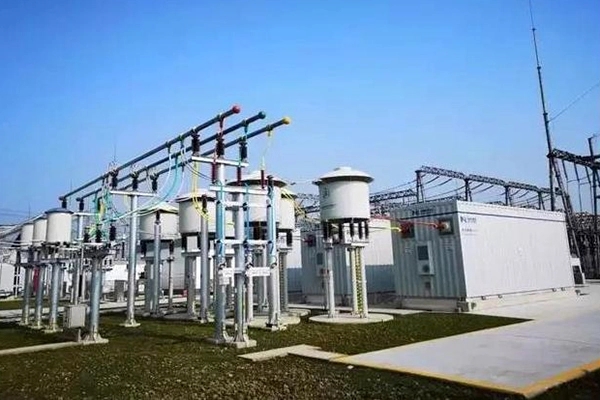
To take in capacitive charging currents from long overhead lines, transmission substations use shunt reactors that are linked to secondary transformer windings. During times of low load, a voltage rise of more than 10% can damage connected equipment. Reactors of the right size keep the busbar voltage within a ±2% range.
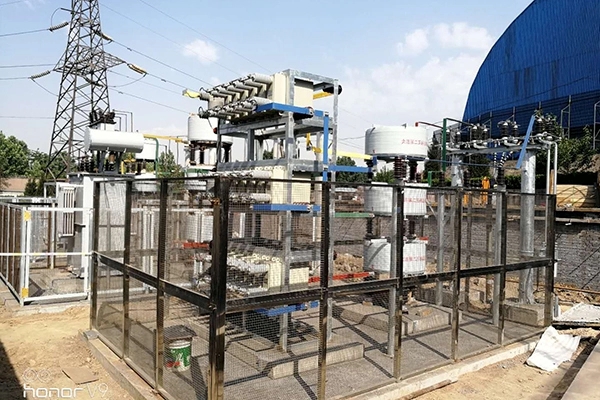
Series reactor integration is very helpful for renewable energy collection sites. When solar inverters send harmonic currents through medium-voltage lines, air-core reactors that are linked in series make LC filters that are tuned to certain harmonic orders. The CKGKL series controls inrush currents when capacitors are switched on and off. Transient peaks drop from 200 times steady-state to 15 to 20 times, which is doable and keeps vacuum contactors from wearing out too quickly.
Industrial facilities facing power factor penalties add reactors to capacitor banks that aren't set properly. This keeps the systems from resonating with the resistance of the grid upstream. CNC machines and robotic assembly lines cause load changes very quickly. Reactors smooth out voltage changes, which lowers waveform distortion below the 5% THD limits required by IEEE 519.
Comparative Analysis: Air-Core Reactor vs. Iron-Core Reactor in Power System Applications
To choose the best reactor technology, you have to weigh the performance of the electricity, the safety of the environment, and the cost of the project over decades.
Performance Metrics Under Operational Stress
When you compare energy efficiency, you can see big differences. Losses in air-core systems are less than 0.05% at full load. This is because the aluminum wires heat up resistively. Core losses from hysteresis and eddy currents are added to iron-core units, bringing the total losses up to 0.15 to 0.25%. Over the course of a 220kV substation's year-round activity, this difference adds up to 12–18 MWh more use, which is a lot when added up across multiple reactor banks.
The shape of a cage is affected by how it gets rid of heat. By mounting the reactor vertically, outdoor air-core reactors use natural convection to push warm air out without the need for extra equipment. Most iron-core transformers need cooling panels or air fans, which adds extra places for failure and extra electrical loads.
During fault clearing, transient reaction behavior is very important. When short-circuit currents surge through an air-core winding, inductance stays the same. This lets protection relays accurately figure out where the fault is. During faults, iron-core saturation makes inductance fall without warning, which can let higher-than-calculated fault currents flow and damage equipment ratings.
Procurement and Lifecycle Considerations
A 50 Mvar iron-core reactor may cost 60–70% less than a similar air core reactor type at the start of the capital costs process. Lifecycle study, on the other hand, turns this benefit around. Because of the need for magnetic space and structural support for outdoor post insulators, installing air-core designs is more difficult and adds 15 to 20 percent to the cost of civil works. For dielectric fluid storage, iron-core units need oil holding pits, systems that find leaks, and environmental permits.
Supplier environments are different in each area. Through ABB, Siemens, and Schneider Electric, the European and North American markets have large support networks for both technologies. In projects in the Asia-Pacific and Middle East, companies like Xi'an Xikai offer localized technical help by changing designs to fit the pollution levels and seismic zones of each site. Lead times for delivery range from 12 weeks for normal ratings to 24 weeks for custom high-voltage setups that need to be tested at the plant.
After-sales service models affect the total cost of ownership. Most air-core warranties cover the integrity of the insulation for 5 to 10 years. Iron-core agreements, on the other hand, require buyers to pay for annual oil sampling and DGA testing. Epoxy-encapsulated windings don't need to be maintained, so technicians don't have to travel long distances to reach remote wind farm substations.
How to Choose the Best Reactor for Your Power System: Criteria and Market Solutions
Systematic evaluation frameworks help procurement teams match technical needs with seller abilities, so there aren't any costly mismatches between what the reactor is supposed to do and how it actually works.
Project-Specific Assessment Criteria
Material choices are based on the environment. Coastal substations are exposed to IEC 60815 pollution class IV, which means that salt fog speeds up the tracking across insulator surfaces. This is stopped by air-core reactor designs that use hydrophobic silicone coatings with leakage distances greater than 40 mm/kV, which have been proven through accelerated aging protocols. In desert sites, UV stability is very important. Cycloaliphatic epoxy formulations don't chalk under strong sun radiation and last for 30 years.
Acoustic rules limit the technologies that can be used near cities. Local laws say that noise levels at the edges of properties can't be higher than 50 decibels at night, so iron-core installations aren't allowed unless expensive casings are used to block out noise. Air-core options naturally meet these limits, which makes the approval process easier.
Budget constraints go beyond the purchase price and include costs for setting up the site and running the business. A detailed cost model for a 330kV project showed that air-core reactors initially cost 140% more than iron-core equivalents, but that not having to build infrastructure for oil handling and do maintenance every two years cut the total cost by 22% over 20 years.
Navigating Global Supplier Landscapes
Tier-1 makers keep a wide range of products in stock. The ARB series runs from 12 to 800 kV and comes in both outdoor and indoor versions. It comes with modeling tools that can guess how the magnetic field will be distributed. Siemens focuses on modular designs that let them add capacity in stages. When GE Grid Solutions combines reactors with SVC systems, they can do harmonic filtering all by themselves.
Regional experts give you an edge over other sellers. Xi'an Xikai's plateau-rated equipment works regularly at 4,000 meters, meeting the needs of Tibetan and Andean projects that standard designs miss. Their dry-type air-core reactor range includes custom casings that meet IP54/IP65 ingress protection and can be delivered within 8 weeks, which is very important for EPC plans that need to be finished quickly.
Certification verification guards against low-quality goods. Suppliers you can trust give you IEC 60076-6 test reports that show the lightning impulse withstand (BIL), temperature rise, and partial discharge levels below 10 pC. Third-party factory audits and ISO 9001 quality systems make sure that the same level of quality is used in all production batches.
Technical support depth is what sets skilled partners apart from order-takers. Good providers help with finite element analysis of magnetic clearances, give AutoCAD base plans, and send field experts to help with commissioning. International consortiums can talk to each other more easily thanks to service teams that can help in Mandarin, English, and Arabic.
Installation, Maintenance, and After-Sales Support for Air-Core Reactors
It takes a lot of careful planning during the logistics, construction, and long-term service phases to turn reactor specifications into operational assets.
Safe and Efficient Installation Practices
Site planning starts months before the equipment comes. According to IEC 60076-6 Annex B, civil builders pour reinforced concrete foundations that can handle wind loads and seismic accelerations. For foundation bolts to fit with reactor support structures, they must line up within ±2 mm of each other. In magnetic clearance zones, you need to do a scan to make sure that there are no rebar cages or underground lines within the exclusion limits.
Professional heavy-haul trucks and mobile cranes are used for transporting large outdoor units. A normal 100 Mvar air core reactor weighs between 8 and 12 tons, and it needs approved rigging that can hold 150% of the reactor's weight. Controlling the humidity while storing keeps water from getting into the epoxy insulation—desiccant breathers keep the relative humidity below 50% inside protective wrappings.
Electrical connections demand precision torqueing of aluminum busbar joints to manufacturer specifications, typically 250–350 Nm. Connections that are undertorqued create high-resistance areas, while connections that are overtorqued crack metal extrusions. Using infrared thermography to check the initial energization shows that the current flows evenly along parallel conductor lines.
Maximizing Equipment Uptime Through Preventive Maintenance
As part of the annual inspection process, tracking marks on insulator sheds that show partial discharge activity must be seen. If a coating is hydrophobic, water droplets should stick to it. If this property is lost, it means the surface is dirty and needs to be cleaned with chemicals. Pollutants from factories are removed by high-pressure washing before they can form electrical paths.
Connection integrity checks mean retorquing all connected joints and measuring the contact resistance. Values higher than 10 microohms show damage that needs to be fixed. Portable partial discharge detectors look at windings for corona activity. Readings that stay above 50 pC require a more in-depth study using ultrasound localization.
Predictive maintenance leverages thermographic scans during peak load periods. When temperatures rise above 15°C, they need to be looked at right away. Expert workers keep track of changes in temperature over many years, which helps them spot insulation that is slowly wearing out before it fails completely.
Comprehensive After-Sales Service Models
The way warranties are set up varies by strategy. Parts and work coverage is standard for two to three years, and for insulation systems, it can be extended to ten years. Progressive providers like Xi'an Xikai guaranty performance: if inductance drifts more than ±5% during warranty periods, they will repair units for free, covering all costs, including the cost of reinstallation.
Spare parts availability prevents extended downtimes. Important parts like post insulators, terminal connectors, and weathersheds are kept in stock at regional warehouses and can be delivered within 48 hours. Manufacturers who keep their ISO 14001 environmental certifications make it easier to properly get rid of old units by collecting the metal windings for recycling.
Technical help hotlines that are open 24 hours a day, seven days a week offer troubleshooting advice in an emergency. When a utility company in the Middle East noticed strange shaking in a shunt reactor, Xi'an Xikai's remote diagnostics team looked at the vibration spectra within hours and found loose foundation bolts that were causing the shaking. This prevented damage to the windings. This responsiveness builds trust, which is necessary for repeat business on expansion projects with multiple stages.

Conclusion
When choosing between an air core reactor and an iron-core reactor, you have to weigh the benefits of uniformity, ease of upkeep, and limited space against the costs and difficulties of installation. For EPC companies in charge of 110-330kV substations, air-core technology offers the best thermal stability and harmonic mitigation precision. These are directly related to the dynamic stability needs of modern grids that use variable renewable power. Environmental stressors, acoustic limits, and lifetime service models are carefully looked at to make sure that the reactors chosen are in line with both short-term project costs and long-term operating realities. Getting involved with makers who offer full engineering support, certified testing paperwork, and responsive after-sales networks changes the relationship between buyers and sellers from a transactional one to a strategic one.
FAQ
1.How do noise levels compare between air-core and iron-core reactors in outdoor substations?
Air-core reactor designs make less than 45 dB of noise through rigid winding compression systems that keep vibrations to a minimum, which meets strict noise codes for cities. Magnetostriction in layered cores makes iron-core units make 70–85 dB, and they usually need acoustic casings that cost an extra $15,000–$30,000 per unit.
2.Can existing iron-core reactor foundations be retrofitted for air-core installations?
In most cases, magnetic clearance standards mean that new underpinnings are needed. Air-core units need 1.5–3 meter buffer zones away from metal buildings, while iron-core versions have flux inside them. Structural engineers need to make sure that the concrete that is already there can support post insulator assemblies that are taller and can handle different wind loading profiles.
3.What factors influence procurement lead times for custom air core reactors?
It takes 12 to 16 weeks to ship standard voltage rates. Because of things like different BIL levels for high-altitude installations or special enclosures for corrosive environments, delivery times are pushed back to 20 to 24 weeks so that type testing and plant acceptance processes can be completed according to IEC standards.
Partner With a Trusted Air Core Reactor Manufacturer for Your Next Project
Xi'an Xikai is ready to help you with your high-voltage substation needs with tried-and-true dry-type air core reactor options made to work in 110-330kV transmission networks, which are very tough environments. For State Grid, green integration, and industrial power quality projects that need to follow grid code, our CKGKL line provides the necessary harmonic reduction, inrush current limiting, and thermal stability. We offer customized voltage ratings, fast 8-week shipping for pressing EPC plans, and 24/7 multilingual technical support. Our products are backed by ISO 9001/14001 standards and have been used in over 40 countries and shown to work well. You can email our tech team at serina@xaxd-electric.com, amber@xaxd-electric.com, or luna@xaxd-electric.com to talk about the details of your project, ask for type test documentation, and get fair quotes.

References
1. Smith, J.R. & Chen, L. (2021). Comparative Analysis of Reactor Technologies in High-Voltage Transmission Systems. IEEE Transactions on Power Delivery, Volume 36, Issue 4.
2. International Electrotechnical Commission. (2019). IEC 60076-6: Power Transformers – Part 6: Reactors. Geneva: IEC Publications.
3. Rodriguez, M. & Patel, K. (2020). Harmonic Mitigation Strategies for Renewable Energy Integration. Journal of Electrical Engineering and Technology, Volume 15, Issue 2.
4. Anderson, T.W. (2022). Lifecycle Cost Assessment of Substation Reactive Compensation Equipment. Electric Power Systems Research, Volume 208.
5. Zhang, H., Kumar, S., & O'Brien, P. (2023). Seismic and Environmental Performance of Outdoor Air-Core Reactors. International Journal of Electrical Power & Energy Systems, Volume 145.
6. European Copper Institute. (2020). Technical Guidelines for Reactor Selection in EHV Substations. Brussels: ECI Technical Report Series.