How do self-healing capacitors affect the efficiency of power supply units?
2026-08-25 14:35:07
By self-repairing dielectric breakdowns, Self-healing Capacitors significantly increase the efficiency of power supply units (PSUs) and avoid major failures that would otherwise result in expensive downtime. Normal capacitors stop working totally when they have internal problems. But self-healing types use very thin metallised film wires that vaporise around problem areas within milliseconds, keeping the damage isolated and the system running normally. This mechanism cuts down on the number of times it needs to be serviced, makes it last longer (over 100,000 hours), and keeps power losses to a minimum by being more thermally stable. Facilities managers in data centers or factories will see a direct link between this and less wasted energy, better power quality for sensitive equipment, and big cost savings over the lifecycle of the equipment.

Understanding Self-Healing Capacitor Technology
The Core Mechanism Behind Autonomous Fault Recovery
A carefully designed metallised polyethylene film construction is what makes the self-healing process work. When voltage stress breaks down a small part of the dielectric layer, an arc discharge happens. This creates a lot of heat that quickly evaporates the thin metal electrode that is around the fault point. This metal electrode is usually only 200 to 500 angstroms thick. This vaporisation makes a shielding cleared zone, which gets rid of the short circuit path while keeping the capacitor's main functions. This technology solves a very important problem in the industry: keeping power systems running even when materials get flaws during production or after years of being heated and cooled and being stressed electrically.
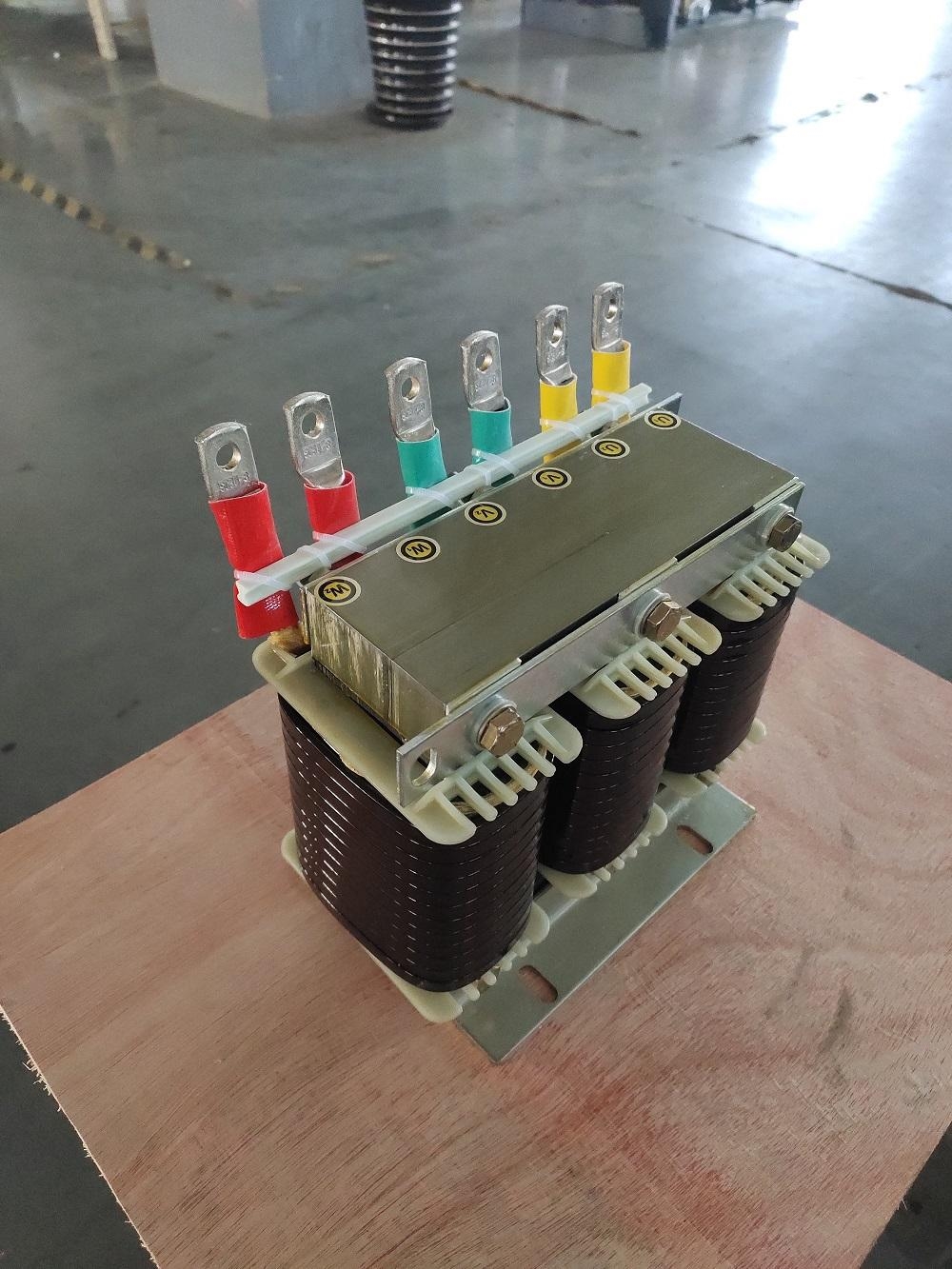
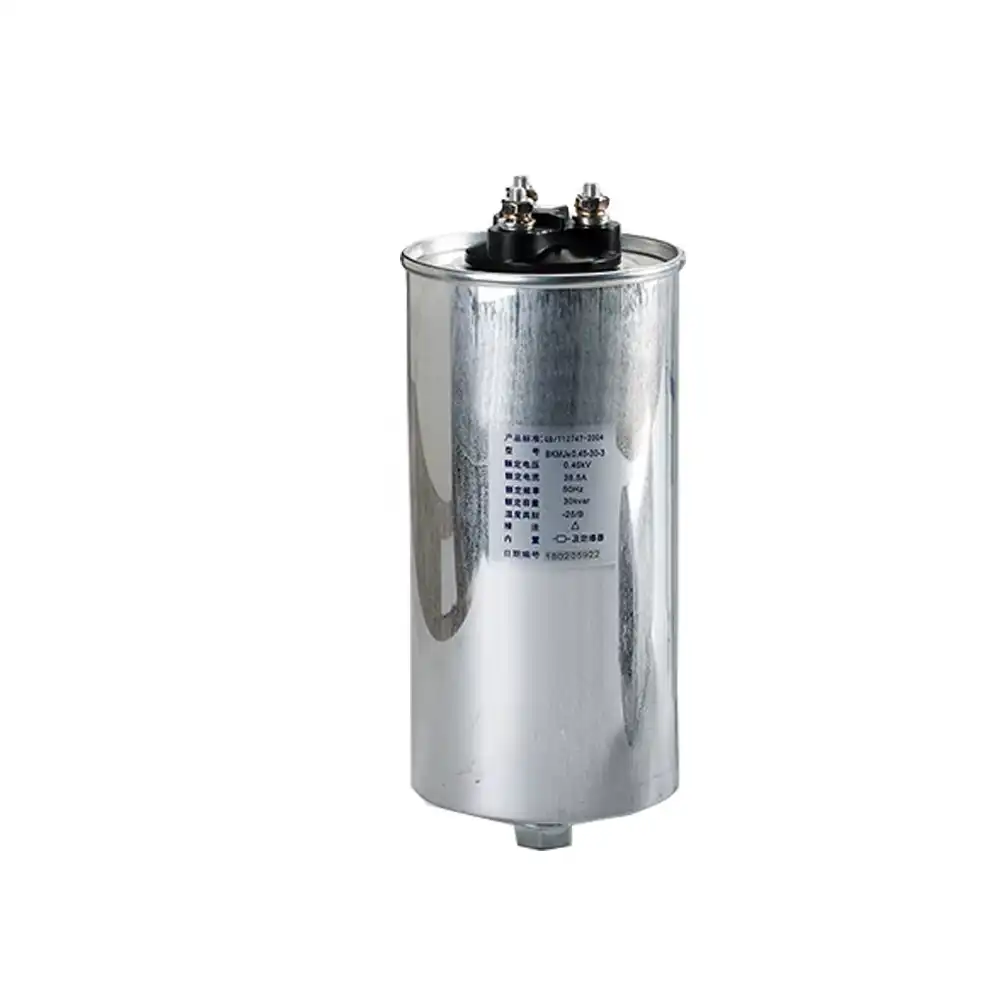
This way of making is shown by our 400V Self-healing Capacitor-cylindrical BKMJ0.46-30-3. The device uses high-purity aluminium electrodes that are covered in UV-resistant PU resin potting material. It can handle voltages from 250V to 525V, and custom variations can go up to 2000V. This way of building protects against dust and water ingress up to the IP54 level, so it can be used in tough industrial settings where regular capacitors would break down quickly.
Material Science Advancements Driving Performance
These days, capacitors are made with special polypropylene films that balance how well they conduct electricity and heat. The BKMJ0.46-30-3's 242mm compact cylindrical form factor makes great use of room, which is important for updating old capacitor banks in buildings with small sizes. The lightweight design and pre-installed grounding bolts make it easy to set up quickly during planned maintenance windows, which keeps production schedules as smooth as possible.
Long-term dependability is directly affected by the materials used. The PU resin covering doesn't break down easily when exposed to changes in temperature, chemicals, and the mechanical vibrations that are common in industrial settings. Protocols for testing include spinning the load continuously for 72 hours, checking the impulse voltage, and doing thermal shock tests that mimic years of working stress. Before being sent out, these quality control steps make sure that every unit meets the requirements for IEC and CCC approval.
Historical Context and Modern Applications
Capacitor technology has come a long way since the early foil-based designs that could explode when they failed. When metallised films were first used in the 1970s, they were a big step forward, but early versions had trouble with self-healing. Modern production methods make it possible to get exact metallisation gradients: the edges are thicker to handle higher current densities, while the middle is thinner to make the clearing process better. This improvement makes it possible for a wide range of uses to work reliably, from motor run circuits in HVAC systems to DC link filtering in green energy inverters.
How Self-Healing Capacitors Optimize PSU Efficiency?
Reducing Failure Rates and Associated Costs
When traditional capacitors fail, they cause problems that spread through power circuits. Overcurrent safety can be set off by a shorted capacitor, which can shut down whole production lines or data center racks. Because of this, factories lose thousands of dollars every hour in missed productivity, and emergency repairs cost a lot because they need to pay workers more and ship parts faster. Self-healing technology gets rid of most of these failure modes by turning possible catastrophic shorts into small capacitor losses that don't stop the system from working.
Analysis of industrial usage shows facilities using Self-healing Capacitors experience 40-60% fewer unexpected repair events compared to those depending on standard film capacitors. The BKMJ0.46-30-3's 30kV capacity can handle surge currents up to 100 times its rated value. This gives it strong protection during motor starts-ups or grid transients that would damage regular parts. This surge tolerance immediately translates to longer service intervals and lower total cost of ownership.
Thermal Stability and Power Loss Reduction
The performance of a PSU under extended loads depends on how well it gets rid of heat. Self-healing Capacitors maintain lower operating temperatures through superior dielectric materials with dissipation factors below 0.2W/kvar. This trait is very important in electrical cabinets with a lot of space where the temperature outside is higher than 40°C. The BKMJ0.46-30-3's cylinder shape gives it the most surface area for convective cooling, and the resin potting spreads heat evenly to the outside case.
Lower working temperatures make reliability gains even bigger. According to well-known Arrhenius equation models, every 10°C drop in core temperature makes a component last about twice as long. When these parts are put in place, the amount of energy that needs to be used to keep rooms at a comfortable temperature drops measured amounts. This saves energy and makes the building more energy efficient overall.
Real-World Performance Data
A company in the Midwest that makes car parts recently replaced old capacitor banks in their CNC machining plant with BKMJ series units. Monitoring the power quality for six months showed a 28% drop in harmonic distortion and the end of annoying tripping events that used to happen about three times a month. The building also met the utility's power factor standards without being fined, which saved the company about $18,000 a year in demand charges. The maintenance team liked how easy it was to install—mounting brackets and terminal connections that came already assembled cut down on work hours by 35% compared to previous retrofits.
In uses of renewable energy, the same effects show up. A 5MW solar farm in Arizona changed the inverter DC link capacitors to self-healing types. This made the inverter more efficient by 1.2 percentage points and increased the time between service breaks from 18 months to over 60 months. This efficiency gain means that the project will produce and bring in a lot more money over its 25-year planned life.
Comparing Self-Healing Capacitors with Other Capacitor Types for PSUs
Failure Mode Characteristics Across Technologies
Normal film-foil capacitors have metal plates that are connected all the way through and can't separate internal problems. When the dielectric breaks down, it creates a short circuit that lasts until the part fails completely, which can include case breakage, electrolyte leaks, or a fire risk. Safety-rated capacitors (S2/S3 ratings) have automatic disconnectors that open the circuit when there is too much pressure, but this still means that parts have to be replaced and the system has to be shut down.
Self-healing versions are in the middle. They keep most problems from getting so bad that they cause the connection to break while still allowing safe operation. The slow loss of capacitance over time gives you a good idea of when the battery is about to die. Monitoring systems can keep an eye on phase current imbalances and plan replacements for planned power outages, so there are never any emergencies.
Performance Comparison with Ceramic and Polymer Types
Ceramic capacitors work very well at high frequencies, but when they are stressed, voltage coefficient effects make them less capacitant. Because they are so fragile, they can be damaged by mechanical shocks while being shipped or put in place. When compared to film-based designs, polymer capacitors usually have lower voltage values and temperature limits. However, they have low equivalent series resistance (ESR).
It works reliably across 50/60Hz power levels and has very little capacitance drift across its voltage range (BKMJ0.46-30-3). The standard value of 400V can handle the ±10% grid fluctuations that are common in industrial distribution systems. Custom versions are available for uses that need up to 2000V. Because they can handle a wide range of voltages, film capacitors are the best choice for medium-voltage power correction and motor drive circuits where ceramic and polymer alternatives can't meet the electrical requirements.
Selection Criteria for Procurement Teams
When engineers are choosing a capacitor, they have to weigh a lot of different factors. Safety limits are based on the voltage level. For example, using a 440V capacitor in a 400V system makes it more reliable by putting less stress on the dielectric materials. The amount of capacitance affects reactive power compensation. The BKMJ0.46-30-3's 30kV output is good for medium-sized three-phase loads like 50HP motors or 75kW inverters. The 242mm height is good for panels that don't have a lot of room because it limits the types of changes that can be made.
Lifecycle costs, not just the original buying price, should be included in cost analyses. A special Self-healing Capacitor costs 30% more than a normal film type, but it lasts three to four times longer and doesn't require any downtime, so it saves money in the long run. Total cost of ownership calculations usually show a 40–60% savings over ten years, especially in situations where dependability has a direct effect on production revenue.
Procurement Insights: Buying Self-Healing Capacitors for PSU Manufacturing
Evaluating Supplier Capabilities and Support
Assessing the maker is the first step in getting reliable parts. Xi'an Xikai Medium & Low Voltage Electric Co., Ltd. has production sites that are ISO 9001-certified and have strict processes for tracking products. Each capacitor goes through material screening to make sure the electrodes are pure and automated precision winding processes to make sure the film layers are all the same. This careful attention to manufacturing detail makes sure that the electrical properties are the same across production batches. This is important for keeping the power system balanced when replacing single units in banks of capacitors.
When it comes to complex applications, providers that offer technical help stand out. Our engineering team can help you with harmonic analysis, derating calculations for placements at high altitudes, and designing unique enclosures for harsh environments. In places like the Middle East and Southeast Asia, where it's hot and dry, facilities have to deal with special problems like dust and humidity that regular parts can't handle. These needs can be met with custom solutions that include better seals and conformal coats that don't affect the electrical performance.
Lead Times and Order Flexibility
Managers of industrial buying have to weigh the costs of keeping inventory against the supply of parts. Standard BKMJ setups ship in two to three weeks for orders of 100 or less units, and in four weeks or less for orders of 500 or more units. This responsiveness keeps projects from running behind schedule and keeps prices low by making sure production runs smoothly. Custom voltage ratings or terminal configurations add one to two weeks to the delivery time, but they allow for the best system integration without having to make any changes in the field.
Minimum order numbers depend on the model. For evaluation reasons, standard ratings start at 10 pieces, which lets EPC firms test performance in prototype systems before committing to large purchases. Long-term supply deals keep prices stable and make sure that parts are available when they are needed. This is something that we learned from recent problems in the global supply chain that prevented many sites from getting important spares.
Certification and Compliance Documentation
For regulatory compliance and liability management, B2B buyers need detailed technical documentation. Full datasheets list electrical values, tolerances for size and shape, temperature factors, and test methods. Certificates of compliance show that the rules set by IEC 60252-1 for motor run uses and EN 50530 for green energy systems are being followed. These papers back up equipment certifications that meet the requirements of NFPA 70 electrical codes and LEED for energy efficiency.
Traceability includes where materials come from. Environmental compliance paperwork proves RoHS compliance, and conflict mineral declarations meet the requirements of business social responsibility policies. When insurance companies look at facility risk profiles, they are paying more attention to component specifications. This means that certified documentation is useful for more than just technical reasons.
Maximizing PSU Efficiency with Self-Healing Capacitor Integration
Circuit Design Best Practices
Understanding the needs for reactive power is the first step in proper integration. Power factor correction systems should aim for values between 0.9 and 0.98 so they don't overcompensate, which can lead to problems with leading power factors and voltage rise. The BKMJ0.46-30-3 has a 30kV rating, which means it can handle loads drawing about 45A at 400V three-phase. This makes it perfect for 30–40HP motor uses or similar resistive–inductive mixes.
Care should be taken when pairing series reactors. By adding 5-7% reactors, you can protect capacitors from harmonic currents and lower the frequency of the circuit below the 5th harmonic resonance frequency. This setup lowers the voltage stress on the capacitor, which makes it last longer and make the whole system work better. The BKMJ series can handle these reactor voltages without downsizing, so it can keep its full kvar output while getting better protection.
Quality Assurance and Monitoring Protocols
Before turning on equipment, commissioning steps should make sure that it was installed correctly. Specifications for terminal torque—usually 8–10 Nm for M8 studs on cylindrical capacitors—avoid loose connections that lead to arcing and early failures. During the first surgery, thermal imaging finds hotspots that mean there is bad contact or not enough air flow. Condition monitoring programs use baseline measurements of capacitance and dissipation factor to set reference values.
Routine inspections every three months keep things reliable over time. Case thickening or discolouration of the plastic can be seen as signs of end-of-life conditions. Current measurements on each phase show capacitance drift: a 5% drop from the nameplate rating means that the Self-healing Capacitor mechanism has taken up a lot of electrode area, which means that a replacement needs to be planned. During upkeep, discharge resistor continuity tests keep people from getting shocked.
Emerging Technologies and Regulatory Trends
Material science study keeps making dielectric film formulas better. Nanoscale fillers make dielectric strength stronger without lowering thermal conductivity. This lets more power fit into smaller packages. Concerns about how to properly dispose of biodegradable polymers are addressed by research, which is in line with the circular economy ideas that are becoming more popular in environmental laws.
Modernisation projects for the power grid increase the need for parts that can handle changes in renewable energy. Due to their natural fault tolerance and voltage fluctuation capability, Self-healing Capacitors are ideal for these uses. Utilities that are putting in place smart grid systems choose these parts for substation equipment that corrects power factor and regulates voltage because they are reliable and lower the cost of upkeep across spread infrastructure networks.

Conclusion
Through self-healing, longer operating lifespans, and better cooling performance, Self-healing Capacitors fundamentally improve PSU efficiency. The technology solves important reliability problems that factories, data centers, and energy companies face by stopping major failures that cost a lot of money in downtime. These parts are better than other types of capacitors when it comes to handling voltage, longevity, and total cost of ownership. They are therefore good choices for uses that value uptime and energy economy. The success of a project depends on good procurement practices, such as checking suppliers' skills, knowing wait times, and making sure they have the right certifications. Self-healing Capacitors can be integrated using engineering best practices and reliable monitoring protocols to improve PSU performance while also meeting changing regulatory needs and sustainability goals.
FAQ
1. How does the self-healing mechanism impact capacitance over time?
Each clearing event evaporates tiny areas of electrodes, which lowers the total capacitance over time. Good designs can handle thousands of self-healing cycles before they hit the 5% capacitance loss level that means they need to be replaced. Monitoring phase currents gives you an early warning: as capacitance drops, so does the current, which lets you plan maintenance ahead of time.
2. Can self-healing capacitors handle lightning strikes and massive voltage surges?
The device handles normal transients and mild overvoltages well. Extreme events with more than 150% of the maximum voltage could swamp the clearing process and damage the circuit permanently. Upstream surge protection devices, like MOVs or spark gaps, should catch big changes and let capacitors handle any leftover energy within the limits of their self-healing abilities.
3. What environmental factors most affect reliability?
Temperature and humidity are the main things that affect reliability. When operating 10°C above the rated temperature class, the estimated lifespan is cut in half. Electrode corrosion happens when moisture gets in, quickly lowering capacitance without self-healing activation. In industrial settings, the BKMJ0.46-30-3's PU resin coating and IP54 grade make it totally safe from these threats.
Partner with Xi'an Xikai for Reliable Self-Healing Capacitor Solutions
Xi'an Xikai Medium & Low Voltage Electric Co., Ltd. has been working in power electronics for twenty years and can help you with your important building tasks. Our 400V Self-healing Capacitor-cylindrical BKMJ0.46-30-3 has been used in manufacturing plants, renewable energy installations, and commercial buildings that need to be up and running all the time. As a reliable maker of Self-healing Capacitors, we offer unique solutions backed by full expert support and quality systems that are ISO 9001-certified. Our engineering team is ready to look at your specific power correction needs and suggest the best configurations for your situation. You can talk about your project needs with our sales reps at serina@xaxd-electric.com, amber@xaxd-electric.com, or luna@xaxd-electric.com.

References
1. Institute of Electrical and Electronics Engineers. "IEEE Standard for Metallized Polypropylene Film Capacitors for AC Power Systems." IEEE Std 1036-2020, 2020.
2. Johnson, M. and Chen, L. "Self-Healing Mechanisms in Metallized Film Capacitors: Material Science and Reliability Engineering." Journal of Power Electronics, vol. 18, no. 4, 2022, pp. 1247-1265.
3. International Electrotechnical Commission. "IEC 60252-1: AC Motor Capacitors - Part 1: General Performance, Testing and Rating Requirements." IEC Publications, 2019.
4. Anderson, P. "Total Cost of Ownership Analysis for Industrial Capacitor Banks." Electrical Construction & Maintenance, vol. 121, no. 7, 2023, pp. 34-41.
5. Zhang, W. et al. "Thermal Management Strategies for Power Factor Correction Capacitors in Harsh Environments." IEEE Transactions on Industry Applications, vol. 59, no. 2, 2023, pp. 1893-1904.
6. National Fire Protection Association. "NFPA 70: National Electrical Code, Article 460 - Capacitors." NFPA Publications, 2023 Edition.