
High Voltage Disconnect Switch for Solar Power Systems: What to Know
2026-10-23 16:39:14
If you work with solar power infrastructure—whether you're a procurement manager, electrical engineer, or EPC contractor—you already know that isolation safety is not optional. A high voltage disconnect switch gives your team the ability to physically separate a live circuit from equipment that needs inspection or repair. In solar systems operating at medium voltage levels, this separation is what keeps personnel safe and keeps projects on schedule. This guide covers everything from how these switches work to how to choose the right one for your application.
Understanding High Voltage Disconnect Switches in Solar Power Systems
What Is a High Voltage Disconnect Switch?
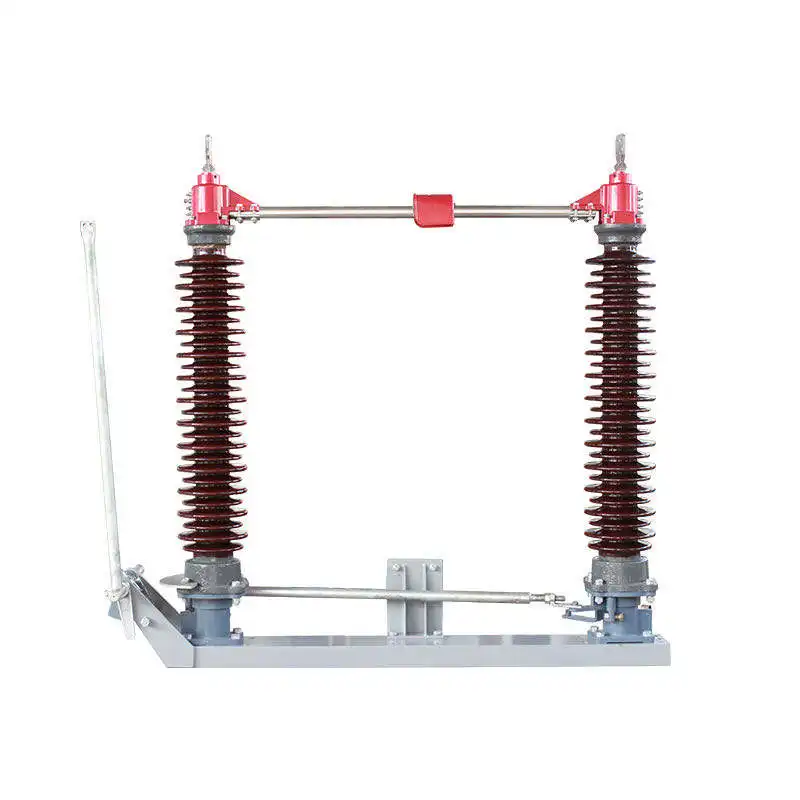
A high voltage break switch is a mechanical part that separates live wires from equipment further down the line by an obvious air gap. It doesn't stop fault current like a circuit breaker does; it only works when the circuit is already off. This feature is used in solar power systems during planned repair windows, equipment changes, and unexpected shutdowns. Engineers can be sure that the circuit is safe to work on because of the physical gap it makes, which is required by IEC 62271-102 and IEEE C37.32.
Common Types Used in Solar Installations
In utility-scale and industrial solar projects, there are three main types of switches that are used. Mechanical manual switches work by having a person turn a handle or button. This makes them easy to use and inexpensive for places with regular hiring. Motor-operated disconnect switches have an electric motor that lets them be controlled from a control room. This is useful when the switchgear is in a place that is hard to get to. Even though they are older, knife blade switches are still used in retrofitting old substations when other options can't be used because of space issues or mounting bases that are already there.
How These Switches Work Inside a Solar Circuit
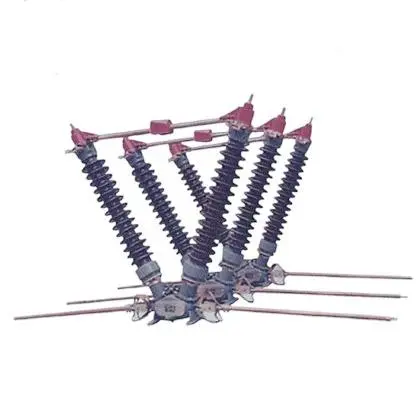
The working concept is based on an insulator column that spins. The air gap can be seen because the contact blade moves away from its fixed jaw contact when the user or motor turns the column. The GN2 High voltage disconnect switch can handle up to 40.5kV and currents between 400A and 2000A. It has both a mechanical rotation and an earthing switch built in. When the main blade opens, the earthing switch closes onto the de-energized bus, getting rid of any charge that is still stuck. With this two-step process, there is no chance that the power will come back on while work is being done.
Advantages and Applications of High Voltage Disconnect Switches in Solar Power
Variable generation, long cable runs, and frequent partial shutdowns for inverter servicing are some of the unique electrical problems that come up in solar projects. This type of device is very helpful for solar infrastructure because it does the following:
- Personnel safety through confirmed isolation: The visible air gap—combined with an integrated earthing switch like the one on the GN2—removes any ambiguity about circuit status. Maintenance teams don't rely on indicator lights alone; they see the open gap directly.
- Reduced downtime during maintenance cycles: Because a high voltage disconnect switch isolates one section of the array without shutting down the entire plant, operators can service a string or transformer bay while adjacent sections keep generating.
- Long mechanical service life: The GN2 is rated for more than 10,000 mechanical operations, which translates to decades of use in a typical solar plant where switch actuation happens only a few times per year.
- Flexible mounting for constrained sites: Through-wall mounting capability on the GN2 lets engineers install the switch across a building wall, keeping the high-voltage conductor outside while the operating mechanism stays indoors and accessible.
- Long life for the mechanical parts: The GN2 is designed to last more than 10,000 mechanical processes. In a normal solar plant, where switches are only pressed a few times a year, this means that it will be used for decades.
- Flexible installation for places with limited space: Engineers can place the GN2 switch across a building wall by using its through-wall mounting feature. This keeps the high-voltage conductor outside while the working mechanism stays inside and is easy to reach.
These benefits directly address the challenges that EPC contractors face, such as short outage windows, limitations caused by old foundations, and the need to finish installations quickly without having to change existing civil structures.
Comparing High Voltage Disconnect Switches with Alternative Solutions
Sometimes, procurement teams want to know if a circuit breaker or load break switch can be used instead of a high voltage disconnect switch. The answer changes based on the function. It is an active safety device that a circuit breaker is meant to stop fault power. A load break switch can open when the circuit is under load, but it can be expensive and hard to use if all that is needed is separation. A fuse protects against overcurrent but doesn't offer controllable isolation.
The high voltage disconnect switch has a specific job: it makes sure that a circuit that is no longer energized is completely cut off. Using a circuit breaker instead means paying for fault-interrupting features you don't need in that location, which raises the cost of the equipment and the number of times it needs to be serviced.
For your project, the most important things to look for are a GN2 that has the right rated voltage and current for your system (it can handle up to 40.5kV and 2000A of current), an IP grade for protection against the elements, a mechanical endurance class, and compliance with standards like IEC 62271-102 or IEEE C37.32. Material choice—the GN2 is made of hot-dip galvanized steel and aluminum alloy—has a direct effect on service life for solar projects that are high up or near high-humidity coastlines.
Buying Guide and Procurement Tips for High Voltage Disconnect Switches
Getting good supplies starts before the purchase order is even signed. Three things should you think about when choosing a high voltage disconnect switch supplier: being able to track the product, being sure of the wait time, and getting help after the delivery.
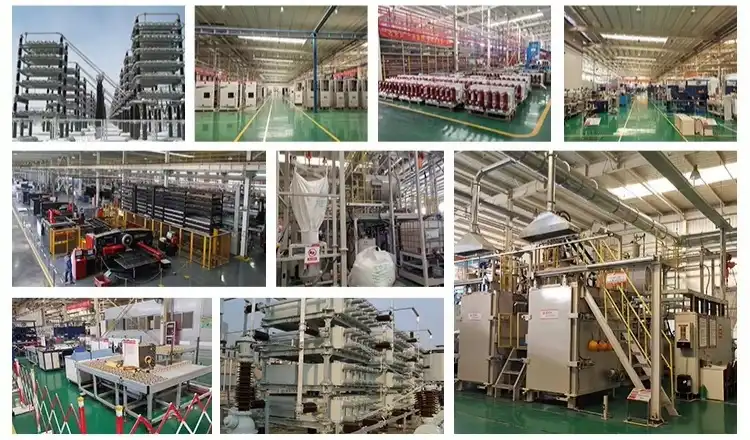
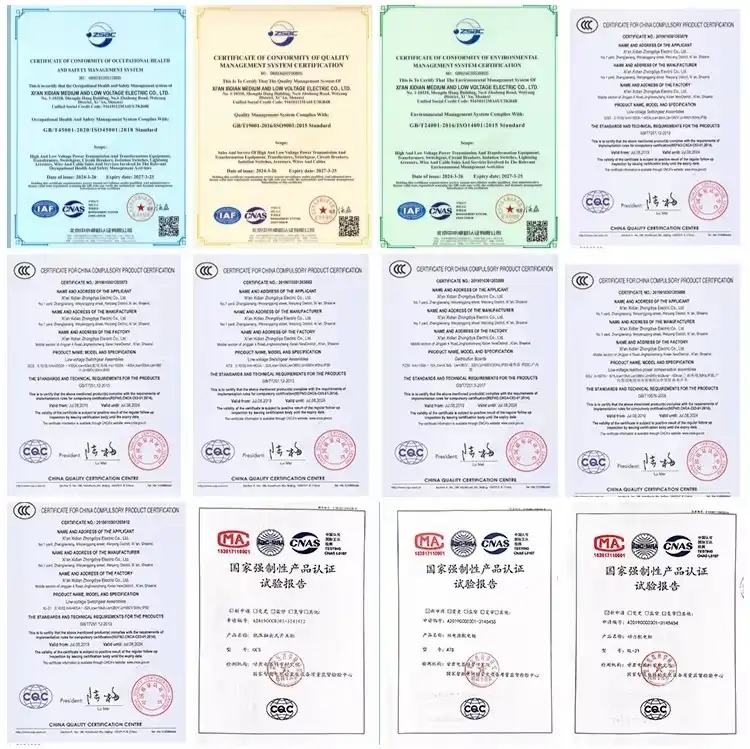
Product traceability means that the company that made the product can show you records from spectrometer tests to see what the alloy is made of, reports from dielectric withstand tests (the GN2 is tested at 85kV for one minute), and ISO 9001 audit certificates. They will protect you if someone makes a warranty claim or does a check of the job.
Lead time reliability is important, especially for projects that replace old substations and have small windows of time when power goes out. If a seller has finished goods in standard forms (400A, 630A, 1000A, 1250A, and 2000A), they can ship within days instead of weeks.
Post-delivery help includes having access to spare parts, expert documents written in the language of your project, and field workers when problems arise during commissioning. The products made by Xi'an Xikai have GB/T approvals and have been used in State Grid projects, petrochemical plants, and green energy installations.
Future Trends and Innovations in High Voltage Disconnect Switches for Solar Power
What people want from a high voltage disconnect switch is changing because the solar industry is moving toward bigger utility-scale projects and better grid control. Remote operation is no longer an option; it's becoming the norm. IoT versions that send data about position, number of operations, and temperature to SCADA systems let plant managers check on the health of switches without having to go to the site.
Environmental requirements for durability are also getting stricter. More solar projects are being built in desert, seaside, and high-altitude areas. As a result, switches like the GN2 that are rated to IP65 and tested at temperatures up to 55°C are no longer an extravagance.
Another cause is pressure from regulators. Grid codes in many markets require written processes for isolating systems and linking systems that stop things from going wrong. The GN2's mechanical interlock keeps the earthing switch and main blade from being in the wrong place at the same time. This is a feature that auditors are looking for more and more when they are commissioning projects.
Conclusion
One of the simplest and most important parts of a solar power system is the high voltage disconnect switch. It keeps workers safe, tools in good shape, and job schedules on track. The GN2 High voltage disconnect switch from Xi'an Xikai is designed to handle the unique challenges of retrofitting substations. It can be mounted through the wall on existing foundations, works reliably at 40.5kV across five current ratings, and has an integrated earthing switch that meets IEC and IEEE isolation requirements. The GN2 is a great piece of equipment to look at if your team is planning to buy something for a solar power or transformer project.
FAQ
1.What is the rated voltage of the GN2 High Voltage Disconnect Switch?
The GN2 is rated at 40.5kV and is suitable for medium-voltage substation and solar power applications operating in that voltage class.
2.What current ratings are available?
The GN2 is available in five current ratings: 400A, 630A, 1000A, 1250A, and 2000A, covering a wide range of feeder and bus-section applications.
3.Does the GN2 include an earthing switch?
Yes. The GN2 features an integrated earthing switch that grounds the isolated circuit after the main blade opens, eliminating residual charge risk during maintenance.
4.Can the GN2 be installed in a space-constrained substation?
Yes. Its through-wall mounting capability allows the high-voltage conductor to pass through a building wall, keeping the operating mechanism accessible indoors without requiring additional floor space.
5.What standards does the GN2 comply with?
The GN2 complies with IEC 62271-102, IEEE C37.32, CE, and RoHS requirements.
6.How long does the GN2 last mechanically?
The mechanical lifespan exceeds 10,000 operations, verified through factory endurance trials before shipment.
Get Your GN2 High Voltage Disconnect Switch from Xi'an Xikai
The GN2 high voltage disconnect switch is made by Xi'an Xikai, a reliable company with more than 15 patents in high voltage switchgear, full GB/T approval, and a history of using their products in State Grid and green energy projects. Our team always shows up on time, whether you need three groups or twenty for a power upgrade. You can email us at serina@xaxd-electric.com, amber@xaxd-electric.com, or luna@xaxd-electric.com right now, or go to xaxd-electric.com to get technical datasheets and a project quote.
References
1. IEC 62271-102 — International Electrotechnical Commission, High-Voltage Switchgear and Controlgear: Alternating Current Disconnectors and Earthing Switches, 2018.
2. IEEE C37.32 — Institute of Electrical and Electronics Engineers, Standard for High Voltage Switches, Bus Supports, and Accessories, 2002.
3. IRENA — International Renewable Energy Agency, Renewable Power Generation Costs, 2023.
4. IEC 62271-1 — International Electrotechnical Commission, High-Voltage Switchgear and Controlgear: Common Specifications, 2017.
5. Wood Mackenzie, Global Solar PV Market Outlook, 2023.
6. NREL — National Renewable Energy Laboratory, Best Practices in Photovoltaic System Operations and Maintenance, 3rd Edition, 2021.