
Armored Metal-Enclosed Switchgear: Fixed or Withdrawable?
2026-10-29 17:10:52
Armored metal-enclosed switchgear can be fixed or withdrawable. For most 40.5 kV substation and industrial distribution projects, I recommend withdrawable construction. A withdrawable breaker moves between service, test, and disconnected positions, so crews can test or replace it without opening the busbar compartment. Fixed construction costs less and takes less floor space, but it fits only feeders where planned outages are acceptable. The right answer depends on feeder criticality, downtime cost, maintenance skill, room size, and test evidence. This guide covers each factor so you can write a clear specification and compare supplier quotations on equal terms.
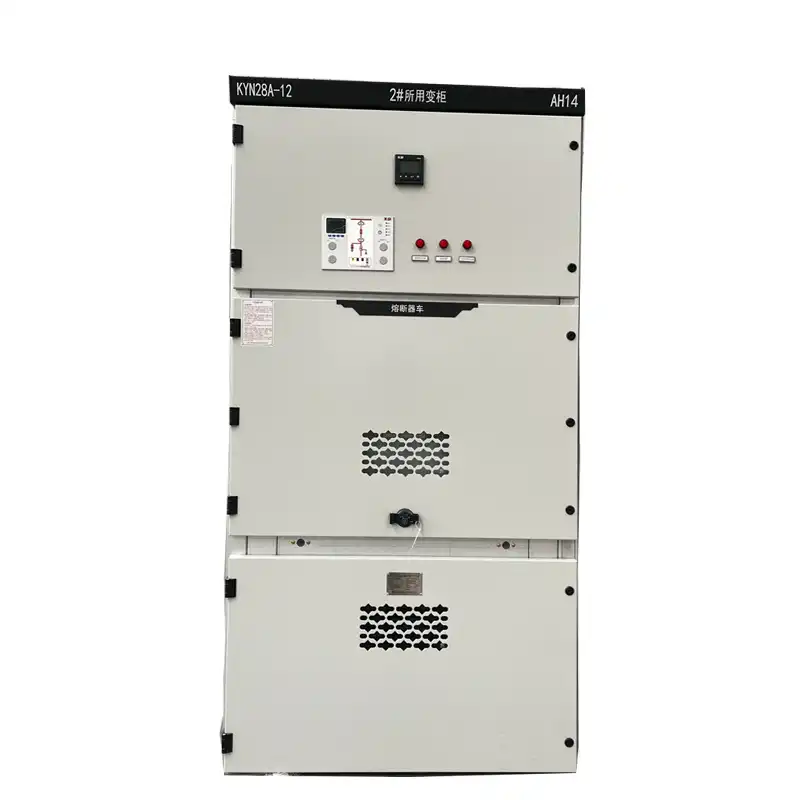
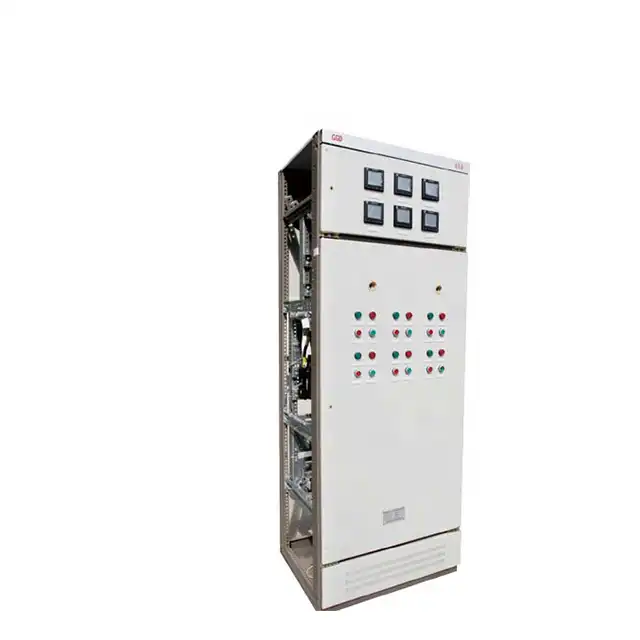
What Armored Metal-Enclosed Switchgear Is and How the Designs Differ
Compartments Inside Armored Metal-Enclosed Switchgear
Armored metal-enclosed switchgear is factory-assembled medium-voltage equipment. For the circuit breaker, cable connections, low-voltage control, and busbars, each cabinet has grounded metal walls that separate the space inside. It's harder to get to parts that are on because of these walls, and they help keep a fault in one place. Parts of a lineup that are often seen are incoming and outgoing feeds, bus couplers, earthing switches, interlocks, and arc voltage relief. Surge protectors and circuit breakers handle regular current and stop odd current. Most IEC rates are between 12 kV and 36 kV, and 40.5 kV units are used in power plants and substations that are bigger. The first thing I look at in every review is how the compartments are laid out. This shows how the design handles both changes and fixes.
Fixed vs Withdrawable Armored Switchgear: The Core Comparison
The way they work inside both kinds of armored metal sealed switchgear is the same. This one is only different in how the breaker is mounted. With fixed designs, the switching device stays in place all the time. This makes them cheaper, easier to use, and smaller. They work well with systems that are stable and have set times when they need to be fixed. When the plug is pulled out, the breaker is on a truck that can be moved around to fix, test, disconnect, or do maintenance. They cost more and need more room in front of the cabinet for moving and storing, but they can be changed more quickly and the main circuit can be checked without having to open the cabinet. A spare breaker can be used in place of a broken one when trucks with the same rating are the same size. There isn't a clear winner among the styles.
Metal-Enclosed vs Metal-Clad, AIS, and GIS
Terms aren't always the same. In the US, IEEE C37.20.2 talks about metal-clad switchgear that has breakers, locks, and grounded barriers that can be taken off. Different types of partitions and loss of service continuity are put into different groups by IEC 62271-200. What does "metal-enclosed" mean? I look at the test records, compartment structure, insulation medium, and switch access to make sure they are all the same. A label doesn't always show that two things are the same. Price, accessibility, and installation options are all well-balanced with armored metal-enclosed switchgear in an air-insulated form. With gas insulation, switchgear takes up less room, so it's better for small rooms. However, it costs more and needs extra care. The best one to use depends on your budget, the size of the site, the weather, and your growth plans.
How to Choose Between Fixed and Withdrawable Designs
Start With the Cost of an Outage
Before you decide between fixed and retractable protected metal covered switchgear, you should find out how much it costs for this feeder to go down. For data centers, hospitals, continuous-process plants, transportation systems, and c-process plants, fast breaker repair and on-site tests are good. Less important industrial feeders often work well with fixed construction when planned shutdowns are okay. Next, take a look at how your care is organized. Are your crews trained? Do you have an extra breaker? Is there enough room on the floor to stack and lift equipment? In real life, you can compare the cost of cash to the chance of outages, the time it takes to get a replacement, and the cost of service for a long time. You should ask the electrical engineer who works for the owner how long each feeder can be without power.
Matching the Design to the Application
The choice is based on how it will be used. Withdrawable units are used for motors, process lines, generators, and transformers that need to be kept stable. Fixed units are often used for stable feeds in plants. When looking at substations, it is important to think about fault levels, how to coordinate security, utility processes, and how the business will grow in the future. For example, projects that store batteries, use renewable energy, build railroads or airports, or clean water may need extra environmental protection, tracking from afar, or unique control interfaces. There are rooms inside that help keep the temperature stable. Outside, equipment doesn't need as much space but needs better security around it. The single-line plan from the design institute and the owner's maintenance rules are the best places to start when it comes to armored metal sealed switchgear at 40.5 kV.
Mixed Configurations and a Simple Decision Sequence
For most people, having a mixed group is the best way to balance cost and freedom. Use units that can be taken out of service for starters, bus couplers, high-value process feeders, and important transformers. If the circuit going out isn't very important, use set units. Check that the seller has test results for each type of protected metal covered switchgear you want to buy before you buy it. The next things I look at depend on how important the system is. These are the cost of downtime, technical grades, repair methods, accessible room, compliance, and supplier support. Because of this order, teams can't choose a panel type before they know what the feeder needs. It's also simple for EPC contractors to show the owner when the scheme is being looked over.
Technical Standards for Armored Metal-Enclosed Switchgear
IEC 62271-200 and ANSI/IEEE Requirements
Before you compare the prices, make sure that they can be matched technically. IEC 62271-200 tells us about AC switchgear with a metal case that is more than 1 kV and up to 52 kV. The paper talks about rated voltage, insulation level, current, short-time and peak resist, division, loss of service continuity, and internal arc classification. When building in the US, projects usually follow IEEE C37.20.2 for metal-clad switchgear, along with local rules and utility needs. It is possible for voltages up to 38 kV to be in this standard. For Chinese projects, you might also need GB/T 11022 and DL/T 404. Armored metal-enclosed switchgear sold in multiple markets needs a clear plan that shows which standard each owner needs. The bid papers should also include local certification.
Type Tests and Internal Arc Evidence
The most important thing to look at after making a short list of protected metal sealed switchgear is the type-test report. Find out how well the dielectric works, how much it can withstand short-term shocks, how much the temperature rises, and what the internal arc is. IEC 62271-200 says that internal arc protection (IAC) is checked from three different sides: the front (F), the side (L), and the back (R). Type A is for people who are allowed to see it, and Type B is for everyone else. Reports also say what test is being done and for how long. You can only use the report if the tried-and-true design works with your plan. Compare the report to the cabinet size, type of breaker, pressure release layout, and installation conditions. To test for arcing faults in North America, use IEEE C37.20.7 as a guide.
Temperature Rise at 2500 A and High-Altitude Derating
A lot of people worry about two things when they work on 40.5 kV projects. Let's start with heat. When the grade current is used, a temperature-rise test is done to make sure that the busbars and contacts stay within the limits. A report for a smaller current, on the other hand, does not cover a 2500 A panel. Ask for the report on the same type of cabinet when you need it. Second, the height: IEC 62271-1 says that up to 1000 m is a normal working height. Above that, the dielectric strength goes down because the air is less dense, so the insulation needs to be set up. Early on, let the provider know how high the spot is and how loud it is. Armored metal-enclosed switchgear for high sites should have its design reviewed, not just picked out of a catalog.
KYN61-40.5 Withdrawable Armored Metal-Enclosed Switchgear
Ratings and Standards
These guys make the KYN61-40.5 metal-clad switchgear for 40.5 kV systems. Rated current comes in at 630 A, 1250 A, 1600 A, 2000 A, or 2500 A. It can work in temperatures from -10°C to +40°C and at heights of up to 2000 m with an IP4X security class. The plan was based on IEC 62271-200, GB/T 11022, and DL/T 404-1997. Our plateau-type equipment can work up to 4,000 m above sea level in places higher than 2000 m. Our engineers look at the site data before they come up with a design. It can be used in industrial distribution and substations that need 40.5 kV units that can be pulled out. The metal case is protected.
How the Withdrawable Design Works
The vacuum circuit breakers in the KYN61-40.5 are housed in separate metal boxes. When something goes wrong, the breaker cuts off the broken part, and the techs can safely change parts because the trolley can be taken off. According to IEC 62271-200, the design must be able to handle arcs. It also has a triple interlock system with mechanical, electrical, and programmatic interlocks to keep operators from making mistakes. The steel case doesn't rust and stops electromagnetic waves (EMI). IEC 61850 says that voltage, current, and temperature can be tracked by IoT parts. If your design school needs a certain five-prevention interlock scheme, send it to us, and we'll look at it and see how it matches the panel design. The armored metal-enclosed switchgear scheme gives owner engineers a clear answer when they look at it.
Quality Control and Project Experience
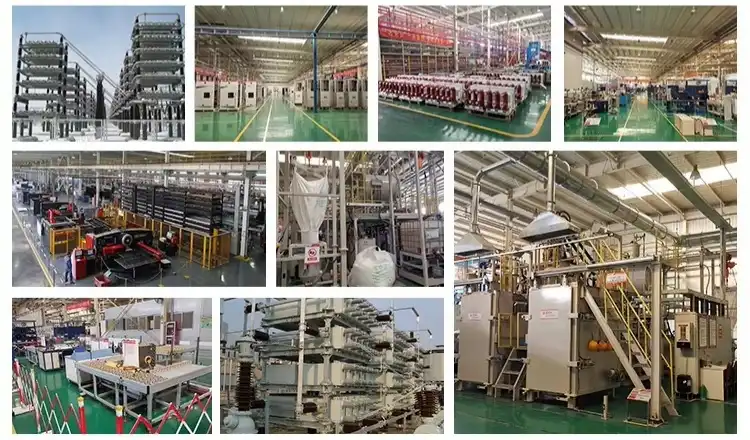
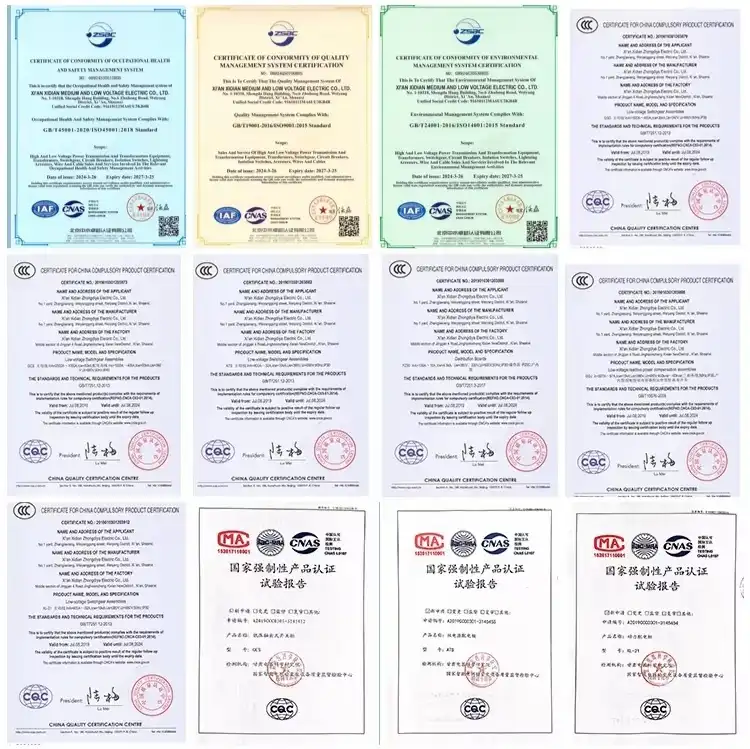
Every piece of our armored metal sealed switchgear goes through more than 50 checks. Power-frequency resist and partial discharge studies are two examples. The parts are made of high-quality steel and have epoxy on them. We use ISO 9001 and ISO 14001 as guides. It has been in business for more than 25 years and is a National High-Tech Enterprise. It has 18 patents in the field of switchgear technology. The State Grid systems, petrochemicals, rail transportation, water saving, green energy, steel and metallurgy all use our gear. The type of busbar, breaker, and communication protocol can be changed to fit the needs of a certain area. One example is making designs that can stand up to flooding in Southeast Asia or getting certification for places that are prone to earthquakes. We guaranty every order for 5 years and answer in less than 72 hours.
Procurement and Supplier Checks for Armored Metal-Enclosed Switchgear
Quotation Inputs and Cost Drivers
The cost of armored metal-enclosed switchgear depends on the voltage, current, fault rating, number of panels, arrangement of breakers, arc-resistant needs, switches, indicator transformers, type of casing, communications, factory testing, delivery terms, and the way the equipment is delivered. There are many parts to a full quote request. These include the single-line diagram, feeder schedule, environmental data, applicable standards, installation location, preferred fixed or withdrawable arrangement, and delivery date. When the quotes come in, look at what is not covered for things like switches, relays, CTs, VTs, wire accessories, testing, commissioning, and papers. Approval of the design, production, testing for plant acceptance, shipping, and help at the site should all be on the delivery timeline. For projects with 5 to 50 panels, reviewing the plan early is helpful because a change to the design made at the last minute affects all of them.
Supplier Checklist
A supplier of armored metal-enclosed switchgear should show experience with your voltage class, application, and destination market. Here are the three areas I check before an order:
- Test evidence: Request type-test reports covering dielectric performance, temperature rise, and internal arc, plus routine test reports. Ask the supplier to confirm in writing that the tested design matches the exact panel, breaker, and arrangement in your proposal.
- Drawings and data: Request general arrangement drawings, single-line diagrams, control schematics, data sheets, bills of materials, manuals, recommended spares, and warranty terms, so the design institute and owner engineer can review the scheme quickly.
- Project support: Request references for similar voltage classes and markets, export packaging details, factory acceptance testing, commissioning support, and spare-parts availability. OEMs, distributors, and EPC contractors should also confirm private-label capability and relay integration.
These checks turn a price comparison into a technical comparison and reduce rework once equipment reaches the site.
Common Selection Mistakes
A lot of the same mistakes keep happening in different tasks. Teams pick equipment based only on how much it costs at first, use different terms for metal-enclosed and metal-clad construction, or forget to think about how much space is needed for taking out the breaker, lifting it, storing it, and fixing it. Some lists arc resistance but don't say what kind of resistance it is, which parts were checked, for how long, or how they were put together. Some people agree to a plan before they check to see if it meets the needs of utilities, the rules of the area, safety standards, and the way things are in the area. If you look at building plans, ask for technical dates that match, check test results, and compare lifetime costs instead of top prices, you can avoid these problems.
Conclusion
Armored metal-enclosed switchgear can be either fixed or movable. Which type is chosen relies on how important the feeder is, how much it costs to have a failure, how easy it is to keep, how much room it takes up, and the total cost of ownership. It costs less, is easier to build, and takes up less space to use fixed designs. Withdrawable designs, on the other hand, make it easier to test the breakers and change the breakers more quickly. They also make it less likely that the power will go out. You can put units that can be taken out on incomers, bus couplers, and key feeders with a mixed order. They made the right choice because they met the standards of IEC 62271-200 or IEEE C37.20.2, had type-test and internal arc reports that were the same, did a temperature-rise test at the right current, and checked the site's elevation. Full quote inputs and supplier document checks make it easier to compare bids and cut down on mistakes in the selection process.
FAQ
1. Is withdrawable switchgear always better?
No. Withdrawable units cut replacement time, but fixed units cost less and need less space. Feeder criticality and outage tolerance decide.
2. What ratings does the KYN61-40.5 offer?
It has a rated voltage of 40.5 kV and rated currents of 630 A, 1250 A, 1600 A, 2000 A, and 2500 A. It serves altitudes up to 2000 m and ambient temperatures from -10°C to +40°C.
3. Which standard applies to armored metal-enclosed switchgear?
IEC 62271-200 covers AC metal-enclosed switchgear from above 1 kV to 52 kV. US projects usually follow IEEE C37.20.2 and utility rules. Confirm the owner's list.
4. Can the equipment work above 2000 m?
The KYN61-40.5 is rated up to 2000 m. Our plateau-type equipment meets requirements up to 4,000 m, and we review site data first.
5. What do you need to prepare a quotation?
Send the system voltage, rated current, short-circuit level, single-line diagram, site conditions, standards, arc-resistant expectations, preferred arrangement, delivery location, and schedule.
Request Your Armored Metal-Enclosed Switchgear Recommendation from Xi'an Xikai
You can send Xi'an Xikai your single-line layout, rated current, site elevation, and standard needs at any time. Our business makes armored metal-enclosed switchgear that is sealed in protective metal. We have 40.5 kV units that can be taken out and have ratings of up to 2500 A, equipment that can work at heights of up to 4,000 m, and technical help for looking over plans. Visit xaxd-electric.com or send an email to serina@xaxd-electric.com, amber@xaxd-electric.com, or luna@xaxd-electric.com to find out more.
References
1. IEC 62271-200: High-voltage switchgear and controlgear – AC metal-enclosed switchgear and controlgear for rated voltages above 1 kV and up to and including 52 kV, 2021
2. IEC 62271-1: High-voltage switchgear and controlgear – Common specifications for alternating current switchgear and controlgear, 2017
3. IEEE C37.20.2: IEEE Standard for Metal-Clad Switchgear, 2015
4. IEEE C37.20.7: IEEE Guide for Testing Metal-Enclosed Switchgear Rated Up to 52 kV for Internal Arcing Faults, 2017
5. GB/T 11022: Common specifications for high-voltage switchgear and controlgear standards, 2020
6. NFPA 70E: Standard for Electrical Safety in the Workplace, 2024