
What Makes an Outdoor Disconnect Switch Reliable Outdoors?
2026-10-29 17:10:48
An outdoor disconnect switch stays dependable outdoors when its materials, ratings, and moving parts match the site it serves. Rain, ice, dust, salt, pollution, and heat swings attack insulation, contacts, and linkages every day. A dependable unit uses corrosion-resistant metals, stable contact pressure, a smooth mechanism, and insulation sized for local pollution and altitude. It also carries voltage, current, and fault ratings that fit the system, plus test records you can verify. In this guide, I explain each factor for substation and EPC projects, using our GW4 High Voltage Disconnect Switch as a working example.
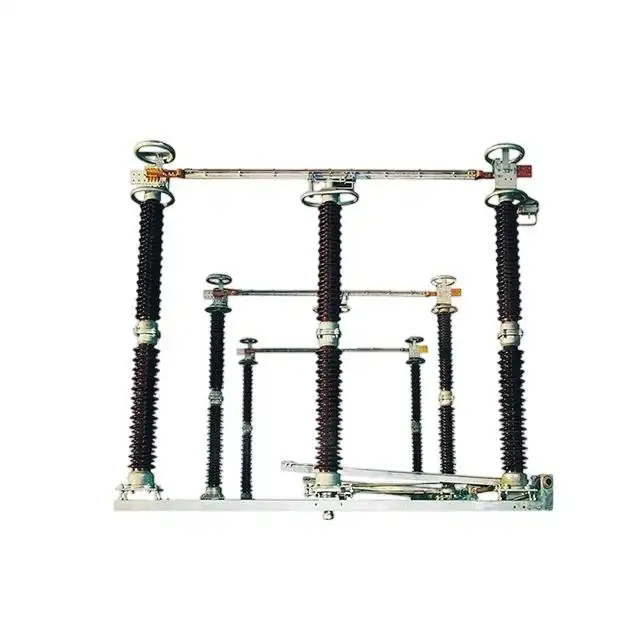
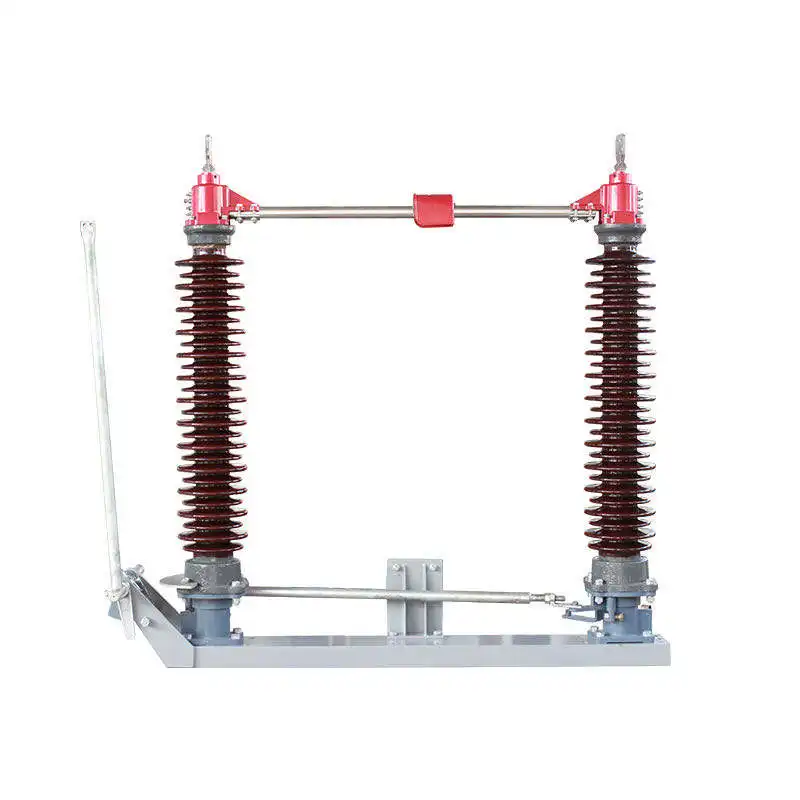
Core Design Factors That Keep an Outdoor Disconnect Switch Working
Weather Exposure Comes First
It can rain, snow, be muggy, be dusty, be exposed to UV light, be in salty air, and change temperatures. Rust and condensation often do more damage than a storm because they work slowly on metal surfaces that touch and join. The operating force, wind, and ice loads all add to the mechanical stress. Every review starts with the site: is it on the coast or in the middle of nowhere? Is it clean or dirty? Is it low or high? The finish on the material, the type of insulator, and the rating limits are all based on the answers. Even if the nameplate looks the same, a switch that works well in one yard may not last long in another. This is the reason why one datasheet can't show the whole picture.
Contacts and Current Path
Every hour, contacts carry load current, so contact pressure and material are important. Resistance goes up when pressure isn't even, and heat is made when resistance goes up. Over time, rusty springs lose their force. Buyers should look at the contact material, spring protection, arc control, clear ON/OFF indication, and how long the device will last in terms of operating cycles. The terminals must fit the size of the wire that is given and stay tight even when the temperature and shaking change. It's better to have flexible connections because they can handle movement that would stress joints that are too rigid. These small details may not seem important on paper, but they determine how hot the device gets and how long it lasts. Find out how the supplier manages them while they are being put together.
Mechanism and Moving Parts
A common worry on EPC projects is that the machinery will get stuck, which is a valid worry. Crews are in real danger when a disconnect mechanism fails to open as required during an outage or maintenance operation. Since pins, bushings, joints, and bearings are outside, that's where rust and dirt tend to gather first. Transmission parts that don't rust, short friction motion, and good lubrication spots keep the working effort low. You should pay the same amount of attention to handles, hinges, locks, and fixing points. Before shipping, make sure the operation is checked. After putting the switch in place, move it by hand a few times to make sure it moves smoothly and stays in place. Fixing stiffness found early is much cheaper than fixing an activity that doesn't work during a downtime.
Weatherproof Ratings, Pollution, and Altitude for an Outdoor Disconnect Switch
NEMA Enclosure Ratings for an Outdoor Disconnect Switch
"Weatherproof" needs to be backed up by a recognized classification. Electrical equipment with a rating of up to 1,000 volts is covered by NEMA 250. NEMA 3R covers rain, sleet, snow, and falling dirt, and ice formation outside doesn't hurt the equipment inside. NEMA 4 adds security against dust blown by the wind and water sprayed from a pump. NEMA 4X makes sites near water, chemicals, and washdowns more resistant to corrosion. These values are for low-voltage units that are sealed. The rating will not work in the field if the cable glands, drains, mounting position, and cover seals are not kept in good shape. Never use the default rating in the catalog; always use the rating from the real site.
Creepage Distance for Polluted Sites
Insulators are used instead of sealed enclosures in open-air high-voltage switches. At voltages above 40.5 kV, surface dirt and wetness can cause leaking current and flashover. IEC TS 60815-1 divides places into five types of pollution, ranging from very little to a lot. There is a certain creepage distance for each class, which is between 22 and 54 mm/kV. Some places, like factories or plants near the coast, may need a longer creepage path than yards in the middle of the country. Early on, let your provider know the pollution class so that the length of the insulator and the shape of the shed will fit the spot. This one input stops a lot of redesigns later on in the tender process.
High Altitude and Dielectric Strength
Thin air doesn't insulate as well. IEC 62271-1 says that 1,000 m is the normal highest point for service conditions, so any sites above that height need to have their insulation designs changed. This group includes mountain substations and some projects in the western US. Xi'an Xikai makes plateau-type equipment for up to 4,000 meters above sea level. All of their technical specs are in line with national and industry standards. Send us the exact height and pollution class along with your question so that we can match the clearances and insulator options you choose to your rated voltage. In this way, the outdoor disconnect switch stays within its insulating limits.
Electrical Ratings, Safety Rules, and Codes for an Outdoor Disconnect Switch
Match Voltage, Current, and Fault Ratings
A voltage reading alone doesn't tell the whole story. The switch has to match the voltage, phase, number of poles, load current, and short-circuit current that are available in the system. Check the short-time and peak resistance scores against the bus's fault level. When something is rated, it means the highest system voltage it can handle. For example, a 110 kV or 220 kV substation needs a switch from a higher rated voltage class, not one from the nominal grid figure. Check the rated current against the size of the conductor and the growth that you expect the load to have. Put all of these numbers in the bid criteria so that all of the bids come in at the same duty.
Isolation Is Not Protection
So that crews can work safely, an outdoor disconnect switch cuts power to equipment. It's not the same as a circuit breaker and it doesn't fix damage. Interlocks and the order in which they are used are important because high-voltage disconnects only open after the breaker has cut the load current. Low-voltage units give you a choice: models with fuses protect against local overcurrent, while models without fuses rely on devices further upstream. There are also differences between AC and DC ratings because DC arcs are harder to put out. You should never put an AC-rated switch in a solar or battery circuit without getting written permission from the manufacturer.
U.S. Codes and Standards
In the US, utility substations usually follow the National Electrical Safety Code (IEEE C2), while commercial and industrial sites usually follow NFPA 70, which is also known as the National Electrical Code. Both talk about grounding, clearances, and space for working. IEC 62271-102 is often used for alternating current disconnectors and earthing switches in international projects. We know that our GW4 product meets standards like IEC 62271-102 and IEEE C37.32. Before you bid, make sure you know which edition the owner or utility needs and ask for the test reports that match. Do not take an indoor model outside unless it is clearly approved to do so by its manufacturer.
How the GW4 High Voltage Disconnect Switch Handles Outdoor Duty
Materials Built for Weather
As an outdoor disconnect switch, the GW4 is made of hot-dip galvanizing steel parts, which protect against rust by adding a zinc layer. Its transmission system is made of stainless steel, which includes the pins, bushings, joints, and bearings. This means that the moving linkage doesn't rust, which is where sticking usually starts. Profiles made of aluminum alloy help heat escape. The design for heat dissipation is said to not need any maintenance. As a whole, these options address the two issues that EPC teams bring up most often: slow corrosion in wet or coastal areas and stiff machinery after years of use. They also make it easy for your design office to compare the clear list of materials to the bid specification.
Contacts and Electric Field Control
Stainless steel contact springs that are squeezed from the outside don't rust and keep the pressure at the contacts stable. Connectors for flexible busbars can bend to accommodate movement, and copper plates that are bent make upkeep easy. Short friction travel during operation cuts down on wear and effort. When you touch the contacts, grading rings and covers spread the E-field evenly and cut down on RF interference. This keeps close equipment and sensitive secondary devices safe. Each trait is linked to a known point of failure: mechanism drag, contact heating, and joint stress. Your engineers can compare these points to the site layout and the single-line diagram.
Core Advantages of This Outdoor Disconnect Switch
This is what makes the GW4 so useful for power work.
- Wide range of ratings: The GW4 can handle currents up to 6300 A and voltages between 40.5 kV and 252 kV. So, one product family can be used for designs of 40.5 kV, 110 kV, and 220 kV substations. This lets EPC teams use the same drawings, spare parts, and training for operators on multiple projects.
- Flexible layout: When both base sides can be installed as options, it gives planners more options for bay plans and tight sites. The same design works in yards in the middle of the country, near the coast, and in humid areas thanks to a galvanized steel frame and a stainless steel transmission system. This makes it easier to find parts for projects that are spread out in different areas.
- Lower upkeep: Copper plates that are bent make service work easier, moving parts don't wear out as quickly, and the design for heat dissipation is said to not need any maintenance. During planned outages, crews still check the insulators, fasteners, and end positions. This design cuts down on the work and makes it more predictable for the owner.
Outdoor Disconnect Switch Installation and Wiring Diagram Planning
A clear plan is the first step to a safe installation. Before the crew gets there, make sure you know the system's voltage, current, phase, base size, and layout. There are steps in our GW7B-363 guidebook for inspecting most high-voltage disconnects. These include comparing the nameplate to the contract, looking for cracks in each post insulator, making sure the screws are tight, and using the mechanism by hand. Before you put the insulators in place, make sure the bases are level. If the bases aren't level, the insulator column won't be in line. Write down the torque values, grounding points, line and load connections, and grounding points on the model. Also, get the owner to sign off on the installation record.
Maintenance and Troubleshooting for an Outdoor Disconnect Switch
In our GW7B manuals, it says that the whole thing should be checked out every five years and right away after a severe short circuit. Crews clean insulators and electrical surfaces, put conductive grease on touch surfaces, make sure pins and bolts are tight, and grease moving parts that have rust on them. If a post insulator is cracked, they replace it and test the side switch. If a handle feels stiff, first check the pin holes and drive joints for rust or binding. Terminals that are too hot are usually a sign of loose connections or dirty contact faces. If parts still have cracks, broken contacts, or repeated moisture issues after being cleaned, they should be replaced.
How to Evaluate an Outdoor Disconnect Switch Manufacturer
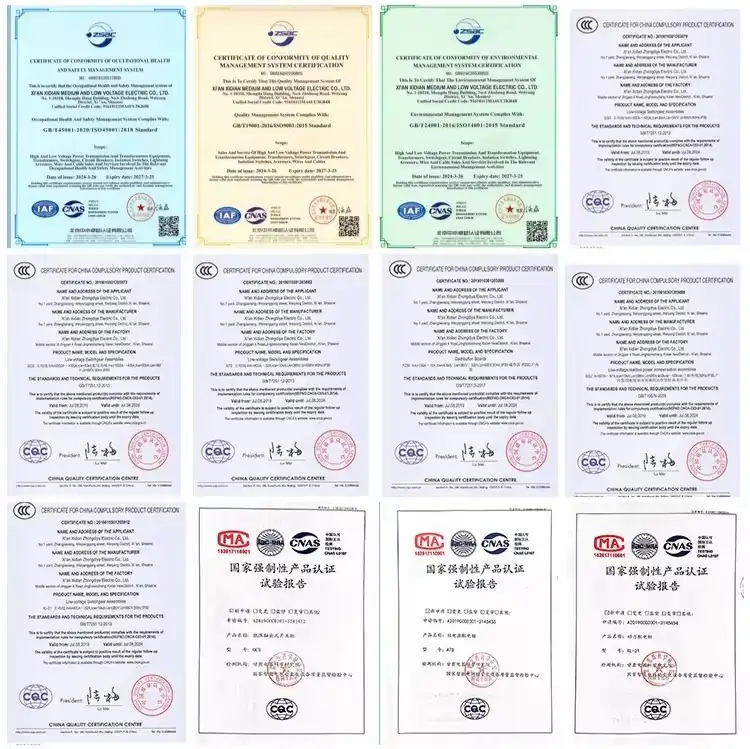
Teams that buy things need proof, not just claims. Ask for type test reports from a recognized lab for the same model and rating, as well as drawings, installation guides, and a list of projects that have been used at your voltage class. Check to see how the supplier inspects incoming materials, keeps track of assembly, and can track batches. Check to see what standards the reports cover and if the utility will accept them. Before you place a large order, ask for a sample or pilot installation. Medium- and low-voltage equipment from Xi'an Xikai is used in State Grid systems and power engineering projects. We can talk about custom configurations for needs related to altitude and pollution.
Conclusion
An outdoor disconnect switch that works well depends on how well it fits with its location. Rain, salt, smog, and changes in temperature must not damage the materials. The contacts must have stable pressure, and the system must move smoothly. The system must have the right voltage, current, fault, and pollution class and altitude ratings, as well as the right insulator length and clearance. Circuit breaker protection is still needed because the disconnect switch provides isolation rather than fault interruption, and U.S. projects must follow the rules, like NFPA 70 or IEEE C2. There are needs from 40.5 kV to 252 kV and up to 6300 A. The GW4 example shows how galvanized steel, stainless transmission parts, protected contact springs, and shaped electric fields can meet these needs. Careful installation, regular maintenance, and proof from the supplier, such as type test reports and operating records, finish off the picture.
FAQ
1. What is an outdoor disconnect switch?
It's a tool that can be handled by hand or by motor that cuts off power to equipment or a line so that workers can be safe. Not only does it not fix problems, but it also protects with a circuit breaker.
2. Which NEMA rating suits outdoor use?
NEMA 3R is good for low-voltage enclosed units that will be exposed to rain and snow in general, while NEMA 4X is better for sites near the coast, chemicals, or water. Instead, open-air high-voltage switches like the GW4 use insulator creepage and parts that don't rust.
3. Can I use an indoor switch outdoors?
No, unless it's clear from the approval that it can be used outside. Weather needs seals and protection against corrosion, which indoor enclosures don't have.
4. What should I request from a supplier for a 110 kV or 220 kV project?
Ask for type test reports for the same model and rating, as well as drawings, installation guides, maintenance instructions, and project references for the same or a comparable voltage class. Also provide the site altitude, pollution level, system voltage, rated current, short-circuit level, applicable standards, and any utility-specific requirements so that the quotation matches the actual project conditions. Confirm that the test reports and certifications are acceptable to the project owner or utility before placing the order.
Request an Outdoor Disconnect Switch Quote from Xi'an Xikai
Xi'an Xikai sells the GW4 High Voltage Disconnect Switch, which can handle up to 6300 A and 40.5 kV to 252 kV. Our plateau-type equipment can work at heights of up to 4,000 meters. To find the best outdoor disconnect switch maker for your substation project, you should send them your voltage, current, height, pollution class, and amount. To find out more, email serina@xaxd-electric.com, amber@xaxd-electric.com, or luna@xaxd-electric.com, or go to xaxd-electric.com.
References
1. IEC 62271-102, High-voltage switchgear and controlgear – Part 102: Alternating current disconnectors and earthing switches, 2018
2. IEC 62271-1, High-voltage switchgear and controlgear – Part 1: Common specifications for alternating current switchgear and controlgear, 2017
3. IEC TS 60815-1, Selection and dimensioning of high-voltage insulators intended for use in polluted conditions – Part 1: Definitions, information and general principles, 2008
4. NEMA 250, Enclosures for Electrical Equipment (1000 Volts Maximum), 2020
5. NFPA 70, National Electrical Code, 2023
6. IEEE C2, National Electrical Safety Code, 2023