
Indoor Current Transformer: Selection Guide for 35kV Systems
2026-10-30 17:36:11
An indoor current transformer for a 35kV system should match the circuit's current ratio, accuracy class, secondary burden, insulation level, and cabinet dimensions. Start by defining whether each winding serves metering or protection. Then confirm the 1A or 5A output, the fault withstand rating, and the mounting drawing before production. We build our 35kV epoxy resin cast units for 50/60Hz service with 20A to 2500A primary current, and this guide walks you through the checks we run with switchgear manufacturers. Read on to compare accuracy classes, core materials, supplier questions, and procurement details.
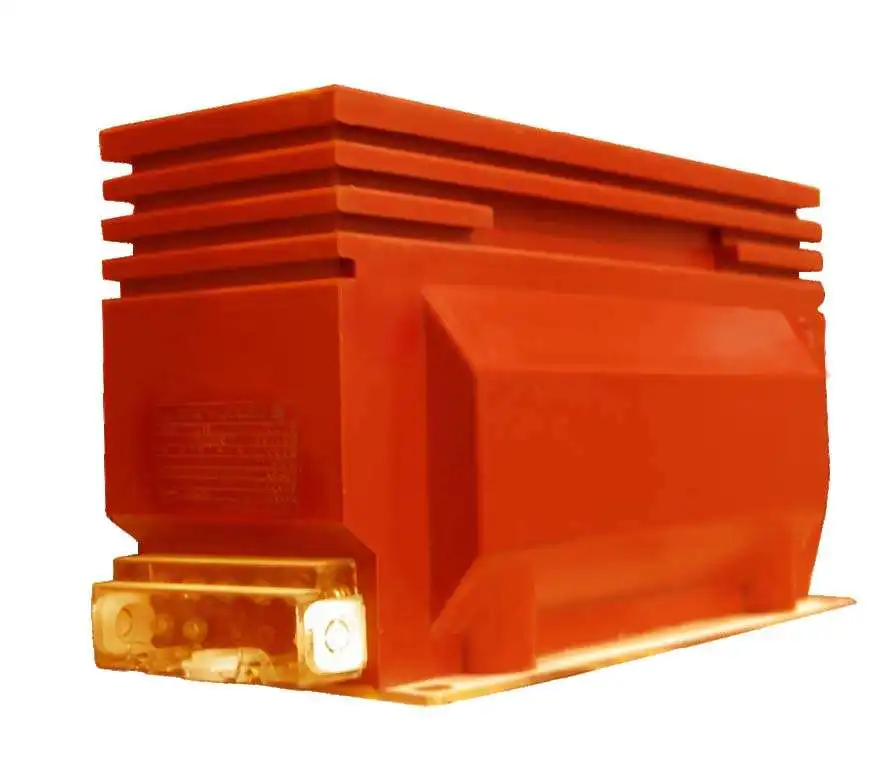
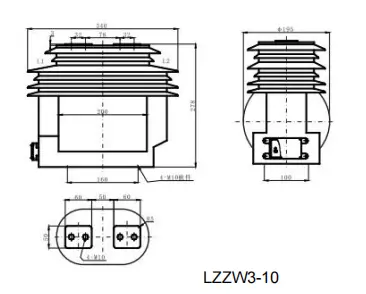
Understanding the 35kV Indoor Current Transformer
What Is an Indoor Current Transformer for a 35kV System?
An indoor current transformer, or CT for short, lowers a high main current to a normal secondary value, which is usually 1A or 5A. After that, it can be safely read by meters, relays, and control devices. You can find it inside enclosed switchgear, on transformer incomers, feeders, bus sections, and motor circuits in a 35kV system. The unit has to meet the highest voltage, insulation level, current ratio, accuracy class, load, fault withstand grade, and cabinet layout of the equipment. In China's GB system, the highest voltage that a 35kV-class device can carry is 40.5 kV. However, IEC tables also list 36 kV, so make sure that the value your project calls for is correct. A bad match can cause a mistake in the measurement, a relay to stop working, the CT to become saturated, or thermal stress.
How Does an Indoor Current Transformer Work?
Electromagnetic induction is how an indoor current transformer works. The primary current makes a magnetic flux in the core, which then causes a much smaller current to flow through the secondary winding. Meters, protection relays, and monitoring systems can connect to the secondary. The main parts are the magnetic core, the primary conductor or winding, the secondary windings, the epoxy resin insulation, the terminals, and the structure for mounting. In many designs, there are two different cores inside the body: one for metering and one for safety. The small size, mechanical strength, and resistance to water in epoxy cast construction make it easy to maintain. At the spot, there is one important safety rule: never leave a live CT backup open. Voltage that comes from an open circuit can be dangerous, so while you're doing repair, keep the secondary on its load or short-circuit it properly.
Xi'an Xikai 35kV Indoor Current Transformer at a Glance
Our 35kV indoor current transformer is an electromagnetic unit that is fully sealed and made in epoxy resin. It follows GB 20840.2-2014 and IEC 61869-1 and 61869-2 and has a high level of accuracy, a large capacity, and stable performance. The main information is shown in the table below:
| Item | Specification |
|---|---|
| Rated voltage class | 35kV |
| Frequency | 50/60Hz |
| Rated primary current | 20–2500A (customizable) |
| Rated secondary current | 1A or 5A |
| Accuracy classes | 0.2/0.5 metering; 5P/10P protection |
| Standards | GB 20840.2-2014; IEC 61869-1 and 61869-2 |
| Construction | Epoxy resin cast, fully enclosed |
The partial discharge in our product data is less than 10 pC. Send us a picture of your cabinet, and we'll see if the ratios, secondary windings, or casings can be changed to fit your needs.
Technical Parameters and Accuracy Classes for a 35kV Indoor Current Transformer
Key Technical Parameters for a 35kV Indoor Current Transformer
Start by getting the indoor current transformer's maximum voltage, highest equipment voltage, power-frequency withstand, lightning impulse withstand, and the standard that it has to follow, like IEC 61869-2 or GB 20840.2-2014. Next, set the primary and secondary ratios so that they can handle normal load, overload, and planned growth. Because cable loss is equal to current squared times resistance, a 5A secondary works well for short cable runs and a 1A secondary works better for long ones. Like, a 1-ohm loop needs 25 VA at 5A but only 1 VA at 1A. Then check the connections, clearances, mounting holes, maximum load, short-time thermal current, peak withstand current, and thermal current. Before production starts, you need to approve a technical drawing and a burden calculation.
Indoor Current Transformer Accuracy Class Explained
The program, the load, and the fault level must all meet the accuracy class. IEC 61869-2 says that ratio errors for measuring classes 0.2 and 0.5 can't be more than ±0.2% and ±0.5% at rated current. The 0.2S and 0.5S S classes make that accuracy even better, down to 1% of rated current. This makes them good for loads that change a lot. The most error that can happen is 5% for protection class 5P and 10% for protection class 10P at the accuracy limit current. The number that comes after the letter P, like 5P10, is the accuracy limit factor. This means that the CT stays accurate up to ten times the rated current. Our indoor current transformer has a rating of 0.2/0.5 for metering and 5P/10P for protection. If you need S-class or PX, please let our engineers know as soon as possible.
Core Material and Burden: Silicon Steel vs Microcrystalline
The core material of a CT changes how it acts. Cores that are microcrystalline or nanocrystalline have high permeability and low excitation current. This means that they can keep their measuring accuracy at low main current and light loads. But their saturation flux density is only about 1.2 T, while grain-oriented silicon steel's is about 1.8 T. This means that protection windings have more room to move when faults happen. A silicon steel core is often used for protection and a high-permeability core is used for metering. Ask your supplier what kind of material is in each winding and ask for the excitation curve and a burden test with your real load. Different winding designs need space too, so decide on the body size and the number of cores at the same time.
Choosing the Right Indoor Current Transformer for 35kV Switchgear
How to Choose the Best Indoor Current Transformer for 35kV Switchgear
Follow a structured process to choose the right ratio for your indoor current transformer instead of picking one from a catalog. First, find the position of the circuit: the receiving feeder, the transformer side, the bus coupler, the motor, or the generator. Second, get information about the system's voltage, current, trouble level, relays, wire length, environment, and project standards. Third, pick a ratio that works for both current loading and future growth without sacrificing accuracy at low loads. Fourth, give each metering and protection need its own dedicated core. Lastly, make sure that the drawings, test reports, certificates, nameplate information, packing needs, and approval documents are correct before you place the order. Xi'an Xikai can also make plateau-type equipment for heights of up to 4,000 meters, so let us know early on how high your site is.
Indoor Current Transformer Compared With Alternative CT Types
Indoor CTs work best in enclosed, safe areas and can be installed directly into medium-voltage switchgear. They don't need as much weather protection or insulation as outdoor CTs, but they still shouldn't go outside without the right environmental approval. CTs that are ring-shaped or toroidal wrap around wires or busbars, while bar-primary and wound-primary designs fit into switchgear systems that are already put together. Epoxy resin cast units are good for insulation, are small, and don't need much upkeep inside. Oil-immersed types work well with other system designs, especially when they are used outside or with higher voltages. Also, the standards are not the same. IEC 61869-2 uses classes like 0.2S and 5P10, while IEEE C57.13 uses classes like 0.3 and 0.6 for metering and C200 for relaying. Since the two systems don't work with each other, be clear in your RFQ about which standard you need.
Common Selection Mistakes and How to Avoid Them
There are four mistakes that happen a lot. Buyers choose a ratio without looking at the actual load profile, don't consider the full secondary load, think that metering and protection cores can be switched out, or agree to the electrical data without seeing the mechanical drawing. Each one makes a problem that can be seen: inaccurate low-load readings, early saturation, relay malfunctions, or inaccurate energy readings. To stay away from them, add up the CT's rated load and the resistance of the cables, meters, relays, terminal blocks, and test switches. Compare the problem current and the time it takes for the safety to clear with the accuracy limit factor. Lastly, make sure that the measurements, connections, phase spacing, mounting holes, and clearances are all okay before the product is made. This is because making changes on-site costs time and money.
Sourcing an Indoor Current Transformer for OEM Switchgear
How to Evaluate an Indoor Current Transformer Supplier or Manufacturer
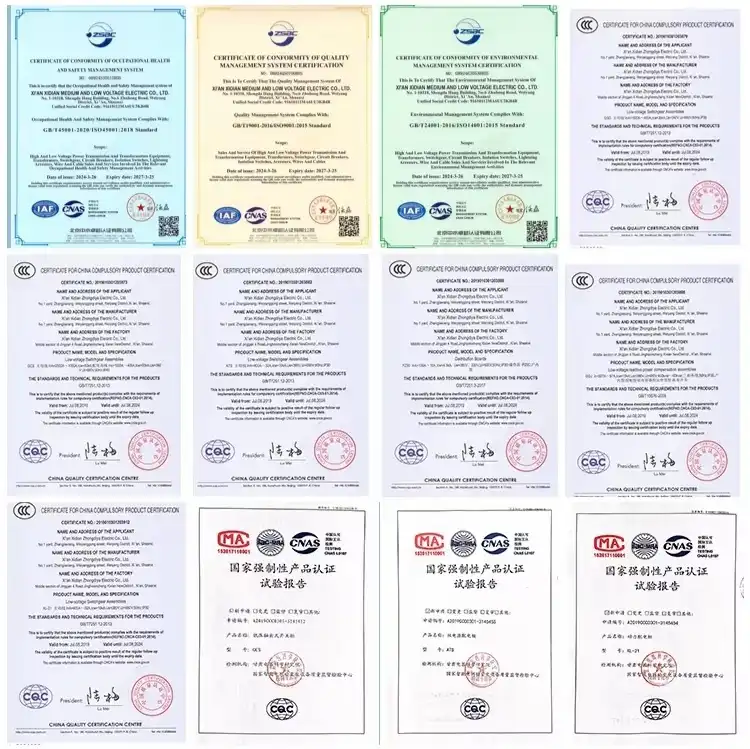
A good indoor current transformer provider has a lot of technical knowledge, proof of quality control, and experience with medium-voltage tasks. Check to see if the company can provide 35kV-class products, custom ratios, 1A or 5A outputs, multiple cores, OEM dimensions, and project nameplates. Ask about processing resin, controlling partial discharge, checking ratios and polarities, testing insulation, making sure accuracy, and keeping records of routine tests that can be tracked. As a company that is certified by both ISO 9001 and ISO 14001, Xi'an Xikai regularly checks for things like dielectric strength, partial discharge, and ratio error. Buyers of exports should also look at local, IEC, EN, or ANSI compliance, factory acceptance testing, third-party inspection, packaging, documentation, and support after the sale. OEMs that make cabinets every month care most about steady batch quality.
Indoor Current Transformer Price Factors
The price is based on the voltage and insulation level, the current ratio, the number of cores, the accuracy class, the load, the safety needs, the short-circuit rating, the design of the resin, testing, certification, packing, and the amount of the order. It costs more for a unit with a 0.2 measuring winding and a 5P safety winding than for a unit with only one core. This is because it needs more core material, more winding work, and a bigger body. We don't list set prices because every drawing is different, and a full RFQ makes quoting go faster. Not only should wholesale buyers compare unit price, but they should also compare batch consistency and supply capacity. Before they compare quotes, EPC and utility projects should agree on milestones for document approval, factory testing, warranty, and delivery.
Procurement Checklist for Your RFQ
A full request cuts down on emails. Add three sets of information:
- Electrical data: Includes the amount, system frequency, primary and secondary ratios, number of windings, accuracy class, and load for each winding, as well as the 1A or 5A output, fault withstand ratings, and the standard that applies, like GB 20840.2-2014 or IEC 61869-2. Add the relay's longest wire run so we can see how much it weighs.
- Mechanical data: Installation plan, body measurements, terminal placement, phase spacing, mounting holes, and cabinet gaps are all shown on this sheet. Mark any limits on height or width, as they affect the size of the core and the number of turns. OEMs should send us interface models as soon as possible so that our engineers can make sure they fit correctly before we start sampling. Add the site's elevation as well.
- Commercial data: Destination, delivery date, annual forecast with monthly release plan, sample needs, inspection or witness test needs, nameplate text, and warranty expectations are all examples of commercial data. Please send the needed sample date and the first batch date separately, as they happen at different times.
With these details, there is less room for error, and it takes less time to go from the drawing to an approved sample.
Matching Applications and Delivery to Your Cabinet Schedule
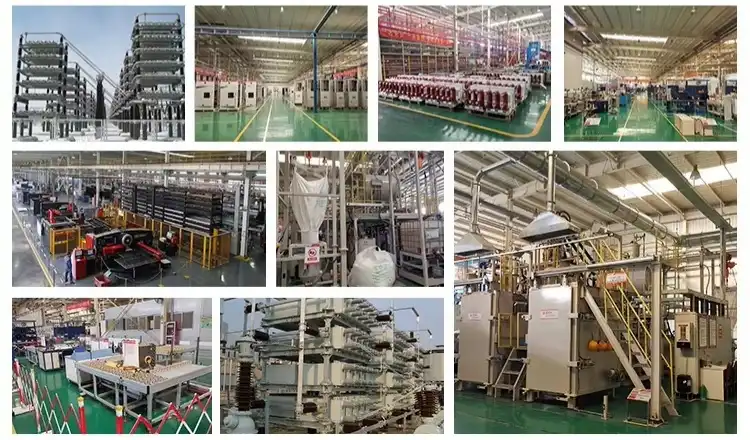
Our 35kV indoor current transformer can work with receiving feeders, transformer circuits, bus sections, and motor feeders inside switchgear that is made of metal. Already, Xi'an Xikai's tools are used in State Grid systems, power engineering, steel and metallurgy, petrochemicals, rail transportation, saving energy and water, building, protecting the environment, and using renewable energy. When OEM cabinet builders make plans for the year, they usually get orders every month, which is how we schedule sampling and delivery. When you give us new instructions, we start with your drawing, make a sample, and then change the size or winding before making the first batch. We will work backward from the dates you give us for making your cabinets.
Conclusion
Selecting an indoor current transformer for a 35kV system starts with knowing what the circuit is for and ends with having a drawing approved before choosing a unit. The main points stay the same. For each application, choose the right ratio, output (1A or 5A), accuracy class, load, insulation level, and fault withstand rating. Measure and protect each other with their own cores, and compare the load to the core material. Different accuracy classes, like 0.2, 0.5, 5P, and 10P, are used for different tasks. The burden estimate, which takes into account wire resistance, determines if the accuracy that was mentioned holds up in service. Enclosed switchgear works well with epoxy resin cast designs, but IEC and IEEE class systems are different and need clear definitions. Checks with suppliers, a full RFQ, and early approval of dimensions cut down on work that needs to be redone and keep cabinet production on schedule.
FAQ
1. What accuracy classes does your 35kV indoor current transformer offer?
Using class names from IEC 61869-2, we put 0.2 and 0.5 for measuring and 5P and 10P for safety. Send us the load and relay data if your design needs 0.2S, 0.5S, or PX windings, and our engineers will confirm the design of the windings.
2. Can the unit run on both 50Hz and 60Hz systems?
Yes. Since the frequency is 50/60Hz, one design family can be used for both grids. That way, the label and test records will match your project. In your RFQ, you should say the system frequency.
3. Should I choose a 1A or 5A secondary?
You can get both. If you have a lot of cables that need to be run, choose 1A. If your relays are close to the CT or your other equipment already uses 5A, choose 5A. First, you should always check the relay input rating. Our experts can confirm the choice based on the length of the wire and the data from the relay.
Request an Indoor Current Transformer Quote from Xi'an Xikai
Xi'an Xikai makes 35kV epoxy resin cast indoor current transformer units that meet GB 20840.2-2014 and IEC 61869-1 and 61869-2 standards. They are also certified by ISO 9001 and ISO 14001, which shows that they are a good company. Want to find an indoor current transformer maker that will look over your drawing before they make a sample? Send your ratio, accuracy class, load, and measurements to serina@xaxd-electric.com, amber@xaxd-electric.com, or luna@xaxd-electric.com by email. You can also find out more about the product at xaxd-electric.com.
References
1. IEC 61869-2: Instrument Transformers – Additional Requirements for Current Transformers, 2012
2. IEC 61869-1: Instrument Transformers – General Requirements, 2007
3. GB 20840.2: Instrument Transformers – Part 2: Additional Requirements for Current Transformers, 2014
4. IEEE C57.13: IEEE Standard Requirements for Instrument Transformers, 2016
5. IEEE C37.110: IEEE Guide for the Application of Current Transformers Used for Protective Relaying Purposes, 2007
6. Protective Relaying: Principles and Applications (Blackburn and Domin), 2014