Automatic Changeover Switch for Solar and Backup Power Systems
2026-05-08 16:01:24
When solar panels are combined with Automatic Changeover Switch backup generators or battery storage, these power sources must work together smoothly. An Automatic Changeover Switch is the smart hub that finds problems with the power quality, handles changes between the grid, solar panels, and backup power sources, and keeps sensitive equipment safe from voltage fluctuations. This technology has grown from simple relay-based devices to microprocessor-controlled systems that constantly check electrical factors. This way, your facility will never have unplanned downtime during source changes.
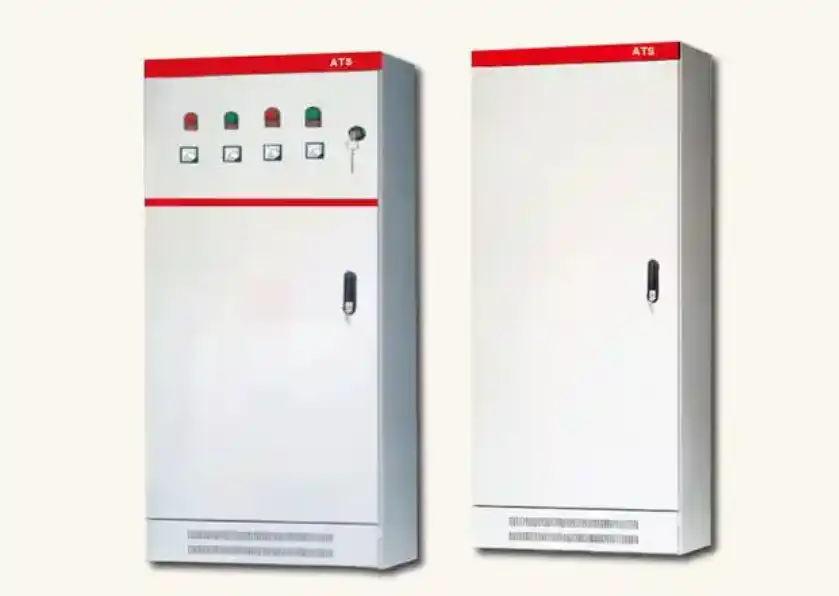
Understanding Automatic Changeover Switches in Hybrid Power Environments
According to studies in the field, power outages cost U.S. businesses about $150 billion a year. The Automatic Changeover Switch solves this problem by choosing the power source automatically, without any help from a person.
How Automatic Changeover Technology Works
At its heart, the gadget constantly checks the voltage, frequency, and phase integrity across various power inputs. When the main source, like the grid or the sun, starts to lose power more than a certain amount, the system starts a managed transfer process. Our Automatic Transfer Switch models use microprocessor-based control that checks the voltage 50 times a second and can spot problems in 20 milliseconds. Because of this quick reaction, equipment doesn't have to deal with brownouts, which can damage motor windings or mess up data center operations. There are both mechanical and electrical interlocks in the switching process itself. This two-layer safety system stops two power sources from connecting at the same time, which could harm transformers or lead to arc flash dangers. For safe operation, the interlock system meets the requirements of UL 1008 and IEC 60947-6-1, which say that there must be certain clearance lengths and contact rates.
Critical Features for Industrial Applications
Transfer times must be less than 100 milliseconds in order to keep production lines from having to restart. For important loads, our equipment can make changes in less than 20ms thanks to pre-positioning mechanisms that shorten the contact trip distance. Current ratings range from 100A to 3200A, so the system can work with both small business buildings and big industrial structures. Protection functions go beyond just checking the power. The overvoltage detection protects against electric grid spikes that happen when lightning strikes or when capacitors are switched on and off. Undervoltage safety stops machines from working during brownouts that cause motors to get too hot. Phase-loss detection finds open wires before single-phasing conditions cause severe bearing failures in three-phase machinery. Outputs for generator start signals are another important feature. When the power goes out on the grid, the switch sends a dry-contact closing to the control panels for the backup generator, which starts the starting process. By only running engines when they're needed instead of leaving them on standby all the time, this teamwork saves fuel.
Application Scenarios Across Industries
Automatic transfer technology is used by data centers to keep their systems running when the power goes out, and solar panels handle the daytime baseload. Life-safety systems in hospitals depend on these switches to keep them running. Even short interruptions could affect the equipment used to watch patients. The devices are built into factories along with solar panels. When it's cloudy, grid power is used as a backup, and green energy is used as much as possible during peak output hours. One of the practical perks is lower costs. When buildings have solar-plus-storage systems, they use switches to draw power from batteries during high-rate times to avoid demand charges. The automatic reasoning gets rid of the need for human action, the Automatic Changeover Switch, which saves money on labor costs and ensures that power quality events are always dealt with in the same way.
Comparing Transfer Switch Technologies: Selecting the Optimal Solution
Automatic Changeover Switch units, manual transfer switches, and automatic transfer switches are terms that procurement workers often get mixed up. Knowing these differences can help you avoid making costly design mistakes.
Automatic Versus Manual Operation
To change power sources on a manual transfer switch, someone has to physically turn a handle or breaker. This method works well in situations where power changes don't happen very often and trained staff are available 24 hours a day, seven days a week. The problem becomes clear during off-hours breakdowns or when reaction time has a direct effect on income. For example, if the power goes out for five minutes, it can cost hundreds of thousands of dollars in broken wafers to fix the line. With automatic methods, people don't have to wait to respond. The transfer is done by the gadget automatically, based on voltage tracking algorithms, without any help from the user. This independence is very important in places that don't have staff, like telecoms buildings or pumping stations that are far away.
ATS Technology Compared to Standard Changeover Switches
"Automatic Transfer Switch" and "Automatic Changeover Switch" are words that are often used to refer to the same thing, but there are some small technical differences between them. Automatic Transfer Switch devices usually stress that they are compatible with emergency generators according to NFPA 110 life-safety rules. They do this by including features like exercise timers that start backup generators under load on a regular basis to make sure they are ready. When it comes to solar integration, changeover switches that watch power flow in both directions and communicate with green energy systems are given the most attention. They talk to solar inverters through Modbus RTU or TCP and get production predictions to help them choose the best source. Our solutions work with both models and give you configuration options by using programmable control logic.
Selection Criteria for B2B Procurement
The voltage number is the first thing that you need to think about. Facilities in North America that use 480V three-phase electricity need switches with 600V class protection to protect them from short-term overvoltages. When working at 400V in Europe, the rules are the same as when using tools set at 690V. Inrush currents must be taken into account when figuring out load capacity. When they are first turned on, motor-driven loads use 6 to 8 times their maximum power. Similar spikes can be seen in capacitor banks. If you only look at the steady-state load when choosing a switch, the contacts will fail early. To make sure devices last a long time, our engineering team suggests setting them at 125% of their estimated high demand. Control voltage is part of system connectivity. Generator controls can send messages of 12VDC, 24VDC, or 120VAC. The transfer switch needs to be able to handle all of these different sources without the need for extra link relays. Our Automatic Transfer Switch types have universal control inputs that work with 12-240VAC/DC, which makes installation easier in a wide range of equipment environments.
Leading Manufacturers and Product Innovations in Power Transfer Technology
There are well-known companies with decades of engineering history in the world market for transfer switches. Schneider Electric's EcoStruxure tracking platform works well with the PowerPact line. Touchscreen controls on Siemens SENTRON devices make setup easier. The OTM line from ABB focuses on small footprints that are good for retrofitting situations where panel room is limited.
Xi'an Xikai's ATS Solution Portfolio
Our company has sold power delivery equipment to State Grid projects, industrial plants, Automatic Changeover Switch, and rail transportation systems all over China, and we are also selling more and more to markets outside of China. Over 15 years of research and development have gone into making the Automatic Transfer Switch product line reliable in harsh environments. Voltage ranges from 220V to 660V AC at 50/60Hz are part of the technical specifications. These ranges meet both North American and foreign norms. For important loads, transfer times drop to less than 20 milliseconds. For standard apps, transitions are complete in three seconds, which is fast enough to keep UPS batteries from dying in most data center setups. The current rates range from 100A to 3200A, and custom choices are available for certain uses. The devices work reliably in temperatures ranging from -30°C to +70°C, so they can be installed in buildings that aren't warm or outside in mild areas. Up to 4,000 meters above sea level, our plateau-type equipment can work, meeting the needs of places in hilly areas where lower air density makes electrical insulation difficult.
Practical Integration: Solar-Backup Hybrid Case Study
A food processing plant in California put in 500kW of solar panels on the roof and a 750kVA gas engine. When it's daylight, the automatic switch favors solar generation. When production goes over solar output, it draws power from the utility grid. When the power goes out, which happens a lot during wildfire season, the system starts the generator within 10 seconds. During this time, batteries fill in the gaps. The adoption cut yearly power costs by 40% while making sure that refrigeration systems, which are important for product quality, would always work. The generator start signal from the switch works with automatic fuel tank level tracking to send alerts when diesel reserves drop below two hours of runtime. This combination shows how smart transfer switches can be used as hubs in complicated power control plans.
Brand Reliability and Technical Support Considerations
When buying something, you should think about how long the maker has been around and how good their care networks are. The devices that are put in place today might keep working for 20 years or more, which is longer than the usual building managers' terms. Obsolescence problems can be avoided in the future by choosing manufacturers with established parts supply lines and quick technical help. The way we make things meets the requirements of ISO 9001, ISO 14001, and ISO 45001, which guarantees uniform quality and care for the environment. There are 27 quality checks that every unit goes through, including a 72-hour constant load test. Third-party approvals, such as CE, RoHS, and China's 3C low-voltage equipment approval, show that the product meets foreign safety standards.
Strategic Procurement and Installation Best Practices
To find effective Automatic Changeover Switch units, you have to look at more than just the price quotes that providers give you at first. Total cost of ownership includes the price of the item itself, the cost of installation, the cost of repairs, and the cost of any downtime that may occur because of broken equipment.
Supplier Vetting and Purchasing Channels
Working directly with makers can help with customization and technical issues. To make switch configurations fit the needs of each project, our sales team works with EPC firms and system programmers to program voltage thresholds, change time delays, and set up communication methods. By working together, field setup time is cut down and expensive retrofits are avoided. For standard setups, distributor networks offer nearby inventory and faster shipping. When looking at distributors, make sure to check their expert training certifications and license status. Unauthorized resellers may offer lower prices, but they can't get warranty help or real new parts.
Installation Guidance for Seamless Integration
Before turning on the transfer switch, the right way to put something starts with making sure the power is good coming in. The utility voltage should be within ±10% of its standard levels, and the rotation of the phases should match what it says on the equipment. Three-phase motors can be damaged by bad timing even if the transfer switch works correctly. Long-term dependability is directly affected by the torque requirements for terminal links. When bolts aren't tight enough, they make high-resistance joints that get too hot and rust. Tightening too much breaks insulation or bends wires. Our assembly instructions give exact numbers—usually 50 to 75 lb-ft for big terminals—and say that the connections should be re-torqued after 100 hours of use so that they settle. Noise protection is an important part of communication wiring. When you run low-voltage control wires next to high-current conductors, interference happens, which leads to annoying trips. These problems can be avoided by keeping 12-inch gaps between devices and connecting them using protected twisted-pair wires. By adding grounding shield drains to one end, you can avoid ground loops and protect yourself from static electricity.
Maintenance Protocols to Maximize Lifespan
Inspections should be done every three months, and part of them should be looking at the contacts and terminations for dust buildup. Cleaning with compressed air stops tracks from running across insulating surfaces. Micro-ohmmeters are used to measure contact resistance once a year; results above 500 micro-ohms mean that the material is pitted or oxidized and needs to be replaced. The mechanical life of our tools is more than 10,000 times at full load. Facilities that handle a lot of moves may reach this point within 5 to 7 years, at which point the contacts will need to be replaced or refurbished. Tracking cycle numbers with the built-in counter lets you plan repairs ahead of time, before problems happen.
Future Developments in Intelligent Power Management Systems
IoT connections and edge computing are coming together to make the Automatic Changeover Switch more than just inactive switching devices. They are now active players in managing energy in buildings.
Smart Monitoring and Predictive Analytics
Next-generation devices have Ethernet ports and web servers built in, so they can be monitored remotely using any browser, not just private software. Dashboards that show power trends, load patterns, and past transfer events all in real time. Cloud-based analytics find trends, like how growing transfer frequency can mean that the power grid isn't stable, which helps with planning infrastructure. Predictive algorithms look at how fast contacts wear down, changes in temperature, and operation counters to figure out when repairs need to be done. When failures are predicted weeks in advance, alerts are sent out, allowing planned downtime instead of emergency fixes, which lowers both direct costs and business disruptions.
Regulatory Influences on Product Design
Title 24 of California's energy rules now says that business buildings bigger than 10,000 square feet must have demand response capabilities. Transfer switches that meet these standards have utility communication interfaces that can react to signals from grid operators and briefly move loads to backup sources during times of high demand. Facility owners get cash benefits while also helping to keep the grid stable. Over the next three years, the updated efficiency rules for electricity distribution equipment from the U.S. Department of Energy will be put into place gradually. To meet compliance, transfer switch control circuits must have as few idle losses as possible, and contact materials must be chosen so that resistance heating is kept to a minimum. Our R&D plan takes these needs into account while still being compatible with systems that are already in place.
Strategic Alignment with Sustainability Goals
Demand for solar integration skills is driven by companies' promises to be carbon neutral. Tracking green energy certificates is made easier by modern Automatic Changeover Switch units that keep track of the source and amount of power sent to important loads. This detailed information makes it possible to report Scope 2 pollution correctly according to the rules for greenhouse gases. Adding energy storage technology is a new step. Charge/discharge cycles are optimized by battery-integrated transfer switches based on time-of-use rates and predicted solar production. The switch works with battery management systems to stop over-discharge situations that shorten the life of lithium-ion cells. This protects the large investment in storage infrastructure. Buildings that want to get LEED approval or similar green building standards earn points by showing that they are resilient and use clean energy. Documentation from intelligent transfer switches that shows the percentage of solar input and the number of hours of grid freedom is what is needed for certification checks.
Conclusion
Switching power sources between solar, the grid, and backup sources must be done reliably for modern businesses and factories to run. This is possible with Automatic Changeover Switch technology because they have tracking managed by a microprocessor, quick transfer methods, and full safety functions. The success of the procurement relies on matching the device's specs to the load's characteristics, making sure the manufacturer's qualifications are checked, and planning for long-term upkeep. Intelligent transfer technology will continue to be a key part of both practical resilience and sustainability goals as power systems move toward distributed supply and storage.

FAQ
1. Can automatic changeover switches integrate with my existing solar inverter and generator setup?
Most modern devices can talk to each other using more than one protocol, such as Modbus RTU/TCP, dry-contact signals, and analog voltage sources. Compatibility depends on the control signal types and voltage grades that meet. Before giving a quote, our tech team looks over single-line layouts and equipment specs to make sure that integration is possible.
2. What maintenance schedule ensures optimal reliability?
The baseline is eye checks every three months to look for dust buildup and loose connections. Every year, tests should check the safety relay's calibration and measure the resistance of the contacts. Maintenance that is done every six months is good for places where people move around a lot. In the product literature, there are detailed checklists that are made for certain types and working conditions.
3. Are custom configurations available for specialized industrial applications?
Of course. We change common platforms to work with different voltage levels, add extra control circuits for safety-critical systems, or add our own communication methods. Custom shelters with IP65 grades are good for harsh settings. From acceptance of the specifications to testing of the prototype, the engineering process usually takes four to six weeks. Production wait times depend on how complicated the product is.
Partner with Xi'an Xikai for Your Power Transfer Solution Needs
Join forces with Xi'an Xikai for all of your power transfer needs. Xi'an Xikai Medium & Low Voltage Electric Co., Ltd. has been making high-quality products for 30 years and now uses cutting-edge transfer switch technology made for solar and backup power uses. In more than 40 countries, our Automatic Transfer Switch product line is used in data centers, hospitals, factories, and other business buildings. As a reliable maker of Automatic Changeover Switch units, we offer full support from specification to commissioning and upkeep for life. No matter what time zone you're in, our global expert team is available 24 hours a day, seven days a week, and speaks 12 languages. The 5-year guarantee, which is longer than the industry standard, shows that the company is confident in the product's durability and the availability of extra parts. We provide customized solutions that meet your exact needs, whether you are an EPC company looking for parts for a multi-megawatt project or a site manager updating old infrastructure. Get in touch with our buying experts to talk about your problems with power control. For technical advice, full specs, and project quotes, email serina@xaxd-electric.com, amber@xaxd-electric.com, or luna@xaxd-electric.com.

References
1. Institute of Electrical and Electronics Engineers. (2020). IEEE Standard for Automatic Transfer Equipment. IEEE Std 1547-2020, New York: IEEE Press.
2. National Fire Protection Association. (2019). NFPA 110: Standard for Emergency and Standby Power Systems. Quincy, MA: NFPA Publications.
3. International Electrotechnical Commission. (2018). IEC 60947-6-1: Low-Voltage Switchgear and Controlgear - Part 6-1: Multiple Function Equipment - Automatic Transfer Switching Equipment. Geneva: IEC Central Office.
4. U.S. Department of Energy. (2021). Distributed Energy Resources Integration: Technical and Market Considerations. Washington, DC: DOE Office of Electricity.
5. Sullivan, Michael J., et al. (2022). "Economic Assessment of Power Interruption Costs Across U.S. Commercial Sectors." Energy Policy, vol. 164, pp. 112-127.
6. Zhang, Lei, and Kumar, Rajesh. (2023). Smart Grid Applications of Automatic Transfer Switches in Renewable Energy Systems. Boston: Academic Press.