Automatic Changeover Switch Working Principle Explained
2026-05-07 16:40:46
In a hospital operating room or data center, every millisecond counts when the main power goes out. An Automatic Changeover Switch is the key to keeping operations running smoothly and avoiding costly downtime. It does this by instantly detecting power problems and moving electrical loads to backup sources. Through microprocessor-based control systems, this smart device constantly checks the quality of the voltage, the integrity of the phases, and the stability of the frequency. It does this by triggering precise switching sequences that protect sensitive equipment while keeping operations going in industrial, commercial, and utility settings.
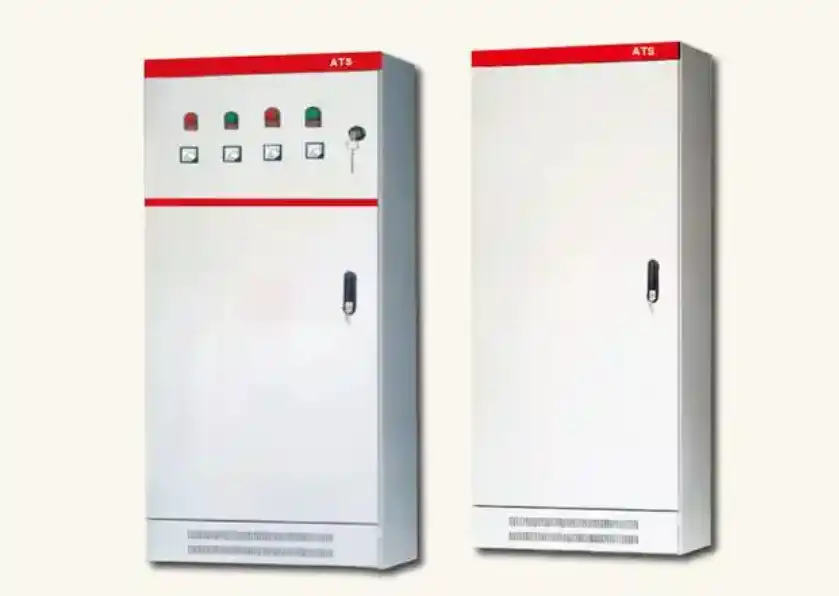
Understanding the Working Principle of Automatic Changeover Switch
Intelligent power monitoring and quick response mechanisms are at the heart of how an Automatic Changeover Switch works. These automated systems work on their own thanks to complex sensor networks and control logic. This is different from manual transfer switches, which need to be reset by a person when the power goes out.
Core Components That Make Switching Possible
There are four important parts that work together to make a reliable transfer switch system. With an accuracy of ±1%, the voltage sensing module constantly checks both the primary and backup power lines for things like voltage magnitude, phase sequence, and frequency deviations. When abnormalities reach certain levels, the microprocessor-based controller starts switching in a way that has already been set up. The mechanical transfer mechanism physically disconnects from the failing source and connects to the backup supply. It is made with high-grade copper contacts and arc-resistant alloys. Also, two mechanical-electrical interlocks keep both sources from being cut off at the same time, which would be a disaster because it could damage generators or cause dangerous backfeed conditions in utility lines.
Step-by-Step Switching Sequence
The process of transitioning follows a carefully planned schedule. During normal operation, the Automatic Changeover Switch keeps the load connected to the main power source and keeps an eye on power quality metrics all the time. When the voltage falls below 85% of its nominal value, rises above 110%, or loses phase, the controller starts a verification timer that lasts between 0.5 and 5 seconds. This helps the controller tell the difference between real faults and short-term disturbances. After this amount of time, if the problem still exists, the system sends a signal to start the generator and use the backup power sources. The physical switch is turned on by the transfer mechanism as soon as the backup generator reaches stable operating conditions, which usually takes about 10 to 15 seconds. Depending on the system, the whole process, from finding a fault to moving the load, can be finished in less than 20 milliseconds for important tasks and up to 3 seconds for normal ones.
Distinguishing Automatic Changeover Switches from Manual Alternatives
There are many operational differences between automatic and manual systems that are not just about ease of use. When power goes out, trained people have to physically operate the switching mechanisms on manual transfer switches. This process takes between 2 and 5 minutes on average and is prone to human error. Automatic systems get rid of this risk by finding and fixing problems right away. This makes them essential in places that house life-support equipment, data servers, or continuous manufacturing processes. Today's Automatic Changeover Switch units have microprocessors that make them smart. These microprocessors also make it possible for advanced features like priority load shedding, which turns off non-critical circuits one by one to keep the generator from overloading during startup.
Types of Automatic Changeover Switches and Their Applications
Transfer switch technology has grown to handle different voltage levels, load capacities, and power source combinations in many different industries. Knowing about these differences helps procurement teams choose equipment that exactly meets the needs of their operations.
Single-Phase Versus Three-Phase Configurations
Automatic single-phase switch that works with 120V to 240V AC is usually used for backup power in homes, small businesses, and protecting individual pieces of equipment with current ratings of up to 400A. Three-phase systems are the workhorses of industrial power distribution. They can handle 208V to 660V AC, which is what most factories, hospitals, and data centers need. These units can handle current ratings of 100A to 3200A, which is enough for CNC machines, HVAC systems, and server farms that need a lot of power. The Xi'an Xikai ATS Automatic Changeover Switch series covers the whole range, with voltage ranges and current capacities that can be changed and are certified to UL 1008 and IEC 60947-6-1 standards.
Specialized Variants for Modern Power Systems
Automatic Changeover Switches that work with uninterruptible power supply (UPS) systems are becoming more and more compatible with battery backup integration. These setups make sure that power stays on right away during the short transition time before generators reach full speed. Solar-compatible transfer switches handle the unique problems that come up when you want to use renewable energy, like managing power flow in both directions and dealing with the voltage changes that happen naturally in photovoltaic systems. Our solutions include Modbus and IoT connectivity, which lets you monitor from afar and connect to building management systems. This is something that EPC firms that are designing smart grid infrastructure really value.
Clarifying Common Terminology Confusion
The terms "Automatic Changeover Switch" and "Automatic Changeover Switch" are often used interchangeably in the business world, even though they refer to the same piece of equipment. Terminology is based on regional preferences. For example, "Automatic Changeover Switch" is commonly used in European and Asian markets, while "Automatic Changeover Switch" is more common in North American specifications. When reviewing international supplier catalogs or working with global engineering teams, it's easier to avoid procurement confusion when you know about this equivalence. Some specifications talk about a "isolation switch function" that lets you physically disconnect the switches so that they can be serviced safely. This is a standard feature of good Automatic Changeover Switch designs.
Benefits and Advantages of Using Automatic Changeover Switches
When you invest in automated switching technology, you get measurable returns in the form of improved safety, operational reliability, and lower long-term costs. These benefits are especially useful for people who run facilities that handle mission-critical infrastructure.
Ensuring Zero-Tolerance Power Continuity
Studies by the Aberdeen Research Group show that factories lose an average of $5,600 per minute during unplanned downtime. Power changes happen quickly in Automatic Changeover Switches—in 20 milliseconds to 3 seconds. This keeps production lines running, keeps data from getting corrupted in server environments, and keeps life-safety systems in healthcare facilities up and running. Our microprocessor-based control technology lets us precisely monitor voltage and spot power quality degradation before it leads to total failure. This lets us switch on and off power before it happens, which protects sensitive electronics from voltage drops and spikes. This feature is very important for data centers because even short power outages can mess up database transactions and cloud services.
Enhancing Operational Safety Through Automation
About 70% of electrical accidents that happen when switching things on and off by hand are caused by mistakes made by people. These mistakes usually happen when the phase sequence connections are wrong or when power sources are accidentally connected in parallel. These risks are taken away by automated systems that have built-in overvoltage, undervoltage, and phase-loss detection that stops transfer when unsafe conditions are present. Mechanical and electrical interlock mechanisms, which are two layers of safety in high-quality units like those made by Xi'an Xikai, physically stop both breakers from being closed at the same time. This keeps generators from being severely damaged and stops dangerous backfeed into utility lines that puts service workers in danger. Flame-retardant materials and arc-resistant construction that meets NFPA 70 standards also make fire safety better.
Long-Term Cost-Effectiveness Analysis
Automatic Changeover Switches cost more up front than manual ones, but when you add up all the costs, you see that they are much more cost-effective in the long run. When downtime is cut down, revenue stays the same and penalties for breaching contracts are avoided. Features that save energy, like eco-mode settings that favor renewable energy sources and limit the generator's runtime when it's not needed, reduce fuel use by 15 to 25 percent yearly. The Xi'an Xikai product line has a mechanical life of 10,000 cycles or more, which means they don't need to be replaced as often as cheaper units that are only rated for 5,000 cycles. IoT connectivity makes predictive maintenance possible, which improves service scheduling even more and stops catastrophic failures that cost a lot to fix and cause long periods of downtime.
Practical Guide for Installation, Maintenance, and Troubleshooting
To properly set up Automatic Changeover Switches, you need to follow established electrical codes, manufacturer instructions, and best practices in the industry. Installing things correctly and keeping them in good shape directly affects how reliable a system is and how long the equipment lasts.
Installation Overview and Integration Considerations
Site preparation requires adequate space and an ambient range of -30°C to +70°C. The Automatic Changeover Switch is installed between the utility entrance and distribution panel with conductors sized for maximum fault current. Phase sequence must be verified in three-phase systems to avoid motor damage. Generator integration requires correct wiring of control signals such as start contacts and status feedback. Technical teams provide wiring diagrams for Cummins, Caterpillar, and Kohler systems to ensure compatibility with backup power sources.
Common Faults and Diagnostic Procedures
Transfer failure typically results from control circuit issues, mechanical wear, or external power quality problems. Technicians should verify control voltage (24V DC or 120V AC), inspect sensor corrosion, and confirm generator signal transmission. Nuisance tripping during brief outages indicates incorrect delay settings or overly sensitive thresholds. Mechanical resistance during switching suggests worn contacts or misalignment, requiring immediate correction to prevent emergency failure.
Maintenance Best Practices for Maximum Reliability
Preventive maintenance includes quarterly visual inspections for loose wiring, overheating, or insect intrusion. Semi-annual functional testing evaluates transfer timing and load performance. Annual inspections involve insulation testing, contact resistance measurement, and relay calibration. In harsh environments such as coastal or industrial zones, professional servicing every 2–3 years is recommended. Detailed maintenance logs help identify degradation trends before system failure occurs.
How to Choose and Procure the Best Automatic Changeover Switch for Your Business?
Specifications and choosing a vendor have a big effect on both the short-term success of a project and its long-term operational satisfaction. The best procurement results come from systematically evaluating technical requirements and supplier capabilities.
Critical Selection Criteria for Industrial Buyers
Capacity planning should include total load plus a 25% safety margin for future expansion and surge currents. Voltage and phase must match existing infrastructure, as conversion between single and three-phase systems is costly. Generator compatibility must include control coordination, warm-up timing, and voltage/frequency stabilization. Certifications vary by application, such as UL 1008 for healthcare and CE/IEC compliance for exports. Xi'an Xikai offers configurable systems from 220V–660V and 100A–3200A.
Evaluating Suppliers and Service Capabilities
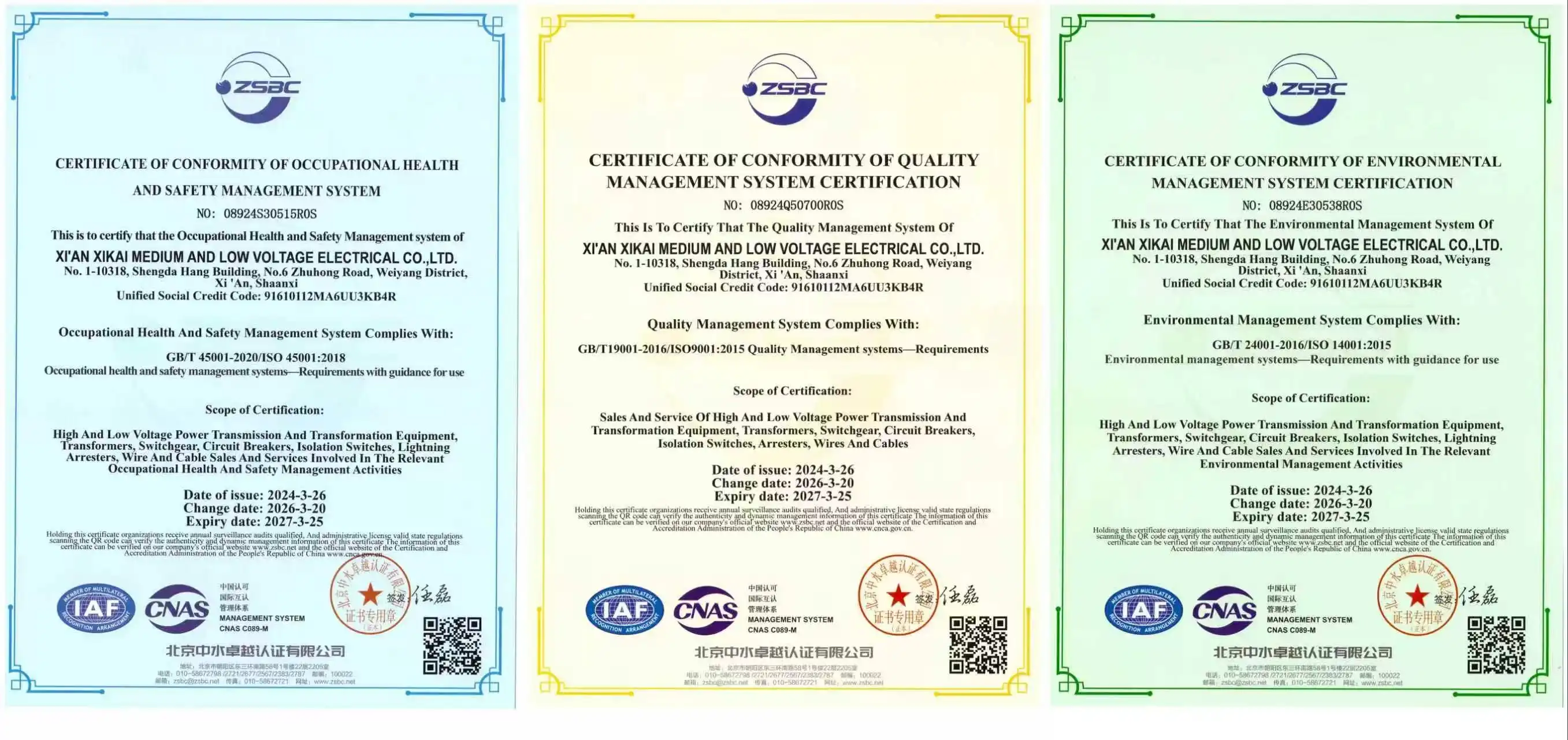
Procurement teams should assess ISO 9001, 14001, and 45001 certifications to confirm quality, environmental, and safety standards. 24/7 multilingual technical support is critical for minimizing downtime during emergencies. Spare parts availability and regional inventory networks significantly affect recovery speed. Xi'an Xikai operates advanced testing facilities with over 27 inspections and 72-hour load simulations, ensuring product reliability before shipment.
Pricing Structures and Value Optimization
Total cost of ownership includes more than unit price. Bulk purchasing reduces spare part inventory and simplifies training across multi-site operations. Customization such as environmental enclosures or monitoring systems increases upfront cost but improves long-term performance. Extended warranties reduce risk, with Xi'an Xikai offering 5-year coverage compared to the industry standard of 3 years. Buyers should evaluate lifecycle cost, maintenance needs, and efficiency differences across suppliers.
Conclusion
It is a smart investment in operational resilience, safety, and cost-effectiveness to choose and use Automatic Changeover Switches. Modern Automatic Changeover Switch technology directly meets the needs of industrial facilities, utility operators, and commercial complexes that must always have power. Its microprocessor-controlled accuracy, fast transfer speeds, and full protection features are exactly what these places need. By knowing how things work at their core, comparing different configuration options to specific operational needs, and working with well-known manufacturers who offer reliable products and full support, procurement teams can confidently choose solutions that protect revenue, keep employees safe, and reduce energy costs in demanding situations.
FAQ: Frequently Asked Questions
1. What is the difference between an automatic changeover switch and a manual transfer switch?
When the power goes out, trained people have to physically operate the switching mechanism on a manual transfer switch. This means that there is a chance of human error and response times are usually between 2 and 5 minutes. Continuous voltage monitoring lets automatic systems find faults in milliseconds and perform transfers without any help from a person, usually finishing the sequence in less than 3 seconds. Response times are cut down by automation, which is very important in healthcare and data center settings where power outages can cause immediate damage or data loss.
2. How does an automatic transfer switch integrate with solar power systems?
Automatic Changeover Switches that work with solar panels control the flow of power in both directions between photovoltaic inverters, the utility grid, and battery storage systems. These units can handle the changes in voltage that come with using renewable energy sources, and they can communicate with inverter control systems using either Modbus or dry-contact signals. The Xi'an Xikai ATS series has special configurations that can handle the switching needs of hybrid renewable energy installations while still following grid code.
3. What maintenance intervals ensure reliable operation?
Visual inspections of connections and the environment every three months help find problems early. Functional testing under load every six months makes sure everything is working right and that the transfer timing stays within the parameters. Failures caused by degradation can be avoided by doing full inspections once a year that include measuring contact resistance and testing the insulation. Units that work in harsh environments or go through a lot of switching cycles should be inspected by certified technicians every two to three years.
Partner with Xi'an Xikai for Premium Automatic Changeover Switch Solutions
Xi'an Xikai Medium & Low Voltage Electric Co., Ltd. has more than 15 years of experience in research and development and can make a wide range of products in over 100 different styles. Our ATS Automatic Changeover Switch series has UL 1008 and IEC 60947-6-1 certifications, and can handle currents from 100A to 3200A. It is controlled by a microprocessor and has fast transfer times of less than 20ms for critical loads. We make Automatic Changeover Switches that are used by State Grid systems, petrochemical facilities, and healthcare institutions. Our solutions are tailored to meet the specific needs of these environments and can work at heights of up to 4,000 meters. Our global support network offers technical help 24 hours a day, 7 days a week in 12 languages, a 5-year warranty, and fast delivery of spare parts to reduce the risk of downtime. Please email our technical experts at serina@xaxd-electric.com, amber@xaxd-electric.com, or luna@xaxd-electric.com for full product details, competitive bulk pricing, and installation instructions that are specific to your facility's needs. Visit xaxd-electric.com to see our full catalog and learn how our patented technologies and ISO-certified manufacturing processes can help your mission-critical operations be more reliable.
References
1. National Fire Protection Association. (2020). NFPA 70: National Electrical Code, Article 700 - Emergency Systems. Quincy, MA: NFPA Publications.
2. Institute of Electrical and Electronics Engineers. (2018). IEEE Standard 446: Recommended Practice for Emergency and Standby Power Systems for Industrial and Commercial Applications. New York: IEEE Press.
3. Underwriters Laboratories. (2019). UL 1008: Standard for Safety - Transfer Switch Equipment, 9th Edition. Northbrook, IL: UL Standards Publications.
4. International Electrotechnical Commission. (2021). IEC 60947-6-1: Low-Voltage Switchgear and Controlgear - Part 6-1: Multiple Function Equipment - Automatic Transfer Switching Equipment. Geneva: IEC Publications.
5. Aberdeen Research Group. (2017). The True Cost of Downtime in Manufacturing: Quantifying Financial Impact and Mitigation Strategies. Boston: Aberdeen Strategy & Research.
6. American Society of Healthcare Engineering. (2019). Power Systems Reliability in Healthcare Facilities: Design, Installation, and Maintenance Guidelines. Chicago: ASHE Technical Publications.