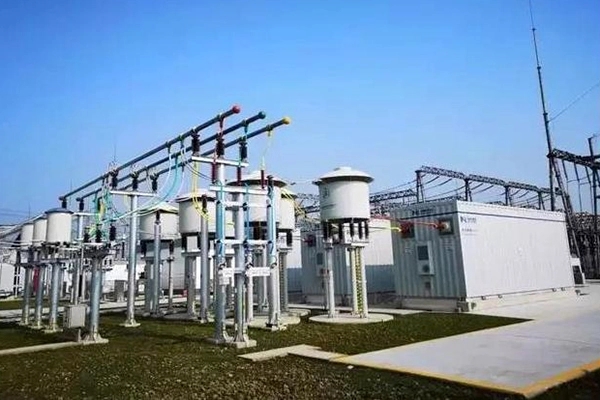
Best Low Voltage Withdrawable Switchgear for Industry
2026-05-06 16:57:44
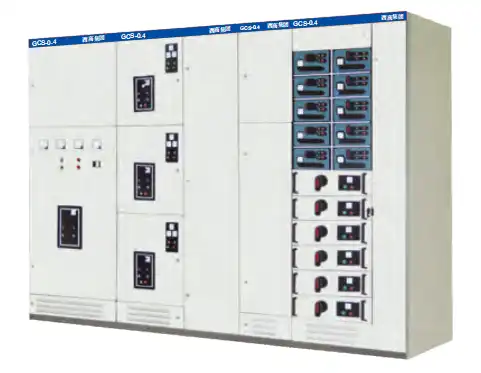
It is clear that Low Voltage Withdrawable Switchgear is the best choice for industrial facilities that need safe and flexible operations when looking at options for a strong power distribution infrastructure. Withdrawable systems let you replace parts without turning off the whole electrical network, unlike fixed installations that make maintenance more difficult. This method is shown by the GCS-0.4 series, which has a modular design and breaking capacities of up to 50kA, working with both 50Hz and 60Hz applications. This design has been used before and works well in places like factories, data centers, and utility companies where unplanned downtime can hurt profits and service reliability.
Understanding Low Voltage Withdrawable Switchgear
What Defines Withdrawable Switchgear Architecture
There are three main types of configurations used in modern power distribution equipment: fixed, plug-in, and withdrawable. Withdrawable designs use horizontal sliding carriages to physically separate protective devices or circuit breakers from live busbars. This is done by mechanically racking the carriages. This separation makes clear electrical zones inside metal-enclosed assemblies, which lets maintenance workers work on individual functional units while circuits next to them stay running. There are separate areas for busbar chambers, functional units, and cable termination zones on the GCS-0.4 platform, which meets the requirements of IEC 61439-2 for Form 4 separation.
Core Components and Operational Principles
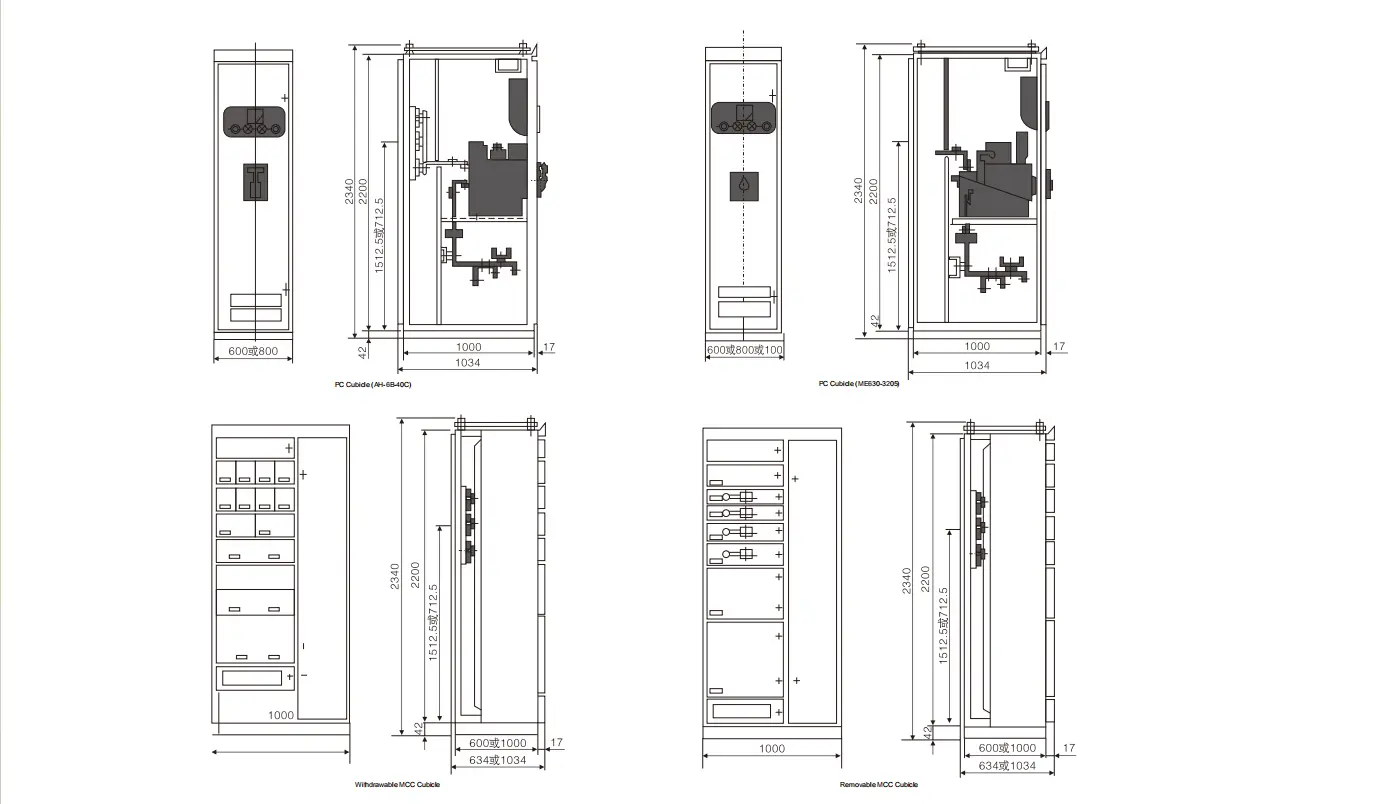
Each unit that can be withdrawn has a circuit breaker mounted on a chassis with mechanical interlocks that stop it from being withdrawn safely while it is still energized. When units are put into the operating position, plug-and-socket contact systems make electrical connections. These systems have pressure contacts that are spring-loaded and rated for 4,000 amperes or more. The modular framework lets different unit sizes fit into standard 600 mm-wide enclosures, which makes the most of limited space in installations. Rated insulation voltages of 660V and 1,000V support a wide range of voltage classes used in markets across North America and the world.
Safety Standards and Compliance Framework
Standardization groups set strict testing rules that industrial switchgear assemblies must follow. Type-tested designs that get IEC 60439-1 certification confirm that designs can withstand high temperatures and short circuits. In the US, UL 1558 sets the rules for how switchboards must be built. Some of the things that help stop arc flashes are metal walls between compartments and pressure relief vents that send fault energy away from operator zones. The GCS-0.4 is protected against solid objects up to IP40, and you can upgrade it to IP54 if you work in places with a lot of dust or moisture.
Knowing these technical basics helps procurement teams figure out if architectures that can be taken apart meet the needs of the facility. Accessibility for maintenance is especially helpful in industries with continuous processes, where production schedules can't wait for long power outages.
Comparing Low Voltage Withdrawable Switchgear with Other Types
Withdrawable Versus Fixed Switchgear
When you need to do maintenance on fixed switchgear, you have to physically disconnect the conductors so that the circuit breakers and other safety devices can be used. This method lowers the initial cost of the equipment, but it takes longer to maintain because technicians have to disconnect whole sections and make sure they are no longer powered on before they can access parts. Fixed designs may work for facilities with a single shift, but Low Voltage Withdrawable Switchgear configurations that let service happen during production hours are better for facilities with multiple shifts. Studies show that withdrawable systems cut down on maintenance windows by 60–70% compared to fixed options. This means that equipment availability metrics are improved in a measurable way.
Operational Flexibility and Lifecycle Economics
Fixed assemblies are simple, but withdrawable units offer strategic benefits when dealing with equipment that is no longer useful. As the needs of production change, operators can change individual circuit breakers to ones with higher ratings or better safety features without changing the infrastructure around them. Standardized unit dimensions across the GCS-0.4 platform make sure that installations from the time of initial commissioning can work with newer ones. This flexibility protects investments over the 20-year operational lifespans that are common for industrial electrical distribution systems.
Application Suitability Across Industrial Segments
In factories with automated assembly lines, keeping the lines running smoothly is very important. This is why it's necessary to have switchgear that can be removed. This is also true for predictive maintenance programs that service equipment based on condition monitoring instead of random schedules. Since power outages affect thousands of users right away, data centers that support cloud computing infrastructure need to be available at the same level of reliability. On the other hand, small commercial buildings with simple electrical needs may be able to get enough reliability from fixed switchboards at lower costs. By looking at these application-specific priorities, you can choose the right technology.The comparison shows that designs that can be taken out of service justify higher initial investments when keeping operations going could have big financial effects. When making procurement specifications, facilities should compare differences in equipment costs with shorter mean times to repair.
Benefits and Industrial Applications of Low Voltage Withdrawable Switchgear
Enhanced Safety Protocols for Maintenance Personnel
When doing electrical maintenance, there are risks of arc flash and shock that can happen. Low Voltage Withdrawable Switchgear mechanisms help reduce these risks by keeping workers away from live conductors. Using insulated handles, rack devices let technicians move circuit breakers between disconnected, test, and connected positions while staying away from live parts. Mechanical interlocks stop units from pulling away when they are under a load that could cause destructive arcs. These engineered safety measures help meet the NFPA 70E compliance standards for training qualified staff and choosing the right personal protective equipment.The compartmentalized structure in the GCS-0.4 series makes it even harder for faults to spread. When there is a short-circuit, arc-resistant features direct heat energy through specific paths instead of exposing nearby equipment or people. According to IEC 61641, testing makes sure that enclosures keep their structural integrity when they are exposed to internal arcing faults. This keeps operators near the equipment safe when failures happen.
Operational Continuity for Critical Infrastructure
Maintenance schedules can't always be used to plan breaks in production at industrial facilities. Condition-based servicing is possible with withdrawable switchgear because it lets technicians replace circuit breakers that show signs of wear without affecting the parallel circuits that power important loads. In the day shifts, a petrochemical plant might work on motor control circuits for non-critical pumps while keeping the power on to safety instruments and cooling systems for the reactor. This selective maintenance feature makes the system more reliable by fixing problems as they arise, before they get so bad that they require forced outages.Data center operators have to meet very strict uptime standards. For example, Tier III facilities should be available 99.982% of the time. Modular switchgear designs can work with N+1 redundancy architectures, which use parallel distribution paths to keep the power on even when a part is being fixed or a failure happens. These strategies for redundancy are supported by the ability to hot-swap withdrawable units, which reduces the number of single points of failure in the electrical infrastructure.
Maintenance Strategies Optimizing Equipment Lifespan
When properly maintained, switchgear assemblies usually last between 25 and 30 years, but harsh operating conditions speed up the wear and tear on the parts. Withdrawable designs make it easier to do inspections that check for things like mechanical operation, insulation integrity, and contact resistance without having to shut down for long periods of time. Using infrared thermography on live equipment to find connections that are getting too hot lets you do targeted maintenance instead of replacing all the parts at once. The GCS-0.4 platform can integrate instruments for continuous monitoring of electrical parameters. This supports predictive analytics that figure out when maintenance is needed based on the actual condition of the equipment instead of general schedules.Because of these operational benefits, withdrawable configurations are becoming more and more common for mission-critical power distribution systems. Facilities benefit from lower maintenance costs because outages last less time and accidents happen less often when workers are safer.
How to Choose the Best Low Voltage Withdrawable Switchgear for Your Industry
Defining Technical Requirements and Environmental Considerations
Before choosing the right Low Voltage Withdrawable Switchgear, you need to write down some electrical parameters, such as the short-circuit current levels, load classifications, and voltage regulation needs. Utility interconnection studies show the fault current that is available at service entrance points. This information is used to figure out what rating of interrupting current main circuit breakers need. The GCS-0.4 can handle short-circuit currents of up to 50kA, which meets the needs of most industrial distribution needs without the need for high-end equipment. The ambient operating conditions also affect the choice of equipment. Standard designs can handle temperatures between -10°C and +40°C. Facilities in harsh climates might need parts that can adapt to different temperatures or environmental enclosures.Both thermal performance and dielectric strength are affected by altitude. Standard equipment is rated for use below 2,000 meters elevation. For projects in mountainous or plateau areas, it is important to ask for designs that are altitude-compensated and keep their full ratings at elevations up to 4,000 meters. In the same way, seismic factors affect mounting needs, especially in places where there is a high risk of earthquakes. The GCS-0.4 meets the requirements for seismic scale 8 by having a stronger cabinet and systems that keep parts in place.
Evaluating Performance Metrics and Scalability
In addition to basic electrical ratings, procurement teams should look at how efficiency factors affect operational costs. Modern switchgear designs minimize resistive losses by using high-conductivity materials and busbar shapes that are perfectly shaped. Good assemblies achieve 99.5% efficiency or higher. Energy losses may not seem like much on a single unit, but they add up over hundreds of circuits in large facilities, which is why they need to be carefully looked at when specifications are being made. When facilities plan to increase their capacity, modular architectures can help because they let them add functional units to existing enclosures in stages instead of replacing whole assemblies.Installation issues affect project timelines and the cost of commissioning. Factory-assembled and type-tested switchgear arrives at job sites ready to connect, which saves time and effort in the field compared to assemblies that need to be set up on-site. The GCS-0.4 uses standard mounting dimensions that work with existing installations. This makes it easier to upgrade old equipment in facilities that use retrofit applications. Another important selection factor is the ease of getting spare parts and technical support throughout the lifecycle of the equipment. This is especially true for facilities that work in areas that are far from manufacturer service centers.
Supplier Landscape and Procurement Strategies
On the global market, there are both well-known companies like Schneider Electric, Siemens, ABB, Eaton, and Mitsubishi Electric and smaller, more specialized companies from around the world. An international brand may have a wide range of products that can be used in many different situations, but the prices may be higher because of how the brand is positioned. Regional manufacturers, such as Xi'an Xikai, offer competitive alternatives that meet similar performance standards and offer quick technical support and the ability to make changes. Instead of just looking at the initial cost of acquisition, procurement strategies should look at the total cost of ownership, which includes the price of the equipment, the cost of installation, the cost of maintenance, and the expected service life.Organizations that manage multiple facilities or EPC firms working on a portfolio of projects can take advantage of volume procurement opportunities. Manufacturers often set pricing tiers based on the amount of an order. When you buy in bulk, you can get better rates and faster delivery times. Setting up relationships with preferred suppliers ensures continuity between projects, which helps engineering teams create standard designs and maintenance staff become more familiar with certain equipment platforms.Successful switchgear selection balances technical performance requirements against budget constraints and operational priorities. Including technical representatives from manufacturers early on in the specification development process makes sure that proposed solutions meet the needs of the specific application while still following all safety and electrical codes.
Conclusion
Choosing the right electrical distribution infrastructure is a strategic choice that affects the safety of the building, its dependability, and the cost of long-term maintenance. Low Voltage Withdrawable Switchgear offers adaptable solutions to meet a wide range of industrial needs by using modular designs that encourage safe maintenance methods and flexible capacity management. The GCS-0.4 platform is a great example of how modern switchgear should be made. It combines standard construction with flexible configurations that can be changed to fit the needs of any application. When it comes to making sure that operations don't stop, organizations that use withdrawable systems that reduce downtime due to maintenance and improve worker safety through built-in safeguards are a clear winner. When procurement teams carefully look at technical requirements, environmental factors, and supplier capabilities, they can make decisions that meet both short-term project needs and long-term facility goals.
Frequently Asked Questions About Industrial Switchgear Solutions
1. What safety standards apply to withdrawable switchgear installations?
For installations in North America, they need to follow UL 1558, which is about building switchboards, and NFPA 70, which is about how to install things. International markets use the IEC 61439 series of standards, which spell out the requirements for design verification and the rules for performance testing. According to IEEE 1584, an arc flash hazard analysis finds the incident energy levels that need the right personal protective equipment (PPE) during maintenance tasks.
2. How often should withdrawable units undergo maintenance inspection?
Maintenance intervals depend on how the machine is being used and what the manufacturer recommends. Typical inspection cycles range from once a year to three times a year. Inspections should be done every six months in harsh environments or for heavy-duty applications, but they can be done more often in climate-controlled installations with moderate loads. Condition monitoring technologies make it possible to switch from time-based to condition-based maintenance plans, which makes the best use of resources.
3. What factors determine the choice between withdrawable and fixed configurations?
Organizations should weigh the need for maintenance accessibility against the need to stay within budget and the importance of the operation. Low Voltage Withdrawable Switchgear designs let parts be serviced without turning off the system, which is helpful for facilities with continuous processes that need maximum uptime. Fixed switchboards may be enough for projects with limited funds and easy access for maintenance. Making decisions that are good for the economy means comparing differences in mean time to repair to equipment cost premiums.
Partner with Xi'an Xikai for Your Power Distribution Needs
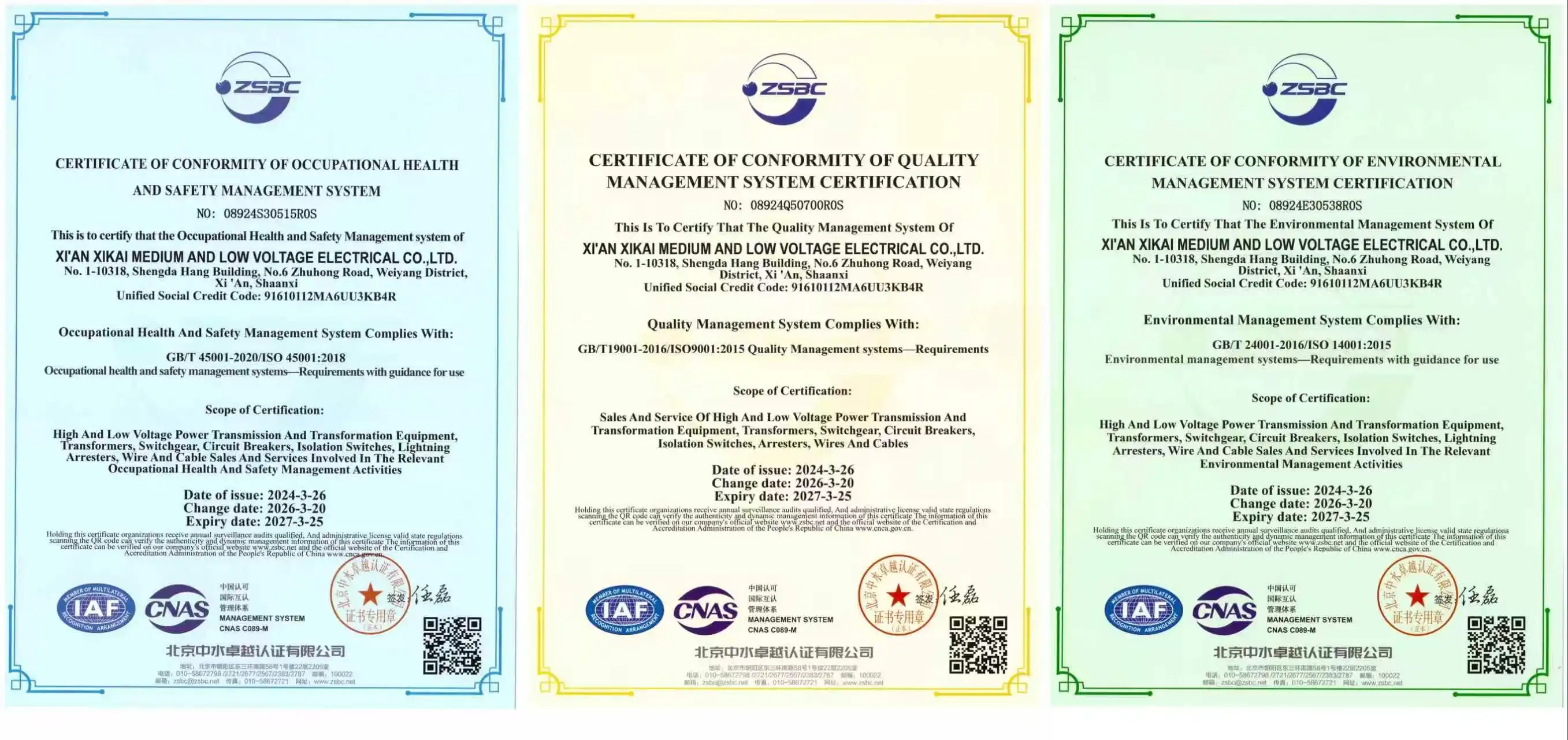
Xi'an Xikai Medium & Low Voltage Electric Co., Ltd. is an industrial electrical infrastructure company that works in the commercial, utilities, and manufacturing sectors. Our engineering teams work with facility managers and EPC contractors to create custom Low Voltage Withdrawable Switchgear solutions that meet the needs of each application. The GCS-0.4 platform has been shown to be reliable through manufacturing processes that are ISO 9001-certified and thorough quality verification testing. You can talk to our technical experts about your project by emailing serina@xaxd-electric.com, amber@xaxd-electric.com, or luna@xaxd-electric.com. We offer competitive quotes for both single assemblies and large orders, as well as detailed technical documentation and application engineering support. Visit xaxd-electric.com to see all of our products and find information that will help you make smart purchasing decisions. We are a well-known company that makes Low Voltage Withdrawable Switchgear, and we can help your facility reach its power distribution goals.
References
1. IEEE Standards Association. "IEEE Guide for Performing Arc-Flash Hazard Calculations." IEEE Standard 1584-2018, Institute of Electrical and Electronics Engineers, 2018.
2. International Electrotechnical Commission. "Low-voltage switchgear and controlgear assemblies – Part 2: Power switchgear and controlgear assemblies." IEC 61439-2:2020, International Electrotechnical Commission, 2020.
3. National Fire Protection Association. "Standard for Electrical Safety in the Workplace." NFPA 70E-2021, National Fire Protection Association, 2021.
4. Underwriters Laboratories. "Industrial Control Panels." UL Standard 508A, Underwriters Laboratories Inc., 2019 edition with revisions.
5. Zhang, Wei and Chen, Lihua. "Modular Switchgear Design Optimization for Industrial Power Distribution Systems." Journal of Electrical Engineering & Technology, vol. 15, no. 3, 2020, pp. 1247-1259.
6. American National Standards Institute. "Safety Requirements for Electrical and Electronic Measuring and Controlling Instrumentation." ANSI/ISA-61010-1-2012, Instrumentation Systems and Automation Society, 2012.