Benefits of Metal-Clad Withdrawable Switchgear Systems
2026-05-12 11:59:02
Metal-Clad Withdrawable Switchgear is a revolutionary way to distribute power in factories because it offers unmatched safety, maintenance freedom, and operating dependability. These systems let you physically remove circuit breakers for maintenance without turning off the power to nearby equipment. This cuts down on downtime by a huge amount and keeps people safe from arc flash dangers. This technology meets the main needs of modern facilities that need constant power availability, regulatory compliance, and cost-effective lifecycle management. It does this by quickly identifying faults and allowing hot-swappable component replacement.
 |
 |
What Is Metal-Clad Withdrawable Switchgear?
Defining the Technology and Its Core Components
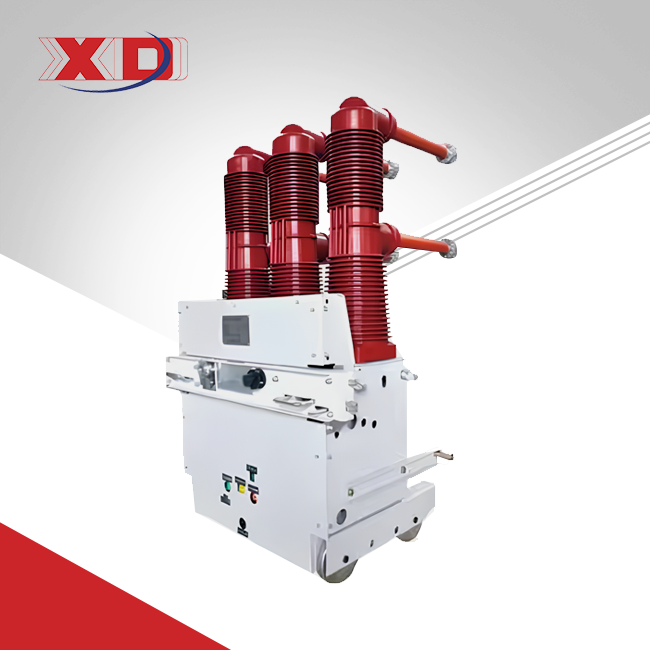
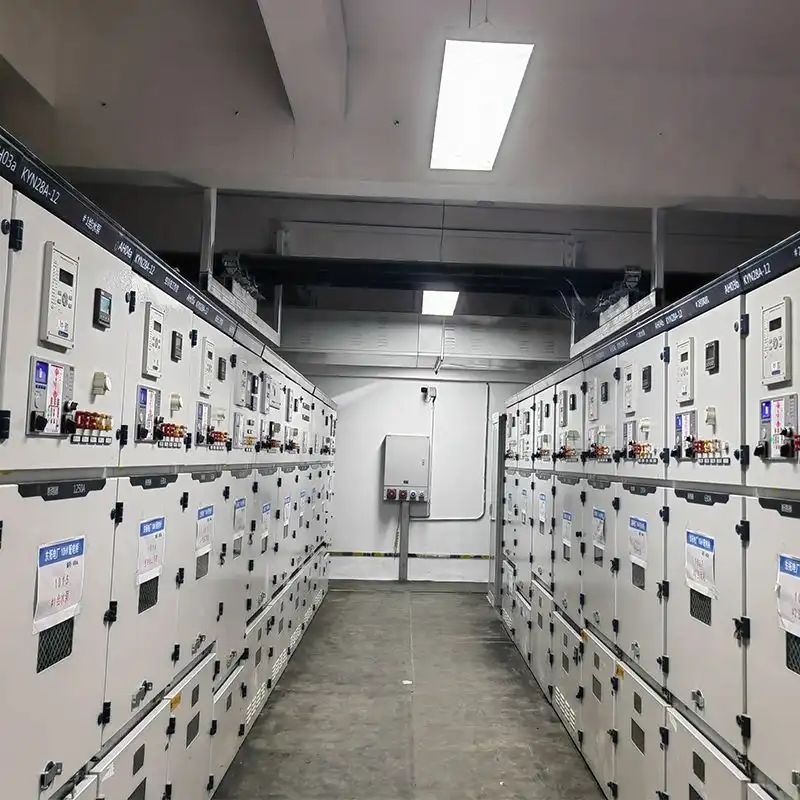
Metal-Clad Withdrawable Switchgear is made up of metal sections that are completely closed off and hold sensors, circuit breakers, busbars, and control units. The Metal-Clad Withdrawable Switchgear is different from permanent setups because it uses precision-guided tracks that let breakers move between the connected, test, and disconnected states. Grounded metal barriers keep each section physically separate, making separate areas for the main bus, breaker, wire termination, and control electronics. This modular design makes sure that repair work on one unit never affects the integrity of parts next to it. This lets only certain sections be serviced without having to shut down the whole system. The mechanical interlock steps are what make the system work. They stop unsafe actions by using hardwired safety reasoning. Breaker operators cannot rack a breaker into the linked position if the room door is not locked and closed. In the same way, to get to the inside parts, the breaker has to be fully withdrawn, and the automatic shutters have to be closed to stop live bus links. These fail-safe features get rid of the risks of human mistakes that come with regular electrical designs.
Standards Compliance and Safety Architecture
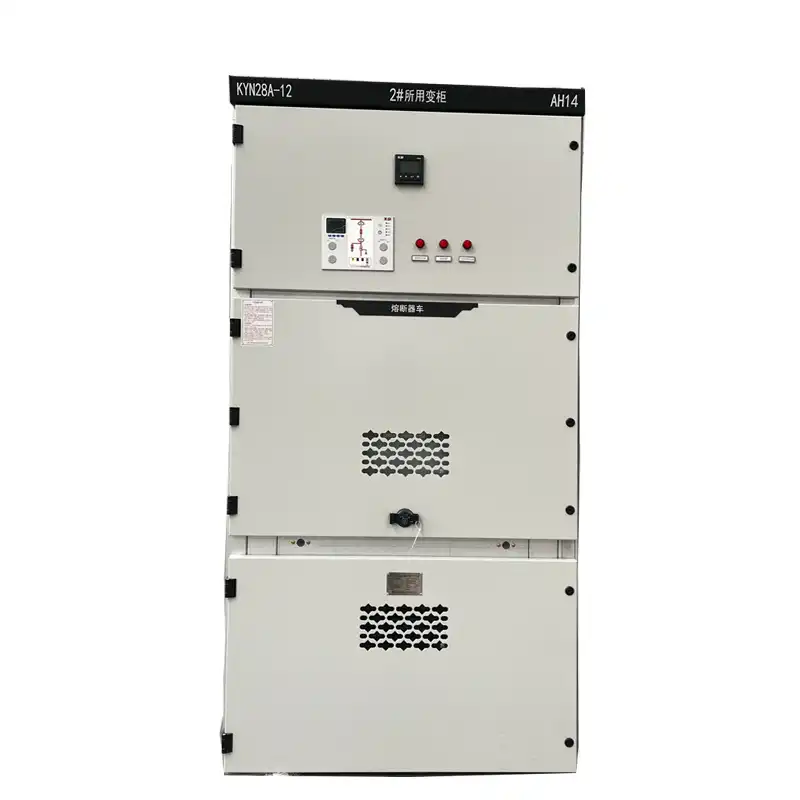
Modern Metal-Clad Withdrawable Switchgear must meet strict international standards like IEEE C37.20.2, IEC 62271-200, and ANSI C37.06. These standards require specific arc-flash control capabilities, insulation coordination, and weather resistance. During certification testing, equipment is exposed to fault currents greater than 63kA for set amounts of time. This makes sure that internal arcs stay inside sections and don't break through barriers or release dangerous materials. The dead-front design hides any live parts that might be touched. Full labeling and visual position signs show the state at all times during operation and maintenance. This way of thinking is shown by our KYN28-12 Removable Metal-Clad Withdrawable Switchgear, which has five-layer safety interlocks that stop circuit breaker mistakes, stop entry to the live compartment, and stop grounding problems. It works with ABB VD4 and VS1 vacuum circuit breakers and is rated at 12kV and 50Hz. It provides arc-resistant safety that has been proven by IEC 62271 compliance tests.
Key Benefits of Metal-Clad Withdrawable Switchgear Systems
Enhanced Operational Safety Through Compartmentalization
The compartmentalized design puts up physical barriers between high-voltage areas and areas where operators can reach them. This makes routine repair much safer by lowering the risk of arc flashes. When electricians need to check or repair a circuit breaker, they take it out of its case and close the automatic shutters over the live bus connections. This process turns possibly dangerous repair jobs into safe ones that don't need any extra safety gear besides standard electrical safety rules. Because their buildings are always running and repair workers are often close to powered equipment, data centers and hospitals really value this safety benefit. Metal-Clad Withdrawable Switchgear lowers arc flash incident energy by up to 80% compared to Metal-Clad Withdrawable Switchgear open-bus designs, according to studies. This directly leads to lower insurance rates and better worker safety.
Maintenance Flexibility and Reduced Downtime
Traditional fixed switchgear needs the whole system to be turned off so that the breakers can be serviced. This means that the facility has to be shut down or rely on backup power sources. Metal-Clad Withdrawable Switchgear gets rid of this problem by letting techs take out individual breakers for testing, calibration, or repair while the feeds next to them keep working. This feature of being able to be hot-swapped is very useful in factories where production line stops cost a lot of money every hour. During storm recovery, utility companies use this flexibility to their advantage by quickly turning out broken breakers to get service back up and running while putting off more extensive fixes until off-peak times. The modular design also makes it easier to keep track of extra parts because standard breaker units can be used in more than one place in the switchgear range. Industrial sites that keep maintenance records show that when compared to set options, Metal-Clad Withdrawable Switchgear cut the average time it takes to fix things by 60%.
Space Efficiency and Scalability
When compared to fixed installations, compact vertical buildings take up 30–40% less floor space. This is helpful for urban substations and retrofits where space is limited. The standard footprint makes it possible to increase capacity in the future by adding new parts without having to remake the equipment that is already in place. Manufacturing plants are increasing output on this scale because it lets them add feeder circuits gradually, meeting their planned equipment investments, instead of installing too much at first. Our engineering team has put KYN28-12 systems in buildings with constant ratings from 1200A to 4000A, and they can handle voltage classes from distribution levels to subtransmission uses. The modular design lets you easily set up different setups, such as a single-bus, main-and-transfer, or double-bus setup.
Long-Term Cost Efficiency
Even though the starting costs of purchase are 15-20% higher than those of fixed switchgear, lifetime analysis always shows that the total cost of ownership is lower. Less repair downtime means less lost production, and better safety means fewer insurance claims and fines from the government. Energy economy goes up because vacuum interrupter technology has lower contact resistance, and busbar designs have been improved to lower I²R losses. Instead of just looking at capital spending, procurement managers should look at the total cost of ownership over 20 years, which includes labor for upkeep, replacement parts, insurance premiums, and energy use. For manufacturing buildings, the breakeven point is between 4 and 6 years. After that, Metal-Clad Withdrawable Switchgear saves a lot of money because they last for more than 30 years.
Metal-Clad Withdrawable Switchgear vs. Other Switchgear Types
Comparing Construction and Operational Characteristics
Metal-enclosed fixed switchgear has lower starting costs, but it is less flexible for repair because the whole system has to be turned off before parts can be accessed. Gas-insulated switchgear (GIS) makes better use of the space thanks to the dielectric properties of SF6, but it raises environmental worries due to greenhouse gas emissions and needs special upkeep. Designs that are air-insulated work well for outdoor setups but don't provide the arc containment and worker safety that are needed in industrial settings. Metal-Clad Withdrawable Switchgear strikes an optimal balance for sites that want to keep operations going because they combine strong safety features with easy repair access. The mechanical racking system is more complicated than fixed designs, but it is reliable because it is carefully machined and tested in the workshop. It has been shown that vacuum circuit breakers in frames that can be removed can block more than 10,000 times without needing new contacts. This is longer than the service life of older oil Metal-Clad Withdrawable Switchgear or air-magnetic technologies.
Performance Metrics and Reliability Considerations
Modern vacuum interrupters can handle short-circuit currents of up to 63kA at 12kV levels, making fault interruption power an important selection factor. The Metal-Clad Withdrawable Switchgear design makes it easy to quickly replace the breaker after it has been faulty. This means that the system is protected for hours instead of days, which is how long it takes for fixed breaker fixes to be done. Utility substations are built with Metal-Clad Withdrawable Switchgear construction so that they can be quickly fixed in case of an emergency. Contact resistance tests show that properly kept Metal-Clad Withdrawable Switchgear connections have thermal performance that is the same as permanently bolted joints. This puts an end to worries about the reliability of the connection. Spring-loaded contact systems keep the same pressure even after thousands of insertion rounds. Regular cleaning and lubrication keep them working well. According to IEEE standards, temperature rise testing proves that Metal-Clad Withdrawable Switchgear works within certain temperature limits when the maximum current is continuously applied.
Procurement Considerations for B2B Buyers
Technical Specifications and Certification Requirements
Regional norms, such as IEEE, IEC, and local electrical codes, should be required by Metal-Clad Withdrawable Switchgear procurement requirements. Make sure that sellers give you certified test results that show how well their products can handle short-circuits, temperature rise, and 10,000 operation cycles. Installations in areas prone to earthquakes need to be certified according to IEEE 693, which requires proof of shake-table testing from recognized labs. Whether regular catalog goods meet project needs or require engineered-to-order solutions depends on how customizable they are. The KYN28-12 platform can handle different types of breakers, such as ABB VD4 and VS1 models, isolation trucks, and transformer safety plans by letting you change how the compartments are set up. Integration into larger substation automation architectures is easy because it works with current safety relay systems and communication protocols.
Evaluating Supplier Capabilities and Support Infrastructure
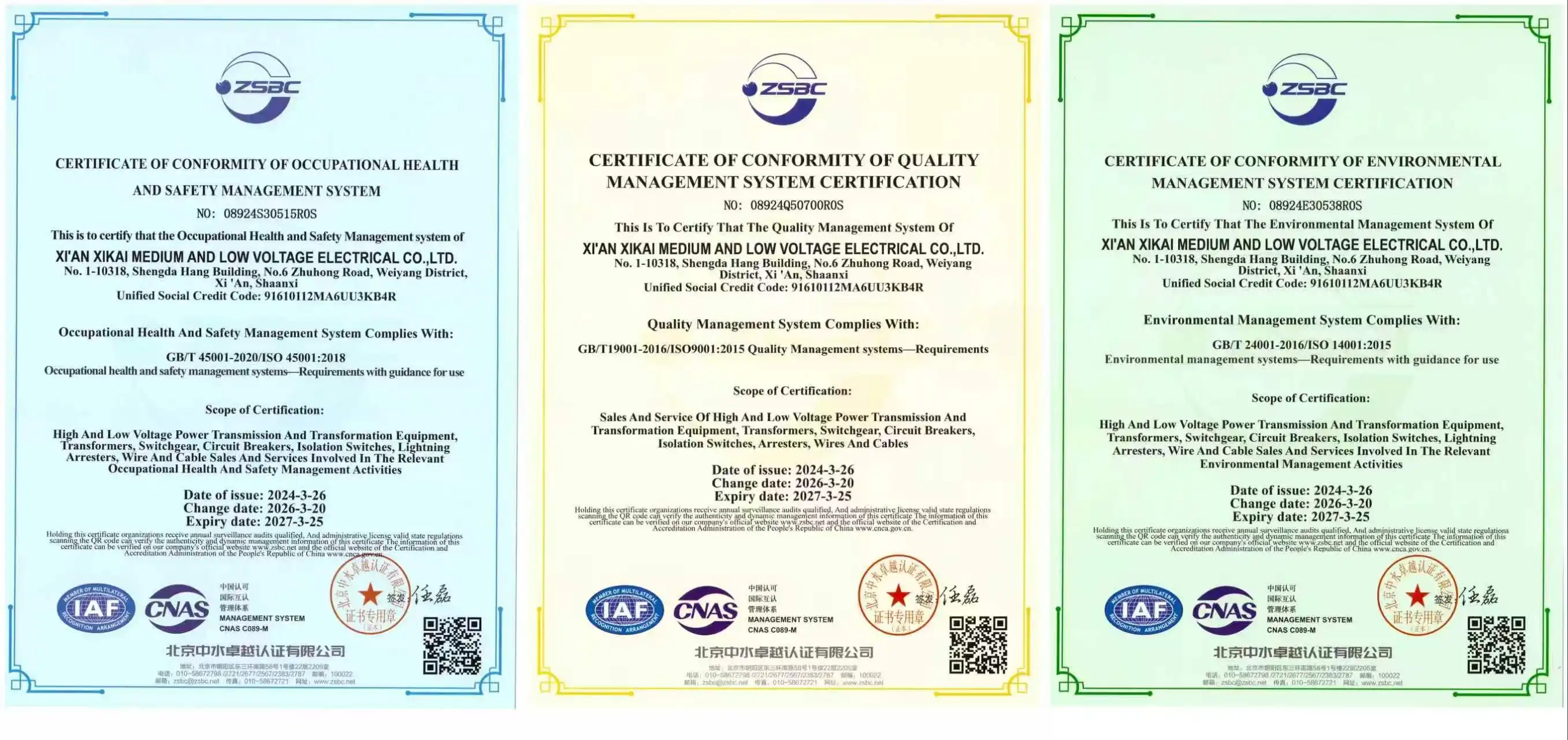
When evaluating a vendor, it's not just the specs of the products that are looked at; it's also the manufacturing quality systems, the reliability of shipping, and the expert help provided after the sale. ISO 9001 certification shows that quality management methods are well-established, and ISO 14001 certification shows that manufacturing activities are environmentally responsible. Purchasing teams should ask to do an audit of the plant to look at how it makes things, where it tests them, and how it handles the supply chain. Delivery times have a big effect on project plans. Standard goods usually ship within 12 to 16 weeks, while custom configurations take 20 to 26 weeks. Make it clear what the guarantee covers, how long it lasts, what services are included, and how quickly you will fix any problems that come up. Installation instructions, upkeep methods, spare parts catalogs, and training materials should all be included in complete paperwork packages that help with long-term asset management.
Cost Structures and Contract Negotiation Strategies
The clear price includes the basic costs of the equipment as well as extras like arc-flash reduction maintenance switches, motor operators for remote shelving, and advanced tracking systems. Volume discounts usually apply to sales of more than one unit, and economies of scale can lower costs by 8–12% for lines with more than three sections. Procurement deals are stronger when they include longer payment terms and performance promises. This is especially true for big capital projects that need to be delivered in stages. Ask for specific cost breakdowns that separate the parts of the price that are for material, labor, testing, and paperwork to find places where you can negotiate. Bundled service agreements that include help with commissioning, training for operators, and preventative maintenance programs make lifetime costs known and make sure the system works at its best. Long-term promises of spare parts availability, Metal-Clad Withdrawable Switchgear protect against risks of obsolescence that could make upkeep less possible in the future.
Typical Applications and Case Studies
Industrial Manufacturing Facilities
Metal-Clad Withdrawable Switchgear is used to protect the motor control centers that run pumps, compressors, and other process equipment in dangerous listed areas in chemical processing plants. Individual motor feeders can be serviced without stopping production lines next to them. This keeps the flow steady and stops costly batch losses. After replacing old fixed switchgear with new Metal-Clad Withdrawable Switchgear that includes predictive maintenance tracking, one petrochemical plant saw a 40% drop in unexpected downtime. These systems are used in auto assembly plants to handle the high starting currents that come from robotic welding equipment and air systems for paint booths. The arc-resistant design keeps faults from happening in harsh industrial settings where flying contaminants and vibrations make it hard for electrical equipment to work properly. Integration with programmable logic units lets equipment be set up in a way that uses the least amount of energy during production processes.
Utility Distribution Networks
Electric companies set up main distribution substations that serve both home and business loads with configurations that can be taken away. This is because service continuity has a direct effect on customer happiness measures. The hot-swappable maintenance feature lets planned breaker testing and calibration happen without affecting customers, helping to meet reliability goals of over 99.95% uptime. More and more, storm-hardening projects like compartmentalized designs that keep internal flaws contained and make it easy to change parts quickly during emergency repair operations. As part of grid modernization projects, new tracking features are added to platforms for Metal-Clad Withdrawable Switchgear. These features allow for real-time load analysis, measurement of harmonic distortion, and prediction of faults. This equipment works with utility analytics tools that find the best ways to use assets and find equipment that needs maintenance before it breaks down.
Mission-Critical Commercial Infrastructure
In order for data centers and hospitals to have reliable power systems, each part must be able to handle hot repair without affecting the system's operation. Metal-Clad Withdrawable Switchgear lets techs work on one distribution line while backup circuits take the full facility load in A/B bus configurations. This feature is especially useful for dealing in financial products because even short power outages can cause big losses in income and compliance reporting duties. Healthcare facilities like the extra safety features that keep maintenance workers safe when they're working in buildings that are already occupied, where an arc flash could put patients and staff in danger. It is easy to follow NFPA 70E electrical safety standards when switchgear design reduces the need for charged work by providing a wide range of Metal-Clad Withdrawable Switchgear functions.
Conclusion
For places that need to make sure they have the most service, keep their employees safe, and be able to change how they run their business, Metal-Clad Withdrawable Switchgear is the best choice. With the compartmentalized design and hot-swappable parts, maintenance goes from causing system downtime to being safe, regular tasks that can be done without any problems. Initial investments are higher than set options, but lifecycle cost analysis constantly shows that it is more valuable because it reduces downtime, improves safety, and can be expanded in the future. Before making a purchase, companies should look at all of a vendor's skills, not just the price. They should look at things like product quality, technical help, and the possibility of a long-term relationship.
FAQ
1. How does Metal-Clad Withdrawable Switchgear improve electrical safety?
The compartmentalized design puts physical hurdles between the powered parts and the areas where operators can reach them. When the breakers are in the "withdrawn" position, automatic shutters cut off live bus connections. Metal-Clad Withdrawable Switchgear interlocks stop dangerous actions by using hardwired processes that can't be changed. This gets rid of the risk of human mistakes. An arc-resistant building that has been tested to international standards has flaws inside that don't go through the enclosures, keeping people safe from arc flash dangers.
2. What factors influence procurement costs?
Base prices are based on voltage ratings, current capacity, fault interruption capability, and licensing criteria. Customization features like advanced tracking systems, specialized breaker types, and arc-flash reduction features raise prices by 10 to 25 percent. There are ways to negotiate for better prices on special features that don't break the bank, such as through volume savings, delivery plans, and bundled service agreements.
3. Can existing installations be retrofitted with withdrawable technology?
Retrofit potential is determined by the amount of floor area available, the strength of the structure, and how well it works with other equipment that is already in place. In modular designs, new Metal-Clad Withdrawable Switchgear can often be replaced in stages, with older fixed equipment being combined with the new sections during the transitional times. To come up with cost-effective repair strategies, engineering teams look at electrical coordination, compatibility of safety relays, and physical installation needs.
Partner with Xi'an Xikai for Advanced Metal-Clad Withdrawable Switchgear Solutions
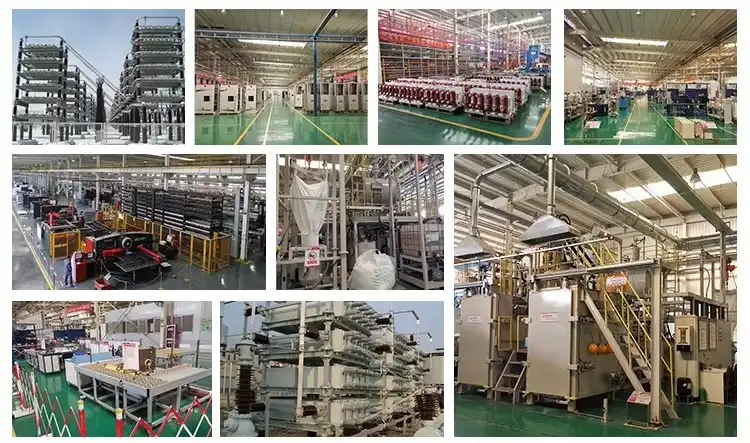
The Xi'an Xikai Medium & Low Voltage Electric Co., Ltd. makes the best Metal-Clad Withdrawable Switchgear systems in the business. These systems are designed to work perfectly in tough industrial, utility, and commercial settings. Our KYN28-12 platform has tried-and-true five-layer safety interlocks and works with ABB VD4 and VS1 circuit breakers. It provides dependable 12kV power distribution and comes with a full ISO 9001 quality guarantee. We work with companies in the power generation, steel metallurgy, petrochemicals, rail transportation, and green energy sectors. Our methods are patented and have been tested at heights above 4,000 meters. Get in touch with our skilled engineers at serina@xaxd-electric.com, amber@xaxd-electric.com, or luna@xaxd-electric.com to talk about your project needs and get personalized quotes. As a reliable company that makes Metal-Clad Withdrawable Switchgear, we offer full system solutions that include technical advice, help with installation, and lifecycle upkeep programs that make sure the equipment keeps working well for decades.
References
1. Institute of Electrical and Electronics Engineers (IEEE), "IEEE Standard for Metal-Clad Switchgear," IEEE C37.20.2-2015, IEEE Standards Association, 2015.
2. International Electrotechnical Commission (IEC), "High-Voltage Switchgear and Controlgear - Part 200: AC Metal-Enclosed Switchgear and Controlgear for Rated Voltages Above 1 kV and Up to and Including 52 kV," IEC 62271-200:2021, International Electrotechnical Commission, 2021.
3. National Fire Protection Association (NFPA), "Standard for Electrical Safety in the Workplace," NFPA 70E-2021, National Fire Protection Association, 2021.
4. American National Standards Institute (ANSI), "AC High-Voltage Circuit Breakers Rated on a Symmetrical Current Basis - Preferred Ratings and Related Required Capabilities for Voltages Above 1000 V," ANSI C37.06-2009, American National Standards Institute, 2009.
5. Das, J.C., "Arc Flash Hazard Analysis and Mitigation in Industrial and Commercial Power Systems," IEEE Transactions on Industry Applications, Volume 43, Issue 6, Pages 1522-1531, 2007.
6. Smith, D.R. and Swanson, S.A., "Medium Voltage Switchgear: Application and Maintenance Considerations for Industrial and Commercial Power Distribution Systems," IEEE Conference on Industrial and Commercial Power Systems Technical Conference, Pages 1-9, 2018.