Vacuum Circuit Breaker for Industrial Power Distribution
2026-05-09 16:25:16
In medium-voltage power distribution systems, a Vacuum Circuit Breaker is the first line of defense. It stops fault currents within milliseconds to protect important equipment. Unlike old technologies that used oil or air, these devices use vacuum arc-quenching chambers to stop electrical arcs right away. This makes sure that factories, data centers, and power lines can keep running without any problems. It's important to find the right safety tools by weighing technical specs, environmental resistance, and long-term dependability. The choices you make will have a direct effect on your business's profits and uptime.
 |
 |
Understanding Vacuum Circuit Breakers: Working Principles and Key Components
The way vacuum interruption technology works solves one of the most important problems in electrical engineering: how to safely put out high-energy sparks without creating other dangers. When the contacts in the vacuum interrupter box separate, an electrical arc appears in a space with almost no gas molecules. This vacuum medium stops ionization, so the arc falls apart on its own in 5–10 milliseconds when the AC cycle's current reaches zero. Since there are no reactive gases, there is no contact erosion. This is a problem that keeps happening in standard air breakers because repeated arcing wears down metal surfaces over time.
Core Components Working in Harmony
Four important elements work together to make sure that the circuit interrupts reliably. Copper-chromium contacts are sealed inside a ceramic or glass envelope in the vacuum interrupter bottle. This keeps the vacuum intact for 20 to 30 years under regular circumstances. The mechanical force to quickly separate contacts during fault detection comes from operating mechanisms, which can be either spring-driven or electromagnetic motors. Current-carrying terminals join the breaker to the busbars using silver-plated tulip contacts or fixed arms that can constantly handle 630A to 3150A without getting too hot. Support insulators and arc shields are examples of insulation parts that keep flashover between live parts from happening and keep the localized plasma contained during stoppage.
Maintenance Practices That Extend Service Life
Mechanical balance and measuring contact wear are the main parts of routine checks. Using micro-ohmmeters to measure contact resistance lets you find degradation before it leads to failures. Readings above the manufacturer's limits mean that the interrupter needs to be replaced. Once a year, lubricating the working mechanism connection stops it from binding, which could slow down the time it takes to respond to a fault. Monitoring the environment inside shelters finds wetness getting in or dust building up, which hurts the insulation's effectiveness, especially in places where the humidity level is close to the daily average of 95% relative humidity.
Vacuum Circuit Breaker vs Other Circuit Breakers: Making the Right Choice
When procurement teams look at protection gadgets, they have to think about the Vacuum Circuit Breaker more than just the cost of the original buy. When you compare vacuum technology to other options, you can see that they are very different in terms of their lifetime costs and how well they work.
Arc Quenching Performance Across Technologies
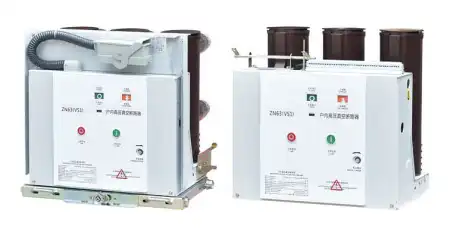
SF6 gas breakers work great for ultra-high voltage tasks, but they are bad for the environment because sulfur hexafluoride is one of the most powerful warming gases, and leaks can make climate problems worse. In North America and Europe, regulations are pushing for vacuum options for medium-voltage systems more and more. Oil circuit breakers used to be common in substations, but now they need complex fire control systems and oil filtering on a regular basis to get rid of carbon byproducts. Air magnetic breakers work well in low-voltage situations, but they need bigger enclosures because they need longer arc lengths to safely extinguish faults. Vacuum technology is the best fit for 12kV to 36kV circuits. The ZN63-VS1 Indoor Vacuum Circuit Breaker has this benefit because it can handle up to 24kV and 40kA of current, which is enough for most industrial distribution situations while still having a small size that makes it good for upgrade projects. It works in temperatures ranging from -15°C to +40°C, so it can be used in a wide range of climates. Unlike fluid-based options, it doesn't lose performance when temps get too high or too low.
Total Cost of Ownership Analysis
The real story about money is shown by maintenance gaps. Air breakers only need to be checked every 2,000 cycles, while Vacuum Circuit Breakers need to be checked every 5,000 to 10,000 cycles. This means that upkeep labor costs will be 40–60% cheaper over a 25-year service life. SF6 equipment needs to be tested for gas leaks every year and eventually shut down so that the refrigerant can be thrown away properly. Oil breakers need to have their fluids analyzed and replaced every two years, and the filtration system needs to be maintained to keep the environment from getting contaminated. Costs are affected by how well energy is used as well. Vacuum contacts have less resistance than air gap contacts, which means that less I²R is lost when current flows normally. This difference amounts to a measurable drop in heat for a 2000A breaker that is always holding 80% of its load. This is important when cooling costs are a big part of energy bills in switchgear rooms that are closed off.
Procurement Insights: Buying Vacuum Circuit Breakers for Industrial Use
To find your way around the global market for medium-voltage equipment, you need to know how specifications affect price and how to choose a seller in a way that guarantees reliable delivery.
Pricing Dynamics in 2026 Market Conditions
The main thing that affects cost is the rated current ability. Models that handle 630A to 1250A are the starting level for smaller distribution panels. Models that handle 2500A to 3150A are more expensive because they have bigger interrupter bottles and stronger contact assemblies. Base prices go up by 15–25% for each level of certification. For example, IEC 62271-100 compliance is the minimum standard, while UL-listed equipment allowed for North American sites has extra testing costs that buyers have to pay for. Supplier reputation influences procurement decisions beyond price sheets. Well-known brands like Siemens and ABB offer detailed instructions and service networks that span the world, which is very important for sites that work on more than one continent. New providers may be cheaper, but you need to do a lot of research on their factory quality processes and where to get their parts.
Evaluating Supplier Capabilities
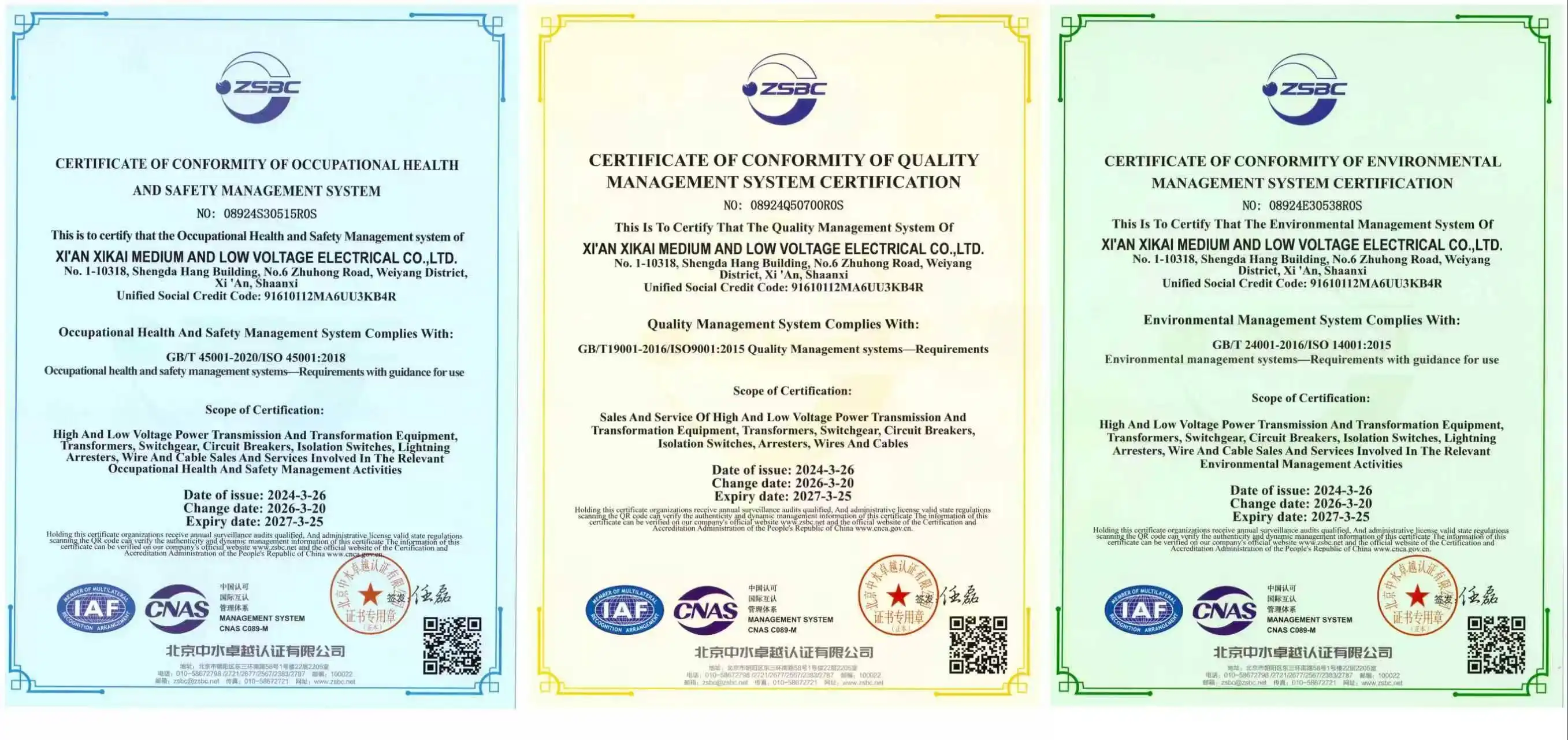
There are a number of things that set trustworthy partners apart from dangerous sellers. Production capacity of the Vacuum Circuit Breaker shows whether sellers can meet large orders without lowering quality. Companies that make 10,000 or more units a year usually keep component standards higher. Portfolios of certifications show dedication to quality management. For example, ISO 9001 certification shows control over the production process, while ISO 14001 and ISO 45001 certifications show advanced environmental and safety management. A technical help system is important when fixing problems in the field. Supply companies with tech hotlines and area service centers open 24 hours a day, seven days a week, to help keep downtime to a minimum when something goes wrong. The warranty should last at least 24 months, and make it clear that new parts will be sent out and service will be on-site within 72 hours for important work.
Logistics and Delivery Considerations
Lead times depend on how customized the item is. Standard store items ship in 4 to 6 weeks, but custom-built units with special communication or interlocking parts take 10 to 14 weeks. International shipping makes things more complicated. The right packaging stops damage from vibrations during ocean freight, and the paperwork has to meet the standards of customs in the target country. If a buyer wants to make a budget, DDP (Delivered Duty Paid) prices are easier to understand than EXW (Ex Works) quotes, which hide landing costs.
Vacuum Circuit Breaker Technical Specifications and Industry Standards
Following international guidelines takes the guesswork out of choosing equipment, making sure it works with current systems, and getting approval from regulators.
IEC 62271 Series Requirements
This group of standards covers high-voltage switchgear and control gear. IEC 62271-100 talks about alternating current Vacuum Circuit Breakers in particular. One important factor is the rating short-circuit breaking current, which must be greater than the highest fault current found by calculating the system impedance. The ZN63-VS1 model has a breaking capacity of 40kA, making it good for substations with a lot of production capacity or many parallel lines that increase the fault current that can flow. For the mechanical longevity class M2 designation, the product must be used at least 10,000 times before it needs major repair. This is for industrial settings where loads are switched on and off often. Electrical endurance E2 rating requires 100 full short-circuit breaks without contact replacement. This is very important for systems that have fault conditions that happen over and over again.
Installation and Testing Protocols
When done right, approval confirms that the manufacturer's standards are met in the field. Dielectric resist testing uses 65kV for one minute between the stages and ground to make sure the insulation is still good after being moved. Measurements of contact resistance show that the mechanical parts are lined up correctly; results below 100 microhms at rated current show that the contact pressure is right. Timing tests use high-speed cameras or electronic monitors to measure how fast the doors open and close. This makes sure that the three-phase units are in sync within ±2 milliseconds. Environmental scores affect where a project is put. The IP4X grade for entry protection keeps things bigger than 1 mm from getting into live parts. This is good enough for switchgear rooms inside buildings with restricted access. Seismic licensing to MSK-8 strength (equivalent to Modified Mercalli Scale VIII) protects buildings during earthquakes and is necessary for buildings in places like California and Japan that are prone to earthquakes.
Modern Trends and Future Outlook for Vacuum Circuit Breakers in Power Distribution
Industrial workers' interactions with protection equipment are changing because of digitalization. They are going from reactive repair to predictive strategies made possible by intelligence built into the equipment.
Smart Monitoring Integration
Manufacturers now put sensors inside breakers to keep an eye on all of their working factors all the time. The total arcing time is measured by contact wear markers, which give an estimate of how long the part will last before it needs to be replaced. By checking the temperature at current-carrying points, you can find loose connections before they break. Vibration sensors find problems with the way things work by sending out alerts when motion patterns change from normal ones. These features are in line with the ideas behind Industry 4.0, in which machines talk to plant management systems directly through Modbus TCP or IEC 61850 protocols. Data analytics platforms collect data from many breakers and look for trends that human operators might miss. For example, they can connect increases in humidity with drops in insulation resistance, which triggers drying processes before a flashover happens.
Renewable Energy Integration Challenges
Installing solar and wind power plants brings new problems with power quality that aren't present in standard power plants. Voltage changes when the output is intermittent, so breakers need to respond faster. Different from sinusoidal loads, harmonic currents from inverter-based power put stress on shielding systems. For green energy uses, Vacuum Circuit Breakers are made with better arc-quenching materials that can handle high-frequency current components and better thermal control to handle changing loads. Modernization plans for power grids around the world are increasing the need for medium-voltage equipment that can handle power flow in both directions. Distributed energy resources that send power back into utility networks need security devices that a Vacuum Circuit Breaker can figure out which way a fault is coming from, which is something that standard breakers couldn't do. These days, vacuum units are connected to communication hubs and directional switches, making them smart nodes in networks that can adapt to different needs.
Sustainability Considerations
Environmental concerns go beyond practical pollution and include manufacturing processes and getting rid of things when they're no longer useful. Greenhouse gases are naturally avoided by Vacuum Circuit Breaker technology, but where the materials come from is important—mining and processing copper and silver leave big carbon fingerprints. Progressive makers use reclaimed metals and clean energy in their factories, which cuts the amount of carbon that is built into the products by 30 to 40 percent compared to traditional methods. Designing for removal is a concept of the circular economy. Standardized terminal designs let you reuse busbars and enclosures during changes, and modular interrupter bottles let you swap parts without throwing away whole systems. These methods are in line with business sustainability goals, which are having a bigger impact on buying choices across all industries.
Spotlight: ZN63-VS1 Indoor Vacuum Circuit Breaker
The main model from Xi'an Xikai shows how advanced engineering can be used to solve real-world problems. This device can handle a wide range of load profiles, from light and air conditioning systems to heavy motor control uses. It can handle steady currents from 630A to 3150A at 50Hz. It is perfect for industrial distribution networks and utility substations that serve business buildings because it can handle 24kV of voltage. Environmental adaptability makes operations more flexible. A humidity tolerance of up to 95% relative humidity per day (2.2 kPa vapor pressure) is good for seaside sites and places where it rains a lot, where less durable equipment has trouble with moisture getting in. The ability to work at elevations up to 1000 meters means that it can be used in most industrial areas without any problems. However, high-altitude mining activities up to 4000 meters can use modified versions with the right changes. In areas that are prone to earthquakes, seismic licensing to MSK-8 strength gives people peace of mind. The spring-operated device gets rid of the need for compressed air systems. This lowers the cost of extra equipment and raises reliability by getting rid of pneumatic failure modes. Within 50 milliseconds, the fault is interrupted, which limits the amount of energy that is released during short circuits and protects equipment further downstream from heat and mechanical stress.
Conclusion
When choosing safety tools for industrial power distribution, you have to weigh short-term needs against long-term operating conditions. Vacuum Circuit Breaker technology has grown to become the best choice for medium-voltage uses because it is better for the environment, easier to maintain, and works with new smart grid infrastructure. Procurement teams can make decisions that improve system reliability while keeping lifecycle costs low if they understand technical specs, compliance requirements, and provider evaluation criteria. As technology and the use of renewable energy change the way electricity networks work, picking equipment that can be easily updated lets facilities take advantage of these changes instead of having to deal with old systems.
FAQ
1. How often do vacuum circuit breakers require maintenance?
Once a year, mechanical checkups should be done to check the working mechanism's lubrication and the alignment of the contacts. Every three to five years, electrical tests are done to check the contact resistance and insulation stability. Unlike oil or SF6 units, vacuum models don't need to sample fluid or check for gas leaks. This means that over the normal working life, 50–60% less upkeep work is needed. Depending on working duty, interrupters need to be replaced every 15 to 25 years. This can be tracked with cumulative interruption counters or arc energy formulas.
2. What safety advantages do these devices offer compared to older technologies?
Getting rid of dangerous shielding fluids from oil breakers gets rid of the fire risks they pose, which is especially important in buildings with people in them, like hospitals or data centers. The sealed vacuum room keeps the arc energy inside, so there are no blast effects outside that could hurt people during fault delays. Maintenance workers are not exposed to the dangers of SF6 equipment because it does not release toxic gases. Faster stoppage times shorten the time that a fault current flows, which lowers the thermal stress on transformers and wires.
3. Which factors matter most when comparing vacuum circuit breaker suppliers?
Production ability shows if a company can make enough to meet big orders without lowering the quality of its products. The certification level shows how hard the tests were. In addition to basic CE marks, look for UL, CSA, or GOST certifications that show compliance with multiple regulatory frameworks. Response times during failures depend on the service network's spread. Downtime is kept to a minimum by providers with regional offices and parts stores. Quality of technical paperwork affects how well a project works; thorough drawings and commissioning processes keep mistakes in the field from being too expensive to fix.
Partner With Xi'an Xikai for Reliable Vacuum Circuit Breaker Solutions
Xi'an Xikai Medium & Low Voltage Electric Co., Ltd. has been an engineering company for thirty years Vacuum Circuit Breaker, and knows how to solve problems with industrial power distribution. Our ZN63-VS1 Vacuum Circuit Breaker supplier can make custom designs for tough situations, such as plateaus at 4,100 meters above sea level or seismically busy areas that need stronger structures. Production that is ISO 9001-certified makes sure that every unit goes through a lot of tests before it is shipped, such as checking for electrical withstand, temperature cycles, and mechanical endurance. Our solutions are completely reliable, and our clients come from the power utilities, heavy industry, and green energy industries. You can email our technical team at serina@xaxd-electric.com, amber@xaxd-electric.com, or luna@xaxd-electric.com to talk about your needs and get full specs that are made to fit your power distribution system.
References
1.. IEEE Standard C37.04-2018: Rating Structure for AC High-Voltage Circuit Breakers, Institute of Electrical and Electronics Engineers, New York, 2018.
2. IEC 62271-100:2021 High-Voltage Switchgear and Controlgear – Part 100: Alternating-Current Circuit Breakers, International Electrotechnical Commission, Geneva, 2021.
3. Slade, Paul G., The Vacuum Interrupter: Theory, Design, and Application, CRC Press, Boca Raton, 2017.
4. NFPA 70: National Electrical Code (NEC) 2023 Edition, National Fire Protection Association, Quincy, Massachusetts, 2023.
5. Zhang, Wei and Liu, Hongyan, "Reliability Analysis of Vacuum Circuit Breakers in Smart Grid Applications," Electric Power Systems Research, Vol. 207, 2022.
6. GB 1984-2014: AC High-Voltage Circuit Breakers, Standardization Administration of China, Beijing, 2014.