
Best Indoor Disconnect Switch: What to Look For
2026-09-30 16:51:36
Choosing the right indoor disconnect switch can make or break a high-voltage project. Whether you're specifying equipment for a new substation or retrofitting switchgear in an industrial facility, the wrong choice leads to costly downtime, compliance failures, or safety incidents. An indoor disconnect switch physically isolates a circuit from its power source, creating a visible break that protects workers and equipment during maintenance. This guide walks you through the types, key selection criteria, top products, procurement steps, and maintenance practices—so you can make a well-informed decision with confidence.
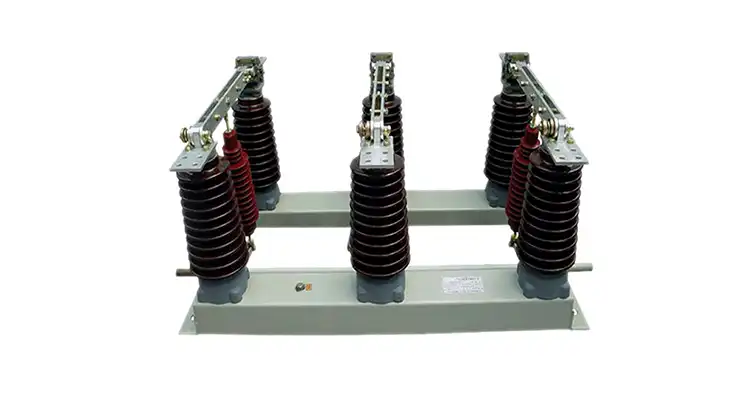
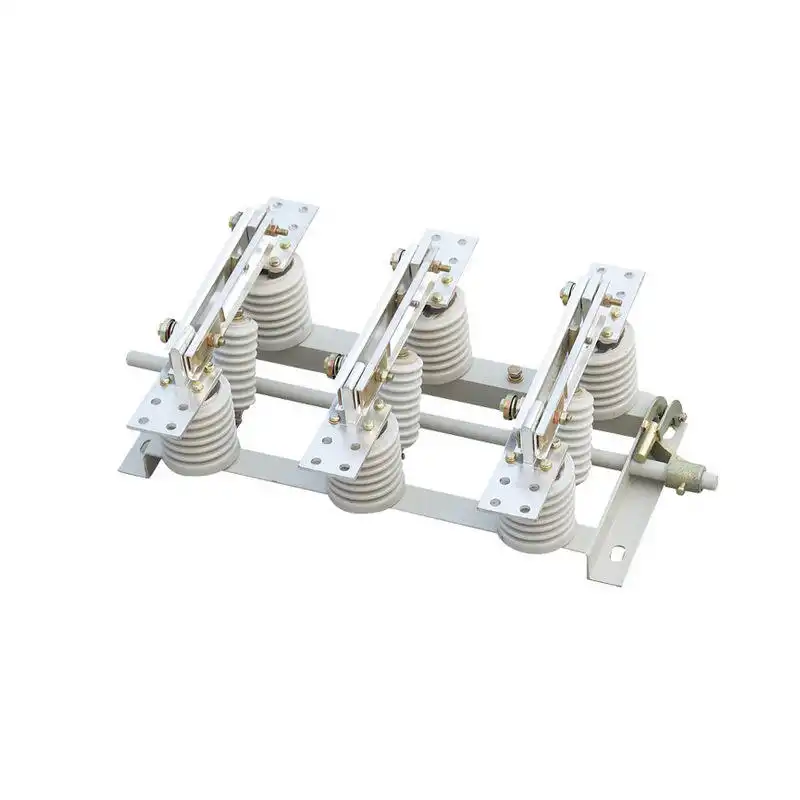
Understanding Indoor Disconnect Switches and Their Types
It's helpful to know what makes one Indoor disconnect switch different from another before you buy it. There are different configurations on the market, and choosing the right one for your needs will save you time and money.
Fusible vs. Non-Fusible Designs
Through integrated fuse elements, a fusible Indoor disconnect switch combines isolation and overcurrent protection. This style works well in situations where one device needs to do both problem stoppage and isolation. A non-fusible switch, on the other hand, only handles separation and depends on a circuit breaker upstream to protect against overcurrent. When working on a 40.5kV high-voltage substation, non-fusible disconnect switches are usually required because the breaker clears the fault on its own.
Circuit Breaker Integrated vs. Standalone Switches
Some new switchgear has the disconnect function built right into the circuit breaker assembly, which makes it smaller. Standalone disconnect switches, like the GN27 series, can be mounted on their own and work with breakers by using mechanical interlocks. You have more options with the standalone method because you are not limited to a single manufacturer's breaker base. You can choose between horizontal, vertical, or inclined mounting to fit the plan of your cabinet.
Indoor vs. Outdoor Disconnect Switches
Inside switchgear cabinets or substations, where temperature, humidity, and pollution levels are controlled, indoor isolation switches work. For outdoor use, they need housings that don't get damaged by water or UV light, as well as longer creepage distances. Choosing an indoor-rated switch for an outdoor area poses a serious safety risk. Before making a choice, you should always check the IP rating and environmental classification.
Essential Features to Consider When Choosing an Indoor Disconnect Switch
There are differences in the quality of each Indoor disconnect switch. These are the main things that set a well-designed gadget apart from one that breaks down over time.
Compliance with IEC, UL, and NEC Standards
Rules must be followed at all times. Any Indoor disconnect switch at 40.5kV must comply with the IEC 62271-102 standard, which regulates high-voltage alternating current disconnectors and earthing switches. For projects in North America, UL 98 and NEC Article 404 spell out the rules for enclosed switches. Checking certification before buying something protects your project from failed inspections and potential liability.
Arc Flash Prevention and Lockout/Tagout Compatibility
In the United States, arc flash incidents cause a lot of electrical injuries at work. According to OSHA data, electrical hazards are consistently one of the main causes of serious industrial accidents. An indoor high-voltage isolating switch that is properly specified has mechanical interlocks that stop it from working when it is loaded. To follow the lockout/tagout (LOTO) steps required by OSHA 29 CFR 1910.147, look for switches with clear, obvious break confirmation and handles that can be padlocked.
Contact Resistance and Thermal Stability
The operating temperature is directly related to the contact loop resistance. For switches rated up to 1250A, industry standards usually say that the contact resistance must be less than 50 microohms. When there is a lot of resistance, heat is made, which speeds up contact wear and can lead to thermal runaway. The GN27 series solves this problem with copper blades that are silver-plated and a swing-contact design that keeps the pressure constant over the whole service life. This means that the contact resistance stays within the required range even after thousands of cycles of use.
Installation Flexibility and Cabinet Fit
There is only so much cabinet space in switchgear projects. Costly redesigns are required when an Indoor disconnect switch does not physically fit the allotted room. The GN27 High Voltage Disconnect Switch can be mounted horizontally, vertically, or at an angle. This means that electrical experts don't need to use any special adapters to make the switch fit the shape of the cabinet.
Comparison of Top Indoor Disconnect Switches in 2026
Indoor disconnect switches are made by a number of well-known companies around the world. Procurement teams can make the right choice when they know where each one stands in terms of performance and fit for the job.
With strong service networks around the world, both Siemens and ABB make 12kV and 40.5kV class isolators. Their items have a lot of different approvals and are good for big utility projects that need long-term service contracts. Schneider Electric focuses on integrating modular switchgear, and they make disconnect switch assemblies that work only with their own cabinet platforms. Eaton's products are mostly made to meet North American standards (UL/ANSI), which makes them a good choice for projects in the United States.
The GN27 High Voltage Disconnect Switch from Xi'an Xikai stands out in this field. Here are some of the best things about this device:
- Rated Voltage of 40.5kV with 630A or 1250A current options — covering the most common substation configurations without requiring a custom order.
- Swing-contact design — reduces mechanical wear and contact pressure loss over time, which directly lowers contact resistance and extends service intervals compared to conventional blade-type designs.
- Low operating torque — the manual mechanism requires noticeably less force than older designs, addressing the operator fatigue concern that comes up repeatedly on projects with frequent switching cycles.
- High-strength insulators with pollution-resistant and high-altitude variants — standard units perform at altitudes up to 1,000m; high-altitude variants extend operation to 4,000m, a specification few competitors match without special orders.
- Compatibility with CS6-2 operating mechanisms or direct switchgear integration — the same switch works in standalone applications and inside metal-enclosed cabinets, reducing your inventory of spare parts.
The voltage is 40.5kV with 630A or 1250A current selection of choices that covers the most popular substation layouts without the need for a custom order.
Procurement Guide: How to Buy the Best Indoor Disconnect Switch
A clear buying process keeps time-sensitive EPC projects from having to deal with costly design mistakes and delivery delays.
Define Your Application Requirements First
Start with the voltage class, the rated current, the way the device is mounted, and the conditions of the environment. For 40.5kV work in an indoor substation, make sure it meets the requirements of IEC 62271-102, check the fixing position of the cabinet, and see if pollution-resistant or high-altitude versions are needed. By setting these parameters before asking for quotes, you can avoid going back and forth with suppliers.
Compare Total Cost of Ownership, Not Just Unit Price
A lower unit price can hide higher upkeep costs if the switch needs to have its contacts cleaned or parts replaced more often. Over a 20-year service life, the GN27's self-cleaning contact design and low working torque cut down on worker hours, which is important when you need to order 5 to 50 units per project.
Verify Lead Times and Warranty Terms
When projects have set dates for when they need to be finished, supplier lead time is just as important as product quality. Early on, confirm whether stock is available or when production will begin. Standard guarantee terms for this type of product are one to three years. Make sure you ask about the availability of extra parts after the warranty period is over, because a switch with a ten-year design life needs spare contacts that can be easily accessed.
Troubleshooting and Maintaining Indoor Disconnect Switches
Even a well-designed Indoor disconnect switch needs to be checked on a regular basis to make sure it stays safe to use.
Common Failure Modes to Watch
The most common problem is contacts that get too hot. It's usually caused by surface oxidation, worn-out springs that lower contact pressure, or being out of place after mechanical use. A micro-ohm meter is used to do regular contact resistance tests with a goal of less than 50 micro-ohms. This finds problems as they start to form before they lead to failures. If resistance goes above what is allowed, cleaning the contact surfaces with the right solvent and checking the spring torque settings usually get performance back to normal.
Recommended Inspection Schedule
Most makers say that a full check should be done once a year or every 100 mechanical cycles, whichever comes first. As part of every check, you should clean the insulators to get rid of any dust or dirt that has built up, re-torque the terminal connections, grease the mechanical links according to the manufacturer's instructions, and make sure the mechanical interlock works properly. A five-minute inspection cycle for each switch lowers the risk of an installation with fifty units by a large amount.
When to Replace Rather Than Repair
It is safer to replace than to fix if contact pitting can be seen, if blade alignment can't be fixed by adjusting, or if insulator cracking is found. Because the GN27 is made up of separate modules, the contact blades can be changed without taking the switch out of its cabinet. This cuts down on both downtime and the chance of damaging nearby equipment.
Conclusion
The voltage class, current rate, mounting setup, and mechanical design of the Indoor disconnect switch must all be compatible with the project's requirements. Long-term dependability is affected by meeting standards, how well contact resistance works, and how much torque is used. The GN27 High Voltage Disconnect Switch from Xi'an Xikai directly addresses all of these issues; it can handle 40.5kV uses, can be mounted in a variety of ways, and requires less upkeep thanks to its swing-contact design. Having these technical advantages along with a structured buying process and a regular repair plan will make sure that your switching equipment works safely for its whole life.
FAQ
1.Can the GN27 be operated under load?
No. Like all indoor high-voltage isolating switches, the GN27 is an off-load device. Operating it while current is flowing generates an arc that can destroy the switch and endanger personnel. A circuit breaker must open the circuit before the disconnect switch operates. The mechanical interlock is designed specifically to enforce this sequence.
2.What contact resistance should I expect from the GN27?
The GN27 maintains contact resistance below 50 micro-ohms under normal operating conditions, consistent with IEC 62271-102 requirements. This value should be verified at incoming inspection and rechecked during annual maintenance.
3.How does altitude affect insulation performance?
Air density decreases at higher altitudes, reducing dielectric strength. Standard GN27 units are rated for altitudes up to 1,000m. For installations above that threshold, Xi'an Xikai offers a dedicated high-altitude variant engineered to maintain insulation integrity up to 4,000m.
4.What is the difference between fusible and non-fusible indoor disconnect switches?
A fusible switch integrates fuse elements for overcurrent protection; a non-fusible switch handles isolation only. At 40.5kV, non-fusible designs are standard because upstream circuit breakers manage fault clearing.
5.How often should the mechanical linkage be lubricated?
Lubricate the mechanical linkage annually or every 100 operating cycles, using the lubricant grade specified in the product manual. Skipping this step increases operating torque and accelerates wear in the pivot points.
Get a Quote from Xi'an Xikai for Your Next Project
The GN27 Indoor disconnect switch is sold by Xi'an Xikai to EPC contractors, substation integrators, and switchgear manufacturers in a number of different markets. Our products fall into 7 main groups and more than 100 different styles. Some of them are approved to work at high altitudes of up to 4,000 meters. Get in touch with our sales team to talk about your project's requirements, bulk order prices, and wait times. To find out more about our Indoor disconnect switch Supplier skills, please contact us at serina@xaxd-electric.com, amber@xaxd-electric.com, or luna@xaxd-electric.com.
References
1. International Electrotechnical Commission. IEC 62271-102: High-Voltage Switchgear and Controlgear – Part 102: Alternating Current Disconnectors and Earthing Switches. IEC, 2018.
2. National Fire Protection Association. NFPA 70: National Electrical Code. NFPA, 2023.
3. Institute of Electrical and Electronics Engineers. IEEE C37.32: Standard for AC High-Voltage Disconnect Switches, Interrupter Switches, Fault Initiators, and Grounding Switches. IEEE, 2002.
4. Occupational Safety and Health Administration. Control of Hazardous Energy (Lockout/Tagout): 29 CFR 1910.147. U.S. Department of Labor, 2019.
5. Underwriters Laboratories. UL 98: Standard for Enclosed and Dead-Front Switches. UL, 2020.
6. National Electrical Manufacturers Association. NEMA KS 1: Enclosed and Miscellaneous Distribution Equipment Switches (600 Volts Maximum). NEMA, 2017.