
What is an Active Harmonic Filter and Its Benefits?
2026-09-30 16:58:20
Power quality problems are quietly costing industrial facilities millions of dollars each year. According to the Electric Power Research Institute (EPRI), poor power quality costs U.S. industry between $119 billion and $188 billion annually. Harmonic distortion sits at the center of many these losses. If you manage power distribution for a data center, hospital, or manufacturing plant, understanding how an active harmonic filter works — and what it can do for your system — is one of the most practical steps you can take right now.
What Is an Active Harmonic Filter?
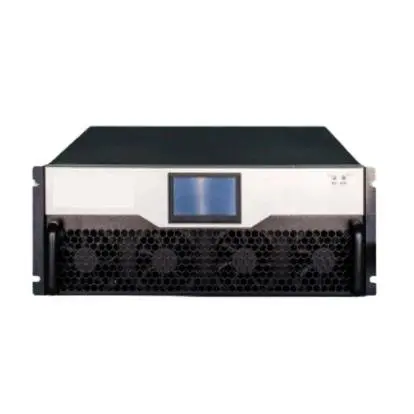
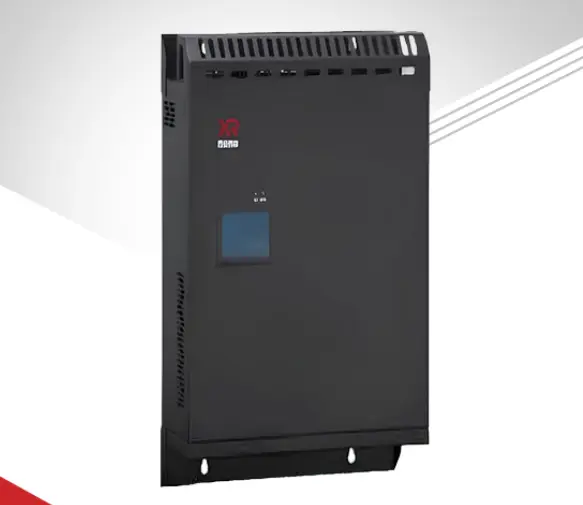
An active harmonic filter (AHF) is a piece of electronics that finds harmonic currents caused by non-linear loads and sends equal but opposite currents into the power grid to cancel them out. In contrast to passive solutions, it works in real time, measuring and fixing distortion as load conditions change. The electrical supply is now cleaner and more stable, and it meets the standards set by IEEE 519 and IEC 61000. This means that system integrators and data center contractors will have less equipment breakdowns, waste less energy, and be able to prove compliance—all from a single device.
Understanding Active Harmonic Filters
How the Technology Works
An AHF quickly checks the load current with a digital signal processor (DSP). It finds harmonic parts, usually those from the second to the fiftyth order, and tells an IGBT-based inverter to make correcting currents in 10 milliseconds. This reaction speed is quick enough to handle sudden changes in load that happen in VFDs, UPS systems, and medical imaging equipment.
Active vs. Resonance Risk
One reason engineers like active technology better than inactive banks is that it stops vibration. It's possible for passive LC circuits to create parallel resonance with the grid transformer, which could make harmonic voltages stronger instead of lower. Since an active harmonic filter doesn't have a set setting frequency, it can change to any harmonic profile the load gives it, even when the grid voltage is low.
Modular Architecture
There are two types of Xi'an Xikai's active harmonic filter: those that are rack-mounted and those that are wall-mounted. Because each module works on its own, you can add more capacity by adding more units without having to shut down the system. This modular design is great for places like hospitals and data centers where downtime is not an option.
Key Benefits of Active Harmonic Filters in Industrial Power Systems
When a facility puts in an active harmonic filter, they usually see improvements in four areas that can be measured. So, here are the main performance benefits of this technology that make it worth looking into:
- Dynamic Harmonic Suppression: The filter achieves a harmonic suppression rate of up to 97%, reducing total harmonic distortion (THD) from levels above 40% down to below 5% — well within IEEE 519 limits. This directly protects transformers, motors, and sensitive electronic equipment from thermal stress and premature failure.
- Resistance to Grid Fluctuations: The device maintains stable compensation even when supply voltage fluctuates or load patterns shift rapidly. In substations handling renewable energy inverters, this stability prevents voltage swings that can trip protection relays and interrupt production.
- Energy Cost Reduction: By correcting the power factor alongside harmonic distortion, an active harmonic filter reduces reactive power demand charges. Industrial facilities commonly report a 10–15% drop in electricity bills after installation, based on case data from comparable deployments in manufacturing and commercial buildings.
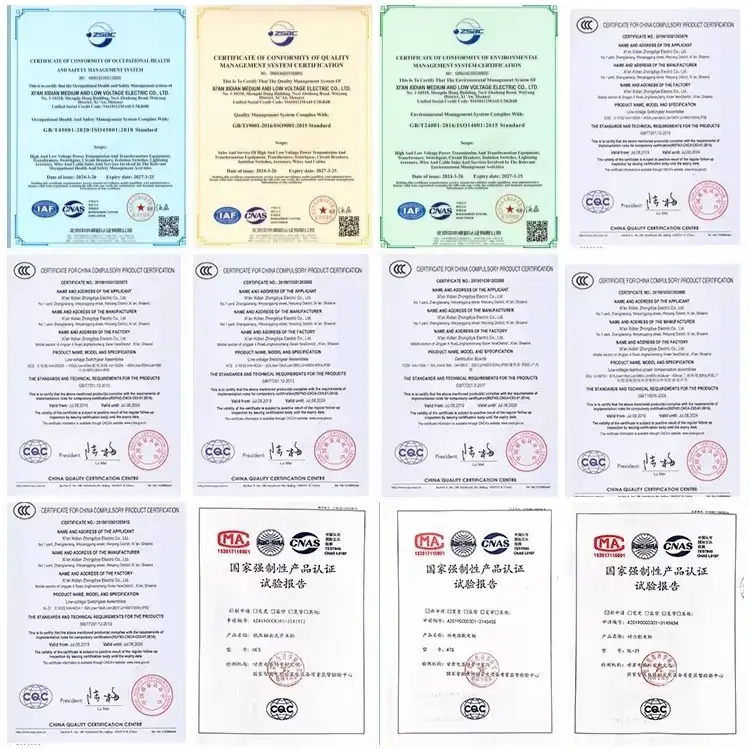
- Rugged Reliability: Xi'an Xikai units undergo 72-hour aging tests and 100% load validation before shipment, backed by ISO 9001, ISO 14001, CE, UL, and CCC certifications. Capacitors are flame-retardant and operate below 45 dB — meeting NFPA 70 fire codes for hospital and commercial retrofits.
Xi'an Xikai units are certified by ISO 9001, ISO 14001, CE, UL, and CCC and go through 72-hour age tests and 100% load proof before they are shipped. Capacitors don't catch fire and make less than 45 decibels of noise, so they meet NFPA 70 fire codes for hospital and business retrofits.
Active Harmonic Filter vs. Other Harmonic Mitigation Solutions
The type of load, your budget, and your safety needs will all affect which harmonic reduction method you choose. The main choices are shown in the table below:
Active harmonic filter: ≤10 ms | None | High | Up to 97% | Passive LC filter: None (fixed) | High | Low | 50–70% | Harmonic reactor (choke): N/A | Moderate | Low | 20–40% | Hybrid filter: ≤20 ms | Low | Moderate | 80–90% |
| Solution | Response Time | Resonance Risk | Adaptability | Typical THD Reduction |
|---|---|---|---|---|
| Active harmonic filter | ≤10 ms | None | High | Up to 97% |
| Passive LC filter | None (fixed) | High | Low | 50–70% |
| Harmonic reactor (choke) | N/A | Moderate | Low | 20–40% |
| Hybrid filter | ≤20 ms | Low | Moderate | 80–90% |
Passive filters are cheaper up front, but they can't adapt when the harmonic spectrum changes, which happens all the time in places where different VFD loads are used. A passive bank that is tuned for the 5th harmonic doesn't protect against currents that are tuned for the 7th or 11th harmonic. Since the active harmonic filter fixes all orders at once, it is the best choice for places like data centers and hospitals where load levels are complicated and change with shifts.
How to Choose the Right Active Harmonic Filter
Assess Your Harmonic Profile First
Do a power quality survey with a calibrated power analyzer before choosing a filter. Find out what the main harmonic orders are, what the high THD levels are, and how the load changes. This information tells us how much compensation current we need and how many modules we need.
Evaluate Performance Metrics
It's best to find one with a response time of 10 ms or less, a harmonic suppression rate of at least 95%, and a power factor correction range that goes all the way up to 1.0. Check that the unit has CE, UL, and CCC certifications. These are the minimum requirements for projects in Europe, North America, and China, in that order.
Consider Total Cost of Ownership
The price of an active harmonic filter is only one part of the equation. Take into account the money you'll save on energy, the fines you won't have to pay, the downtime for equipment further down the line, and the cost of compliance checks. Long-term capital costs are lower with modular pieces that allow fields to grow without having to be completely replaced.
Installation, Maintenance, and Future Trends
Commissioning Best Practices
It is at the point of common coupling (PCC) that an active harmonic filter links in parallel with the load. With this parallel design, installation doesn't affect lines that are already in use. It is important to make sure that the supply voltage matches the unit's rated input and that the CT (current transformer) sensors are installed correctly before turning it on.
Routine Maintenance
Compared to inactive banks, AHFs don't need as much maintenance. A normal upkeep plan includes checking the cooling fans and heat sinks once a year, updating the DSP controller's software, and making sure the CT sensor is calibrated. Xi'an Xikai offers remote monitoring help, which cuts down on the need for technicians to come to the spot.
Emerging Trends
Newer AHF designs are coming with IoT connection units that let manufacturers make real-time power quality dashboards and alerts that can be used ahead of time. IEEE is also changing its 519 standard to make THD limits stricter. In a few years, the 97% suppression rate will no longer be a nice-to-have but a requirement for compliance.
Conclusion
Harmonic distortion is a problem that can be measured and fixed. It is dealt with at the source by an active harmonic filter, which works in real time and across all harmonic orders without the risk of reverberation. End users want system designers that work with data centers, hospitals, or precision manufacturing facilities to make sure that the AHF they use has a 97% suppression rate and a 10 ms reaction time. This technology is modular, certified, and has been used in the field. It keeps installations in line with IEEE 519 and IEC 61000 standards, protects equipment, and lowers operating costs.
FAQ
1.Which industries benefit most from an active harmonic filter?
Data centers, hospitals, semiconductor fabs, and steel mills benefit most because they operate large numbers of non-linear loads — UPS units, VFDs, rectifiers, and arc furnaces — that generate severe harmonic distortion. These sectors also face strict power quality compliance requirements.
2.Can an active harmonic filter work alongside an existing power factor correction panel?
Yes. Because it connects in parallel and carries no fixed resonant frequency, an AHF works alongside existing capacitor banks without creating resonance. Always confirm compatibility by reviewing the bank's detuning factor and the site's short-circuit impedance with your supplier before installation.
3.Does an active harmonic filter comply with IEEE 519 and IEC 61000?
A properly sized AHF reduces THD to below the 5% current distortion limit specified in IEEE 519-2022 and meets voltage quality requirements under IEC 61000-3-2 and IEC 61000-3-12.
4.What does the modular design mean for future expansion?
Each module operates independently. When your facility adds load — new server racks, additional production lines — you install extra modules rather than replacing the entire system. This protects your initial investment.
5.How long does installation typically take?
For a parallel-connected unit at a single distribution panel, installation typically takes one to two days. Larger multi-module deployments at substations or across multiple distribution boards may require a week of coordinated commissioning.
Get a Custom Active Harmonic Filter Solution from Xi'an Xikai
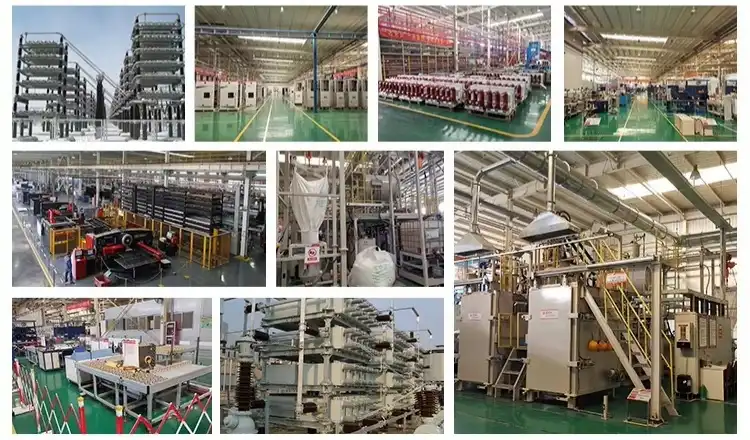
Active harmonic filters made by Xi'an Xikai Medium & Low Voltage Electric Co., Ltd. are designed to work in harsh industrial settings. Our units are certified by ISO 9001, ISO 14001, CE, UL, and CCC. Before they are shipped, each one goes through a 72-hour aging test and a full-load validation. Our engineering team is ready to look at your power quality data and come up with a solution, whether you need a single active harmonic filter supplier for a pilot project or 100s of them spread out over many sites. To get a technical consultation right away, email us at serina@xaxd-electric.com, amber@xaxd-electric.com, or luna@xaxd-electric.com.
References
1. IEEE Std 519-2022, IEEE Recommended Practice and Requirements for Harmonic Control in Electric Power Systems, IEEE, 2022.
2. IEC 61000-3-2:2018, Electromagnetic Compatibility (EMC) — Limits for Harmonic Current Emissions, International Electrotechnical Commission, 2018.
3. Akagi, H., Active Harmonic Filters, Proceedings of the IEEE, Vol. 93, No. 12, 2005.
4. Electric Power Research Institute (EPRI), The Cost of Power Disturbances to Industrial and Digital Economy Companies, EPRI Report 1006274, 2001.
5. Mohan, N., Undeland, T. M., & Robbins, W. P., Power Electronics: Converters, Applications, and Design, 3rd ed., Wiley, 2003.
6. Subjak, J. S., & Mcquilkin, J. S., "Harmonics — Causes, Effects, Measurements, and Analysis: An Update," IEEE Transactions on Industry Applications, Vol. 26, No. 6, 1990.
