Best Lightning Arrester for Renewable Energy & Grid Stability
2026-01-13 15:44:11
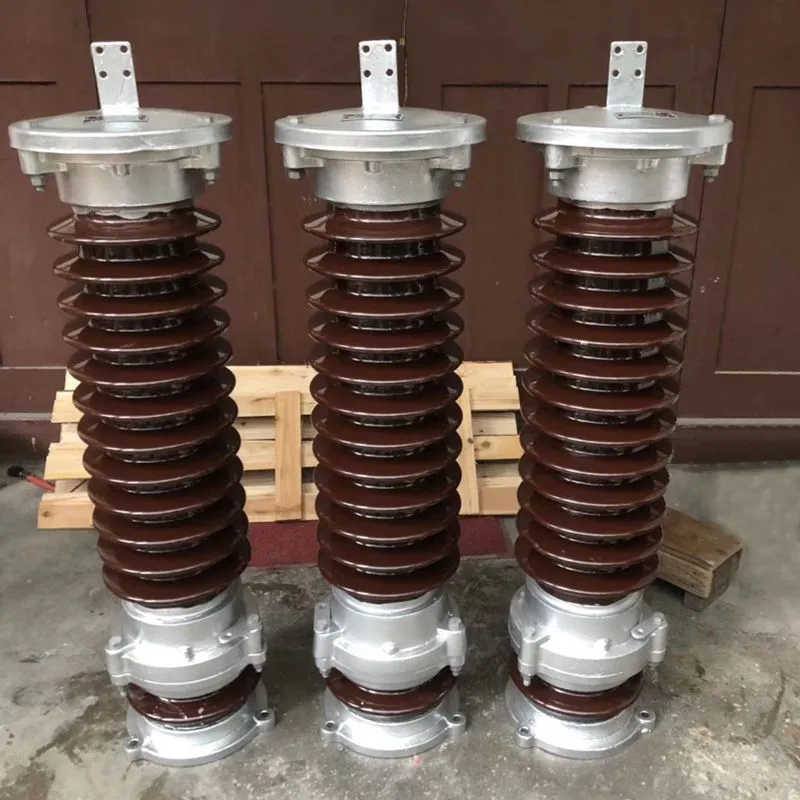
The polymeric metal oxide varistor (MOV) arrester is the best lightning arrester for green energy and grid stability because it protects against surges better and lasts longer for outdoor installations. These high-tech arresters provide excellent overvoltage safety while keeping the grid stable during severe weather. Their polymer housing can handle high and low temperatures and dirt, which makes them perfect for solar farms, wind sites, and important distribution networks in a range of climates.
Understanding Lightning Protection Requirements in Modern Power Systems
Renewable Energy Integration Impact
Power systems face enormous problems as renewable energy integration accelerates worldwide. Wind turbines and solar arrays create new distribution network vulnerabilities where lightning strikes can cause catastrophic equipment failures. Modern power electronics generate complicated surge patterns that challenge traditional protection systems.
Power Outage Costs
Data centers, hospitals, and factories need reliable power. Lightning can cause millions in lost production, equipment damage, and safety issues in one outage. This highlights the need for sophisticated surge protection technologies that can handle direct hits and switching transients.
Protection and Maintenance Costs Balance
Utility transmission system managers must balance protection effectiveness and maintenance costs. Storm-related equipment failures delay service and endanger emergency repair workers. Arrester technology must be reliable and protect workers to protect vital services and infrastructure.
Essential Selection Criteria for Premium Arresters
Able to discharge voltage
How effectively exceptional arresters perform in difficult conditions distinguishes them from standard choices. Your discharge voltage must exceed the greatest surge values likely in your application. Wind farms require 36kV-138kV arresters, while solar systems use lower voltages but require fast response times. Additionally, a reliable lightning arrester is essential for ensuring protection against these surges.
Environmental Resilience
For long-term dependability in difficult environments, environmental resilience is crucial. UV degradation, salt fog corrosion, and temperature variations must be handled by polymer building materials. In unclean regions where flashovers can occur, creepage distance—the route length over insulator surfaces—is crucial.
Installation and Maintenance Thoughts
Total cost of ownership depends on installation and maintenance charges. Sealed designs may not need regular checks, and replacements can be done without system shutdown. How many surge episodes the arrester can handle before it starts to fail depends on energy dissipation.
Certification rules
Certification standards ensure items comply with local legislation and global best practices. IEC 60099-4 products have been evaluated for lightning impulse, switching impulse, and temperature stability. Certain projects require regional permits, such as the CE mark for Europe or the CSA mark for North America.
Top-Performing Arrester Technologies
Polymeric Metal Oxide Arresters
The gold standard for renewable energy protection is these advanced arresters. The polymer housing has high mechanical strength and electrical insulation across wide temperatures. Inside, metal oxide varistor blocks respond in nanoseconds to voltage spikes, protecting the system without interruption.
Water infiltration is the main cause of outdoor arrester failures, but the sealed construction prevents it. Hydrophobic surfaces retain insulation under heavy rain or snow. This stability is especially useful in remote wind farms with limited maintenance access.
Energy handling capacity outperforms standard designs by 40-60%, protecting larger equipment and several surge incidents without performance deterioration. Protection coordination with other system components is excellent due to non-linear resistance. Compared to porcelain, installation weight is lower, simplifying mounting.
Both arctic wind installations and desert solar farms require thermal performance that is steady from -40°C to +60°C. The polymer substance resists contaminant tracking and degradation, providing 30-year protection.
Station Class Surge Arresters
Critical substation equipment and big renewable projects are best protected by heavy-duty station arresters. These machines manage strong energy surges and accurate voltage regulation. The sturdy construction withstands earthquakes and adverse weather. Moreover, integrating a lightning arrester enhances protection against unexpected surge events.
Redundancy ensures protection even if one varistor column fails. In extreme fault conditions, pressure relief systems vent internal gasses to prevent explosive failures that could destroy nearby equipment. Automatic external disconnector switches isolate faulty devices while maintaining system operation.
Surge counter integration and leakage current measurement are advanced monitoring capabilities. These features allow predictive maintenance to avert storm-season breakdowns. Real-time data optimizes protection settings and identifies system vulnerabilities before outages.
Variable voltage and energy levels are possible with the modular design. From 3kV distribution to 800kV transmission, ratings are standard. Mountain wind projects require high-altitude variations that perform well at 4,000 meters.
Distribution Class Lightning Arresters
Branch circuits and smaller installations are protected by affordable distribution arresters without losing performance. The simplified design saves materials and meets IEC safety and reliability standards. These units perform well in well-defined protective and mild environmental stress applications.
Zinc oxide elements protect across operating voltages. Despite surge magnitude, the protective voltage stays consistent, ensuring predictable performance under fault conditions. This uniformity facilitates system coordination and reduces equipment damage.
Compact mounting systems fit existing infrastructure without structural changes. Lightweight construction cuts installation time and labor costs. Standard bushing connections match switchgear and transformer layouts.
Maintenance is minimal due to sealed design and robust varistor technology. Testing can be done without taking the arrester out of service. Budget-conscious projects obtain great value from the 20-year design life while preserving protection.
Regional Market Characteristics and Requirements
Southeastern Asian Market Conditions
High humidity and monsoons plague Southeast Asian markets. Lightning activity surges during transitional weather, causing surge conditions that can overwhelm weak protection systems. In tropical temperatures, coastal installations must withstand salt fog corrosion and retain insulation.
Infrastructure Variability
Southeast Asia's power grid infrastructure ranges from Singapore's smart grids to rural networks in development. Thus, arrester specs must support various voltage and grounding standards. Large project procurement decisions also depend on local manufacturing and technical support.
Environmental Factors in Central Asia
Central Asian installations face severe temperatures and seismic activity, making surge protection difficult. Mountains wind turbines operate in settings with 100°C annual temperature fluctuations. Thus, arrester housing materials and interior components must survive temperature cycling without cracking or performance loss.
Middle East Reliability Standards
In the Middle East, project reliability is crucial, especially during sandstorms when contamination can cause tracking failures. Surge arresters need increased polymer formulations since UV radiation levels in this region exceed most international test criteria. High temperatures and low humidity cause electrical stress that requires particular arrester designs.
African Renewable Energy Considerations
Many African renewable energy plants are in rural areas with restricted maintenance access. Therefore, arresters must be chosen for long-term reliability over cost savings. Wildlife protection is essential in places where bird and animal contact can cause system failures, requiring customized solutions to maintain stability.
Purchasing Recommendations and Implementation Considerations
Assess your system's maximum fault current and coordination needs before choosing arrester ratings. With enough margin for switching surges, the protective voltage must stay below equipment BIL. Consider future system expansion when calculating energy needs.
Environmental assessment should consider pollutants, seismicity, and wildlife. Coastal installations need longer creepage distances and corrosion-resistant materials. Pressure correction and cold-weather performance verification are needed at high altitudes.
Access and mounting limits must be considered during installation. Check that existing structures can withstand arrester and wind loads. Predict maintenance access and testing equipment needs.
Analysis of lifecycle costs should incorporate energy losses, maintenance intervals, and replacement probability. Premium arresters have fewer failures and a longer lifespan, lowering their total cost of ownership.
Industry Trends and Summary
Demand for arresters with monitoring and communication interfaces rises with smart grid integration. IoT devices deliver real-time performance data and maintenance notifications. Renewable energy expansion requires novel arrester designs for protection. Advanced polymer materials and production methods improve reliability and reduce environmental impact. Premium arresters with proven long-term performance are preferred as total cost of ownership rises above initial purchase price.
Conclusion
Choose the best lightning arrester by considering environmental circumstances, system needs, and long-term reliability. Polymeric metal oxide arresters work best for most renewable energy applications due to their longevity, performance, and cost. Regional considerations affect material selection and design, making local expertise crucial for project success. Premium arrester technology reduces outages, maintenance costs, and equipment life. Partner with experienced manufacturers who understand your issues and can provide proven solutions.
Frequently Asked Questions
Q1: How do I determine the correct arrester rating for my renewable energy installation?
A: Calculate the maximum continuous operating voltage (MCOV) based on your system's highest normal operating voltage, then select an arrester with MCOV rating at least 5-10% higher. Consider temporary overvoltage conditions and ensure the protective level remains below your equipment's insulation strength.
Q2: What maintenance is required for modern lightning arresters?
A: Polymeric arresters require minimal maintenance – typically annual visual inspections and leakage current testing every 3-5 years. Monitor for physical damage, contamination buildup, and any signs of discharge activity. Replace arresters showing degraded performance before storm season.
Q3: Can arresters protect against switching surges as well as lightning?
A: Yes, metal oxide varistor arresters provide excellent protection against both lightning and switching surges. Their non-linear characteristics respond proportionally to overvoltage magnitude, making them ideal for modern power electronics that generate various transient types.
Xi'an Xidian: Your Trusted Lightning Arrester Manufacturer
Xi'an Xidian Medium & Low Voltage Electric Co., Ltd. is an expert at offering top-notch surge arrester solutions made especially for grid stability and renewable energy uses. As a leading lightning arrester manufacturer, our high-tech polymeric arresters have more than 20 unique technologies that ensure they protect well even in the toughest conditions. We can make plateau-type equipment that can work at heights of 4,000 meters and designs that are perfect for harsh climates. We put every arrester through extensive tests, including simulated lightning strikes up to 650kV and protocols for fast aging, so we can guarantee that they will last for 25 years.
When it comes to special engineering, we're proud of the fact that we can meet the needs of projects in Southeast Asia, Central Asia, the Middle East, and Africa. Our technical team is here to help you from the first plan consultation through installation and ongoing upkeep. We show that we care about quality, the environment, and worker safety by having ISO 9001, ISO 14001, and ISO 45001 certifications. We also guarantee fast delivery times, with lead times of 6 to 8 weeks for large orders. Our wide range of products covers voltage ratings from 3kV for distribution systems to 138kV for transmission uses. Contact us at serina@xaxd-electric.com, amber@xaxd-electric.com and luna@xaxd-electric.com for custom options that will help your grid protection plan.
References
1. International Electrotechnical Commission. "IEC 60099-4: Surge arresters - Part 4: Metal-oxide surge arresters without gaps for a.c. systems." Geneva: IEC, 2014.
2. IEEE Working Group 3.4.11. "IEEE Guide for Application of Metal-Oxide Surge Arresters for Alternating-Current Systems." IEEE Std C62.22-2009, Institute of Electrical and Electronics Engineers, 2009.
3. McDermott, Thomas E., et al. "Lightning Protection of Wind Turbine Generator Systems." IEEE Transactions on Industry Applications, vol. 46, no. 5, 2010, pp. 2043-2049.
4. Hinrichsen, Volker. "Metal Oxide Surge Arresters in High-Voltage Power Systems: Fundamentals." Siemens AG Energy Sector, 2012.
5. Christodoulou, Christos A. "Lightning Protection of Renewable Energy Systems: Wind Turbines and Photovoltaic Arrays." Journal of Energy and Power Engineering, vol. 8, no. 4, 2014, pp. 654-663.
6. Asia Development Bank. "Grid Integration of Renewable Energy: Technology and Market Assessment for Southeast Asia." Manila: ADB Technical Report, 2019.