Best LV Intelligent Capacitor Compensation Devices for 2026
2026-02-25 16:15:28
Energy efficiency and grid reliability global priority require low voltage intelligent capacitor compensation devices in modern electrical infrastructure. These new solutions improve power quality, save operational costs, and comply with tougher energy laws in US factories, data centers, hospitals, and utility networks. In 2026, power management must be more sensitive. The LV Intelligent Capacitor Compensation Device outperforms static capacitor banks with real-time reactive power adjustment, harmonic mitigation, and seamless electrical system integration. Procurement, engineering, and system integrators say compensation technology influences operational uptime, equipment longevity, and bottom-line profitability. This thorough reference provides verified technical knowledge and practical application examples to help you find clever capacitor compensation solutions that match your organization's efficiency and cost-saving goals while developing confidence.
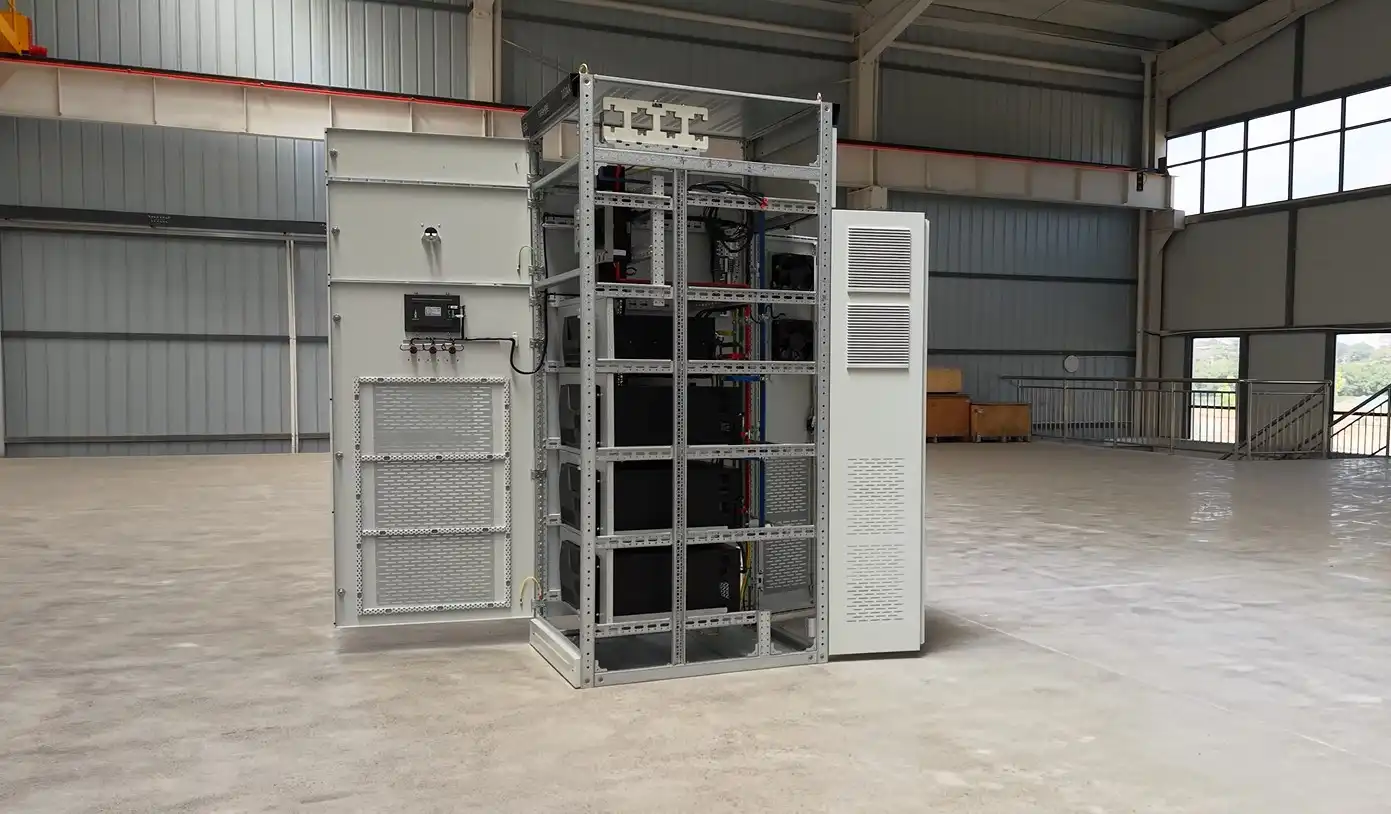
Understanding LV Intelligent Capacitor Compensation Devices
Traditional capacitor banks cannot fix modern power systems. LV Intelligent Capacitor Compensation Devices optimize reactive power compensation using automation, real-time monitoring, and adaptive control algorithms.
How Intelligent Compensation Technology Works
Instead of capacitor banks that switch in increments, intelligent compensating devices use microprocessor controllers and IoT sensors to continuously assess voltage and current indications. By calculating accurate compensation, the controller shifts capacitor banks to improve power factor throughout load conditions. Power factor correction accuracy is maintained within ±1% during operational changes with this responsive technique. Zinc oxide arresters and integrated reactors reduce harmonics up to 13 to protect sensitive electronics from voltage spikes.
In industrial settings where CNC machines, robotic assembly lines, and heavy motors cycle on and off during shifts, these devices may respond to unanticipated load changes in less than 20 milliseconds. Facility managers can use power quality indicators and predictive maintenance with Modbus RTU and IEC 61850 SCADA system connectivity.
Key Benefits Driving Adoption
These factors make intelligent compensating technology popular in industry and commerce:
- Reduced Maintenance: Self-diagnostic capabilities reduce unplanned downtime and extend equipment lifespan beyond 20 years when properly maintained.
- To prevent catastrophic failures that could stop production or compromise vital activities, overvoltage, overcurrent, and temperature monitoring improve system reliability.
- Real-Time Diagnostics: Monitoring power quality trends informs energy management and infrastructure expenditures.
- In reactive load facilities, optimised power factor correction cuts distribution line and transformer losses by 30%.
These advantages immediately address facility managers' operational challenges in assuring uptime when even brief power quality outages can cost considerable financial losses. The industry's move toward intelligent electrical asset management recognizes that proactive, adaptable solutions outperform reactive maintenance.
Top LV Intelligent Capacitor Compensation Devices for 2026: Selection and Comparison
Consider technical criteria, operating requirements, and total cost of ownership when choosing a compensation solution. Understanding option variations, such as the LV Intelligent Capacitor Compensation Device, helps procurement teams match device capabilities to facility needs.
Essential Evaluation Criteria
Technical buyers picking clever capacitor compensation should consider many factors. Durability impacts equipment maintenance and replacement costs, whereas efficiency impacts energy savings and payback. Scalability allows future extension without replacement, which is essential for manufacturing and facilities planning capacity increases. Cost-effectiveness comprises investment, installation, maintenance, and expected lifespan.
Another consideration is electrical infrastructure compatibility. Devices for MNS, GCK, and GGD global cabinet systems speed up installation and project completion. System voltages below AC450V are used in most US industrial and commercial applications to simplify equipment selection and maintenance.
Performance Comparison and Technical Specifications
Leading intelligent compensating devices have baseline capabilities and operational advantages. Power factor adjustment is precise with ±1% compensation precision across various load profiles, from steady-state manufacturing to dynamic data center operations. Harmonic suppression filtering up to the 13th order protects sensitive electronics and computing equipment against distortion that could degrade performance or longevity.
Advance versions keep protection integrity while preventing nuisance tripping during capacitor changeover with inrush current management below 25 times the rated current. Running at 50Hz ±50% accommodates variation in rural or remote places with unpredictable utility supply. Power consumption under 15W lowers parasitic losses, ensuring the compensating device utilizes minimum facility energy. Even in complex load installations, 0–5A sample current with 100mA sensitivity allows precise monitoring.
Strengths and Practical Considerations
Customers from facility operators, utilities, and EPC businesses laud important performance features. Users prefer the quiet below 45dB, especially in commercial contexts where noise pollution affects comfort. When legal and ethical compliance is vital, NFPA 70 flame-retardant materials protect hospitals, schools, and public buildings. IP65 enclosures can withstand chemicals, severe temperatures, and humidity that degrade other designs.
The modular component architecture speeds system upgrades and replacements, decreasing downtime. According to this design philosophy, industrial operations cannot tolerate protracted equipment servicing outages, making accessibility and serviceability crucial selection considerations. Operators like the extensive protection against voltage spikes, overcurrent, and thermal stress, important industrial power system hazards.
Practical Applications and Installation Guide for LV Intelligent Capacitor Compensation Devices
Intelligent compensation technology enhances operations and finances in numerous industries, according to deployments.
Industry-Specific Applications
These devices, such as the LV Intelligent Capacitor Compensation Device, let factories avoid thousands of dollars in monthly power factor fines. CNC, injection molding, and automated assembly lines cause reactive loads that degrade power factor without modification. Intelligent capacitor banks reduce distribution system current demand and utility fines by keeping power factor over 0.95, boosting conductor heating and infrastructure lifespan.
Data centers have power quality difficulties due to harmonic-generating server power supplies and UPS systems. Intelligent compensation devices with harmonic filtering stabilize voltage to sensitive computing equipment and regulate power factor for mission-critical system stability. Rapid response is useful in cloud computing facilities where server loads vary with computational demand.
Reliable hospital electrical systems protect patients and life-critical equipment. Hospital substation intelligent compensation systems stabilize voltage against imaging equipment harmonics and maintain power factor compliance to save energy. The quiet operation meets healthcare noise requirements, and flame-retardant design protects vulnerable people.
Installation and Commissioning Process
Site evaluation determines electricity quality and compensation needs before deployment. During representative operating times, facility teams should audit power quality using current power factor, harmonic content, and load profiles. Device sizing and design are based on baseline data to fulfill operational needs rather than theoretical estimates.
Installation safety must address electrical hazards, space constraints, and facility operations coordination to minimize disruption. In 24/7 manufacturing environments where downtime is costly, de-energizing circuits requires production schedule synchronization. Ground loops are prevented and fault protection systems work with adequate grounding and bonding.
Device calibration guarantees compensation is within parameters after installation. Technicians change controller settings to assure reaction speeds, switching thresholds, and communication interfaces by measuring system attributes. Commissioning testing should simulate different load conditions to guarantee facility compensation across its operational range.
Maintenance and Troubleshooting Guidelines
Lifecycle maintenance optimises device performance:
- Visual inspections: Check enclosures, indication lights, and ventilation apertures for thermal stress and physical deterioration quarterly.
- Semiannual Electrical Testing: Verify capacitor degradation, relay performance, and protective device response within limitations.
- Annual System Performance Review: Trend search logged power quality data, compare current performance to baseline commissioning values, and replace controller firmware if manufacturers change.
- Immediate Response Protocols: Define alarm processes, technical assistance contacts, and safety equipment shutdown criteria.
These solutions maximize uptime and reduce costs by helping facility managers and maintenance teams discover issues before they fail. Incorrect controller settings might cause annoyance switching, requiring threshold adjustment rather than component replacement. Significant facility load changes after installation may cause harmonic resonance, requiring reactor value verification and tuning revisions.
Procurement Insights: Where and How to Buy LV Intelligent Capacitor Compensation Devices
Strategic procurement ensures high-quality equipment, including the LV Intelligent Capacitor Compensation Device, with comprehensive support at affordable rates that meet project budgets and timelines.
Reliable Sourcing Channels
Warranty and after-sales support from certified dealers and suppliers protects your investment throughout equipment lifecycle. Direct manufacturers offer technical assistance, custom configuration, and emergency service. Reliable US vendors stock inventories, reducing lead times and logistics.
Supplier credentials should include certification, industrial experience, and equivalent installation references. Unlike generalist electrical distributors, power quality equipment vendors can assist you understand technical specifications and choose configurations that match your demands.
Pricing Factors and Negotiation Strategies
Intelligent capacitor compensation device cost depends on capacity, feature complexity, and order quantity. Customization can save money when specialized operating needs require specific capabilities, although conventional models for popular applications are usually better. Negotiating bulk purchases for multi-site deployments or phased facility expansions lowers unit prices.
Purchase, installation, maintenance, energy savings, and lifespan comprise total cost of ownership. While more expensive, premium equipment save energy, improve reliability, and reduce maintenance. Getting full lifecycle cost estimates from vendors helps compare alternatives economically.
Logistics and Installation Support Services
Product availability, customization, and shipping distance determine delivery times. Custom-engineered solutions take 6-12 weeks to construct and test, whereas standard setups ship in 2-4 weeks. Procurement timelines around delivery schedules reduce project delays and align with construction or closure deadlines.
Leading vendors' value-added services decrease project risk and simplify implementation. Equipment is factory-tested before shipment to reduce field fault troubleshooting. To ensure correct installation, manufacturer technicians supervise. Operator training maximizes ROI by teaching facility personnel how to operate and maintain equipment.
Company Introduction and Our Product & Service Information
Xi'an Xidian Medium & Low Voltage Electric Co., Ltd. provides decades of power distribution experience to North America. As one of China's leading medium and low-voltage electrical equipment manufacturers, we provide complete system integration services with stringent quality requirements and constant innovation. High- and low-voltage switchgear, dry-type transformers, and revolutionary power electronics are available in 7 categories, 34 series, and over 100 variants. We offer full power distribution systems that are compatible with many applications due to our wide range.
The LV Intelligent Capacitor Compensation Device offers cutting-edge technology for demanding industrial and commercial applications. At voltages below AC450V, these devices automatically correct for reactive power, improving power factor, equipment efficiency, and investment costs. With ±1% compensation accuracy and harmonic suppression filtering up to the 13th order, our systems improve voltage quality and reduce distribution line and transformer losses. ISO certifications and rigorous testing demonstrate our quality assurance. Our engineering staff provides ongoing technical support to ensure our customers receive customized solutions and reliable assistance. We serve power engineering, petrochemicals, and renewable energy through long-term, mutually successful partnerships.
Conclusion
Industrial and commercial facilities benefit from intelligent capacitor compensation technology's power quality, energy savings, and reliability. 2026 capacitor banks have automated reactive power optimization, harmonic mitigation, and integrated diagnostics. Solution selection must evaluate technical factors, operational requirements, supplier capabilities, and total cost of ownership. High-quality equipment and assistance decrease energy costs, downtime, and regulatory compliance, ensuring long-term profitability. This resource provides procurement insights, technical comparisons, and practical implementation assistance to help decision-makers design and implement compensation solutions that fulfill business goals.
Frequently Asked Questions
1. What factors should I consider when selecting an LV Intelligent Capacitor Compensation Device?
Voltage, normal and peak reactive power consumption, harmonic content, installation area, and control system integration should be considered. System voltage compatibility below AC450V serves most industrial applications, while compensation capacity must match calculated reactive load with safety margin. Variable frequency drives, switching power supplies, and other non-linear loads require harmonic filtering. Installation and maintenance are easy with MNS, GCK, or GGD cabinet compatibility.
2. How do intelligent compensation devices reduce energy costs?
To avoid power factor fines and save utility expenses, power factor correction reduces utility supply current consumption for similar real power supply. Lower current reduces distribution cable and transformer resistive losses and heat. Correctly adjusted facilities lower reactive power charges 15-30%. Reduced electrical infrastructure stress extends equipment life and lowers maintenance expenses.
3. What installation support is available for complex projects?
Quality manufacturers and suppliers provide pre-installation site investigations, engineering assistance with system design, factory acceptance testing before shipment, and expert field commissioning. Many offer operator training for facility staff to utilize and maintain equipment. Installation guides, wiring diagrams, and programming guidelines aid implementation. Post-installation assistance includes warranties, technical helplines, and performance reviews.
Partner with Xi'an Xidian for Advanced Power Quality Solutions
With reliable, performance, and value-driven intelligent capacitor adjustment technology, Xi'an Xidian can help you optimize power quality. Our seasoned team understands the vital operational needs of US manufacturing facilities, data centers, hospitals, and utility infrastructure. Personal consultations examine your power quality issues and provide tailored solutions using our advanced LV Intelligent Capacitor Compensation Device technology. We can meet your needs with a single device or a multi-site deployment thanks to our technical knowledge and product selection. Contact us at serina@xaxd-electric.com, amber@xaxd-electric.com, or luna@xaxd-electric.com to discuss your project and receive a thorough quote from a reputable LV Intelligent Capacitor Compensation Device manufacturer committed to your operational success.
References
1. Chen, W., & Liu, H. (2024). "Intelligent Reactive Power Compensation in Modern Industrial Distribution Systems." IEEE Transactions on Industrial Electronics, 71(3), 2847-2856.
2. Johnson, R. M., & Patterson, K. L. (2025). Power Quality Solutions for Commercial and Industrial Facilities: A Comprehensive Guide. Electrical Engineering Press.
3. National Electrical Manufacturers Association. (2025). "NEMA Standards Publication: Low Voltage Power Capacitors and Intelligent Compensation Systems." NEMA CP 82-2025.
4. Rodriguez, A., Thompson, S., & Williams, D. (2024). "Comparative Analysis of Static and Intelligent Capacitor Banks in Variable Load Applications." Journal of Power Systems Engineering, 18(4), 412-428.
5. United States Department of Energy. (2025). "Best Practices for Reactive Power Management in Industrial Facilities." DOE/EE-2025-Industrial.
6. Zhang, Y., Kumar, P., & Anderson, J. (2026). "Harmonic Mitigation and Power Factor Correction Technologies: Performance Evaluation and Selection Criteria." International Journal of Electrical Power & Energy Systems, 142, 108-119.