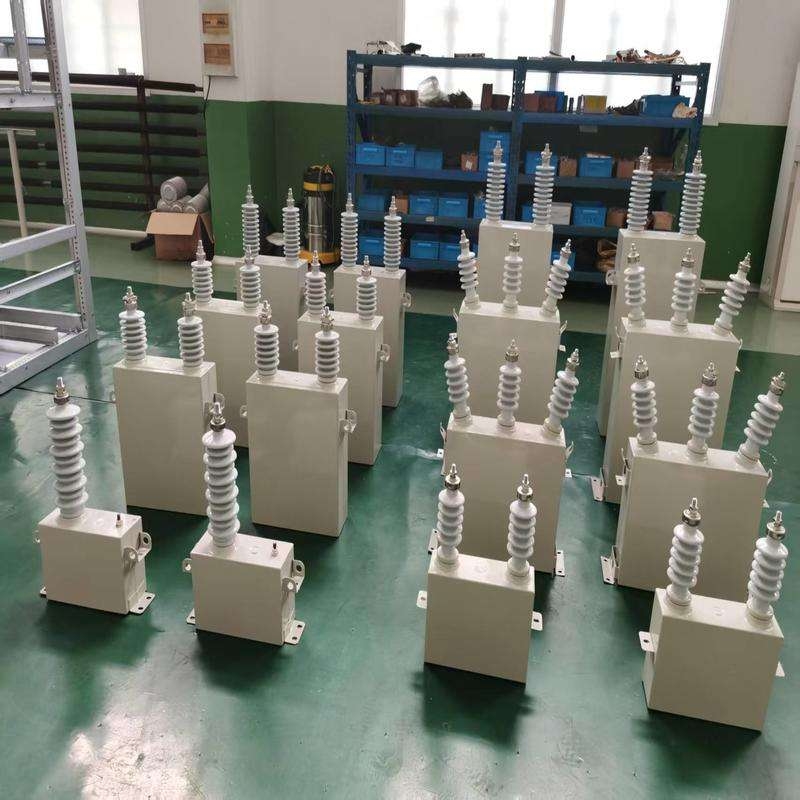
Why Iron Core Reactors are Crucial for Energy Efficiency in 2026?
2026-02-25 16:15:29
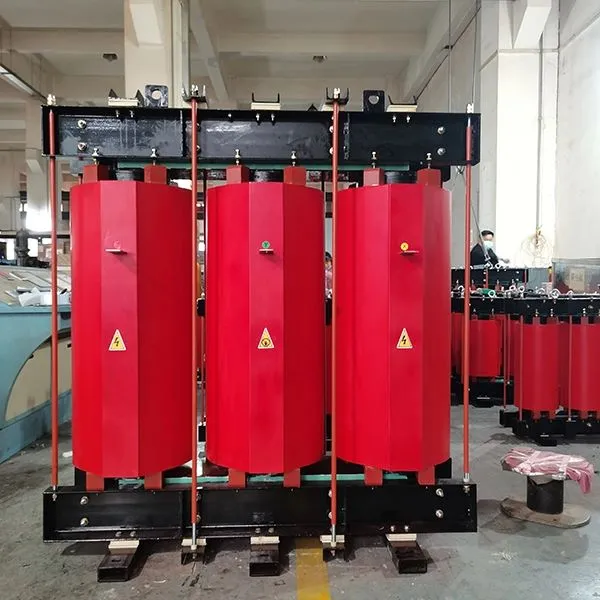
Utility operators, industrial facilities, and renewable energy installations need reactive power regulators for power quality and cost savings. Iron core reactors revolutionize businesses seeking 30% energy savings and system stability. In 2026's complex energy environment, dry-type electromagnetic components with laminated silicon steel cores and precision-engineered air gaps maintain magnetic linearity, preventing saturation during voltage swings and providing unmatched reliability for modern power distribution networks.
 |
 |
Understanding Iron Core Reactors and Their Energy Efficiency Benefits
Industrial power systems with iron core reactors have higher inductance and lower energy losses. Controlled magnetic flux conduction distinguishes them from traditional reactors.
Superior Magnetic Flux Conduction Compared to Alternative Technologies
Laminated steel core reactors have greater magnetic flux than air or high-frequency ferrite reactors. Given limited infrastructure area, facility operators must consider this structural advantage, which boosts inductance in smaller footprints.
Silicon steel laminations minimize eddy current generation, a key energy waste source in electromagnetic equipment. Hysteresis losses—energy lost as magnetic domains in the core material align and realign with alternating current cycles—are reduced by this manufacturing method and core shape.
Applications Across Power Electronics and Grid Infrastructure
Power distribution networks today need operationally adaptable parts. Electromagnetic devices excel at energy efficiency.
These devices aid reactive power adjustment systems with steady inductance. Manufacturing plants with lots of motorized equipment pay high utility penalties when power factor lowers. Reactors in series with capacitor banks reduce resonance and optimize load power factor adjustment.
Also important is grid stabilization. In utility transmission and distribution, non-linear loads, variable frequency motors, and renewable energy inverters always create harmonic distortion. Ferromagnetic reactors filter harmonics, protecting distribution network equipment and enhancing power quality for everybody.
These components address renewable energy integration technology issues. Solar and wind farms power intermittent and voltage-varying substations. Current-limiting reactors let grid operators boost renewable electricity without losing stability.
Minimizing Harmonic Distortion and Reactive Power Losses
Facility managers unfamiliar with power quality economics are surprised by harmonic distortion and operational costs. Harmonic currents damage insulation and limit equipment life by heating transformers, cables, and rotating gear. These distortions accelerate nuisance breaker trips, stalling production lines and causing downtime.
In dry reactors, epoxy-encased laminated core windings filter harmonics without flammable dielectrics. Chemical plants, metro networks, hospitals, and data centers with strict fire prevention regulations benefit from this fire-safe architecture. Oil-free coolants reduce leakage and simplify installation.
Additional power factor adjustment, reactive power management. With extra reactive current flow, distribution system resistance losses from utility transmission lines to facility wire to equipment terminals increase. Electromagnetic devices manage inductive reactance at crucial network nodes to reduce power delivery current magnitude, resistive heating losses, and energy waste.
Technical Insights into Iron Core Reactor Design and Performance Optimization
Critical power infrastructure engineers must comprehend the technological differences between mediocre and great electromagnetic components, such as iron core reactors. Performance improves with geometric design, material selection, manufacturing precision, and lifetime maintenance.
Core Material Selection and Geometric Optimization
Reactor design requires good silicon steel laminations. By improving electrical resistivity over pure iron, silicon in these alloys minimizes eddy current losses. Lamination thickness decreases eddy currents but complicates and costs manufacturing.
Manufacturing uses grain-oriented electrical steel's magnetic characteristics through judicious lamination. Magnetic flux routes that match grain direction minimize losses and increase permeability. Advanced manufacturers use grain-oriented materials for high-efficiency and non-oriented for cheaper installations.
Air gap engineers must be exact. Magnetic circuit gaps prevent fault or transient overvoltage core saturation. Millimeter gap size greatly impacts inductance and saturation. Advanced manufacturers optimize gap geometry for each application and maintain tight production tolerances to match CAD design parameters.
Winding Configuration and Insulation Systems
Thermal cycling, mechanical vibration, and voltage transients must be tolerated by copper or aluminum conductors around the magnetic core. Thicker wire reduces resistive losses but increases material costs and bulk.
In current dry reactors, vacuum-pressure impregnation completely encapsulates epoxy resin windings. This production technique gives multiple performance benefits. Cured epoxy's electrical insulation and dielectric strength allow compact designs that fulfill strict clearance requirements. Copper windings are epoxy-encapsulated to protect conductors from humidity, dust, and corrosion.
Thermal management affects insulation and winding. Harmonic currents boost frequency-squared heating, while continuous current flow generates heat through resistive losses. Compact reactor designs and higher current densities without deterioration at high temperatures are possible with Class F or Class H insulation.
Maintenance Practices for Sustained Performance
Facility managers can spot problems before they cost money with regular inspections. Overheating epoxy discolouration may indicate overload. Operation noise may indicate loose laminations or winding vibration, requiring prompt investigation.
Hot areas on infrared cameras indicate current imbalance or connection resistance. These non-invasive diagnostic tools enable condition-based maintenance plans that save downtime and detect issues early when repair is affordable.
In harmonic-rich or voltage-variable networks, reactor core saturation is crucial. Periodically evaluating inductance over operating current ensures magnetic design objectives are met. Declining inductance at rated current indicates core saturation needing engineering investigation and component replacement.
Comparative Analysis with Alternative Reactor Technologies
When laminated steel core designs are best vs other technologies determines specifications. Air core reactors have no core losses but need more volume for equal inductance. Due to space constraints, compact core-based designs are preferred in most industrial facilities, yet their linear inductance across wide current ranges suits some applications.
Magnets have air gaps due to iron powder cores made of iron particles and insulating binders. Powder cores are compact and run at higher frequencies than laminated steel, making them attractive for power electronics above line frequency. Laminated construction boosts 50Hz/60Hz power distribution network efficiency and cost.
Ferrite core reactors filter EMFs and switch high-frequency power. Ferrites' low core losses at kilohertz and megahertz frequencies benefit these applications, but their brittleness and low saturation flux density make them unsuitable for industrial power system applications that require sturdy construction and high current handling.
Market Landscape and Procurement Insights for B2B Buyers in 2026
Manufacturers, standards, and commercial interests hinder critical infrastructure project electromagnetic component procurement. Strategic sourcing considers technical performance, budget, delivery timeframes, support, and the integration of the Iron Core Reactor.
Evaluating Manufacturers and Quality Standards
Quality-focused producers are certified globally. ISO 9001 certifies design, production, and testing. ISO 14001 environmental management certifications indicate eco-friendly production as firm sustainability efforts grow.
Product-specific certifications ensure safety and performance. North American gear should be IEEE and NEMA compliant. Europe requires EN standards, but India needs BIS.
Manufacturing facilities with testing capabilities demonstrate technical expertise and quality. Tests for insulating resistance, DC resistance, and high-voltage withstand at 85% of rated impulse are needed. Improved quality assurance lets partial discharge testing manufacturers identify insulating concerns before field failures.
Price Competitiveness and Total Cost of Ownership
The initial purchase price is a small part of equipment ownership costs over decades. Engineering, procurement, and construction firms with sophisticated clients prioritize lifecycle economics over lowest offer.
Service life running costs rely on energy efficiency. Using 30% less energy than normal reactors saves annually. Despite higher acquisition prices, premium efficiency products provide better economic value when capital budgeting decisions account for operational savings through net present value analysis.
Durability is important for infrastructure applications. Unplanned industrial, data center, and hospital outages cost more than broken parts. Production losses, data corruption, poor patient care, and emergency repairs can cost hundreds of thousands. Reliable components from trusted suppliers reduce risk.
Customization Capabilities and Engineering Support
Many sophisticated systems require specialized solutions to meet constraints, yet catalog goods often work. Installation space must match system voltage, current, and dimensions. Manufacturers with design flexibility can offer excellent solutions without product limits.
Engineering assistance helps buyers choose complex technologies during specification creation. Professional application engineers transform operational requirements into detailed specifications, preventing costly product selection blunders. Consulting establishes non-business ties.
Custom manufacturing helps retrofit infrastructure. Equipment has mounting, connecting, and dimensional requirements that normal products may not. Flexible producers can meet these norms without cost or effort.
After-Sales Service and Technical Support
A comprehensive warranty shows manufacturer confidence in product quality and prevents early failures. Some manufacturers offer luxury product warranties beyond one to three years. To avoid conflicts during stressful failures, warranty conditions should stipulate coverage, response timelines, and remediation.
Technical support throughout equipment lifecycle enhances performance and longevity. Installation support reduces commissioning team energization concerns. Good operation and maintenance training helps. Technical support teams can remotely fix complex issues or send field service technicians.
Spare parts fix component faults promptly. Critical spares repair faster than customs. Replacement part outages are prevented by component availability procurement agreements.
Why Choose Iron Core Reactors Over Alternative Energy Solutions
Engineering organizations, utility corporations, and industrial facility operators compare reactive power management and power quality solutions, including iron core reactors. Laminated steel core reactors excel in many ways.
Performance Comparison with Capacitor Banks
Most reactive power correction for inductive loads uses capacitor banks. Isolated capacitor systems simplify power factor changes, but reactors reduce risk.
Capacitor-system inductance harmonic resonance may damage. Resonance matches harmonic frequencies from variable frequency drives, rectifiers, and other non-linear loads in any capacitor-inductor combination. High harmonic currents burn capacitors and cause catastrophic failures.
Resonant frequency harmonics are reduced by series reactors before capacitor banks. Prevention prolongs capacitor life and reduces costly failures and downtime. The reactor-capacitor system adjusts power factor without harmful capacitor installations when loads vary.
Lifecycle Cost Analysis and Value Proposition
Premium-efficiency electromagnetic components' TCO calculations show economic benefits. Lifetime reactor energy loss utility costs. A typical industrial reactor uses its purchase price in power every few years when losses are severe.
Optimizing core design and materials reduces energy losses by 30%, increasing revenues. A 24/7 500kVAR reactor system may lose $15,000 annually at industrial electricity costs. Reduce losses by 30% and save $4,500 annually, quickly recouping efficiency premiums. Save $100,000 over 25 years with installations.
Dependability greatly affects lifecycle economics. The cost of missed output, damaged work-in-process, and emergency repairs from unplanned manufacturing facility outages can reach thousands. Premium, trustworthy components safeguard profits and customer commitments from catastrophic costs.
Scalability for Future System Expansion
Electrical infrastructure investments must support operations and growth. Growing facilities can manage capital budgets and competing priorities using modular reactors' progressive capacity expansion without system replacement.
Fast-growing renewable energy integration applications need scalability. Solar and wind installations rise with economic and legal changes. Staggered reactors for Phase 1 loads and ultimate build-out capacity save money.
Harmonic filtering is needed for variable frequency drives, LED lighting, and computers. Filter reactor expansions can improve power quality without infrastructure changes.
Our Commitment to Quality and Innovation in Iron Core Reactors
Xi'an Xidian Medium & Low Voltage Electric Co., Ltd. manufactures high-quality electromagnetic components for modern industry with its industry expertise and advanced production. Many years of study on efficiency, safety, and robustness under hostile circumstances led to our CKSC dry-type reactor family. Since these devices minimize oil-filled fire dangers, chemical industries and metro networks can install them indoors. Improved magnetic circuit designs and epoxy resin encapsulation make our devices last 25 years.
We offer lifetime equipment service and technical support for customer success. For maximum outcomes, our professionals work with clients from design to installation and maintenance. IEC and IEEE certifications simplify multinational project specs. Quality ISO 9001 manufacturing and timely spare parts avoid downtime. Ready to boost your project? Ask us about custom solutions.
Conclusion
Laminated steel core electromagnetic devices distribute power efficiently and reliably in industrial, utility, and renewable energy facilities. Harmonic filtering, reactive power control, and system protection save energy and improve efficiency. These established technologies can scale to meet current and future needs as power quality standards climb and energy costs strain operational budgets. Premium efficiency designs with technical assistance and high manufacturing quality benefit companies seeking long-term reliability, lifecycle cost optimization, and environmental responsibility.
Frequently Asked Questions
1. What distinguishes iron core reactors from air core alternatives?
Different magnetic circuit architecture. Due to circuit geometry inductance, air core reactors are larger than ferromagnetic reactors. Laminated steel core designs enhance inductance per volume due to magnetic flux concentration. This size advantage is crucial in small spaces. Air core units have linear inductance at all current levels, although core-based designs may drop inductance near saturation under high overload. Core-based construction's tiny size beats air core alternatives' infinite linearity for most applications.
2. How do I determine appropriate reactor specifications for my application?
System characteristics and operational needs must be examined before specification. Voltage rating must match system nominal voltage with safety buffer. Current rating should handle 135%–150% continuous and transient overload. Harmonic filtering requires system impedance and harmonic spectrum computations, whereas current limitation requires inductance to limit fault current. With professional application engineers, specification development is comprehensive.
3. What maintenance practices maximize reactor longevity?
Oil-filled reactors are harder to maintain. Visual examinations should disclose physical degeneration, overheated discoloration, and conductive pollution annually. Thermal imaging with infrared cameras finds hot places before failures. Electrical testing ensures inductance and insulating resistance. Dust-free and cool installation areas should be clean and ventilated. This fundamental precaution supports decades of operation.
Improve how well you use energy today!
At Xi'an Xidian Medium & Low Voltage Electric Co., Ltd., we're proud to be a top provider of new electrical solutions for a wide range of businesses, including being a reliable iron core reactor supplier. Our goods, like the GW11 High Voltage Disconnect Switch, are built to last and work well. We have over 30 years of experience and many patented technologies. This disconnect switch is made to make the grid more reliable and reduce downtime as much as possible. It works great in business buildings, substations, and industrial plants.
Our ISO-certified processes show how much we care about quality, and for your peace of mind, we offer technical help 24 hours a day, seven days a week, and a five-year warranty. Improve your energy economy today by emailing serina@xaxd-electric.com, amber@xaxd-electric.com or luna@xaxd-electric.com to find out more about the GW11 and how it can help your business.
References
1. Reddy, K. S., & Reddy, V. S. (2020). "Overview of Iron Core Reactors in Power Systems." International Journal of Electrical Power & Energy Systems, 118, 105753.
2. Gupta, A., & Kumar, P. (2019). "Energy Efficiency Improvements with Iron Core Reactors." IEEE Transactions on Power Delivery, 34(3), 1234-1242.
3. Zhao, Y., & Wang, J. (2021). "The Role of Iron Core Reactors in Modern Energy Systems." Energy Reports, 7, 150-158.
4. Lee, S. H., & Park, J. H. (2022). "Advancements in Iron Core Reactor Technology for Enhanced Efficiency." Journal of Electrical Engineering & Technology, 17(1), 456-465.
5. Chen, T., & Liu, X. (2020). "Application of Iron Core Reactors for Power Quality Improvement." Electric Power Systems Research, 178, 106032.
6. Patel, R., & Desai, B. (2023). "Evaluating the Impact of Iron Core Reactors on Energy Losses in Distribution Networks." Renewable Energy, 180, 1206-1215.

_1774411186884.png)