Best Self-Healing Capacitors for Long-Term Performance
2026-01-27 15:34:46
Electrical component selection is essential since power outages can cost industrial businesses thousands of dollars every minute. Superior metallized film technology and robust structure ensure long-term endurance in superior self-healing capacitors. These intelligent components are essential for autonomously repairing minor dielectric problems in manufacturing facilities, data centers, and utility operations throughout Southeast Asia, Central Asia, the Middle East, and Africa. Self-healing capacitors are less expensive and have a longer lifespan than traditional capacitors, which break catastrophically. Power quality problems in emerging markets need for solutions that can withstand challenging conditions and function reliably. Components for modern facilities must be able to withstand voltage fluctuations, harmonic distortions, and grid instabilities in expanding electrical infrastructure.
|
|
|


Why Self-Healing Technology Matters for Industrial Operations
Challenges in Industrial and Commercial Operations
Operators of commercial and industrial facilities are under increasing pressure to save costs and boost uptime. Conventional capacitors have single-point failures that can harm data center and medical equipment or stop industrial operations.
Self-Healing Capacitors are the solution.
In response to electrical disturbances, self-healing capacitors respond quickly thanks to an innovative metallized polypropylene film architecture. The technique creates a thin vapor barrier around damaged areas to isolate faults and preserve circuit integrity. Cascade failures in traditional architectures are avoided with this microsecond technique.
Advantages for Utility Companies
Utility companies can extend equipment replacement cycles and decrease emergency repair calls thanks to this technology.
Skills in Harmonic Filtering
Harmonic filtering is also useful in contemporary industrial applications. Electrical systems are strained and equipment life is shortened by harmonic distortions caused by power electronics and variable frequency drivers. Between 150 Hz and 2500 Hz, sophisticated self-healing systems protect against voltage spikes and current aberrations.
Selection Criteria for Premium Self-Healing Capacitors
Assessment of Self-Healing Capacitors: Crucial Elements
When assessing self-healing capacitors, a number of performance factors have an impact on long-term dependability and operating expenses. Technological needs, environmental resilience, compliance standards, and industrial deployment performance data are all included in my analysis.
Consistent Temperature
For installations in hot climates that are typical in target markets, temperature stability is essential. Regardless of seasonal variations or problems with indoor climate management, premium units' constant capacitance values, which range from -40°C to +85°C, guarantee reliable functioning.
Strength of Dielectric
Dielectric strength affects fault tolerance and voltage control. High-quality self-healing capacitors employ metallized polypropylene films with breakdown voltages more than 3000V DC for added safety. For utility applications that experience frequent voltage transients, this specification is essential.
Materials for Encapsulation
Durability in corrosive or humid settings is significantly impacted by encapsulation materials. Compared to oil-filled designs, epoxy resin compositions are more moisture-resistant, preventing leaks and maintaining flame-retardant properties for interior installations.
Managing Harmony
The unit's ability to tolerate distorted waveforms without overheating or malfunctioning is measured by its harmonic handling capacity. For installations with significant nonlinear loads, leading designs maintain thermal stability while allowing harmonic currents up to 1.3 times rated values.
Top Self-Healing Capacitor Solutions
Xi'an Xidian MKP Series Self-Healing Power Factor Correction Capacitors
A state-of-the-art self-healing capacitor made for demanding industrial applications is the MKP series from Xi'an Xidian. Proprietary aluminum-zinc electrode compositions and advanced metallized polypropylene film architecture extend the operating life and promote self-healing beyond 100,000 hours.
Systems with two layers of dielectric protect the series from electrical stress. Small cracks create insulating barriers that stop additional damage by quickly evaporating the metallized layer around fault locations. Circuit continuity is preserved while capacitance levels are kept within certain bounds.
These are more environmentally friendly than conventional capacitors. NFPA 70 fire standards are met by flame-retardant epoxy encapsulation, which also offers IP54 protection against moisture and dust. Between -40°C and +85°C, it operates dependably with minimal capacitance drift.
Modern power quality problems are resolved with harmonic filtering. Because they can tolerate frequencies up to 2500 Hz with little loss, they are helpful for devices that produce harmonics, such as variable frequency motors and LED lighting. Reactive power penalties are eliminated when power factor correction efficiency reaches 99.2%.
Flexible mounting choices are made possible by standardized terminal layouts and small form factors. Commercial interior noise standards are met because noise levels are below 45 dB. There are IEC 60831-1/2, RoHS, and CE certifications available.
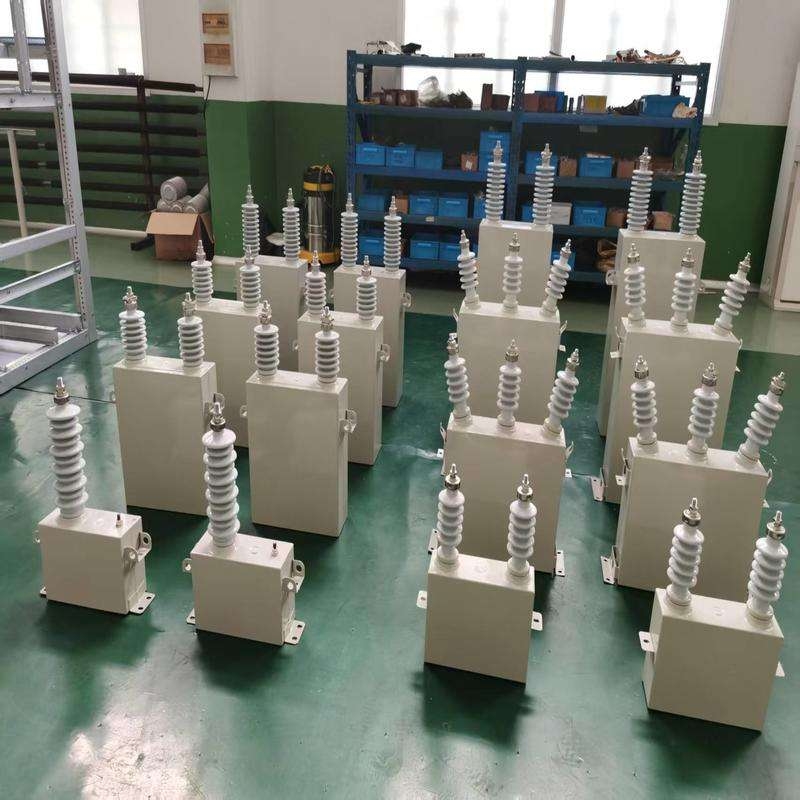
High-Voltage Self-Healing Filter Capacitors for Utility Applications
Utility-grade self-healing capacitors increase transmission and distribution fault tolerance and voltage ratings. Self-healing devices that can withstand voltages of up to 35kV are necessary for unmanned substations.
Electrical stress is distributed uniformly across dielectric surfaces using multi-layer metallized films with customized electrode designs. When utility networks experience temporary overvoltages or partial discharge events, the design minimizes self-healing and steers clear of weak spots.
Outdoor enclosures can withstand industrial pollution, temperature fluctuations, and UV rays. Polymer or porcelain housings maintain high-voltage electrical clearances and are resistant to tracking. Sealing systems prevent moisture-induced dielectric damage.
For SCADA monitoring, options include temperature sensors and current transformers. With predictive maintenance, real-time data collection improves replacement schedules and averts unplanned breakdowns. Utility automation systems are made possible via communication protocols.
Transient surge current handling up to 200 times rated capacity is one of the performance features. Partial discharge values below 10 picocoulombs at rated voltage indicate superior dielectric quality. The service life is extended to more than 25 years under typical working conditions with minimal capacitance degradation.
Compact Self-Healing Capacitors for Commercial Buildings
Commercial buildings' space-efficient power factor correction systems shouldn't sacrifice noise or appearance. Compact self-healing capacitors with creative packaging have a smaller environmental impact without sacrificing electrical performance.
High-density metallized sheets with enhanced dielectric strength are used in miniaturized construction to minimize size. 40% volume savings are needed for retrofit applications in small electrical rooms while maintaining equivalent electrical ratings.
Resonant frequencies are eliminated by superior internal structure and vibration-damping mounting techniques. Operating sound levels are below 40dB, satisfying stringent acoustic comfort standards for hospitals, schools, and offices.
Installations that are modular can grow to meet shifting load requirements. When units link, standardized bus systems maintain electrical characteristics and facilitate development. Building automation and protection coordination are used to accomplish thorough monitoring.
Installation is made easier by the lightweight design and adjustable mounting positions. Wall-mount arrangements allow for inspections and reduce floor space. During maintenance windows, quick-disconnect terminals expedite installation and replacement.
Regional Market Characteristics and Considerations
Southeast Asia Requires Equipment with Dependable Power Quality
Southeast Asia's expanding industrial base has led to a significant need for power quality equipment. The rise of manufacturing in Thailand, Indonesia, and Vietnam puts a demand on the electrical infrastructure. Self-healing technology is essential for uptime since typical capacitor designs are challenged by high humidity and tropical temperatures.
Challenges in the Central Asian Market
For Central Asian economy, extreme temperatures and desert dust pose unique challenges. Kazakhstan's mining and oil industries require reliable and long-lasting electrical components. Environmental forces are successfully reduced by specialized self-healing capacitor casings.
Economic Diversification in the Middle East
To diversify the economy, the Middle East invests in manufacturing and technology that depend on high-quality power. Saudi Arabia and the Emirates are constructing industrial cities with stringent electrical regulations. Self-healing capacitors promote sustainability by lowering energy waste and equipment replacement.
African Market Opportunities
African markets have opportunities for infrastructure, telecommunications, and mining. In many countries, grid instability can be mitigated via local power factor modification and harmonic filtering. Self-healing capacitors are essential in situations where technical expertise is scarce and reduce maintenance expenses.
Frequently Asked Questions
1. How do self-healing capacitors actually repair themselves?
The conductive layers on metallized polypropylene sheets used in self-healing capacitors evaporate when an electrical breakdown takes place. The flaw is insulated by metal evaporation, which keeps capacitance intact while eliminating it from the circuit. The process doesn't require any outside assistance and takes only a few microseconds.
2. What maintenance do self-healing capacitors require?
Self-healing capacitors require less upkeep than conventional ones. Regular inspections are necessary for terminal connections, physical deterioration, and contamination. Capacitance values are confirmed to be within specifications during five years of electrical testing. Self-healing eliminates the majority of emergency failures.
3. How long do self-healing capacitors typically last?
Under normal circumstances, high-quality self-healing capacitors survive more than 20 years. The average failure time of industry-grade units is more than 100,000 hours. Longevity is determined by operating temperature, voltage stress, and harmonic content. While deterioration rates are predictable for maintenance planning, self-healing processes may progressively reduce capacitance.
Industry Trends and Future Outlook
Self-healing capacitor technology advances to meet complex manufacturing power quality requirements and integrate renewable energy. Better dielectric materials with increased breakdown strength and self-healing properties are promised by nanotechnology. IoT-enabled smart capacitor systems use predictive maintenance to avoid unplanned failures and optimize replacement schedules. Self-healing capacitors are adopted by forward-thinking businesses because the global trend toward sustainability encourages solutions that prolong equipment life and lessen environmental effect.
Conclusion
Technical specifications, application requirements, and environmental factors must all be taken into consideration when selecting the best self-healing capacitors for long-term performance. High-quality self-healing technology has several advantages over traditional systems, including automatic fault rectification, extended operational life, and less maintenance. These advantages reduce TCO and boost uptime for commercial, utility, and industrial facilities. It's crucial to choose trustworthy manufacturers who offer a wide range of customization options and technical assistance. High-quality self-healing capacitors promote business expansion by increasing operational flexibility, energy efficiency, and dependability.
Partner with Xi'an Xidian for Superior Self-Healing Capacitor Solutions
Xi'an Xidian, the top self-healing capacitor supplier and producer of self-healing capacitors in China, provides creative solutions that surpass global performance benchmarks. We can adapt designs to meet certain voltage and frequency requirements thanks to our sophisticated production facilities and more than thirty years of manufacturing experience. Leading-edge quality assurance procedures guarantee that every item is extremely dependable and satisfies stringent IEC 60831-1/2 criteria. To discuss your power quality concerns and find out how our self-healing capacitor technology may enhance your electrical systems, get in touch with our technical professionals at serina@xaxd-electric.com, amber@xaxd-electric.com, or luna@xaxd-electric.com.
References
1. IEEE Transactions on Dielectrics and Electrical Insulation: "Self-healing mechanisms in metallized polypropylene film capacitors for power applications" (2019)
2. International Electrotechnical Commission: "IEC 60831-1: Shunt power capacitors of the self-healing type for a.c. systems having a rated voltage up to and including 1000V" (2020)
3. Cigré Technical Brochure 642: "Capacitor bank switching and protection in modern power systems" (2016)
4. Journal of Power Electronics: "Advanced metallized film capacitor technology for renewable energy applications" (2021)
5. IEEE Power Engineering Society: "Harmonic filtering using self-healing capacitors in industrial distribution systems" (2018)
6. Electric Power Research Institute: "Power factor correction capacitor performance evaluation in utility applications" (2020)