
Self-Healing Filter Capacitor for Industrial Power Factor Correction
2026-11-13 17:19:56
Self-healing filter capacitors help industrial plants correct power factor, cut reactive power demand, and lower line current. Their metallized polypropylene film clears small insulation faults on its own, so one weak spot does not take a capacitor bank offline. Paired with a series reactor, they also form a tuned LC circuit for harmonic filter cabinets. This guide for engineers, buyers, and OEM teams in the United States who must match a capacitor to a specific frequency, voltage, and duty. Below, I cover how the technology works, how to select it, and how to qualify a supplier.
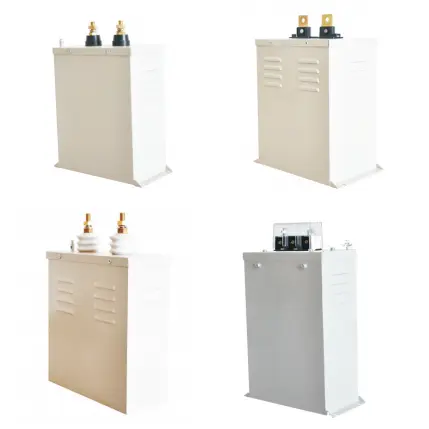
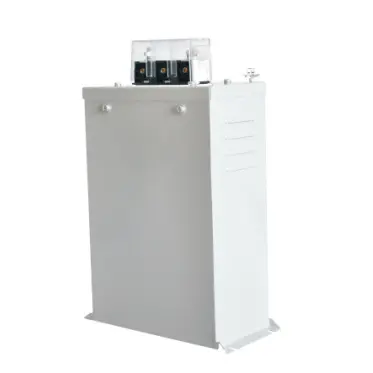
Understanding Self-Healing Filter Capacitors for Power Factor Correction
What Are Self-Healing Filter Capacitors?
Self-healing filter capacitors are thin capacitors whose outsides are covered in metal. A vacuum is used to put down a very thin layer of zinc-aluminum on polypropylene (MKP) or polyester film. As soon as the film breaks, the fault current burns off the metal around a weak spot in it. Even though the vapor leaves behind a small area of insulation, the capacitor still works. You avoid a short circuit right away, even though you lose a little capacitance. With foil capacitors, it’s not the same. Their thick wires cannot fix a problem, so a break can leave a short that won’t go away. Because of this, film designs work better for AC power duty, where the voltage is stressed over and over again with each cycle.
Why Use Self-Healing Capacitors for Industrial Power Factor Correction?
Motors, welders, and drives all pull reactive power. The current in the lines and transformers goes up because of this, and many businesses charge extra if your power factor is low. Self-healing filter capacitors offer reactive power close to the load, which makes room on the line. The losses and ESR of metallized film are low, and it can handle strong AC. A bank can work for years if the voltage, temperature, and harmonic current don’t go too high or too low. A capacitor bank stays up and running because it can fix small problems on its own. You cannot use it instead of grounding, overcurrent protection, discharge resistors, or safe servicing. I always tell people who buy capacitors to think of them as a safety system.
Self-Healing Filter Capacitors Versus Other Capacitor Technologies
There are various kinds of capacitors. They all do different things. Self-healing polypropylene filter capacitors are good for adjusting reactive power and filtering AC because they have low loss and can handle high ripple current. Silver electrolytic capacitors, on the other hand, store more energy per unit volume because they are polarized and have a higher ESR. This is why they are often put in stages with a DC link. EMI is cut down with ceramic capacitors, which separate high frequencies. In some designs, metallized polyester can save room or money. However, polypropylene usually has less loss and better high-frequency behavior. You should never switch an AC filter capacitor for a DC-link part without first checking the whole electrical system. This is because the voltage pattern, ripple current, and failure mode are all different.
Where Self-Healing Filter Capacitors Work in Industrial Power Systems
Industrial Plants and Motor Drives
There is a low power factor and a lot of harmonic content in factories that use CNC machines, assembly lines, pumps, and variable-frequency drives most of the time. Detuned harmonic filters and power factor adjustment banks in these plants have self-healing filter capacitors. It is made up of a capacitor and a series reactor in a detuned filter that is tuned to a certain frequency. The bank cannot talk to the network because of this. Along a 60 Hz line, the 5th harmonic is at 300 Hz and the 7th harmonic is at 420 Hz. In other words, the target tuning point tells you how much capacitance you need. Our units can handle up to 100 times the rated current inrush current in these situations.
Substations and Renewable Energy Connections
Harmonics are added by solar and wind transformers, which makes the power flow uneven. People who work in substations use self-healing filter capacitors to keep the voltage fixed and cut down on the confusion that these sources cause. Many things can happen in the field, like changes in temperature and humidity, and it may be a long time between repairs. Because of this, it is important to use stable materials and sealed encapsulation. It is possible for Xi'an Xikai’s plateau-type tools to work at heights of up to 4,000 meters. It is set by IEEE 519-2022 in the US at the point of common coupling. To put it another way, measured harmonic data should be used instead of guesses when making a filter.
Commercial Buildings and Retrofits
Hospitals and shopping malls often use older capacitor banks that have lost their power or leaked oil. There is no chance of oil leaks in these buildings because they have dry-type self-healing filter capacitors in cases made of concrete or plastic. For places where people are, our units are quiet (below 45 dB) and made of materials that won’t catch fire. NFPA 70, the National Electrical Code of the United States, tells us how to put in capacitors. Your electrician and inspector should look over the last plan. If the load has changed since the original installation, you can also change out stages that have failed and tweak the tuning.
Xi'an Xikai Self-Healing Low-Voltage Filter Capacitors
Product Specifications
We use metallized polypropylene film (MKP) as the insulator in our self-healing filter capacitors. If there is a small break, the metal layer around it breaks down, putting the insulation back together. Houses made of epoxy resin or plastic are better for the environment and don't let oil leaks happen. 440 V, 480 V, 525 V, and 690 V are all voltages that it can handle. Each unit can hold 5 to 100 kvar of power. Target filtering frequencies can be set anywhere from 150 Hz to 2,500 Hz. This type of self-healing filter capacitors works with the 480 V class that is common in U.S. industrial plants. Our product data is different from other brands’ because it has a low-ESR design that can cut reactive power losses by 15–30%. Also, the fact that it can fix itself can save you up to 40% on the cost of replacement.
How the Construction Works
The dielectric is MKP film, which can fix itself even if it gets broken. A combination of aluminum and zinc is used to make electrode layers that don't change their permeability. The winding is surrounded by an epoxy resin that doesn't catch fire. This resin is great for outdoor substations because it can handle changes in temperature, pressure, and humidity. Links between wires are safe because they have brass ends that don't rust. Trouble spots are kept separate by the film, electricity flows through the electrodes, water stays away from the metallization with the resin, and the cable is held in place by the terminals. Thin layers of metal can be worn away over time by water, so the quality of the seal has a direct effect on how long it lasts. People who make self-healing filter capacitors don't have to worry about oil leaks because their bodies are made of sealed plastic.
Manufacturing and Quality Assurance
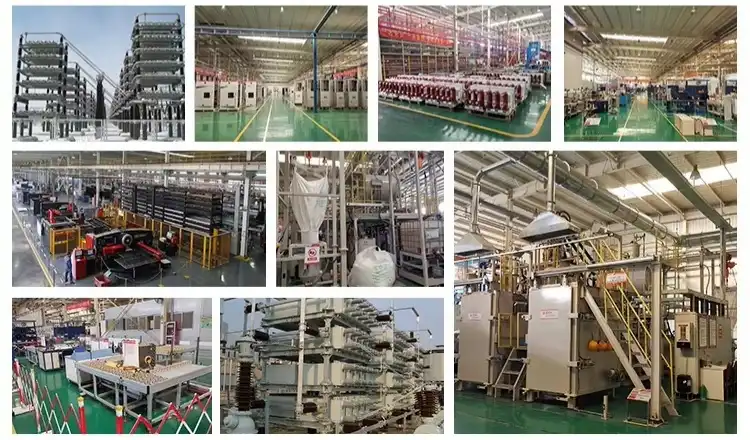
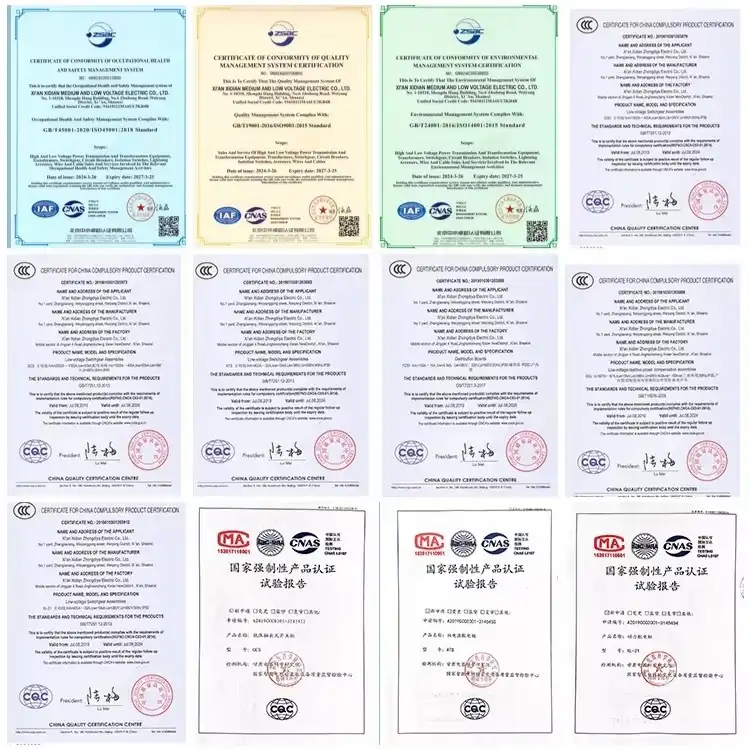
Quality starts at the film. The MKP film was cut with a laser that was less than 0.01 mm off. The metal layer was then added by vacuum metallization to even out the surface. Auto-winding makes sure that each element stays the same. Then, all of the units are electrically checked to make sure there is no leakage current or capacitance changes that are greater than 3%. The units also do a safety check according to IEC 60831-1/2 and a load simulation for 72 hours. We know that our product is safe because it has been approved by CE, RoHS, UL (North America), and CCC. When used on a large scale, we also say that its MTBF is 100,000 hours or more. People in the U.S. should check that the description matches the type they want to buy. It is important to have a tight limit when you tune a circuit because capacitance sets the tuning frequency of self-healing filter capacitors.
How to Choose and Avoid Costly Mistakes
How to Choose a Self-Healing Filter Capacitor for Power Factor Correction
Start by figuring out the system's power, phase order, frequency, link method, and how it works. To find kvar, you should use more than just microfarads. You should also look at load power, present power factor, and target power factor. For the voltage grade, changes in the grid, harmonics, switching transients, and the voltage rise caused by a series reactor across the capacitor must all be taken into account. More care needs to be taken with tolerance for tuned filters. When capacitance changes by 3%, the tuning point moves by 1.5%. This is because the tuning frequency is based on the square root of capacitance turned around. Also, look at the loss factor (tan δ), which changes how much heat is lost. Make sure you know about the temperature rise, humidity, vibration, altitude, discharge behavior, and fire performance before you place your order.
Common Selection Mistakes
There are four mistakes that keep happening. People who want to buy only look at the microfarad value. The way they adjust reactive power and harmonic filters are not clear to them. It is used in an AC circuit and has a DC link. They forget about the inrush current and how often they turn the power on and off. If you have a bank that is too small, it can cause resonance and too much current in networks with a lot of harmonics instead of better power quality. It is important to talk about the harmonic spectrum, grid resistance, short-circuit ratio, reactor needs, switching method, and security coordination to make sure this doesn't happen. It's also important what kind of film is used because different films change capacitance at different temperatures in different ways. To get temperature information for self-healing filter capacitors before you finish a design, you should ask for it.
Specification and Procurement Checklist
A clear specification cuts down on the back and forth that takes weeks. When it comes to the electricity, you need to write down the voltage, tuning frequency, capacitance (or kvar), tolerance, ripple and harmonic current, overload conditions, discharge time, connector type, and tuning frequency. For mechanical needs, you should write down the biggest dimensions, the type of terminal, how it will be mounted, how much it weighs, and how it will be cooled. Ranges of temperatures, humidity, altitude, vibrations, and time spent outside should be written in the environment notes. On the business side, you need to think about things like certifications, sample amount, MOQ, annual volume, wait time, warranty, and technical change control. To get a correct quote for self-healing filter capacitors, giving this full set at the start lowers the risk of a bad merger later on.
Qualifying a Supplier and Validating Before Volume Orders
How to Evaluate Self-Healing Filter Capacitors Manufacturers and Suppliers
A good provider will be able to show stable winding and encapsulation, controlled film sourcing, automatic testing, and output that can be tracked. Ask for datasheets that show the capacitance, voltage, frequency, ripple current, loss factor, insulation resistance, temperature limits, lifetime, measurements, and connections. This is the next step: ask for test results on voltage endurance, self-healing filter capacitors behavior, temperature cycling, humidity, and vibration. Lifetime claims that aren't clear, records that are missing, and datasheets that aren't fully filled out are all red flags. When shopping abroad, you should also think about the minimum order quantity (MOQ), the wait time, the export packing, the Incoterms, the guaranty terms, the ability to visit the factory for an audit, and the customer service after the sale. These checks make sure that your project is safe when you buy from another country.
Customization and Engineering Support
Customization is needed because people who make harmonic filters often need to set frequencies that aren't standard. The voltage and frequency needs that aren't typical can be met by our modular designs. Along with that, we've worked on more than 12 patents and research projects at the national level. Not only does Xi'an Xikai sell tools for State Grid systems, but it also does so for petrochemicals, rail transportation, steel and metallurgy, and green energy projects. Ask each provider how quickly they can send you samples, who can answer your technical questions, and how they keep track of film lots. Because different materials can change how things work, ask for information on capacitance vs. temperature for the exact film that was used. Because they can be fixed by more than one engineer, the self-healing filter capacitors will always be the right size for the circuit.
Validation Process Before Mass Purchase
To validate, do it in stages. First, you should look at the application using the real load profile, harmonic content, switching conditions, temperature, and the area where the installation will be done. The second step is to test the prototypes for size, terminal strength, withstand voltage, capacitance, tan δ, insulation resistance, and ripple-current temperature rise. Third, make sure the system improves the power factor, handles switching transients, noise, temperature rise, and protection coordination without any resonance. All of these things should be tested according to IEEE 519. Limit incoming inspections, make sampling plans, make sure batches can be tracked, get certificates of conformity, and spell out what needs to be done to fix things after approval. This staged method lets you add more self-healing filter capacitors while having fewer field failures.
Conclusion
Self-healing filter capacitors use metallized film to fix small dielectric problems. This helps factories balance the power factor and make tuned harmonic filters. Film designs work better than electrolytic or ceramic parts when they need to handle AC power. To make sure they can do their job, every kind of capacitor needs to be tried out. Start with kvar, which means for voltage margin and includes tolerance, tan δ, ripple current, and surroundings. This will help you make a good choice. Not taking resonance risk into account, picking based only on microfarads, and mixing correction with filtering are all mistakes that people often make. It is less likely that something will go wrong in the field if sources are checked, records are kept, and proof is done in steps, from the pilot to the system test. This makes a capacitor bank that is good for its circuit and doesn't break down when it's needed.
FAQ
1. How does self-healing affect capacitor life?
A small piece is taken away every time the electrode is cleared, which means that the capacitance goes down by a small amount. Many users think it's the end of life when the price drops by 3% to 5%. To keep the number of events in check, power and temperature must stay within their limits.
2. Can self-healing filter capacitors still fail?
Yes. It can still fail because of too much heat, water getting in through a broken seal, too much voltage, or stress on the parts. Being able to fix itself can only fix dielectric faults, so protection devices and proper installation are still needed.
3. What information do you need for a quote?
You need to include the application, voltage, tuning frequency, capacitance (kvar), tolerance, ripple current, working temperature, measures, documents needed, annual volume, and delivery date.
Request Self-Healing Filter Capacitors from Xi’an Xikai
Describe the voltage, tuning frequency, capacitance, or kvar goal you want to reach, as well as how you would like to set up the gadget. Self-healing filter capacitors are what our business does. We have units from 440 V to 690 V, 5 kvar to 100 kvar, one-of-a-kind designs, and unique ways to deal with frequencies that aren't common. Our team will think about what you need and get back to you with an idea. You can email serina@xaxd-electric.com, amber@xaxd-electric.com, or luna@xaxd-electric.com, or go to xaxd-electric.com.
References
1. IEEE Standard for Shunt Power Capacitors (IEEE Std 18), 2012
2. IEEE Standard for Harmonic Control in Electric Power Systems (IEEE Std 519), 2022
3. Shunt Power Capacitors of the Self-Healing Type for a.c. Systems Having a Rated Voltage up to and Including 1000 V, Part 1: General (IEC 60831-1), 2014
4. Power Electronic Capacitors (IEC 61071), 2017
5. National Electrical Code (NFPA 70), 2023
6. Improving Motor and Drive System Performance: A Sourcebook for Industry, U.S. Department of Energy, 2014