
Capacitor-Cylindrical Self-Healing: Principles and Applications
2026-11-20 17:14:39
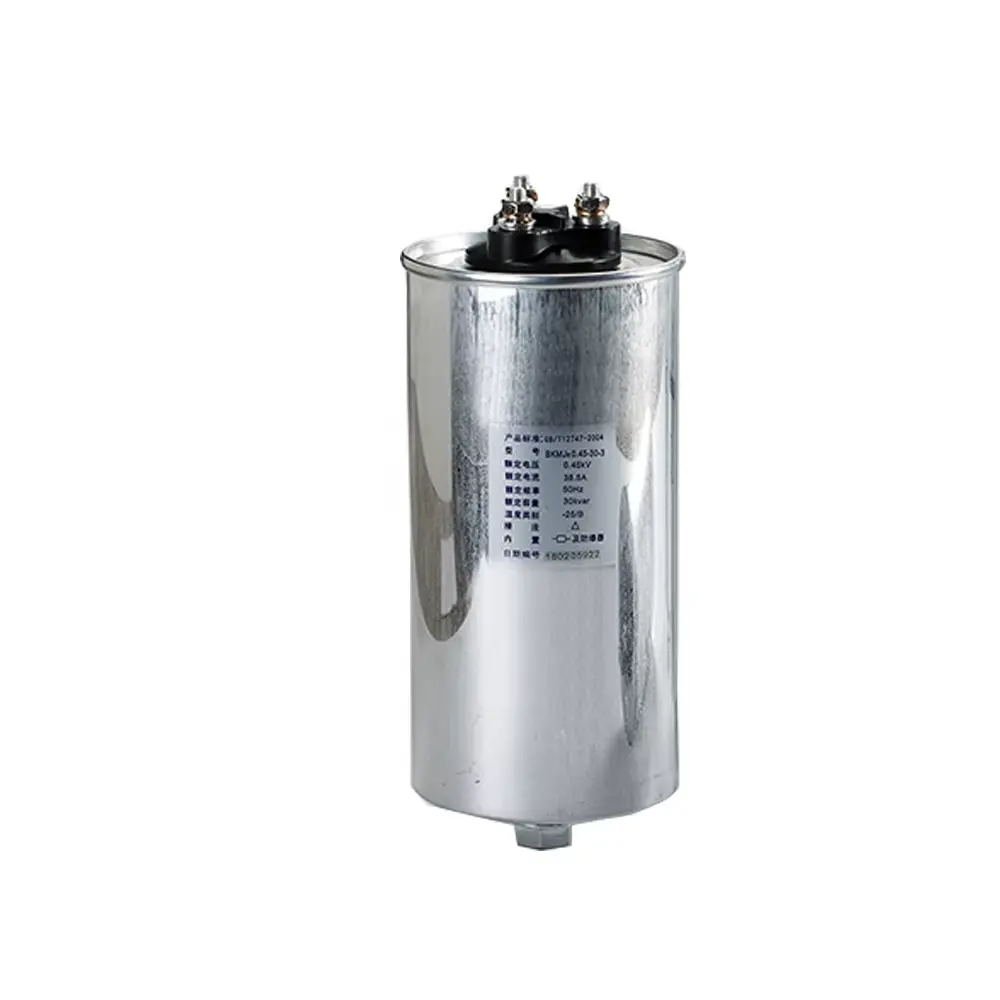
The self-healing capacitor-cylindrical unit is made up of a wound metalized polypropylene film capacitor in a round housing. It is made so that a small insulation fault can be fixed by itself. When a weak spot in the film breaks, the thin metal coating around that spot vaporizes and locks out the fault within microseconds. The capacitor then continues to work. Because of this idea, self-healing capacitor-cylindrical designs are often used for motor systems, power factor correction, AC filtering, and equipment for renewable energy. This guide explains how these capacitors work, how to read their ratings, where they should be used, and how to get a lot of the 400V BKMJ0.46-30-3 in good quality.
How a Self-Healing Capacitor-Cylindrical Is Built and Works
What a Cylindrical Self-Healing Capacitor Is
A self-healing capacitor-cylindrical part rolls up two layers of metalized polypropylene film into a tight cylinder and puts it inside a case made of aluminum or plastic. The terms are often mixed up, so I've put them apart here. A cylindrical capacitor only talks about the shape, and electrolytic cans fit that shape. The dielectric in a film capacitor is made of plastic film. A self-healing film capacitor has a thin layer of metal on top that can burn off around a fault. Voltage, capacitance, temperature, service life, harmonics, safety, and cost are some of the selection questions that engineers, purchasing managers, OEMs, distributors, and system integrators all have to deal with. This guide goes over each question in the right order, from technical evaluation to requests for samples and quotes.
Construction: From Film to Finished Unit
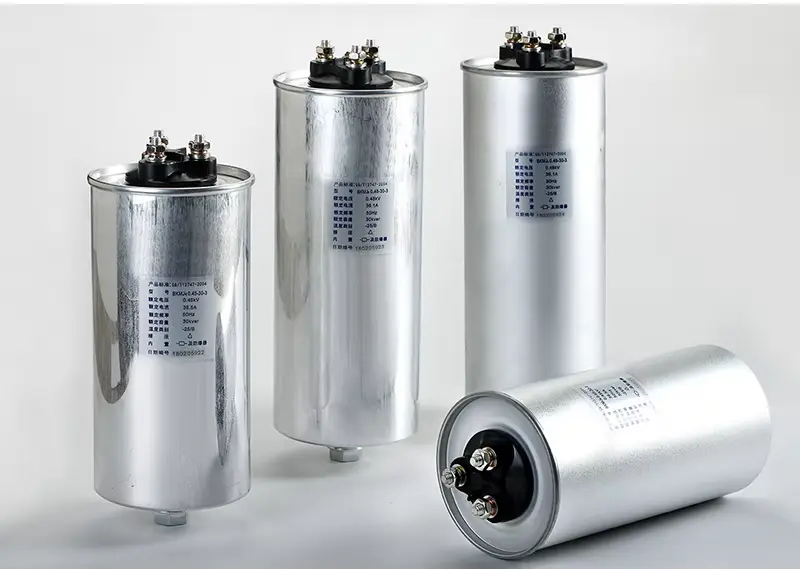
Polypropylene film is used as the dielectric. The electrode is a very thin layer of metal, usually zinc, aluminum, or an alloy, that is only a few tens of nanometers thick. The cylinder-shaped part is made by winding the film, and sprayed metal at the ends connects the layers to the terminals. It is sealed with encapsulation material and sits in a housing. When the switch is turned off, discharge resistors let go of the stored voltage. If the pressure inside the circuit rises, a pressure-sensitive disconnector opens it. Soft PU resin is used to make the BKMJ0.46-30-3's housing, and a grounding bolt is already built in. Each self-healing capacitor-cylindrical design has this layout, and each part does its own job: the film stores energy, the resin protects the element, and the disconnector limits damage when the device is no longer needed.
The Healing Process Step by Step
There is a clear order to healing. First, the voltage stress builds up in a weak spot in the film. Second, a small arc of breakdown appears. Third, the arc's power turns the thin metal around the spot into vapor. Fourth, in microseconds to milliseconds, that area turns into an insulating island, and the arc stops. Fifth, the capacitor keeps working even though it's losing very little capacitance. How well this works is affected by fault energy, film thickness, voltage stress, temperature, humidity, frequency, and harmonics. I want to be clear about the rules. Healing can only fix small mistakes. Overload, sustained overvoltage, or poor cooling can still damage a self-healing capacitor-cylindrical unit, and the capacitance decreases over time as these things happen more than once. The pressure disconnector then keeps the circuit safe when it's time to go.
Comparing Types, Ratings, and Applications of Self-Healing Capacitor-Cylindrical Units
Self-Healing Versus Other Capacitor Types
When you compare designs, make sure that the voltage, capacitance, frequency, temperature, and duty cycle are all the same. Vague words like "standard capacitor" can hide real differences. A foil film capacitor that doesn't fix itself can get a permanent short after just one breakdown. An aluminum electrolytic capacitor is polarized and works well for DC links that need a lot of capacitance in a small space. However, it is not good for AC power factor correction at line voltage. In spite of the fact that oil-filled units usually mount upright and have a leak risk, they are good at moving heat. Films with rectangular shapes fit neatly into boxes. A self-healing capacitor-cylindrical unit has even pressure inside, good heat release in dense banks, and a range of mounting options. There may be a better way to use an electrolytic or another type when the design needs a very high DC capacitance.
Electrical Ratings to Check on a Datasheet
To choose a capacitor, do not only look at its capacitance. Check the frequency, RMS and peak voltage, capacitance, insulation resistance, dielectric loss, and the difference between the rated voltage and the test voltage. The most important thing for power factor work is kvar at rated voltage. The choice is based on the system voltage and the type of connection. Harmonics increase RMS current and heat. It says that the BKMJ0.46-30-3 can handle voltages between 250 V and 525 V, and it can handle voltages up to 2000 V. It can also handle 50/60 Hz. If you buy in bulk and order the same model every month, you should also ask about the batch test records and capacitance tolerance. This is because differences between batches can cause banks to perform unevenly. There is a clear self-healing capacitor-cylindrical datasheet that has all of these things on it, along with safety features like the disconnector and discharge resistor.
Where These Capacitors Work
These self-healing capacitor-cylindrical units are used in fixed compensation at motor terminals, detuned filter banks, AC filters in solar and wind inverters, and three-phase distribution boards. Because many utilities charge extra for low power factor, motor-heavy sites don't have to pay that extra fee. Pay attention to resonance: harmonic currents can resonate with capacitor banks and transformer inductance, especially when they are close to variable frequency drives. When detuning reactors are used, they move that resonance away from common harmonic orders. IEEE 519 also gives planning harmonic limits. Because switching frequency, ripple, temperature, humidity, and load swings change the design that needs to be made, make sure that the capacitor works with the contactors, fuses, monitoring devices, and airflow in the cabinet. Pick based on how it will be used, not just the size or value of the package.
Selecting and Sourcing a Self-Healing Capacitor-Cylindrical Supplier
A Practical Selection Process
Let's do it in four steps. To begin, you need to describe the use, system voltage, load profile, phase configuration, and switching conditions. Second, write down the temperature, humidity, altitude, vibrations, and type of enclosure. Third, decide on the main parameters, such as capacitance, voltage, frequency, current, loss, insulation resistance, temperature range, service life, size, mounting, terminals, and voltage. Fourth, don't just look at the shape of the package when comparing candidates. There are cylinder, rectangular, electrolytic, non-self-healing, and oil-filled types. You should look at the whole application. After making a list, go over the datasheet, approve a sample, make sure it meets the requirements, look over the warranty, and talk to the manufacturer. Because it comes in a standard size and rating, like BKMJ0.46-30-3, this process is easier for a 400 V panel. This means you can quickly test a self-healing capacitor-cylindrical sample in your own cabinet.
Evaluating a Manufacturer or Supplier
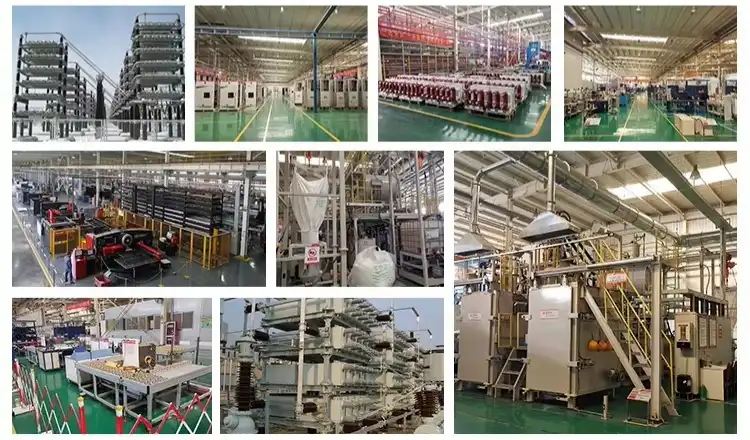
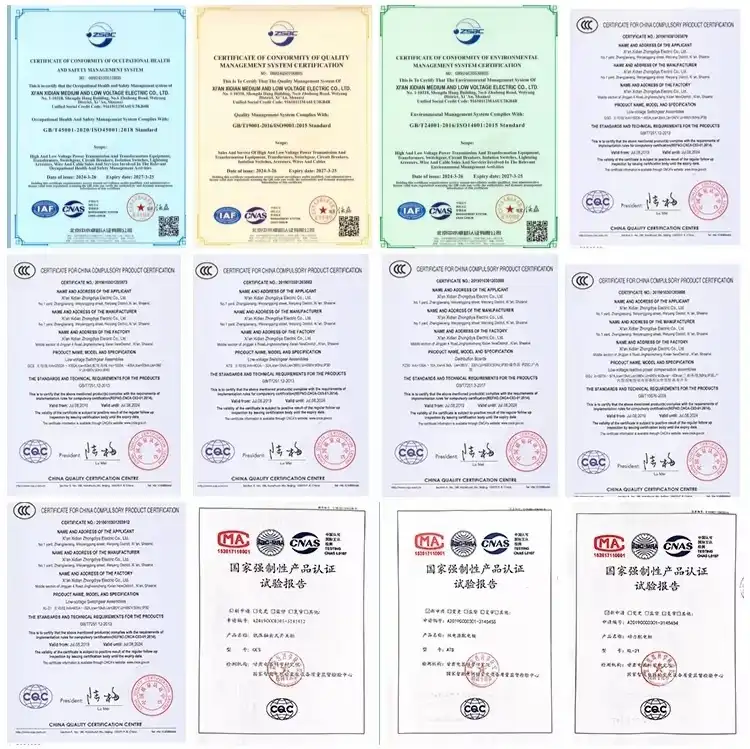
You should look for things like manufacturing experience, metallized-film technology, production capacity, quality control systems, test equipment, the ability to track the product, certifications, a warranty, and technical documents. Xi'an Xikai makes medium- and low-voltage electrical equipment in 34 series and 7 product categories. Its capacitor processes are based on ISO 9001, and the company has ISO 14001 facilities and more than 15 patents. Ask each supplier for the same information on the datasheet: how it was built, the dielectric material used, the voltage, the frequency, the current, the temperature, the loss, the insulation resistance, the safety devices, the dimensions, and the service life. Then make sure you understand the terms of the order, including sample orders, pilot batches, minimum order quantities, lead times, Incoterms, payment terms, export documents, and packaging. Standard models are very competitive in terms of price, so stable capacitance between batches, clear records, and on-time delivery often determine which self-healing capacitor-cylindrical manufacturer gets repeat business.
Common Selection Mistakes
It is a mistake to choose simply on capacitance, voltage, frequency, current, temperature, harmonics and the installation circumstances must all function together." The second is that you install an AC capacitor in a DC circuit without testing it since the peak voltage , ripple current and discharge requirements are different . The third doesn't take into consideration resonance and ripple current which makes things overly hot. Mistake 4: Treating self-healing as a source of endless protection. It does not cover long lasting overvoltage, overcurrent, mechanical damage, or not enough air flow. The fifth considers the unit price solely. Missing papers, inconsistent batches and inadequate assistance add to the total ownership cost via downtime and replacements. A cheaper self-healing capacitor-cylindrical device that fails soon costs more than one that performs as expected.
400V Self-Healing Capacitor-Cylindrical BKMJ0.46-30-3: Features, Testing, and Installation
Product Features
400V Self-healing Capacitor-cylindrical BKMJ0.46-30-3 30 kvar @ 400 V For industrial, renewable and commercial power systems. Mostly 0.46 in the model code signifies the rated voltage in kV, 30 means the kvar and 3 means three-phase unit. It can withstand voltage of 250 V to 525 V . It can withstand voltage up to 2000 V . Frequency : 50/60Hz. The compact, lightweight design, 242 mm in height, allows convenient installation in dense capacitor banks. The casing is IP54 certified for dust and water resistance, and with a grounding bolt, simple wiring and PU soft resin potting, it is straightforward to install. The design life is more than 100,000 hours at rated circumstances and the dissipation factor is less than.2 W/kvar. The device is self maintaining and requires no maintenance.
Quality Control and Testing
The first stage is the material screening to ensure the quality of the high-purity aluminium electrodes and UV-resistant resins. The tension is automatically regulated during the winding so the layers of film are equal. Then each device is put through 72 hours of load cycling, impulse voltage testing and thermal shock tests. Audits under ISO 9001 methods ensure compliance with IEC and CCC requirements. For self-healing shunt capacitors up to 1000 V tests according to IEC 60831-1 have to be passed which measure voltage withstand between terminals and terminals to case. High dissipation factor suggests inadequate contact or dampness. If you are buying 200 to 2000 units each month, then I would urge you to ask for test reports and batch records with every shipment. Then you may compare capacitance of each batch.
Installation, Commissioning, and Maintenance
Check markings, capacitance, voltage rating, terminals, dimensions, packing and physical condition of item prior to installation. When installing it is vital to follow the manufacturer’s recommendations for torque, wiring, clearance, ventilation, discharge and phase connection. Also check sure the grounding bolt is attached. During commissioning checks are carried out on capacitance, insulation resistance, wiring, operational voltage, current, temperature, power factor and harmonic measurements. In service watch for overheating, odd sounds, deformation, disconnector operation, declining capacitance. Always switch off the power and wait for the capacitor to drain before touching the connections. Check the frequency of your inspections, batch recordings and replacement recordings, particularly in industrial equipment and renewable energy equipment. In normal operation a self-healing capacitor-cylindrical system is maintenance free but frequent inspections will discover heat and wear and tear issues early.
Conclusion
There is a self-healing capacitor-cylindrical unit that has a protective housing, discharge resistors, a pressure-sensitive disconnector, and wound metalized polypropylene film. Its best feature is that it can isolate localized faults: a small breakdown can turn the metal around it into vapor, but the capacitor will still work. Overloading, harmonics, heat, and poor air flow will still damage it, though. When voltage, capacitance, frequency, ripple current, and temperature match the load, the cylindrical type is better for AC power factor correction, motor compensation, filter banks, and inverter filtering than the foil film, electrolytic, oil-filled, or rectangular types. Not just capacitance or unit price are used to choose sounds; datasheets, test records, and consistent batches are also used. This is what the 400V BKMJ0.46-30-3 shows in a small, grounded, PU-potted, 30 kvar package. Any capacitor like this needs to be installed carefully and checked on a regular basis to make sure it stays within its design limits.
FAQ
1. What is a self-healing capacitor-cylindrical unit?
The case is round and the capacitor is made of wound metalized polypropylene film. In the event that the dielectric fails in a very small area, the metal coating around it vaporizes and separates it from the rest of the capacitor, which keeps it working. Its round shape makes the pressure inside it spread out evenly. Most of the time, buyers use it to fix power factor, run motor systems, and filter AC.
2. Does self-healing protect against every fault?
No, it only fixes small glitches in one place. A self-healing capacitor-cylindrical unit can still be damaged by heavy harmonics, sustained overvoltage, mechanical damage, or poor air flow. Capacitance slowly goes down after repeated healing, so check it while it's in service. When pressure builds inside, a pressure-sensitive disconnector opens the circuit.
3. What should I request before a bulk order?
Request the data sheet, drawings, certifications, test reports, sample, warranty conditions, lead time and how the product will be packaged. So that each shipment is the same as the previous one, make sure that the voltage, kvar, capacitance tolerance and batch records of BKMJ0.46-30-3 are right. Before you build a pilot batch, try one sample in your own cabinet to see whether it fits.
Request a Self-Healing Capacitor-Cylindrical Quotation from Xi'an Xikai
Xi'an Xikai makes self-healing capacitor-cylindrical. Their processes are ISO 9001 and ISO 14001 certified, and they have more than 15 patents. They can deliver large orders in about 4 weeks. Send your voltage, kvar, quantity, and destination to serina@xaxd-electric.com, amber@xaxd-electric.com, or luna@xaxd-electric.com. Someone from our team will get back to you with the BKMJ0.46-30-3 datasheet, sample options, and a quote. For more information, go to xaxd-electric.com.
References
1. IEC 60831-1, Shunt Power Capacitors of the Self-Healing Type for AC Systems Having a Rated Voltage up to and Including 1000 V, 2014
2. IEEE Std 18, IEEE Standard for Shunt Power Capacitors, 2012
3. IEEE Std 1036, IEEE Guide for Application of Shunt Power Capacitors, 2010
4. IEEE Std 519, IEEE Standard for Harmonic Control in Electric Power Systems, 2022
5. Electrical Power Systems Quality, Third Edition, 2012
6. NEMA CP 1, Shunt Capacitors, 2000
