
What Makes a Dry-type Iron Core Reactor Resistant to Thermal Cracking?
2026-11-20 17:14:41
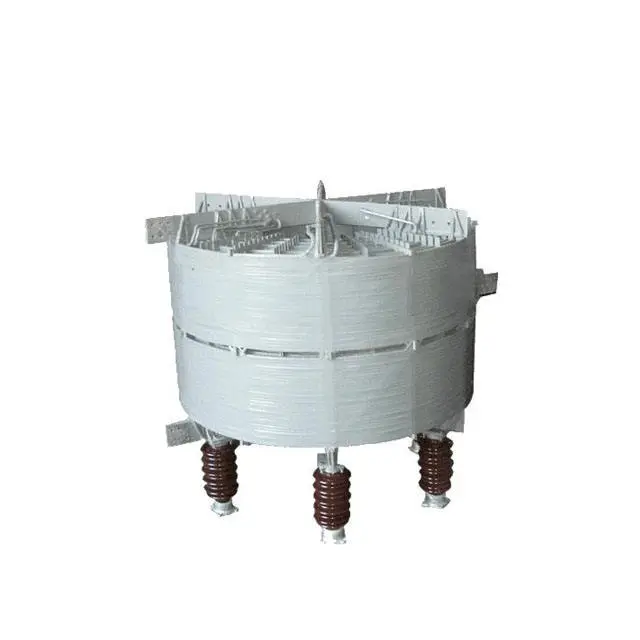
When the materials in a dry-type iron core reactor expand at the same rate, the heat stays low and spreads evenly, and there are no holes in the insulation of the coil, the reactor doesn't crack when it gets hot. The winding is strong against repeated heating and cooling because it is made of vacuum-cast epoxy resin, glass fiber reinforcement, and full high-temperature curing. A low-loss core keeps the heat inside the part to a minimum, and clear cooling paths and firm clamping stop hot spots and movement. These ideas guide the way we build the CKSC Dry-type Iron Core Series Reactor. You can be sure that your engineers and buyers can trust this guide because it goes over each factor.
Why Thermal Cracking Matters in a Dry-Type Iron Core Reactor?
Where Reactors Work in Your Power System
A dry-type iron core reactor can filter harmonics, limit current, protect motor drives, convert renewable energy, and distribute power. A lot of the time, panel builders put it in filter cabinets, tuned to a certain resonant frequency, and put it in series with capacitors. Line reactors go before a drive, load reactors go after it, and filter reactors make capacitor circuits less tuned. There are times when the 3rd, 5th, 7th, 11th, and 13th harmonic currents can be absorbed by a filter reactor. For these projects, Xi'an Xikai works with engineers, purchasing managers, original equipment manufacturers (OEMs), distributors, and system integrators.
What Thermal Cracking Looks Like
Repeatedly heating and cooling something can cause damage called thermal cracking. It shows up as cracks on the resin's surface, cracks inside the resin, layers coming apart, and slow degradation of the insulation. Every time the load is put on it, the frame, insulation, and winding all expand and contract. When those parts move at different speeds, stress builds up at the weakest point until it breaks. The crack then gets wet, which speeds up the damage. It's possible for a dry-type iron core reactor to pass its first test but still fail after years of switching and changing loads.
How Cracking Shortens Service Life
A small crack doesn't stay small for long. The coil ages faster because it lets water in and allows partial discharge, which wears away insulation and dielectric strength. Harmonic currents make things worse by increasing losses and temperature rise, which makes the coil go through hotter cycles. One failed reactor can shut down a bank of capacitors and cause a warranty claim for a panel builder. I look at five areas when judging risk: the materials, the construction, the thermal design, the manufacturing, and the fit for the purpose. The next parts will go in that order.
How a Dry-Type Iron Core Reactor Resists Thermal Cracking
Low-Loss Core and Matched Materials
The coil is under less stress when there is less heat inside the dry-type iron core reactor. Good core steel, the right flux density, tight laminations, and well-made joints all help lower core loss, hot spots, and temperature differences. Pairing materials is also important. Different things, like copper or aluminum conductors, insulation, resin, steel frames, and core parts, expand at different rates. This means that the design has to make sure that the differences don't go over what the insulation can handle. Class F insulators and annealed silicon steel are used in our CKSC series. Class F is a 155°C thermal class according to IEC 60085. It says that core losses are 30% less than usual models.
Epoxy Resin Vacuum Casting
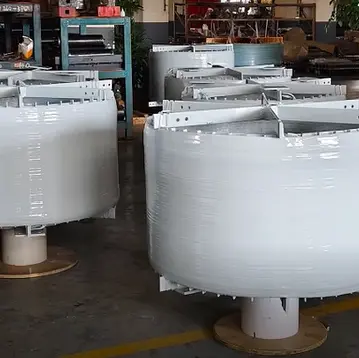
Epoxy resin that doesn't catch fire is vacuum-cast into each CKSC coil, and the resin cures at a high temperature. When vacuum casting, air is sucked out of the winding before the resin hardens. This leaves very few empty spaces that could hold water or stress. The glass fiber reinforcement makes the coil stronger, so it can handle big current shocks and cracking from hot to cold. It can also stand up to humidity, dust, and chemical corrosion once it's been cured, and the series lists partial discharge levels below 5 pC. For a dry-type iron core reactor to not crack, the coil must not have any holes in it.
Curing and Process Control
When curing is done, resin can be used. We wind the wires automatically and cure them at 160°C for 48 hours. Resin that hasn't been cured properly stays weak and can shrink unevenly over time. On the other hand, a controlled cure makes a solid mass that holds the insulation and windings together. Each of the curing time, temperature, and vacuum level should be written down in the process record because they all have an effect on the residual stress. When you are comparing suppliers, don't just take a label like "cast resin." Instead, ask for these specifics.
Construction and Thermal Design That Protect the Winding
Winding Geometry and Mechanical Support
The balanced conductor configuration and uniform tension of the winding distributes heat and electromagnetic force evenly. This is particularly the case when harmonics are adding to eddy-current losses. Core clamps, spacers, support blocks and bracing are utilised to hold the assembly stationary during heat cycling or a short circuit event. Moving the assembly may harm the insulation. The CKSC series has a segmented air-gap architecture and high-temperature adhesives to keep noise below 75 dB and core vibrations minimal. Find out how each provider repairs and packs the core. A loose core may move while being transported.
Cooling Paths and Environmental Protection
The dry type iron core reactor needs to release heat. Then the cooling ducts and ventilation routes take away the cool air (AN) or the forced air (AF). The CKSC series has both of these technologies with low temperature rise design below 95 degree Celsius. Dust may get into the ducts therefore it is crucial to pick an enclosure with the correct filters and IP rating for the location. Salt, chemicals and humidity may harm insulation over time. The epoxy coil here that does not absorb water helps. For desert regions, there is a high temperature version.
Thermal Design Beyond the Nameplate
Plate current tells a little portion of the narrative. Real temperature is affected by losses, impedance, harmonics, overloads, ambient temperature, enclosure ventilation, altitude and duty cycle. Hot spots are found at wire ends, wire splices, core connections and terminals. Problems in these spots might disguise ordinary reading. Thermal modelling, temperature-rise testing, infrared examination, and sensors in the correct locations may reveal them. Drives, rectifiers, UPS systems and renewable converters require more thermal space. A typical reference for harmonic limitations is IEEE 519-2022. Send us waveform and overflow data so we can figure out what size margin we should be using.
Manufacturing and Verification Controls for a Dry-Type Iron Core Reactor
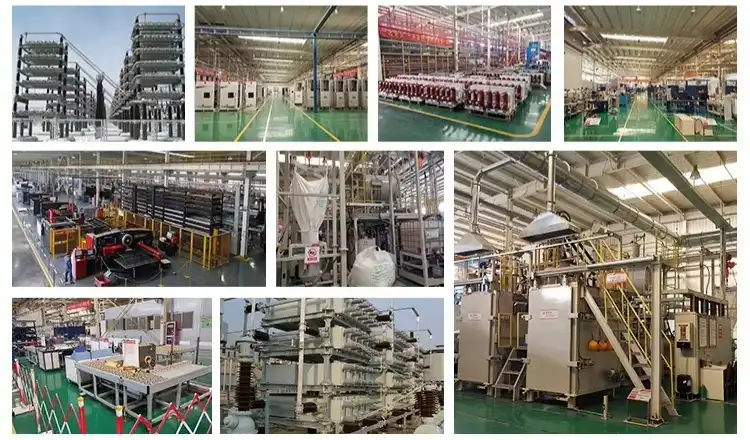
Traceable Materials and Process Records
Plate current tells a little portion of the narrative. Real temperature is affected by losses, impedance, harmonics, overloads, ambient temperature, enclosure ventilation, altitude and duty cycle. Hot spots are found at wire ends, wire splices, core connections and terminals. Problems in these spots might disguise ordinary reading. Thermal modelling, temperature-rise testing, infrared examination, and sensors in the correct locations may reveal them. Drives, rectifiers, UPS systems and renewable converters require more thermal space. A typical reference for harmonic limitations is IEEE 519-2022. Send us waveform and overflow data so we can figure out what size margin we should be using.
Tests and Documents to Request
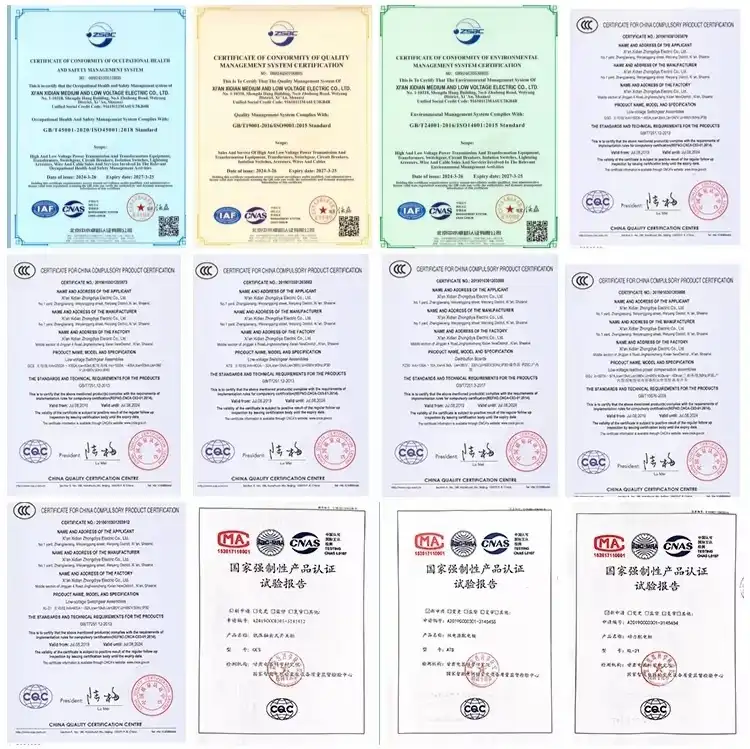
Check the following routine and type tests: temperature increase, impedance, vibration, short circuit verification, winding resistance, insulation resistance, dielectric withstand and if required, partial discharge. The IEC 60076-6 standard is for reactors and the IEEE C57.16 standard is for dry type air-core series reactors. Be sure you know which standard applies to your dry type iron core reactor design and project. If the project is in the US you should ask for drawings, certifications, inspection plans, test results and any UL, CSA or CE documents that the project calls for. Kindly provide test report of the same unit or similar type test report.
Verification at Factory Acceptance and Commissioning
Check the following routine and type tests: temperature increase, impedance, vibration, short circuit verification, winding resistance, insulation resistance, dielectric withstand and if required, partial discharge. The IEC 60076-6 standard is for reactors and the IEEE C57.16 standard is for dry type air-core series reactors. Be sure you know which standard applies to your dry type iron core reactor design and project. If the project is in the US you should ask for drawings, certifications, inspection plans, test results and any UL, CSA or CE documents that the project calls for. Kindly provide test report of the same unit or similar type test report.
Comparing a Dry-Type Iron Core Reactor with Other Designs
Versus Air Core Reactors
Air core reactors are linear and work well with some high-current systems. However, their stray magnetic fields need to be away from metal, so they are usually left outside on open racks. A dry-type iron core reactor keeps flux inside the core, has a smaller footprint, and can fit inside metal switchgear cabinets. It can also be put close to sensitive electronics without affecting the magnetism. But there is a cost: saturation. Find out what the linearity limit is for any iron core design.
Versus Oil-Immersed Reactors
Oil-immersed reactors can be used outside for high-power tasks, but they need to be maintained and cared for in a way that protects the environment and stops leaks. A dry-type unit doesn't use insulating oil, so there is no chance of leaks or soil contamination. These units are good for commercial buildings and substations that are inside. For regular maintenance, the CKSC coil mostly just needs to be looked at for dust and connections' torque levels checked. It is made of flame-resistant epoxy resin. Check with the people in charge of your area to make sure that local fire codes, like NFPA 70, are followed.
Line, Load, and Filter Reactors
Type of construction and name of application are not the same thing. Based on its role in the system, a dry-type iron core reactor is either a line, load, or filter reactor. A series reactor in a capacitor and filter cabinet stops the circuit from going into harmonic resonance and limits the inrush current when the power is turned on and off. This keeps the capacitors safe. It is important to know the target harmonic order because filter reactor ratings are based on the tuned frequency. Instead of catalog claims, use project data to compare things like noise, cooling, maintenance, short-circuit resistance, and installation space.
How to Select a Dry-Type Iron Core Reactor?
Start with Application and Electrical Data
Before choosing a dry-type iron core reactor, you need to know what you need to do: harmonic filtering, motor-drive protection, current limiting, power-factor correction, connecting to the grid, or switching to renewable energy. Then check the site conditions, voltage, frequency, phases, current, impedance, harmonic spectrum, overload profile, and impedance. Raise the non-standard voltage or frequency, the tolerance for inductance, and the arrangement of the terminals as soon as possible. Include the type of insulation, the temperature rise, the cooling method, the enclosure, the maximum noise level, and the size. But Xi'an Xikai also makes switchgear and dry-type transformers, so we talk to your electrical engineer about these details before we start drawing.
Match Customization to Your Cabinet
The CKSC series can be used in a lot of different cabinet and site situations. Panel builders care most about these choices:.
- Voltage rating: Ratings go up to 110 kV, so you can specify the level your system needs instead of choosing from a short fixed list. Give us the nominal voltage, frequency, and any non-standard requirement early, because those values set the winding and insulation design.
- Cooling and size: Choose natural air (AN) or forced air (AF) cooling, and ask for compact models when cabinet space is tight. Dimensions adjust to your layout, which helps keep airflow paths clear around the reactor. Send the cabinet drawing for a fit check.
- Climate and retrofit: A high-temperature edition suits desert climates, and retrofit versions suit aging grid infrastructure. State the ambient range and the existing installation details, so we can match the coil, insulation, and cooling method to the real operating conditions.
If you choose these options, you can fit the reactor to the cabinet instead of making the cabinet fit around the reactor.
Avoid Common Procurement Mistakes
If you only look at the rated current, you don't have to look at things like harmonic heating, overload frequency, ventilation constraints, altitude, or temperature within the enclosure. If you treat all dry type structures the same you don’t perceive the differences in insulation, resin processing, cooling channels and mechanical support. If you merely look at the lowest price you don't have to consider about downtime, efficiency, warranty, technical support, shipping, testing and regional certification. The quotations for each dry-type iron core reactor should be compared on the same set of data. You’ll also want to include waveform and converter data, verify lead time and export packing, and compare purchase price with total lifetime cost.
Conclusion
There is more than one characteristic that prevents a dry-type iron core reactor from cracking when heated . The low-loss core keeps down the heat; matching materials reduce stress and the coil is made sturdy by a void-free completely cured epoxy casting with glass fibre reinforcing. Clean cooling channels, solid clamping and thermal design based on actual harmonic, overload and ambient data keep movement and hot spots under control. This allows buyers to examine the design decisions they made at factory acceptance and commissioning by checking at records of the materials used, the tests that were done and the sorts of testing that were done. Dry type iron core construction offers a smaller, oil-free alternative to air-core and oil-immersed designs. It should be selected solely on the basis of complete application data, not only rated current or price.
FAQ
1. What causes thermal cracking in a dry-type iron core reactor?
Different rates of expansion for different materials, resin holes, hot spots, weak mechanical support, and not enough room for repeated thermal cycles. Each of these problems can be fixed with vacuum-cast epoxy, full curing, glass fiber reinforcement, and good cooling.
2. Do harmonics crack the coil directly?
Not always directly. Because harmonic currents cause more heat loss and rise in temperature, the coil goes through hotter cycles. That extra stress makes it more likely that a reactor that wasn't designed well will crack.
3. Which cooling methods does the CKSC series offer?
The series can cool with both natural air (AN) and forced air (AF).
4. What should I send for a quotation?
Send the voltage, current, impedance, harmonic profile, cooling need, duty cycle, dimensions, inductance tolerance, certification needs, batch size, and any voltage or frequency that isn't standard.
Request a Custom Dry-Type Iron Core Reactor Evaluation from Xi'an Xikai
Want to find a dry-type iron core reactor maker who can look over your cabinet drawings and harmonic data? The CKSC series is made by Xi'an Xikai and has more than 30 patents, 24/7 support, and more than 500 installations in 20 countries. Email serina@xaxd-electric.com, amber@xaxd-electric.com, or luna@xaxd-electric.com to get a technical consultation and quote for a dry-type iron core reactor.
References
1. IEC 60076-6, Power Transformers – Part 6: Reactors, 2007
2. IEEE Std C57.16, Standard Requirements, Terminology, and Test Code for Dry-Type Air-Core Series-Connected Reactors, 2011
3. IEEE Std 519, Standard for Harmonic Control in Electric Power Systems, 2022
4. IEC 60085, Electrical Insulation – Thermal Evaluation and Designation, 2007
5. IEC 60076-11, Power Transformers – Part 11: Dry-Type Transformers, 2018
6. IEEE Std C57.12.91, Test Code for Dry-Type Distribution and Power Transformers, 2020