
Indoor Disconnect Switch with Earthing Switch: How It Works
2026-11-20 17:14:38
Here are two steps on how to use an indoor disconnect switch with an earthing switch. First, the disconnect blades open, making a clear space between the equipment and the live source. Second, trained staff make sure there is no more voltage, then the earthing switch closes and the isolated conductors are connected to ground. This releases any energy that was trapped or induced. An operator can't earth a live circuit or close the blades onto a grounded one because of interlocks. This thing doesn't stop load current and doesn't work in place of a circuit breaker. I will use the Xi'an Xikai GN24 12kV model to show you the steps, ratings, safe use, and selection.
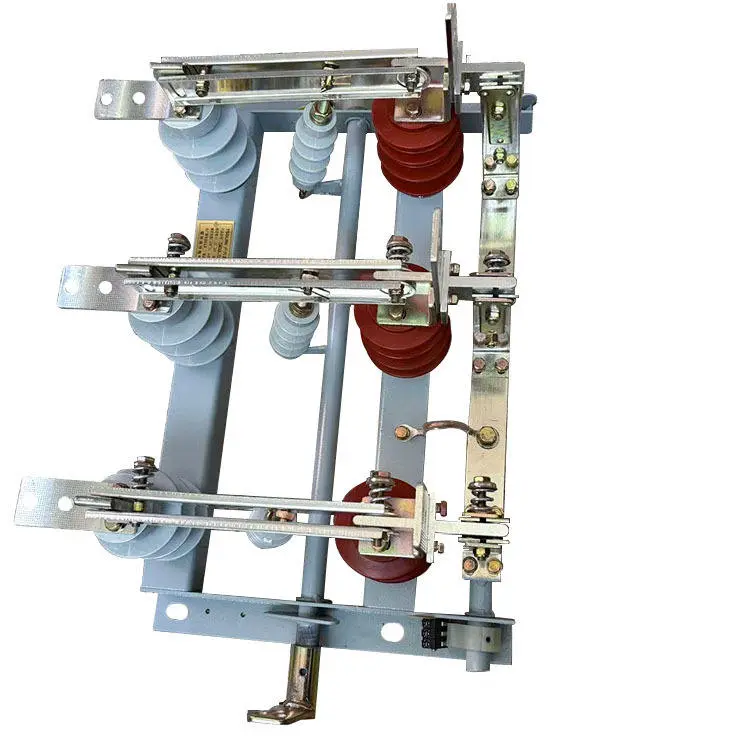
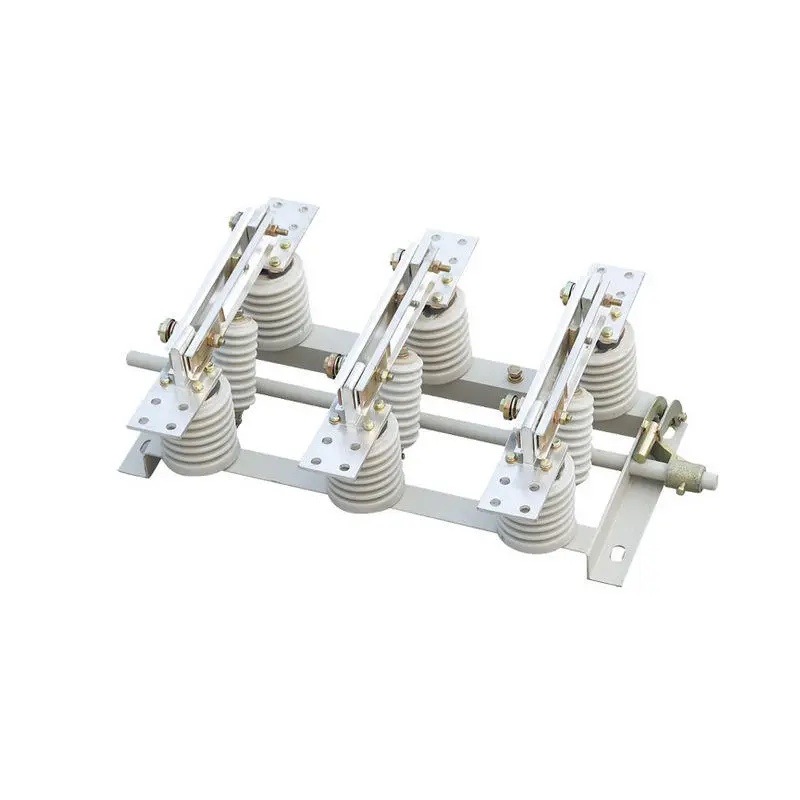
What Is an Indoor Disconnect Switch with an Earthing Switch?
Two Safety Functions in One Device
A medium-voltage circuit can be worked on by cutting off a section of it with an indoor disconnect switch. That part is then connected to earth by the earthing switch, which is also called a grounding switch. They work together to make a clear and obvious safe state. The international standard for AC disconnectors and earthing switches above 1,000 V is IEC 62271-102. It covers installation both inside and outside. I often remind project teams of this: the earthing switch and the disconnect do not replace voltage testing and overcurrent protection, respectively. That's all each device does. The system is only safe when each one does its job.
How the Three Positions Work?
This kind of indoor disconnect switch can be set to three different states: connected, isolated, and earthed. When the device is connected, the main blades are closed and electricity flows through it. When the blades are opened, the gap between the source and the load can be seen, and the load side is cut off. The staff then uses a rated tester to make sure there is no voltage. After that check, the earthing switch will close and connect the conductors to the ground bus. This gives any residual or induced charge a safe way to escape. To get service back up and running, the crew switches things around: they open the earthing switch, make sure it's in the right place, and then close the main blades.
Key Components and Interlocks
The main contacts and blades of an indoor disconnect switch carry the current. The earthing contacts and blades connect to the ground. The live parts are kept away from the frame by insulators. The blades are moved by a mechanism that can be operated by hand or by motor. Position indicators show the real state. That state can be sent to a control system by extra contacts. All of these parts fit together with interlocks. It stops the earthing blade from moving when the main blades are closed, and it stops the main blades from moving when the earthing blade is closed. In some designs, the switch is connected to the upstream breaker by a key interlock. Before they place an order, I always tell my clients to look over the drawing and see how the parts fit together.
Types, Ratings, and Specifications to Check
Indoor Disconnect Switch Types and Mounting Options
The number of poles, mounting style, and presence of an earthing blade all vary in indoor disconnect switch. Some are mounted on a flat frame inside a fixed cabinet for switchgear. Some go through a wall or partition that separates two areas, like a breaker chamber and a busbar chamber. The switches in question are covered by IEC 62271-200, which is for metal-enclosed switchgear from 1 kV to 52 kV. For medium-voltage work, the main options are where the earthing blade goes, how it works, and how big it is to mount. If you don't choose the right switch for the cabinet, you'll have to make changes to the busbars and panels.
Ratings and Technical Specifications to Check
An indoor disconnect switch can't be chosen just by the nominal current. Make sure to check the frequency, insulation levels, short-time withstand current, and peak withstand current. The fault current at the installation point must be higher than the short-time and peak ratings. The earthing switch also needs to have its own short-circuit rating. Normal service conditions are set by IEC 62271-1 for heights up to 1,000 m, so insulation needs to be fixed at higher elevations. People in the US often use IEEE C37.30.1 to talk about AC high-voltage air switches that are more than 1,000 V. You should ask for the datasheet, the dimensional drawing, the type-test reports, and the routine test records that include the measured contact resistance.
Indoor Disconnect Switch vs. Circuit Breakers and Outdoor Disconnects
A circuit breaker automatically cuts off load and fault current. A disconnect switch separates the two and works when there is no load on it. The breaker opens first, and then the disconnect switches turn off the power. An indoor disconnect switch is different from an outdoor unit because it is located in an electrical room or cabinet and depends on the enclosure to keep it safe from rain, sun, and dirt. The materials and designs used in outdoor units are made to withstand the weather. A unit that combines the disconnect and the wiring is better than two separate devices because it has one mechanism that holds the interlock. This lowers the chance of switching in the wrong order and saves space in the cabinet.
GN24 12kV Indoor Disconnect Switch from Xi'an Xikai
GN24 Core Parameters
A 12kV indoor disconnect switch like the GN24 is what you need. It comes from Xi'an Xikai in four different current ratings: 400A, 630A, 1000A, and 1250A. Because its job is to separate and move live or dead bus circuits when there is no load, it should never be used instead of the circuit breaker. There is an earthing switch built into the same unit, which can make the layout easier than adding a separate grounding device. The unit is mounted through the wall, which works with dividers between sections. Your project team can choose one of the four current ratings and match it to incoming, feeder, or bus-section duty. Our engineers will then confirm the details.
Through-Wall Mounting and Cabinet Fit
Builders of switchgear and EPC contractors tell me that dimensional fit is a big factor in many purchases. When you use a through-wall design, the switch is in a compartment wall. This means that the contact side and the terminal side are in separate chambers. When the cabinet is small, that layout is important. When a client and I talk about an indoor disconnect switch, I ask for the cabinet drawing, the opening in the partition, the busbar centers, and the phase spacing. Every cabinet is different, so I can't give you a single size. Before going into production, our engineers check your values against the GN24 dimensional drawing and mark any problems they find. If you order 5 sets or 50 sets, this early check will help you avoid having to do extra work on-site.
Manual Operation and Position Indication
The GN24 can be operated by hand, or it can be motorized. Mechanical indicators show the status of the blades so that operators don't have to guess where they are. Project managers care about how hard it is to operate and how easy it is to get to the handle, especially in small cabinet layouts. In your specification, you should include the operating height and any effort limits. After that, our engineers can go over the arrangement of the mechanism with you. The earthing switch can't close while the circuit is on because of an interlock system. People who are in charge of this indoor disconnect switch should also check the contact resistance at acceptance. Get a copy of the batch's routine test record and compare it to the limit you set.
Safety, Installation, and Maintenance
Safety and Code Requirements
The switch is not the only part of the installation that needs to be safe for use. NFPA 70E tells you how to make your workplace electrically safe, and part of that process is checking to see if there is no voltage. The 29 CFR 1910.147 and 1910.333 lockout/tagout rules from OSHA spell out the bare minimum needed to manage dangerous energy. The crew turns off the power to an indoor disconnect switch, locks and tags the device, checks for voltage, and then turns off the power to the earth. Because local rules are different, make sure you know what you need to do by checking with the engineer of record and the authority that has control. A lot of US projects need 15 kV class equipment, so make sure that a 12kV IEC-rated unit meets your needs.
Installation, Wiring, and Commissioning
Follow the approved drawings and the maker's manual to install the indoor disconnect switch. Check the working space, cable routing, terminal access, and connection to the grounding network before mounting. Make it easy to see the line, load, ground, auxiliary, and interlock circuits. Then, tests should be done by qualified staff to check the mechanical operation, the interlock function, the insulation, the continuity of the ground path, and the main-circuit resistance. When setting up the machine, I suggest making sure that the position indicators match the actual positions of the blades, that the padlocks work, and that the earthing switch can't be closed while the main blades are closed. Write down each result. In the future, maintenance will be based on these records, which also speeds up troubleshooting.
Maintenance Checklist and Common Failure Risks
Problems are usually avoided by doing regular checks. Insulators, contacts, terminals, grounding connections, linkages, locks, labels, and indicators are some of the parts of an indoor disconnect switch that you need to check. Remove any dust, make sure the bolts are tight, and use the lubricant that the manufacturer recommends. Check the contact resistance and see if it changes over time. If it does, it means that the contact pressure is weak or the parts are not lined up correctly. People often make mistakes like picking based only on the current rating, ignoring the fault level, skipping a dimension check, and using the switch while it is loaded. This last one is the most dangerous because a disconnect can't break a load, so an arc can form. That risk goes down when you interlock with the breaker.
How to Select and Source an Indoor Disconnect Switch
Selection Steps for Your Application
I think you should do a simple three-step check before you ask for a quote on an indoor disconnect switch.
- Electrical match: Confirm system voltage, rated current, frequency, and the fault level at the installation point. Compare these against the rated short-time and peak withstand currents. For altitude above 1,000 m, tell the supplier early, because insulation needs correction. Say which side of the main blades needs earthing, since the layout depends on it.
- Physical fit: Send the cabinet drawing with partition opening, busbar centers, phase spacing, and operating height. Check the switch's dimensional drawing against these values, including terminal layout and clearances to live parts. Fit problems can delay an order, and a drawing review is easier than correcting a problem after delivery to site.
- Mechanism and documents: Choose manual or motorized operation, and state any limit on handle effort or space. Ask for the datasheet, wiring and interlock diagrams, dimensional drawing, test reports, routine test records, and installation manual. Also confirm lead time, spare parts, and warranty terms so that the supplier's support matches your project schedule.
Before the equipment gets to the job site, these three checks fill in the most common gaps in the specifications.
How Manufacturers and Suppliers Support Project Success
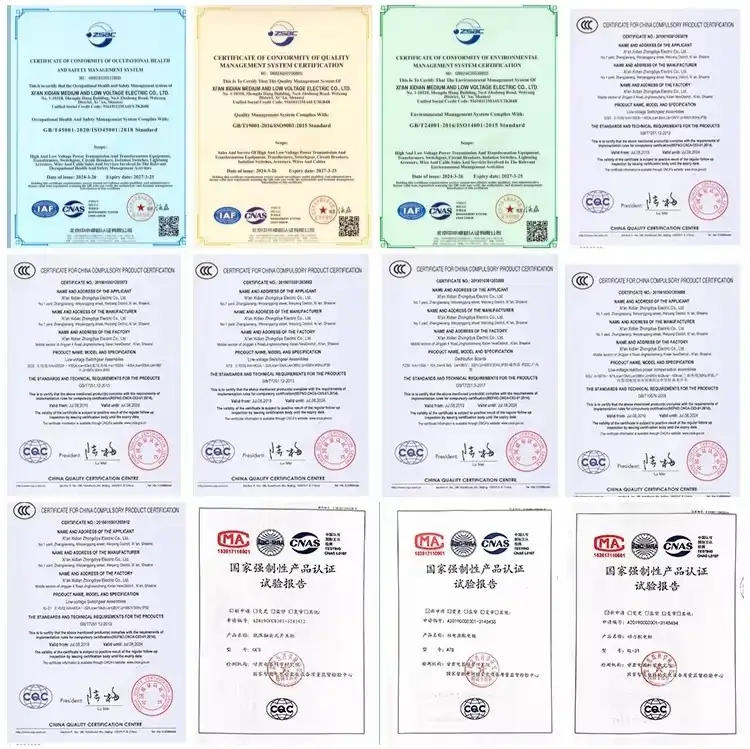
A good company that sells indoor disconnect switches does more than just send you a catalog. Specifications, drawings, test records, and quick answers from engineers are all things that project teams need. Ask the supplier what sizes, handles, or interlocking arrangements they can change to fit your cabinet. Before placing a large order, make sure that the fault level, dimensions, earthing integration, spare parts, minimum order quantity, lead time, sample policy, export documents, and warranty are all correct. Xi'an Xikai has ISO 9001 and ISO 14001 certification, and we can make solutions that fit the needs of each buyer. During the design phase, our engineers go over drawings with buyers. This way, questions come up early, before they are put in place.
Why Xi'an Xikai for Cabinet-Matched Supply
The Xi'an Xikai Medium & Low Voltage Electric Co., Ltd. makes medium and low voltage electrical equipment that falls into 7 main groups, 34 series, and more than 100 different types. Switchgear, dry-type transformers, vacuum circuit breakers, instrument transformers, and prefabricated substations are some of them. Our engineers know how the switch fits the whole panel because they also build the cabinets and breakers around the switches. At heights of up to 4,000 meters, our plateau-type equipment can do its job. Our goods are used in power engineering, steel, petrochemicals, rail transportation, State Grid systems, and renewable energy projects. We can help you with questions about fit, rating, and interlock when you buy an indoor disconnect switch from us because of this.

Conclusion
Crews can be sure they are safe when there is an indoor disconnect switch with an earthing switch. They can isolate with a gap that can be seen, make sure there is no voltage, and then ground the conductors. That order is kept straight by interlocks, and the device should never be used instead of a circuit breaker or voltage testing. The right choice depends on the rated voltage, current, short-time and peak withstand ratings, the height, and the size of the cabinet. At acceptance, contact resistance and interlock tests make sure the quality. The switch works reliably when it is installed, commissioned, and checked regularly. NFPA 70E and lockout/tagout rules make sure that work is done safely. The GN24 12kV unit comes in 400A to 1250A options and combines isolation, earthing, and through-wall mounting for no-load bus circuit duty. The cabinet drawing should be the first thing you check.
FAQ
1. Can I open the GN24 under load?
No, the GN24 separates and moves bus circuits when there is no load. First, turn on the circuit breaker. Then, use the disconnect.
2. Does the earthing switch replace a voltage test?
No. Trained staff first use a rated tester to make sure there is no voltage. After the earthing switch is turned on, any induced or trapped energy can go to ground.
3. Which ratings does the GN24 offer?
A 12kV voltage and 400A, 630A, 1000A, and 1250A current are what it can handle. Send a drawing of your cabinet so that our engineers can make sure it will fit.
4. What should I send for a quote?
Send the voltage, current, fault level, altitude, cabinet drawing, and mechanism choice for the system. Sizes and papers will be looked over with you.
Request a GN24 Indoor Disconnect Switch Quote from Xi'an Xikai
Looking for a company that sells indoor disconnect switches and makes sure the cabinets fit before they are shipped? Xi'an Xikai can be reached at serina@xaxd-electric.com, amber@xaxd-electric.com, or luna@xaxd-electric.com with your drawings and grades. We have GN24 12kV units ranging from 400A to 1250A that come with built-in earthing and can be mounted through walls. Our plateau-type equipment can handle requirements up to 4,000 meters. For more information, go to xaxd-electric.com.
References
1. IEC 62271-102: High-voltage switchgear and controlgear – Part 102: Alternating current disconnectors and earthing switches, 2018
2. IEC 62271-1: High-voltage switchgear and controlgear – Part 1: Common specifications for alternating current switchgear and controlgear, 2017
3. IEC 62271-200: AC metal-enclosed switchgear and controlgear for rated voltages above 1 kV and up to and including 52 kV, 2021
4. IEEE C37.30.1: Standard Requirements for AC High-Voltage Air Switches Rated Above 1000 V, 2011
5. NFPA 70E: Standard for Electrical Safety in the Workplace, 2024
6. OSHA 29 CFR 1910.147: The Control of Hazardous Energy (Lockout/Tagout), 1989
