
Choosing the Right Current Transformer for High-Current Applications
2026-10-16 17:18:55
Choosing the correct current transformer for high current applications is one of the most critical choices an electrical engineer or procurement manager can make. A current transformer reduces large primary currents down to safe, quantifiable secondary values, generally 1A or 5A, so that metering and protective relays may work reliably. Wrong decision might lead to measurement mistakes, damage to equipment or even safety concerns. This article will cover the basics, the criteria, the comparison of solutions, and best practices for procurement to help you make a confident and educated choice.
Understanding Current Transformers and Their Principles
The operation of a current transformer is based on electromagnetic induction. The main carries the high line current. The secondary winding produces a proportionate, lesser current for instrumentation or protective circuits. If you know the fundamentals you will not make errors from the very start.
CT Ratio and Accuracy Class
The current transformer ratio is used to transfer the main current to the secondary output. For example, a 600:5 ratio takes 600A down to 5A. For example, the accuracy class may be 0.2S, 0.5S, 5P or 10P, and indicates how well the output follows the input for a change in load. Class numbers for measurement CTs are things like 0.2S or 0.5. For security CTs, class numbers are commonly 5P or 10P.
Solid Core vs. Split Core Types
When you install a solid core CT, the primary cable needs to go through the window. They are more precise therefore they are preferable for permanent locations of panels or switchgear. Split core CT's are easy to retrofit since they clamp around an existing wire. But occasionally they trade a little accuracy for convenience.
CTs vs. Voltage Transformers
Voltage transformers or potential transformers and current transformers serve distinct purposes. Voltage transformer reduces the line power. Current transformer monitors the current and provides safety. They are usually mounted together in a medium voltage switchgear panel, but should never be interchanged or substituted for one another.
Key Factors to Consider When Choosing a Current Transformer for High-Current Applications
Selecting an appropriate instrument transformer for a high-current situation entails more than matching a nameplate rating. There are a number of interrelated aspects that engineers and procurement teams need to consider before finalising a specification.
Load Current Range and Voltage Class
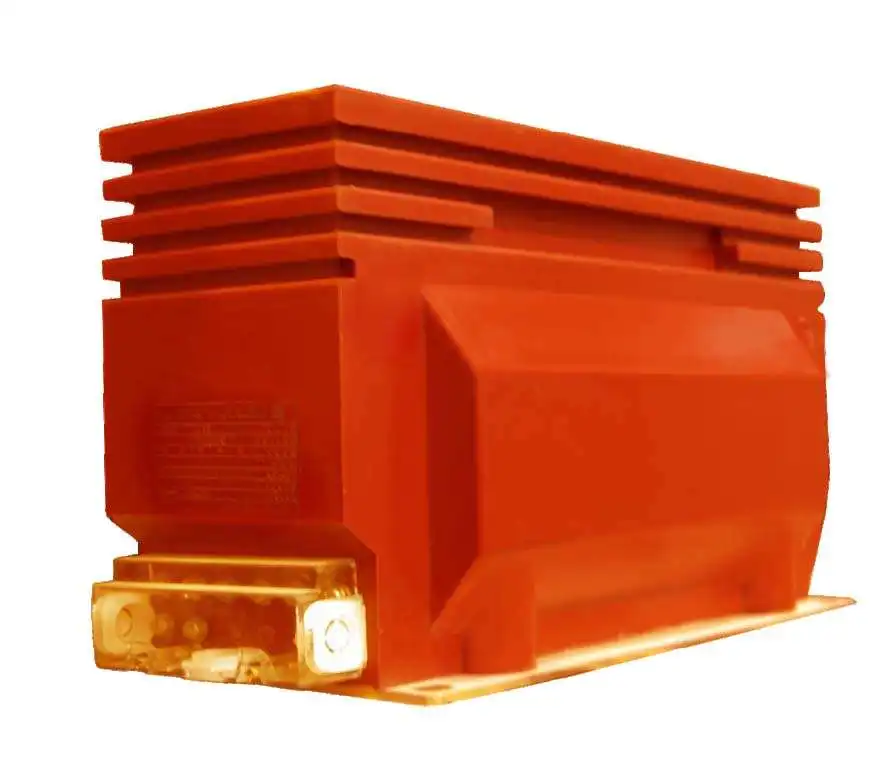
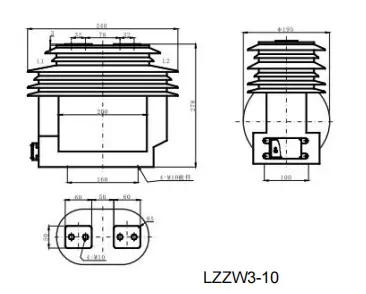
The rated primary current should be chosen such that the core does not saturate throughout the whole working range. For a 10kV switchgear installation with load currents up to 1000A the CT should be rated suitably. Xi'an Xikai 10kV Outdoor/Indoor Current Transformer has a primary current range of 20-1000 Amps. It has an input of 11kV and an output of 10kV, making it a great fit for medium voltage distribution panels.
Accuracy Class and Secondary Burden
The accuracy class of the relay must be matched to the connected load (the total impedance of the meters and relay wire). If the load is more than rated VA, the mistakes rise rapidly. A current transformer of class 0.2S or better with appropriate VA output is the lowest allowable criterion for billing grade metering. However, protection circuits may tolerate larger errors and can check proper functioning in the case of fault situations.
Environmental and Mechanical Conditions
Outdoor installations confront challenges like dampness, UV exposure and temperature changes. A properly sealed epoxy resin cast design is impervious to these pressures. The vacuum casting by Xi'an Xikai's unit guarantees no air spaces and insulation that functions consistently in coastal, high altitude or industrial conditions. Switchgear manufacturers also need to ensure that the CT dimensions match the busbar spacing and depth of the panel in their cabinet design.
Comparing Current Transformer Solutions for High-Current Applications
Different technologies are needed for different measuring and safety duties. Engineers may then pick the most beneficial option after they understand the advantages and downsides of each.
Here a nice summary of the key approaches used in medium-voltage systems:
- Solid core epoxy cast CT (take Xi'an Xikai 10kV as an example): for permanent switchgear installation. Accuracy classes from 0.2S to 10P are provided, with 1A or 5A secondary outputs to meet a broad variety of relay and meter inputs. The completely sealed epoxy body prevents contamination and eliminates the need for frequent insulation oil checks. This type is the norm for 10kV distribution switchgear panels for State Grid, industrial or renewable energy applications.
- Split core CT Easier to install around active conductors without disconnection of wires. Suitable for retrofitting meters to existing equipment. The split joint, however, creates a tiny air gap and restricts precision to ~class 0.5 at best and is not suited for revenue metering or sensitive protection programs.
- Shunt resistor (current shunt) – Adds a precise low resistance element to the main circuit that creates a millivolt signal directly proportionate to the current. Accurate at low frequencies and at DC, but risky at medium voltage, heats up proportionate to the square of the current and provides a direct electrical connection between the main circuit and measurement devices. Not applicable to 10 kV.
These discrepancies will be important to procurement teams when completing the BOM specs. The epoxy cast solid core current transformer is still the gold standard for OEM switch gear manufacturers who create 10kV panels.
Procurement and Supplier Selection Guide for High-Current Current Transformers
When you are selecting a current transformer supplier for a switchgear OEM, you need to go beyond the product datasheets. Production timetables are determined by lead times, minimum order quantities, capacity to customise and quality documentation.
Supplier Qualification Criteria
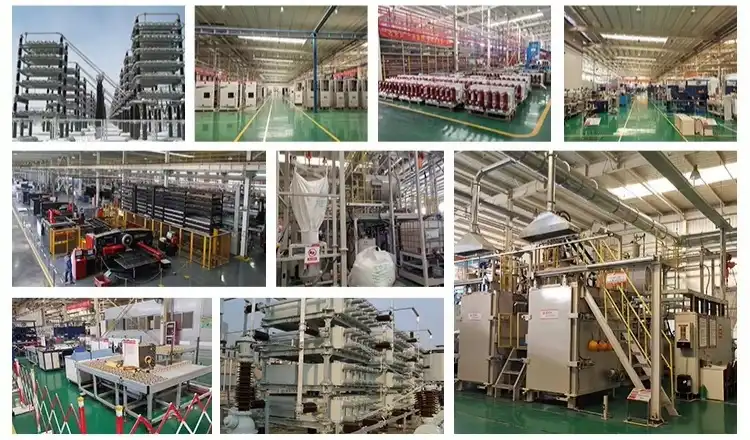
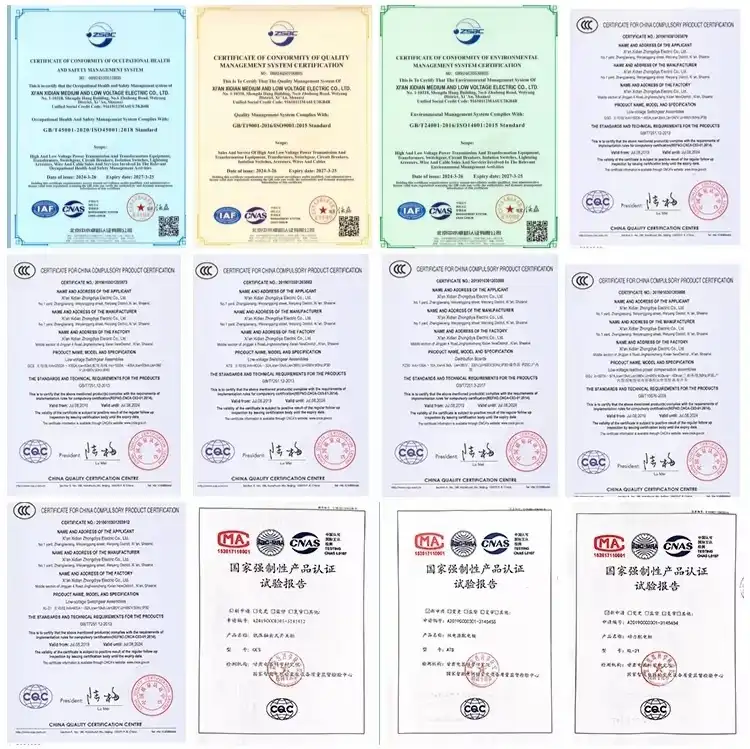
A reliable firm that develops current transformers will have ISO 9001 quality management certification and be able to demonstrate compliance with IEC 61869-1 and IEC 61869-2 or national requirements such as GB 20840.2-2014. The company has ISO 9001, ISO 14001 and ISO 45001 certifications and its products are in line with GB and IEC standards, which means clients may use them in both domestic and outside markets.
Customization and Lead Time Alignment
Multi-ratio or dual-winding CTs are typically a need for OEM switchgear manufacturers, providing both metering and safety in one device. Confirm the supplier can handle unusual winding configurations, changed mounting flanges and compact form factors before signing a framework agreement. This can help you prevent delays that will cost you a LOT of money. The mounting and ratio of Xi'an Xikai are interchangeable to enable for the sampling of new specifications within the customary one to two month period for approval by switchgear manufacturers.
Total Cost of Ownership vs. Unit Price
When you merely look at the unit pricing, you ignore features like warranty coverage, professional service after the sale and field failure rates. A current transformer supplier with a 5-year guarantee and timely technical support minimises the risk of paying a lot of money to return or replace a panel in the field. Xi’an Xikai offers 5 year guarantee and 24/7 technical assistance to support its products. This is significant when manufacturing takes many months.
Installation Best Practices and Testing for High-Current Current Transformers
Even a current transformer that is properly rated might be dangerous or function poorly if it is installed or tested improperly.
Wiring and Polarity Checks
Verify terminal polarity (P1/P2 and S1/S2 marks) prior to energising. Directional relay misoperation caused by reversed secondary polarity. Do not leave secondary terminals open-circuited while the main is energised. An open secondary can develop dangerously high voltage which might damage the insulation or cause injury to workers.
Secondary Injection and Ratio Testing
Before commissioning, execute a turns ratio test using a CT analyser or secondary injection set. Compare the measured ratio with the nameplate. For protective CTs, do an excitation (knee-point voltage) test to ensure that the core will not saturate prematurely under fault current circumstances. The test methods are specified in full in IEC 61869-2.
Ongoing Maintenance Checks
Periodically check the epoxy body for fractures or surface tracking. Measure secondary winding resistance and insulation resistance on a yearly basis. The construction of an epoxy resin cast mainly avoids oil maintenance but mechanical integrity tests are still required, particularly in high vibration settings such as rail traction substations.
Conclusion
To pick the right current transformer for a high-current task, you need to make sure that the CT ratio, accuracy class, secondary load, and physical measurements are all exactly right for your system. The 10kV epoxy-cast current transformer from Xi'an Xikai is a solid, standards-compliant option for OEM switchgear makers. It can handle main currents ranging from 20A to 1000A, can be used for both measurement and protection, and can handle harsh outdoor and high-altitude conditions. It's just as important for the technical specification itself to work with a supplier who can meet your unique needs and make sure that shipping times work with your production plan.
FAQ
1.What is the difference between a measuring CT and a protection CT?
A measuring current transformer (accuracy class 0.2S or 0.5) is optimized for accuracy at normal operating currents, used for energy metering and monitoring. A protection CT (class 5P or 10P) is designed to reproduce fault currents accurately without saturating, ensuring that protective relays operate correctly during short circuits or overload events. Many switchgear panels use dual-winding CTs to serve both functions simultaneously.
2.How do I determine the correct CT ratio for my application?
Identify the maximum expected primary current in the circuit. Select a rated primary current at or just above that value. The secondary current should match your relay or meter input—typically 1A or 5A. Xi'an Xikai's 10kV current transformer covers 20–1000A primary with 1A or 5A secondary output, covering most 10kV distribution applications.
3.Can a current transformer be used outdoors at high altitude?
Yes, provided the unit is rated for outdoor use and the altitude is within its design specification. Xi'an Xikai's equipment meets operational requirements at altitudes up to 4,000 meters, and the epoxy-sealed body handles moisture, UV, and temperature variation effectively.
4.What happens if the CT secondary is left open?
An open secondary circuit on an energized CT creates a very high induced voltage across the secondary terminals. This is a serious safety hazard and can destroy the CT insulation. Always short the secondary terminals before disconnecting any measuring instrument.
Partner With Xi'an Xikai for Your Current Transformer Needs
The 10kV Outdoor/Indoor Current transformer made by Xi'an Xikai Medium & Low Voltage Electric Co., Ltd. is one of their well-known instrument transformers. It is built to GB 20840.2-2014 and IEC 61869-1 & 61869-2 standards. As a company that makes current transformers and has ISO 9001, ISO 14001, and ISO 45001 certifications, Xi'an Xikai helps OEM switchgear makers by offering a range of ratio choices, small form factors, and dependable lead times. Get in touch with our team right away to ask for samples or a professional advice.
- Website: xaxd-electric.com
- Email: serina@xaxd-electric.com | amber@xaxd-electric.com | luna@xaxd-electric.com
References
1. International Electrotechnical Commission. IEC 61869-2: Instrument Transformers – Additional Requirements for Current Transformers. IEC, 2012.
2. International Electrotechnical Commission. IEC 61869-1: Instrument Transformers – General Requirements. IEC, 2007.
3. National Standardization Administration of China. GB 20840.2-2014: Instrument Transformers – Part 2: Additional Requirements for Current Transformers. SAC, 2014.
4. Blackburn, J. Lewis, and Thomas J. Domin. Protective Relaying: Principles and Applications, 4th ed. CRC Press, 2014.
5. Zocholl, Stanley E. Analyzing and Applying Current Transformers. Schweitzer Engineering Laboratories, 2004.
6. IEEE Power & Energy Society. IEEE C57.13: Standard Requirements for Instrument Transformers. IEEE, 2016.