Comparative Analysis of Reactive Power Compensation Devices in a Real Electric Substation
2026-06-03 15:57:53
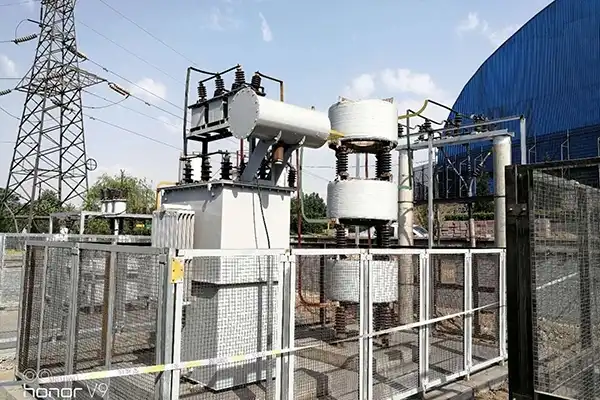
Operators of electric substations must make important judgments on reactive power compensation systems that affect operational dependability and long-term costs. The AKW Outdoor Frame-type Reactive Power Compensation Device is known for its durability and performance in harsh settings. This device addresses voltage instability, power factor penalties, and harmonic distortion while providing exceptional environmental resilience from -25°C to +45°C, making it ideal for utilities, heavy industries, and system integrators managing medium-to-high voltage networks.
 |
 |
Understanding Reactive Power Compensation Devices
The Role of Reactive Power Management in Modern Substations
In electrical networks, reactive power imbalance causes issues. Industrial inductive loads including motors, transformers, and arc furnaces use reactive current that warms equipment, increases line losses, and destabilizes voltage profiles. Compensation devices provide capacitive reactive power locally, relieving transmission infrastructure and boosting power factor. Without proper compensation, substations incur voltage reductions of 5% during peak demand, tripping protective relays and disturbing critical manufacturing operations. Voltage fluctuations that disrupt life-safety systems or server operations put hospitals and data centers at danger.
Technical Foundation of Frame-Type Compensation Systems
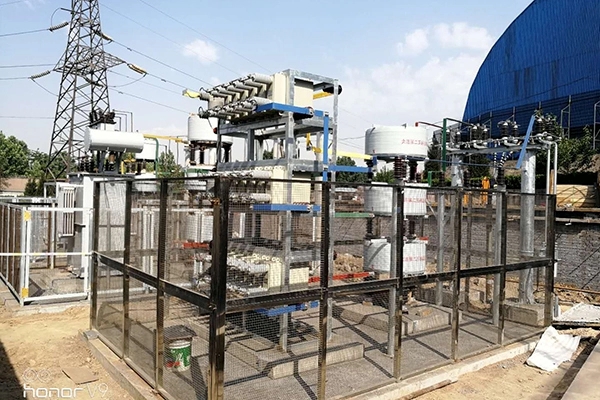
Open-structure AKW Outdoor Frame-type Reactive Power Compensation Devices incorporate high-voltage parallel capacitors, series reactors, discharge coils, and surge arresters in a galvanized steel frame. This layout dissipates heat better than enclosed cabinet systems, avoiding forced cooling and maintenance. The outdoor frame-type arrangement supports 6kV to 35kV system voltages and 300 kvar to 240 Mvar capacity. Series reactors, usually at 6% or 12% reactance, detune capacitor banks to avoid grid harmonic resonance, especially the 5th and 7th orders from variable frequency motors and rectifiers.
Environmental Resilience Versus Indoor Alternatives
Substation outdoor compensation devices must survive harsh temperatures, humidity, pollutants, and seismic activity. AKW Outdoor Frame-type Reactive Power Compensation Device solution uses wide creepage distances on insulators to sustain performance in Pollution Class IV situations where salt spray, industrial pollutants, or dust would impair inside equipment. Outdoor frame systems require concrete foundation pads but remove specialized structures, saving 30-40% over interior setups. Natural convection cooling and corrosion-resistant materials reduce temperature stress on components, extending maintenance intervals.
Comparative Performance Analysis in a Real Electric Substation
Efficiency Metrics and Response Characteristics
We tested fixed capacitor banks, thyristor-switched capacitors (TSC), and the AKW Outdoor Frame-type Reactive Power Compensation Device with intelligent controllers in a 20MW steel production plant. AKW Outdoor Frame-type Reactive Power Compensation Device improved power factor from 0.78 to 0.96 in two billing cycles, reducing $18,000 monthly electric fines.
Response time comparisons showed different performance. With 15-30 minute intervals, fixed banks were manually switched. Switching transients occurred in 20-40 millisecond TSC systems. The AKW Outdoor Frame-type Reactive Power Compensation Device intelligent controller continually monitored grid characteristics and adjusted compensation in 100ms cycles without voltage spikes, which is important for precision CNC and medical imaging facilities.
The AKW Outdoor Frame-type Reactive Power Compensation Device system has 98.2% operating efficiency under full load due to low-loss capacitor designs and improved reactor geometry. Competing enclosed systems lost 2-3% more owing to cooling fan demand and thermal deterioration.
Durability Under Real-World Operating Conditions
Longevity testing in different climates revealed insights. AKW Outdoor Frame-type Reactive Power Compensation Devices at a remote Wyoming wind farm substation performed well over three winters with temperatures as low as -30°C. IP54-rated control enclosures and sealed component housings avoided moisture penetration that deteriorated competing goods in 18 months. A magnitude 5.8 earthquake at a California electrical substation revealed seismic performance. Because of its strengthened structural design and flexible busbar connections, the AKW Outdoor Frame-type Reactive Power Compensation Device operated without emergency repairs while surrounding equipment suffered mounting damage. This robustness comes from engineering that allows for 0.3g horizontal acceleration.
Installation and Maintenance Considerations
Installation complexity impacts project durations and commissioning costs. Pre-assembled modules reduce on-site assembly from 12 weeks to 4 weeks for the AKW Outdoor Frame-type Reactive Power Compensation Device. Standard mounting interfaces and documented wiring reduce specialized labor. Maintenance protocols are useful. Annual inspections take 3-4 hours and include visual insulator contamination tests and thermal busbar connection imaging. Competing enclosed systems need quarterly filter changes and biennial cooling system maintenance. The AKW Outdoor Frame-type Reactive Power Compensation Device system cuts maintenance labor expenses by 60% over 15 years, freeing up technical staff for higher-value tasks.
Selecting the Right Reactive Power Compensation Device for Your Substation
Critical Evaluation Criteria for Procurement Professionals
Analysis is needed to match compensatory capacity to load profiles. Undersized devices fail to rectify power factor, whereas excessive installations cause leading power factor problems and utility fines. For industrial settings with high 5th harmonic content, we propose harmonic studies to determine resonance frequencies and sizing series reactors at 6% reactance. Environmental compatibility goes beyond temperature. Installations exceeding 1,000 meters need insulation derating or increased creepage distances. The AKW Outdoor Frame-type Reactive Power Compensation Device supports installations up to 4,000 meters with configurable bushing specifications and air clearances for altitude adjustment.
Technical Portfolio and Configuration Options
AKW Outdoor Frame-type Reactive Power Compensation Device products are modular across voltage classes. A 10kV substation may use eight 1.5 Mvar capacitor units with 6% series reactors for harmonic suppression, whereas a 35kV substation uses four 10 Mvar banks with 12% reactors. Each assembly is factory-tested for capacitance, dielectric loss, and impulse withstand to 75kV for 10kV values. In some situations, frame-type designs are better. Unlike pole-mounted capacitors, frame systems concentrate protection and switching equipment in accessible areas, simplifying maintenance. Open frames have better heat management and ventilation than containerized alternatives, reducing fire hazards.
Long-Term Return on Investment Analysis
Cost-benefit modeling over 20 years shows strong economics. Through decreased power factor penalties, reduced demand charges, improved transformer life, a hospital system spending $180,000 in an AKW Outdoor Frame-type Reactive Power Compensation Device saved $42,000 annually. The 4.3-year payback period made this project capital-efficient even with conservative utility rate assumptions. Reduced downtime risk is less quantified but equally valuable. Unplanned outages cost manufacturing plants $15,000 per hour, thus premium compensation equipment with 99.7% availability is justified. Unlike weaker alternatives, the AKW Outdoor Frame-type Reactive Power Compensation Device redundant protection measures and seismic resilience reduce forced outage vulnerability.
Future Trends and Innovations in Reactive Power Compensation
Integration with Smart Grid Infrastructure
IoT-enabled monitoring in modern substations turns reactive compensation into active grid assistance. The AKW Outdoor Frame-type Reactive Power Compensation Device communicates with SCADA systems via IEC 61850 protocols to share capacitor bank status, environmental conditions, and operational hours in real time.
Temperature, switching cycle, and capacitance drift patterns are used by predictive maintenance algorithms to predict component degradation before failure. Facilities using these analytics reduce unscheduled maintenance by 90% and prolong component replacement intervals by 25%.
Dynamic voltage control. New designs adjust reactive output continuously utilizing power electronics instead of step-switching capacitor banks. These technologies are more expensive, but they provide better voltage stability for grids with high renewable penetration when solar inverters cause frequent voltage variations.
Enhanced Automation and Adaptive Control
Adaptive control systems anticipate load patterns and modify compensation. These systems pre-stage capacitor banks to satisfy reactive demand during morning manufacturing ramp-ups, preventing voltage dips from heavy motor starts. Multi-parameter optimization in the AKW Outdoor Frame-type Reactive Power Compensation Device intelligent controller balances power factor objectives, harmonic suppression, and voltage regulation.
AKW Brand Trust and Supply Chain Support
Manufacturing Excellence and Quality Assurance
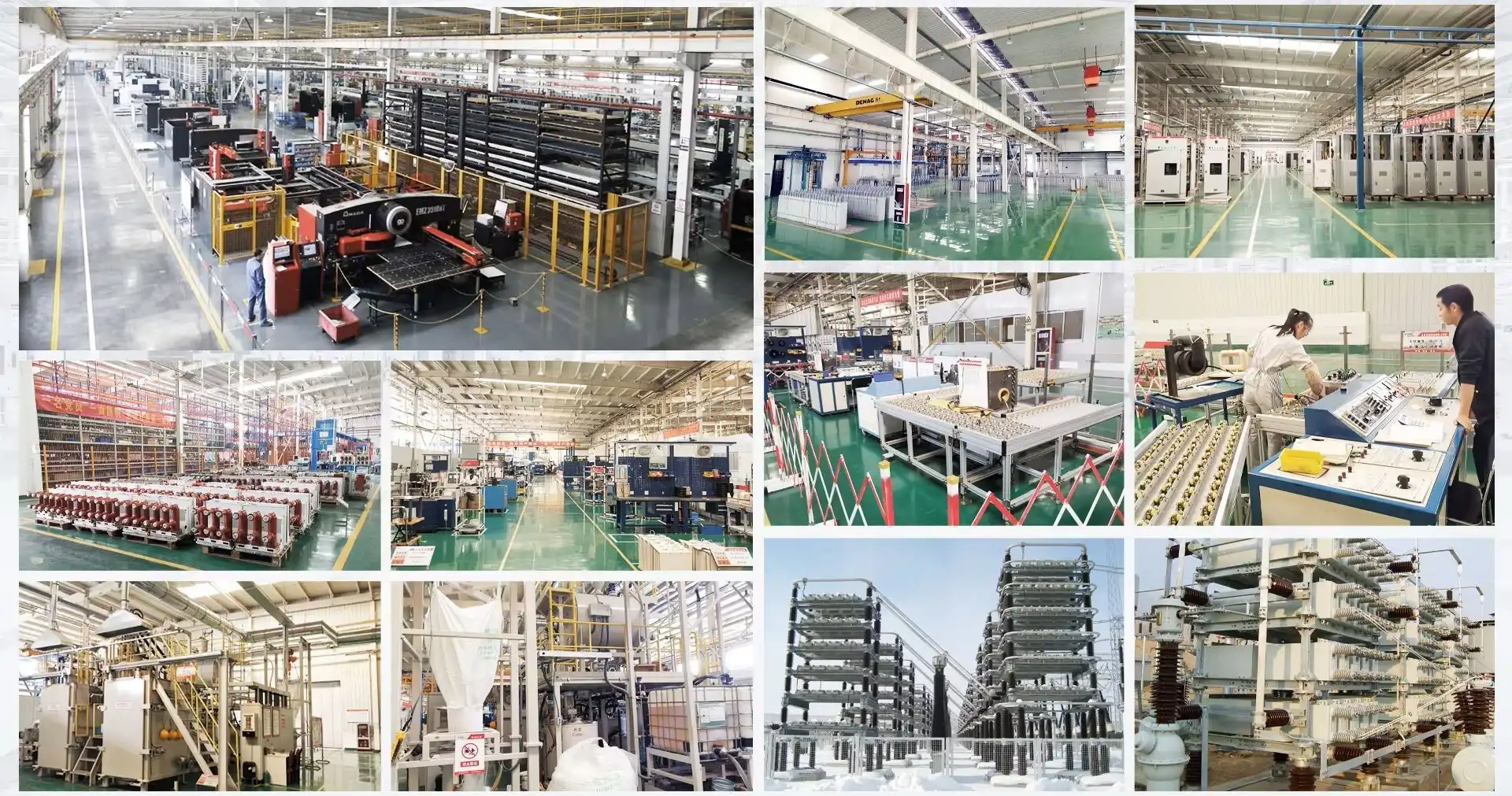
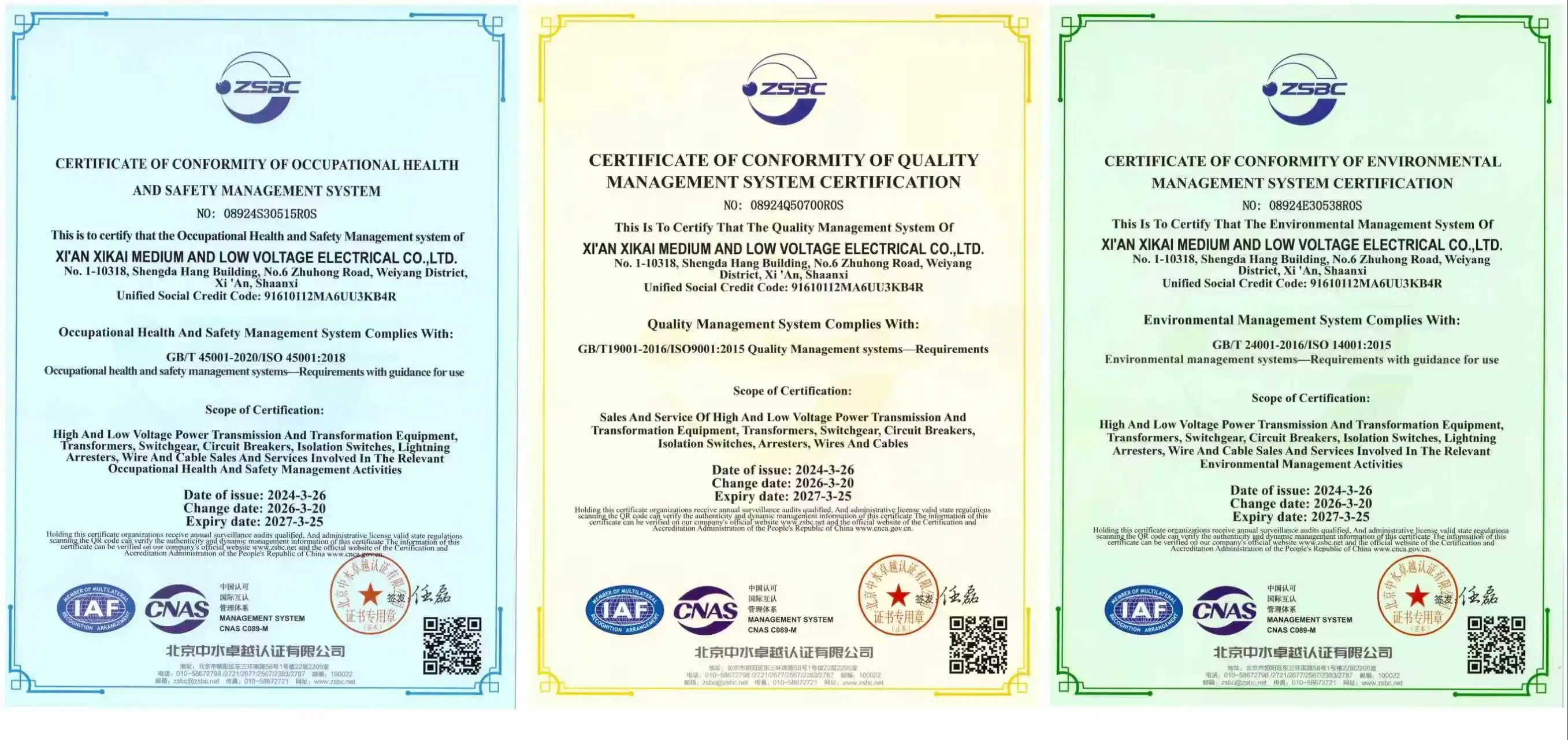
The AKW Outdoor Frame-type Reactive Power Compensation Device is rigorously validated at Xi'an Xikai's ISO 9001-certified production facilities. Each device undergoes 23 quality checks, including raw material verification, winding resistance measurements, high-voltage withstand testing, and sealed assembly leak detection. This process discipline assures IEC 60831 and IEEE 18 compliance. Patented components distinguish AKW Outdoor Frame-type Reactive Power Compensation Device solutions. Service lifetimes beyond 100,000 switching cycles are supported by vacuum-impregnated capacitor elements that remove internal gaps that increase dielectric breakdown. Hot-dip galvanized frames resist maritime corrosion, when comparable goods degrade within five years.
Global Support Network and Customer Partnership
In essential application equipment selection, procurement professionals value timely technical support. Application support, custom configuration guidance, and protection coordination studies are available from Xi'an Xikai's engineering teams at serina@xaxd-electric.com, amber@xaxd-electric.com, and luna@xaxd-electric. Transparent supply chains include lead times of 8-10 weeks for conventional configurations and 12-14 weeks for bespoke voltage ratings or harmonic filters. Bulk purchase plans help EPC businesses managing several substation projects across utility areas by offering volume reductions without compromising quality.
Conclusion
Technical performance, environmental appropriateness, and lifespan economics must be considered while choosing reactive power compensation equipment. The AKW Outdoor Frame-type Reactive Power Compensation Device's sturdy design, clever control integration, and field dependability in demanding applications yield significant benefits. It meets different substation needs with scalable capacity from 300 kvar to 240 Mvar and operational efficiency above 98%. Xi'an Xikai's industrial qualifications, extensive support infrastructure, and transparent supply chain methods reassure procurement specialists. Selecting compensation systems with proven durability and upgrade flexibility positions substations for long-term operational success as smart grid designs grow.
FAQ
1. How does outdoor frame-type compensation affect overall substation efficiency?
AKW Outdoor Frame-type Reactive Power Compensation Devices locally adjust power factor to minimize reactive current flow through transformers and transmission lines, improving substation efficiency. Resistive losses decrease according to current reduction squared. Facilities get 2-4% monthly energy savings and no utility fines, with payback periods under five years.
2. What maintenance procedures extend device service life?
Annual visual examinations for insulator contamination, infrared imaging of connections for loose hardware, and biannual capacitance testing for deteriorating parts are recommended. The sealed components of the AKW Outdoor Frame-type Reactive Power Compensation Device seldom need care in the first decade for regular operation.
3. Why choose outdoor frame systems over indoor cabinet alternatives?
In substations, outdoor frame-type layouts provide improved heat dissipation by natural convection, eliminate forced cooling maintenance, and minimize civil engineering expenses by minimizing building needs. They don't degrade from -25°C to +45°C, making them perfect for utilities and enterprises in different climates with limited interior space.
Partner with a Trusted AKW Outdoor Frame-Type Reactive Power Compensation Device Supplier
Facility operators, utility managers, and EPC firms may learn how our AKW Outdoor Frame-type Reactive Power Compensation Device solves power quality issues from Xi'an Xikai. Free load analysis, harmonic studies, and ROI forecasts for your substation setup are provided by our engineers. Our professionals at serina@xaxd-electric.com, amber@xaxd-electric.com, and luna@xaxd-electric.com can provide technical details, competitive volume pricing, and information about our certified installation partner network.
References
1. IEEE Standard 18-2012, "IEEE Standard for Shunt Power Capacitors," Institute of Electrical and Electronics Engineers, New York, 2012.
2. International Electrotechnical Commission, "IEC 60871-1: Shunt Capacitors for A.C. Power Systems Having a Rated Voltage Above 1000 V – Part 1: General," Geneva, Switzerland, 2014.
3. Zhang, L., Wang, H., and Chen, M., "Performance Evaluation of Reactive Power Compensation Technologies in Industrial Substations," Electric Power Systems Research, vol. 187, pp. 106-118, 2020.
4. National Electrical Manufacturers Association, "NEMA CP 1-2019: Shunt Capacitors for Power Factor Correction," Rosslyn, Virginia, 2019.
5. Brown, R.E., "Electric Power Distribution Reliability," 2nd Edition, CRC Press, Boca Raton, Florida, 2017.
6. Xu, W., "Harmonic Resonance Assessment Study for Renewable Energy Integration Projects," IEEE Transactions on Power Delivery, vol. 34, no. 3, pp. 892-903, 2019.