
Current Transformer Explained: Working Principle & Types
2026-10-09 17:30:05
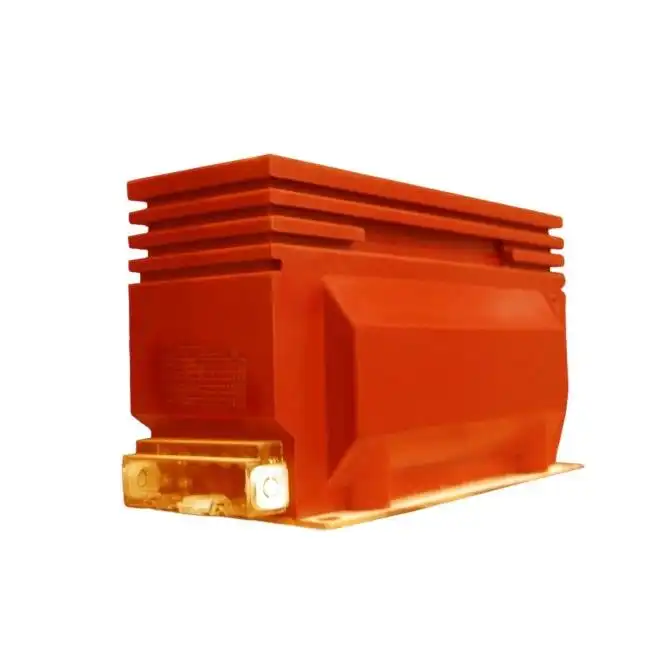
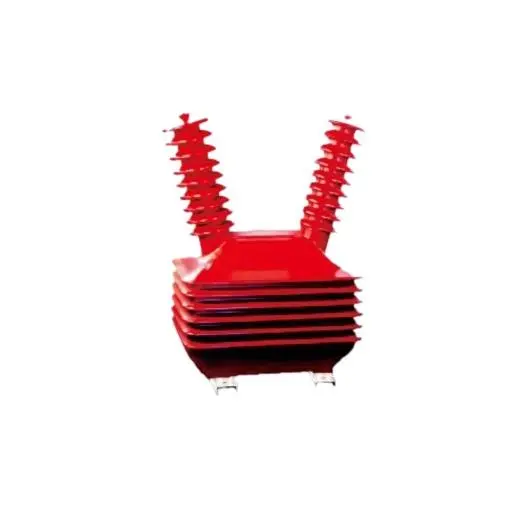
Current Transformer (CT) : It is a precision instrument, used in power systems to convert large primary currents to safer and measurable values at the secondary side for the purpose of protection relays and metering devices. The value of current at the secondary side is usually 1 or 5 A. The CT uses electromagnetic induction to keep the ratio of primary to secondary current constant . This allows engineers to observe high voltage circuits without touching them . For example, a current transformer with an accuracy class 0.2S, 0.5, 5P, 10P etc. The selection of the current transformer is very important for switchgear makers and power system designers.
How a Current Transformer Works
Having knowledge of operation of current transformers can aid engineers in making better choices in the selection process and avoiding costly blunders.
Electromagnetic Induction Principle
How does a current transformer work? Faraday’s law of electromagnetic induction informs us that . The load current travels through the main conductor which in turn produces a magnetic flux in the core. This flux induces an equal current in the secondary winding which is connected to measurement devices or safety switches . The secondary load is maintained low to make the CT operate near to short circuit condition. It can duplicate correctly the current across its specified range.
Core Components and CT Ratio
All modern current transformers have three parts: a magnetic core, a primary winding (typically a single turn bus bar) and a secondary winding with several turns. The CT ratio, say 400/5A, in terms of primary amps to secondary amps, indicates the operator just how much the device reduces the current. When switchgear cabinet builders pair internal elements, the improper ratio might lead to measurement drift, false relay trips or under-protection. All of these concerns are of critical importance.
Accuracy Classes and Their Impact
The accuracy classes of measuring CTs (0.1, 0.2S, 0.5, 1.0) and protection CTs (5P, 10P) are specified in IEC 61869-2 and GB 20840.2-2014. The ratio error of a 0.2S current transformer is maintained within ±0.2% from 5% to 120% of maximum current. This is critical for revenue-grade metering. Protection classes such as 5P20 are supposed to keep the total error below 5% at 20 times the peak power. The most essential factor in the purchase of measurement and protection circuits is the accuracy class that should be taken for the respective task.
Types of Current Transformers and Their Applications
It's necessary to have different CT designs for each placement site and electricity setup. Here is a useful list of the main types that are available right now.
Solid Core vs. Split Core
For new switchgear builds where the main wire can be threaded through during assembly, a solid-core (ring-type) current transformer is the best choice because it has the highest magnetic efficiency. On the other hand, a split-core CT opens along the core to fit around an existing conductor. Split-core types are useful for retrofitting or short-term tracking, but the joints can cause small air-gap losses that make them less accurate at the 0.2S level.
Bar-Type and Wound-Type CTs
When you use a bar-type CT, the primary bus bar acts as the single-turn primary. This makes them small and good for high-current applications above 600A. Wound-type CTs have more than one main turn, which makes them more sensitive and good for lower primary currents, which are common in generator safety panels. Having both bar-type and wound-type choices from the same source saves a lot of planning time for switchgear makers who need parts for a wide range of currents (20A to 1000A).
Dry-Type Epoxy Resin vs. Oil-Immersed Models
Modern indoor and outdoor medium-voltage switchgear is mostly made of dry-type, epoxy-resin-cast CTs. These don't need any repair fluid, don't pose a fire risk, and can handle wetness and partial discharge. In some older transformer systems, oil-immersed CTs are still used. The epoxy resin cast fully-enclosed current transformer is now the standard for 10kV applications. It is certified under both IEC 61869-1/2 and GB 20840.2-2014 and has a clean, small design that fits into tight cabinet spaces.
Key Technical Considerations for Procurement
When switchgear makers go to buy current transformers, they have to deal with a number of problems that keep coming up. Change orders can be expensive, so it's best to get these details right when writing the specification.
Calculating CT Burden
The burden is the total impedance of the secondary circuit, which is made up of the wiring resistance and the load on the instrument that is connected. It is given in volt-amperes (VA). If the linked load is higher than the CT's maximum VA, accuracy goes down. To figure out the burden, engineers add up the relay VA, the meter VA, and the cable resistance at the rated secondary current. A few meters of thin wire adds a lot of resistance to a secondary output that is 5A. Always include a margin when you indicate the secondary VA. For example, a 15 VA rated current transformer that is used to handle a 12 VA real load works safely and correctly.
Safety Protocols and Testing
A current transformer with an open-circuited secondary winding is very dangerous. It's dangerous for the secondary terminals to have high voltages when the core saturates without a load path. Before removing any instrument during installation or testing, you should always short-circuit the secondary. Using a reference standard or calibration bridge to check the precision of the device on a regular basis makes sure that the ratio error and phase shift stay within the class limits. For revenue metering applications, IEC 62052-11 says that calibration checks should be done when the system is first set up and then every five years.
Matching CT Specifications to Switchgear Cabinet Design
Three things help switchgear OEM makers decide which part to use: the accuracy class, the secondary VA capacity, and the physical measurements. Both the energy meter and the protection relay are in the same unit, which cuts down on the number of parts needed. The current transformer has a rating of 0.2S/10P and an output of 15/30 VA. The attachment hole shapes and flange sizes must match up with the cabinet's bushing locations. If you specify these sizes early on, including the window width for ring-type CTs, you can avoid redesigning at the last minute, which would cause production plans to slip.
Xi'an Xikai 10kV Outdoor/Indoor Current Transformer
The 10kV epoxy-resin-cast current transformer that Xi'an Xikai Medium & Low Voltage Electric Co., Ltd. makes is designed for medium-voltage switchgear OEM applications. The device can handle up to 11kV of input voltage and 10kV of output voltage. It can handle main currents of 20A to 1000A and secondary outputs of 5A or 1A. It works with both 50Hz and 60Hz networks and is compliant with GB 20840.2-2014 and IEC 61869-1 and 61869-2.
Here are some of the best things about this device:
- Epoxy Resin Vacuum Casting: The fully-enclosed construction eliminates internal air voids, preventing partial discharge and extending service life in humid or polluted outdoor environments.
- High Accuracy with Large Capacity: Ratio error stays within class limits across the full primary current range of 20–1000A, supporting simultaneous metering and protection duties from a single unit.
- Compact Indoor/Outdoor Adaptability: The housing dimensions suit both wall-mounted indoor panels and weatherproof outdoor pole-mounted switchgear, reducing the need for different part numbers across product lines.
- Altitude-Ready Construction: Xi'an Xikai's designs meet operational requirements at altitudes up to 4,000 meters, a feature relevant for projects in South Asia, the Middle East, and high-elevation domestic installations.
These benefits directly address the two problems that switchgear cabinet manufacturers have been mentioning the most: fitting a precise, dual-function CT into a cabinet with limited space and keeping the accuracy stable in a variety of environmental conditions. Xi'an Xikai allows yearly framework agreements with monthly buy orders and can sample prototypes for new requirements within one to two months, which is in line with how switchgear is usually made.
Current Transformer Applications in Power Systems
From power step-up substations to the low-voltage distribution boards inside business buildings, current transformers can be found all along the electrical supply chain. In 10kV distribution switchgear, the energy meter for billing and the overcurrent circuit for generator protection are both fed by a current transformer. The secondary windings on the same core are often split up to make them work with different devices. Modern smart grids have meters that can talk to each other and need to be accurate to within 0.2S in order to support demand-response systems. In wind and solar power plants, CTs check the current coming out of the transformer and send information to SCADA systems that make the best use of dispatch plans.
Conclusion
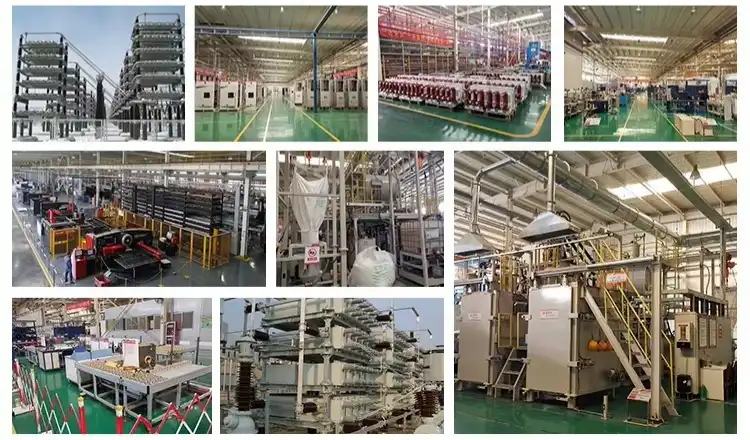
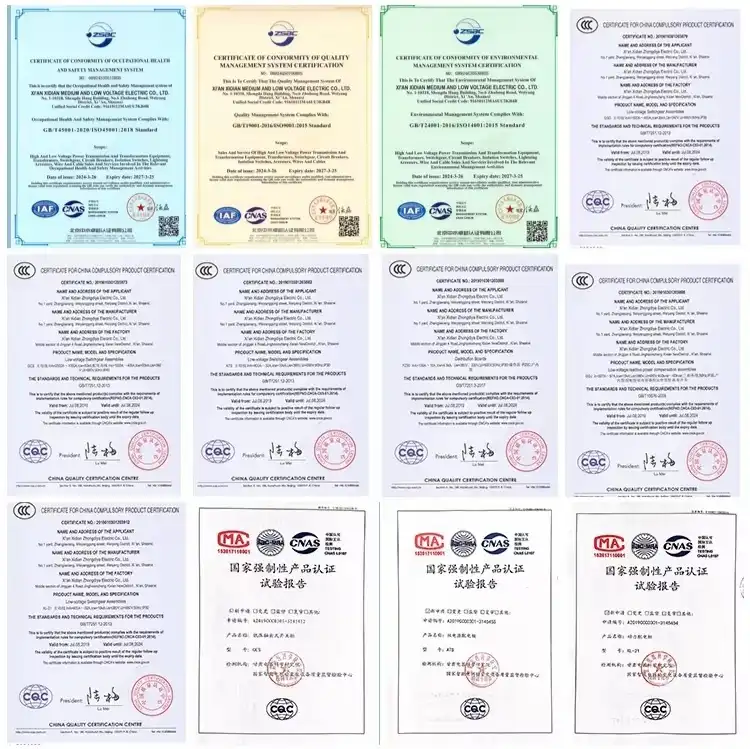
One of the most important jobs of any safety or metering circuit is to turn high currents that can't be reached into safe, accurate signs that instruments can understand. The right choice relies on the level of accuracy, the secondary load, the core material, and how well it fits inside the shell. When switchgear OEM makers need to buy a lot of parts, they should work with a provider that can provide constant accuracy, flexible specs, and production-aligned wait times. This lowers risk at every stage of the project. You can trust Xi'an Xikai's 10kV current transformer range to meet all of your medium-voltage cabinet needs. It is ISO 9001 certified and meets IEC 61869 standards.
FAQ
1.What is the difference between a current transformer and a voltage transformer?
A current transformer steps down line current proportionally for meters and relays, operating with a low-impedance secondary burden. A voltage transformer (or potential transformer) steps down line voltage for voltage measurement, operating with a high-impedance secondary load. Both are instrument transformers, but they serve opposite electrical quantities and must never be interchanged in a circuit.
2.Can a split-core current transformer be used for permanent installations?
Yes, split-core CTs are used permanently in many retrofit and bus-bar monitoring applications. However, because the split joint introduces a small air gap, achieving class 0.2S accuracy is difficult. For revenue metering in medium-voltage switchgear, a solid-core ring-type current transformer is the preferred choice. Split-core models are well-suited for class 0.5 or 1.0 power quality monitoring where occasional access is needed.
3.How often should a current transformer be calibrated?
For revenue metering, most utilities and standards bodies recommend calibration verification at commissioning and every five years thereafter. For protection-class CTs, functional tests aligned with relay maintenance schedules—typically every one to three years—are standard practice. If ratio error or phase angle deviates beyond class limits during any test, the unit should be replaced rather than adjusted.
4.What does the accuracy class 5P20 mean?
Class 5P20 is a protection accuracy designation. The "5P" means the composite error does not exceed 5% at the accuracy limit current. The "20" is the accuracy limit factor, meaning the CT maintains that error limit up to 20 times the rated primary current. This class is common in overcurrent and earth-fault relay applications within 10kV switchgear panels.
Request a Current Transformer Quote from Xi'an Xikai
Xi'an Xikai sells a range of reliable current transformers to companies that make switchgear in both local and foreign markets. No matter if the cabinet is inside or outside, our 10kV epoxy-resin-cast CT can handle main rates from 20A to 1000A. It also meets IEC 61869 and GB 20840.2-2014 standards. If you need help matching specifications, getting samples, or setting up a yearly supply deal, please contact our technical team. You can email us at serina@xaxd-electric.com, amber@xaxd-electric.com, or luna@xaxd-electric.com, or go to xaxd-electric.com to see the full list of current transformer suppliers.
References
1. IEC 61869-2: Instrument Transformers – Additional Requirements for Current Transformers. International Electrotechnical Commission, 2012.
2. GB 20840.2-2014: Instrument Transformers – Part 2: Additional Requirements for Current Transformers. Standardization Administration of China, 2014.
3. Blackburn, J. L., & Domin, T. J. Protective Relaying: Principles and Applications (4th ed.). CRC Press, 2014.
4. IEEE Std C57.13-2016: IEEE Standard Requirements for Instrument Transformers. Institute of Electrical and Electronics Engineers, 2016.
5. Theraja, B. L., & Theraja, A. K. A Textbook of Electrical Technology, Volume II: AC and DC Machines. S. Chand & Company, 2014.
6. Gers, J. M., & Holmes, E. J. Protection of Electricity Distribution Networks (3rd ed.). IET Power and Energy Series, 2011.