High Voltage Disconnect Switch vs. Circuit Breaker: Key Differences
2026-09-02 09:29:10
When planning substation retrofits or EPC projects, selecting the right electrical isolation and protection equipment determines project success. A High Voltage Disconnect Switch serves a fundamentally different purpose than a circuit breaker, though both are indispensable in power distribution systems. Disconnect switches create visible isolation points for safe maintenance, operating only when circuits carry no load. Circuit breakers, conversely, actively interrupt fault currents and protect equipment from overloads. Understanding these distinctions helps project managers and electrical engineers specify the correct equipment for old station upgrades where installation compatibility and rapid deployment are critical considerations.


Understanding High Voltage Disconnect Switches and Circuit Breakers
What Disconnect Switches Actually Do
Disconnect switches physically isolate serviced equipment from live wires. These devices only open wires without current, not load or fault current. Operators use them to create air gaps that indicate power is out before touching transformers, buses, or other items. The spinning insulator design separates critical sections, preventing any remaining electrical pathways.
A lot of repair jobs put an emphasis on disconnect switches that have built-in earthing switches. This two-in-one feature lets technicians quickly ground disconnected circuits, getting rid of any residual voltage that could put workers in danger. Through-wall mounting setups save valuable floor space in crowded substations that were built decades ago. This solves a common problem where equipment placement is limited by the way the foundations were built.
Circuit Breakers' Active Protection Role
Circuit breakers constantly check the flow of electricity and instantly shut down circuits when they find overloads or short-circuits. High-energy arcs that happen when a fault is interrupted can be safely put out in internal arc-extinguishing chambers that use vacuum, SF6 gas, or air-blast technology. Newer types have protection switches that are controlled by microprocessors and work with SCADA systems to make grid management automatic.
Circuit breakers, not disconnect switches, can handle dynamic switching processes when the load is full. They react in milliseconds to abnormal currents, which keeps equipment from breaking and keeps power outages to a minimum in the affected areas. Because of this, they are the first line of defense against electrical problems. During planned maintenance windows, disconnect switches act as secondary safety barriers.
Complementary Roles in Substation Design
Modern substations offer many layers of safety by deliberately mixing both kinds of technologies. Circuit breakers near potential fault sources may reduce harmful currents at any moment. Breakers are isolated by disconnect switches upstream and downstream. These allow breakers to be repaired without cutting power to the bus. This design reduces maintenance downtime, which is important for utilities with tight outage windows.
Key Technical Differences Between High Voltage Disconnect Switches and Circuit Breakers
Core Functional Distinctions
What makes them different is their ability to stop current. Breakers for electric circuits use complex arc-quenching systems that are rated for breaking strengths in kiloamperes at system voltage. They have to safely cut off currents that range from standard load levels to fault currents that are more than 40kA. These arc-extinguishing features are not at all present in disconnect switches. Trying to open them while they are loaded causes uncontrollable arcing that damages contacts and puts users in danger.
The operational speed needs are also very different. Circuit breakers stop a fault within three to five cycles, or 50 to 80 milliseconds at 60Hz. This keeps equipment safe from mechanical and thermal stress. Disconnect switches work much more slowly; they usually need 10 to 30 seconds to be activated by hand or by a motor because they can't work until the circuit is open at the upstream breakers.
Voltage Class and Current Rating Comparisons
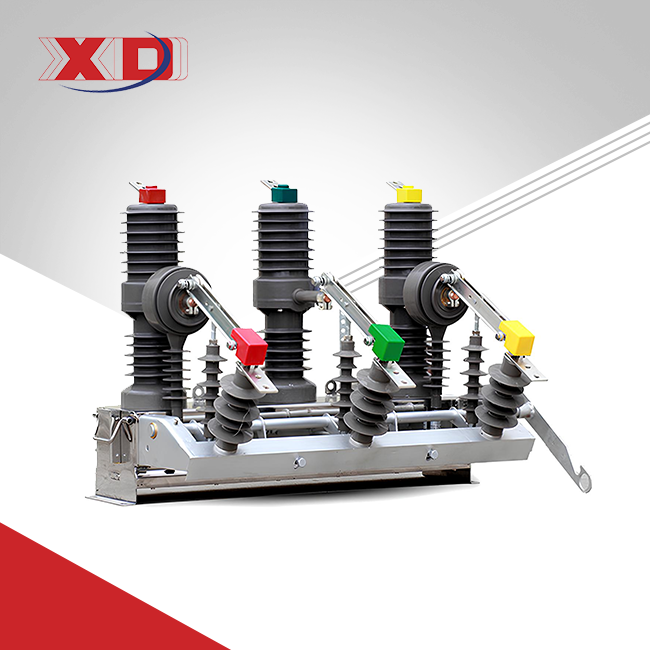
The voltage bands for both types of devices are similar for the High Voltage Disconnect Switch. Common levels include 12kV, 24kV, 40.5kV, and higher classes that reach 550kV for transmission uses. The GN2 High Voltage Disconnect Switch, which can handle currents between 400A and 2000A and is rated at 40.5kV, is an example of a medium-voltage disconnect switch that can be used in distribution substations. Its through-wall mounting allows installations where old foundation bolt patterns limit where equipment can be placed.
When voltage levels are the same, circuit breakers usually focus on breaking current ratings instead of continuous current capacity. A 40.5kV vacuum circuit breaker could handle 1250A constantly and 25kA or 31.5kA fault-interrupting capabilities. These specs cover very different types of safety situations than disconnect switches do.
Standards Compliance Framework
Both types of tools are governed by international standards, but those standards focus on different performance factors. IEC 62271-102 talks about the specific needs for High Voltage Disconnect Switches, such as their mechanical endurance, temperature rise limits, and dielectric withstand voltages. IEEE C37.32 sets guidelines for disconnect switches that are similar to those in the United States. The IEC 62271-100 standard for circuit breakers puts a lot of weight on their ability to break short circuits, their transient recovery voltage values, and their switching duty cycles when there is a problem.
Manufacturers do type tests on disconnect switches that go through more than 10,000 mechanical operations without any load. They also do high-voltage withstand tests that hit 85kV for one minute on 40.5kV-class equipment. When testing circuit breakers, they are put through a series of complicated fault current interruption sequences at different power factors. This makes sure that they work reliably even under the toughest electrical conditions. The different ways of certifying devices are based on their specific roles in power systems.
Advantages and Limitations in Industrial Contexts
Disconnect Switch Benefits for Retrofits
Modernization projects that involve old stations like disconnect switches because they are easy to install and work with existing infrastructure. Because the GN2 series can be mounted through walls, engineers can put operating mechanisms outside of crowded switchgear rooms while keeping contacts in the main equipment chambers. Compared to normal side-mounted setups, this design saves about 30% of floor space, which is a big plus when upgrading stations that were built before modern space standards were made.
Another useful benefit is that it is easy to maintain. Disconnect switches don't have as many moving parts as circuit breakers, and they don't have any complicated arc-quenching assemblies that need special inspection methods. Self-lubricating bearings reduce the need for maintenance by extending service intervals beyond 10,000 operations. Concerns raised by project managers about short outage times can be addressed by modular contact parts that can be quickly replaced during short maintenance gaps. These traits work well in quick-turnaround upgrade situations where installation teams have to finish quickly.
Because they are cheaper, disconnect switches are better for uses that don't need to stop a fault. Because they are easier to build and don't need as many expensive arc-extinguishing parts, they cost 40–60% less to make than equivalent-voltage circuit breakers. Buying disconnect switches for isolation purposes instead of circuit breakers saves money on procurement. Circuit breakers should only be used in places that really need fault protection.
Circuit Breaker Advanced Capabilities
Circuit breakers protect in a way that disconnect switches alone can't: they protect against everything. Integrated electrical trip units constantly check the patterns of current to find overcurrents, ground flaws, phase imbalances, and harmonic distortion, among other things. Engineers can coordinate protection schemes across multiple voltage levels by programming settings. This makes sure that faults are limited to the smallest possible part of the system.
Because they can integrate automation, circuit breakers are smart grid components. IEC 61850 protocols are used by modern designs to talk to each other and send real-time status information to centralized control systems. Remote trip instructions let operators change the configuration of networks on the fly without sending out field staff, which is a feature that supports smart grid efforts. Optional capacitor trip mechanisms allow fail-safe opening even when all control power is lost, so the protection stays strong no matter what.
These more advanced features make things more complicated and need more upkeep. Circuit breakers need to check the timing, contact resistance, and safety relay settings on a regular basis. To do this, they need trained workers with the right tools. Vacuum interrupters need to be replaced after a certain number of breaking operations. This adds costs over the course of their life that disconnect switches don't have.
Making the Right Choice for Your Business: Procurement Considerations
Matching Equipment to Application Scenarios
First, substation planners look at what each circuit needs to work. Places that need to switch loads often, like when controlling capacitor banks or changing transformer taps, need circuit breakers that can stop the current more than once. Disconnect switches are perfect for places that only need to be disconnected sometimes for maintenance, like when the bus is sectioned off or when equipment is disconnected for yearly checks.
Load characteristics also play a role in selection. Fast-acting circuit breakers with backup protection coordination are needed for circuits that supply critical loads that can't be turned off during faults. For less important lines, easier security methods like fuses and disconnect switches for isolation could be used, which would lower the cost of equipment while still providing enough safety gaps.
In older substations, equipment choices are often limited by the amount of space available. The small through-wall form of the GN2 disconnect switch lets it fit into current foundation footprints where physical growth is either not possible or would be too expensive. Its built-in earthing switch gets rid of the need for separate grounding equipment, which further reduces the installation space needed. This is a useful option for upgrading substations that were built with small clearances.
Evaluating Supplier Capabilities
Aside from basic product specs, procurement teams look at possible suppliers for High Voltage Disconnect Switch in a number of other areas as well. Quality standards for manufacturing are very important. Look for ISO 9001 certification and proof that the product meets IEC or IEEE standards for type testing. Suppliers that take part in national research programs like China's 863 initiative often have advanced engineering skills that can be seen in their patent files, which cover new design features.
When repair projects have to deal with non-standard needs, customization becomes very important. It is more valuable to buy from suppliers who can help with engineering so that standard designs can be changed to work with older mounting interfaces or voltage classes that aren't common. Technical advice during the creation of specifications helps find possible installation problems before the equipment is built, which prevents expensive delays that are found during testing.
The infrastructure for after-sales support should be carefully looked at. Maintaining spare parts stocks by suppliers allows for quick repair of parts when they break, reducing the length of outages. Having access to technical support—ideally support in multiple languages 24 hours a day, seven days a week—helps quickly solve commissioning problems or operational questions. Long-term running costs are cut and dependability is increased by training programs that teach utility workers how to maintain equipment.
Procurement Timing and Logistics
When suppliers offer predictable delivery dates, it helps EPC workers who are working on multiple projects at the same time. Standard disconnect switch models, like the GN2 series, usually ship 6 to 8 weeks after an order is placed. However, for custom configurations, lead times may go up to 12 to 16 weeks. Setting up blanket buy orders for expected volumes protects production capacity during busy building seasons, when companies are under a lot of pressure to get things done quickly.
The total cost of the project is affected by how it is packaged and shipped. Through-wall disconnect switches are shipped partly removed to make the shipping box smaller. This makes it easier to move the switches through older substations with limited entry routes. Suppliers who offer installation monitoring services make sure that the right steps are taken during assembly. This cuts down on the time needed for approval and keeps guarantee issues from happening because of bad installation in the field.
Maintenance, Safety, and Standards Compliance
Routine Inspection Protocols
Periodically, disconnect switches need to be visually checked to see if the contact surfaces are oxidized, the insulator columns are tracked or dirty, and the mechanical connections are in the right place. Thermal image scans find hot spots that are growing, which means that the contact is breaking down before it fails. It is suggested that insulators be checked every year in clean indoor environments and every three months in coastal or industrial areas where pollution speeds up the breakdown process.
Contact resistance tests make sure that electricity flows through closed switches. Readings that are more than 20% higher than what the maker recommends mean that the contacts need to be cleaned or replaced. Tests of the mechanical operation show that the stroke moves smoothly across the whole range of motion, without any locking or too much working force. Most of the time, these steps can be done in two hours per three-phase switch assembly, which fits into tight maintenance windows.
For more thorough maintenance on circuit breakers, you need to do things like timing tests to see how fast the contacts separate, vacuum bottle integrity checks for vacuum interrupters, and SF6 gas analysis for gas-insulated types. Protection relay settings need to be checked against coordination studies to make sure that trip features stay set up correctly as system conditions change. For these in-depth checks, which can take up to two full days per breaker, longer power outages are needed than for disconnect switch maintenance.
Personnel Safety Protocols
Lockout-tagout methods are used for all work on disconnect switches or circuit breakers to keep them from getting turned back on by accident. After opening the disconnect switches, operators use properly rated test equipment to make sure there is no voltage before putting on their own protective gear. Models like the GN2 have an integrated earthing switch that makes grounding easy. However, OSHA 1910.269 and NFPA 70E still require that separate protective grounds be installed at work sites.
Arc flash hazard analysis figures out what kind of personal protective equipment is needed for any switching tasks that need to be done with live equipment. Disconnect switches never open under load on purpose, but when they do so by accident, they cause very dangerous arc flash situations. This shows how important it is to have interlocking systems that stop operation unless upstream circuit breakers have already opened. Calculations of the incident energy help choose the right PPE and set safe approach limits that keep people safe from thermal and blast dangers.
International Compliance Standards
In North America, setups follow the IEEE C37 series guidelines, which say how to test and rate disconnect switches. Certifications from the Canadian Standards Association (CSA) and Underwriters Laboratories (UL) add to the confidence that the standard of the equipment that is sold in Canada or the US. Similar IEEE C37 standards are used for circuit breakers, with a focus on ANSI device numbering schemes that make safety coordination paperwork easier.
In order to sell goods in Europe, they need to have CE markings that show they comply with the Low Voltage Directive 2014/35/EU, which, despite its name, covers equipment that uses more than 1000V AC. For installations in dangerous areas, they may also need ATEX certification. Disconnect switches and circuit breakers are both governed by the IEC 62271 set of standards. Sometimes, regional National Committees add extra requirements on top of the base IEC specs.
Type test reports from recognized labs, material certifications showing compliance with RoHS rules that limit dangerous substances, and seismic qualification data for installations in areas prone to earthquakes should all be included in documentation packages. Full paperwork speeds up the approval process with utilities and government agencies, which lowers the time it takes to finish a job.

Conclusion
Disconnect switches and circuit breakers are chosen based on their specific functions, such as isolating for repair or protecting against active faults. High Voltage Disconnect Switch technology makes it easy to set up safe work areas in substations without spending a lot of money or space. This is especially helpful for upgrade projects that have trouble with traditional designs not working with older installations. Circuit breakers are essential for protecting against electrical problems because they can stop current flow in complex ways. Both technologies are strategically placed in modern substations, with disconnect switches where they are needed for isolation and circuit breakers where they are needed for fault protection. Knowing how these roles work together helps procurement teams choose the right equipment, balancing technical performance with budget and installation restrictions while upholding the highest safety standards.
FAQ
1. Can disconnect switches replace circuit breakers to reduce costs?
Never. Disconnect switches don't have the arc-extinguishing ability needed to safely cut off current when there is a load or a problem. Using them instead of circuit breakers is very dangerous and against the rules for electrical work. In good designs, both types of devices—circuit breakers for safety and disconnect switches for isolating—work together.
2. What determines appropriate current ratings for disconnect switches?
The continuous current rating should be at least 25% higher than the maximum expected load current. This is to account for changes in the ambient temperature and future load growth. Ratings for short-circuit resistance must match the fault current that is available at the placement site. This is usually checked through system fault studies. The GN2 line has ratings from 400A to 2000A, which are enough for most delivery needs.
3. How do interlocking mechanisms prevent operational errors?
Mechanical or electrical interlocks make sure that the right switching processes happen. For example, a disconnect switch can't work while circuit breakers are closed or earthing switches are engaged. These safety features directly stop operations that aren't done right and could lead to arc flashes or damage to equipment. This keeps people and property safe.
Partner with Xi'an Xikai for Your Disconnect Switch Requirements
The Xi'an Xikai Medium & Low Voltage Electric Co., Ltd. makes tried-and-true High Voltage Disconnect Switch options that are designed to work well in difficult upgrade situations. Our GN2 series gives EPC contractors the installation options and mechanical dependability they need when they have to quickly upgrade older substations. We have more than 15 patents on switchgear technology and are involved in national research projects. This gives us the technical depth to turn difficult compatibility problems into simple solutions.
As one of the biggest companies in China that makes High Voltage Disconnect Switches, we have strict quality control methods that make sure every unit meets IEC 62271-102 and IEEE C37.32 standards. Our engineering team works with project managers to make standard designs fit legacy mounting patterns. This keeps changes to the field to a minimum and speeds up installation. Plateau-rated equipment works reliably at heights of up to 4,000 meters, and special finishes keep equipment from rusting in seaside or industrial settings.
Send an email to serina@xaxd-electric.com, amber@xaxd-electric.com, or luna@xaxd-electric.com to talk about the specifics of your project. Visit xaxd-electric.com to see our full line of products, which includes seven types of tools used in power distribution systems around the world.

References
1. IEEE Standard C37.32-2020: IEEE Standard for High-Voltage Air Disconnect Switches, Interrupter Switches, Fault Interrupters, and Accessories, Institute of Electrical and Electronics Engineers, 2020.
2. IEC 62271-102:2022: High-voltage switchgear and controlgear – Part 102: Alternating current disconnectors and earthing switches, International Electrotechnical Commission, 2022.
3. Thompson, R.J., Practical Guide to Substation Design and Equipment Selection, McGraw-Hill Professional Engineering, 2018.
4. National Electric Power Research Institute, Technical Guidelines for Old Substation Retrofit and Modernization, China Electric Power Press, 2021.
5. Heising, C.R., IEEE/PES Switchgear Committee Report on Disconnect Switch Failure Modes and Maintenance Strategies, IEEE Transactions on Power Delivery, Volume 34, Issue 2, 2019.
6. Zhang, W., Liu, H., and Chen, M., Space Optimization Techniques in Urban Substation Retrofits: Equipment Selection and Layout Strategies, International Journal of Electrical Power & Energy Systems, Volume 128, 2021.