
How Does a Voltage Transformer Reduce Voltage Safely?
2026-10-09 17:30:01
A voltage transformer securely decreases voltage by employing the theory of electromagnetic induction between two magnetically linked windings on a common iron core. The main winding is connected to a high voltage source (e.g. 24kV), while the secondary winding provides a corresponding lower standardised output (usually 100V or 480V) to measurement and protective circuits. The secondary circuit solely transmits signal level energy, thereby keeping workers and equipment away from hazardous primary voltages. The accuracy and worker safety during normal operation are determined by the appropriate insulating materials, the core shape and the ratios of the windings.
Understanding Voltage Transformers: Fundamental Principles and Components
What a Voltage Transformer Actually Does
It reduces a high main voltage to a safe metered secondary voltage for metering switches and safety panels. This is done via a voltage transformer (VT) also known as a potential transformer (PT). A current transformer detects the current flowing across the line while a VT monitors the line voltage directly. This functional separation is of great importance in the design of medium voltage switchgear. Do not connect 100V or 480V rated instruments directly to 24kV busbars.
Core Construction and Winding Design
Most of the time, cold-rolled, grain-oriented silicon steel laminations are used to make the magnetic core. These layers cut down on eddy current losses and make it possible to tightly control the number of turns in the primary and secondary windings. To meet the accuracy class 0.2 and 0.5 requirements of IEC 61869-3, the precision copper winding on both sides keeps the phase shift to less than 30 minutes. Core shape also prevents flux saturation, which would change the output signal when there is too much going on.
Insulation Materials and Safety Architecture
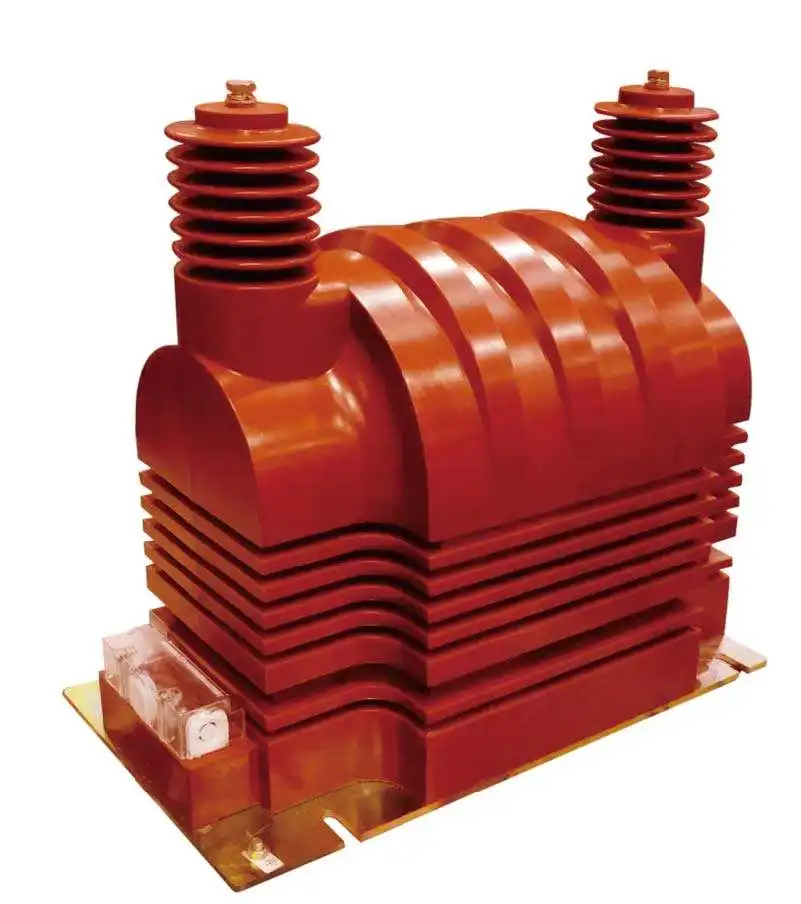
In any VT system, high-voltage shielding is the main safety barrier. The 24kV indoor unit at Xi'an Xikai uses vacuum-cast epoxy resin to completely surround both windings. This gets rid of any air gaps that could lead to partial discharge. With a rating of 17.5/55/105kV, the device can handle a power-frequency test at 55kV for one minute and a shock voltage of 105kV. These numbers are in line with IEC 61869-1 and GB 20840.2-2014. When used inside a substation, this fully enclosed structure also protects against moisture and conductive dust.
How Voltage Transformers Safely Reduce Voltage: Technical Insights
The Step-Down Process in Practice
The voltage drop is based on the number of turns (N₁/N₂) between the primary and secondary windings. That number is 50:1 for a 24kV/480V unit. In a steady state with sinusoidal waves, the secondary voltage closely follows the primary voltage with little change. This gives metering circuits a precise, proportional signal. Xi'an Xikai's product has an epoxy resin covering that keeps this ratio within ≤0.5% error even when the load changes between 30VA, 80VA, and 200VA.
Built-In Overvoltage and Thermal Protection
Medium-voltage VTs can have ferroresonance, which is an oscillation that isn't linear between the system capacitance and the transformer's magnetizing inductance. This effect can push the core into deep saturation, which can cause dangerous overvoltages. This risk is immediately dealt with by pairing the VT with a specialized ferroresonance suppressor. Thermal protection comes from the resin body, which can work safely from -25°C to +55°C, and the low-loss silicon steel core, which keeps the inside from getting too hot when the recommended load is applied continuously.
Maintenance Practices That Preserve Accuracy
Most of the time, accuracy drifts over time because of insulation wearing out. For Xi'an Xikai units, the factory limit for routine partial discharge testing is below 10pC. This testing should be done again during planned outages to find early signs of degradation. Checking the secondary strain against the stated capacity keeps the winding from being overloaded, which speeds up the wear and tear on the insulation. When you clean epoxy surfaces once a year, you get rid of the conductive layers that can shorten the creepage distance in wet industrial settings.
Comparing Voltage Transformers with Other Transformer Types for Safe Voltage Control
VT vs. Current Transformer
A current transformer (CT) measures line current by running the primary conductor through a toroidal core. During operation, the secondary must never be open-circuited, or voltages that are too high will show up. A voltage transformer works the other way around—its secondary should never be short-circuited because that would make the main draw too much power. Both devices are necessary in a 24kV switchgear panel, but they protect against very different types of failure and need to be handled in different ways.
VT vs. Isolation Transformer
An isolation transformer keeps two circuits with similar voltage levels from touching each other through galvanic separation. This is mostly done to block out noise or protect equipment. Not only does it not step voltage down to signal-level outputs, but it also does not meet accuracy-class standards for meters. A potential transformer is precisely set for measuring jobs and usually works at loads well below 1kVA. An isolation transformer, on the other hand, can handle full load power. If you put an isolation transformer in a safety circuit instead of a VT, the readings would not be accurate, and the relay might not work right.
VT vs. Autotransformer
There is no galvanic separation in an autotransformer because the main and secondary circuits share a single winding through a tap. This setup is fine for adjusting voltage in low-risk situations, but it can't be used in medium-voltage measurement systems where full electrical separation is needed to keep people safe. With its separate primary and secondary windings and high-grade epoxy insulation, a properly rated VT meets both safety and accuracy standards that an autotransformer can't.
Industry Applications and Case Studies: Voltage Transformers in Action
B2B Applications in Medium-Voltage Switchgear
OEM makers of switchgear that sends 24kV cabinets to utilities in South and Southeast Asia need VTs that fit the internal shape of each cabinet design. The small epoxy-cast unit from Xi'an Xikai fits into standard indoor switchgear compartments and sends accurate voltage messages to SCADA systems, energy meters, and safety relays. The 50/60Hz grade means that a single SKU can be used on both 50Hz local grids and 60Hz foreign markets. This makes it easier to buy in bulk once a year and plan monthly purchase orders.
Real-World Case Study: Export Switchgear Line
One company that made medium-voltage switchgear and sent 24kV cabinets to Southeast Asia got complaints about accuracy drift after 18 months of use in humid seaside substations. When they switched to Xi'an Xikai's fully enclosed epoxy VT with a verified partial discharge below 10pC, there was no measurable increase in ratio error over the next twenty-four months of field inspections. The vacuum-cast construction stopped the wetness from getting in, which was hurting the old open-frame design. The maker made the Xi'an Xikai unit the same across all of its 24kV cabinet lines for sales in China and other countries.
Substation and Renewable Integration
Grid managers who are in charge of substations that use solar or wind power often see voltage waves that are very repetitive, which makes monitoring very important. The silicon steel core of the Xi'an Xikai is designed to cut down on hysteresis and eddy current losses by up to 30%. It also keeps the ratio performance fixed even when the waveform is twisted. Because of this, the unit can be used in substations where regular metering-grade VTs would need to be calibrated more often.
Procurement Considerations: Selecting Safe and Reliable Voltage Transformers
Key Technical Parameters to Verify
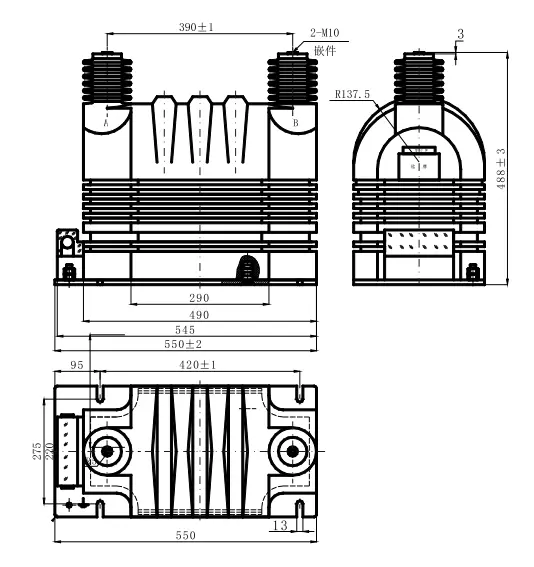
Before placing an annual framework order, engineering teams should check that the voltage transformer cabinet meets four criteria: the accuracy class (0.2 for revenue metering, 0.5 for general measurement, and 3P for protection); the rated secondary burden (30/80/200VA options on Xi'an Xikai's 24kV unit); the insulation level (17.5/55/105kV for this voltage class); and the overall envelope dimensions to make sure that each compartment fits. If you get even one of the parameters wrong, it can ruin protection coordination studies or make it impossible to send the type-test to the end customer.
Certification and Quality Assurance
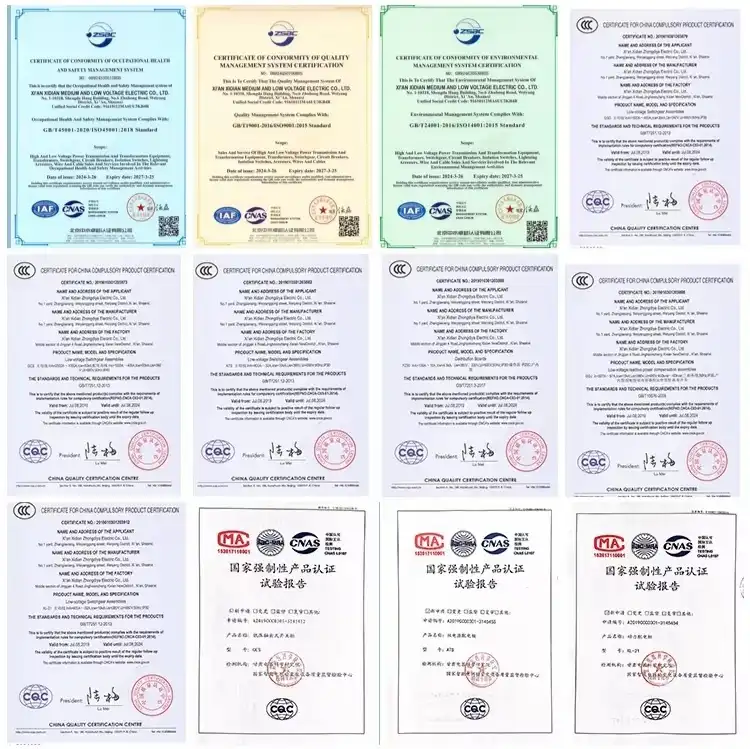
If a procurement team is sending goods to IEC-territory markets, they should make sure that the VT has certificates for IEC 61869-1 and IEC 61869-2, as well as GB 20840.2-2014 for Chinese projects. During the production process, Xi'an Xikai does all of its tests automatically. These tests include a power-frequency withstand at 55kV for one minute, an impulse voltage at 105kV, and a partial discharge reading below 10pC. ISO 9001 and ISO 14001 certification cover the whole production process, from inspecting the raw materials that come in to sending out the finished goods.
Lead Time and Ordering Structure
For new specifications, it usually takes one to two months for samples to be made and approved before mass production can begin. Most stock configurations have a three-week lead time for large orders. Xi'an Xikai allows yearly framework agreements with monthly release orders, which is how most mid-size OEM switchgear manufacturers who make between 20 million and 500 million yen a year buy things.
Conclusion
With a well-defined turns ratio, strong insulation, and a precision core design, a voltage transformer lowers voltage safely. The 24kV indoor unit from Xi'an Xikai has three load choices, dual-frequency operation, and epoxy resin encapsulation to meet the needs of current medium-voltage switchgear for metering and protection. As it has been tested to a 105kV impulse level and approved by IEC 61869-1/2 and GB 20840.2-2014, it gives OEM switchgear makers a technically sound potential transformer that is ready to be exported for 24kV cabinet configurations in both local and foreign markets.
FAQ
1.What is the difference between a voltage transformer and a potential transformer?
The two terms describe the same device. "Potential transformer" is the older IEC and IEEE terminology; "voltage transformer" is the current preferred term under IEC 61869-3. Both refer to an instrument transformer that steps down high voltage to a safe measurement level for meters and relays.
2.How does accuracy class affect metering performance?
Accuracy class defines the maximum permissible ratio error and phase displacement. Class 0.2 limits ratio error to ±0.2%, making it appropriate for revenue metering where billing accuracy is legally regulated. Class 0.5 allows ±0.5% error and suits general measurement. Class 3P is specified for protection applications where wide dynamic range matters more than tight steady-state accuracy.
3.What causes ferroresonance in a VT circuit, and how is it controlled?
Ferroresonance occurs when the VT's nonlinear magnetizing inductance resonates with system capacitance, often triggered by switching events on lightly loaded feeders. The standard countermeasure is installing a ferroresonance suppressor in the secondary circuit, which damps oscillations before they damage the transformer or connected relays.
4.Which insulation level applies to a 24kV system?
IEC 60071-1 assigns a rated insulation level of 17.5kV (Um) for systems nominally operating at 24kV. The corresponding power-frequency withstand is 55kV and the lightning impulse withstand is 105kV—exactly the values specified on Xi'an Xikai's 24kV indoor VT.
5.What secondary burden range should I specify for a 24kV switchgear panel?
Match the combined burden of all connected instruments to the transformer's rated output. Xi'an Xikai's unit offers 30VA, 80VA, and 200VA options. Operating below rated burden preserves accuracy; exceeding it increases ratio error and accelerates winding thermal stress.
Get a Quote from Xi'an Xikai — Trusted Voltage Transformer Supplier for 24kV Switchgear
Xi'an Xikai delivers precision potential transformers built to IEC 61869-1/2 and GB 20840.2-2014, with accuracy classes 0.2 and 0.5 available in 30/80/200VA burden ratings. Our 24kV indoor voltage transformer ships within three weeks for standard orders, with full technical support for new-specification sampling. Contact our team today to discuss your 24kV switchgear requirements:
- Email: serina@xaxd-electric.com | amber@xaxd-electric.com | luna@xaxd-electric.com
- Website: xaxd-electric.com
References
1. International Electrotechnical Commission. IEC 61869-2: Instrument Transformers – Additional Requirements for Current Transformers. IEC, 2012.
2. International Electrotechnical Commission. IEC 61869-1: Instrument Transformers – General Requirements. IEC, 2007.
3. IEEE Power and Energy Society. IEEE C57.13: Standard Requirements for Instrument Transformers. IEEE, 2016.
4. Stevenson, W. D. Elements of Power System Analysis, 4th ed. McGraw-Hill, 1982.
5. Glover, J. D., Sarma, M. S., & Overbye, T. J. Power Systems Analysis and Design, 6th ed. Cengage Learning, 2017.
6. Blackburn, J. L., & Domin, T. J. Protective Relaying: Principles and Applications, 4th ed. CRC Press, 2014.