
Dry-Type Air Core Series Reactor: Benefits and Applications
2026-10-13 17:29:01
A dry-type air core series reactor is a static inductive device connected in series with power lines or capacitor banks to control harmonic distortion, limit inrush currents, and maintain grid voltage stability. Unlike oil-filled or iron-core alternatives, it uses epoxy-encapsulated aluminum windings without a ferromagnetic core, which eliminates magnetic saturation entirely. This design keeps inductance constant under all load conditions, including fault events. For EPC contractors and power design institutes specifying equipment for 110–330kV substations, understanding how this technology works — and where it performs best — is the first step toward confident procurement decisions.
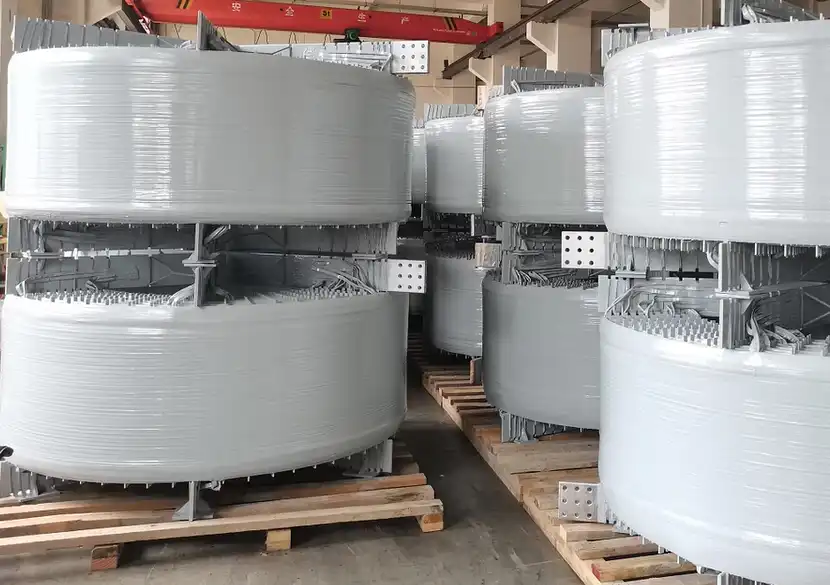
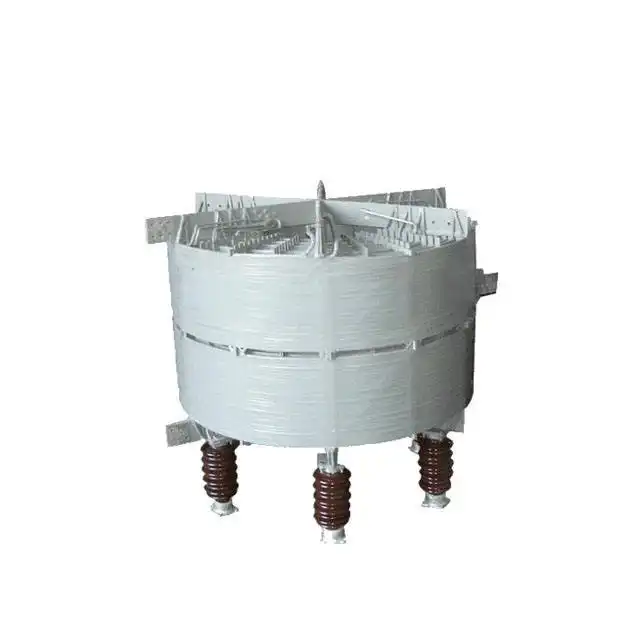
Understanding Dry-Type Air Core Series Reactors
It's easy to understand how a dry-type air core series reactor works: metal coils wound around an air center create a controlled inductive reactance. The magnetic flux path goes through air because there is no ferromagnetic core. This means the device never gets too strong, not even during a short-circuit. According to IEC 60076-6 and IEEE C57.16, this feature is called "perfect inductance linearity," and it is one of the most important ones in high-voltage substations.
Core Winding Structure and Insulation
Glass-fiber strengthened epoxy glue, a material that doesn't absorb water, UV light, or surface tracking, surrounds the windings. When Class F or Class H insulation systems are used, they can keep working even when the temperature outside is high. For example, the CKGKL dry-type air core series reactor can handle 30kV lightning impulse voltages and works consistently in a wide range of conditions, from dusty deserts to humid coastal areas. It can be connected in series with medium-voltage capacitor banks because its maximum voltage is 3464.1V.
Noise, Losses, and Maintenance Profile
As long as there is no magnetostrictive iron core, there is no hysteresis noise. The CKGKL model's operating sound levels stay below 45dB at rated current, which is helpful in places where noise limits apply. At full load, total power losses stay below 0.05%, which means that core flow losses don't happen. Maintenance is not needed very often. For outdoor installations, visual inspection of the insulator surfaces and UV coating every three to five years is usually enough.
Mechanical Strength Under Fault Conditions
A dry-type air core series reactor has a very rigid structure made of a single piece of fiberglass. The electrodynamic forces between coil turns are strong during a fault. Because the construction is epoxy-encapsulated, these forces are spread out over the whole winding body instead of being focused on just a few conductors. Most of the units are type-tested to IEC or IEEE earthquake standards, which usually mean a 0.5g ground acceleration, and they are put on insulators that are made to handle bending forces.
Benefits of Dry-Type Air Core Series Reactors
A dry-type air core series reactor is better than oil-filled or iron-core equipment in terms of safety, environmental compliance, and cost over its entire life. These are the main benefits that procurement engineers always list:
- No flammable dielectric fluid: The absence of insulating oil eliminates fire risk and oil-spill liability, which matters greatly inside substations, underground vaults, and urban commercial buildings. It also removes the need for oil containment infrastructure and periodic oil sampling.
- Constant inductance across load range: Because the air core never saturates, the reactor's impedance remains predictable at both normal and fault current levels. This linear behavior is critical for accurate harmonic filter tuning, where a shift of even 5% in inductance can move a detuned capacitor bank into resonance.
- Lower lifecycle cost: With no oil to replace, no core to relaminate, and no dielectric testing schedule, operational expenses over a 20–30 year service life are substantially lower compared to oil-immersed alternatives.
- No dielectric fluid that can catch fire: Since there is no insulating oil, there is no chance of fire and no liability for oil spills. This is very important in substations, underground vaults, and business buildings in cities. It also gets rid of the need for structures to hold oil and for taking samples of oil on a regular basis.
Common Applications of Dry-Type Air Core Series Reactors
The CKGKL dry-type air core series reactor is used in three main business-to-business situations, and each one has its own set of technical needs.
Harmonic Detuning with Capacitor Banks
The reactor makes up a detuned filter circuit when it is linked in series with HV capacitor banks. In industrial networks, the series combination moves the capacitor bank's resonant frequency away from the 5th and 7th harmonic orders, which are usually the most important ones. This stops the growth of harmonic voltages and lowers system waveform distortion, making sure that total harmonic distortion (THD) stays within the limits set by IEEE 519 and IEC 61000-3. When the capacitors are switched on and off, the CKGKL reactor reduces the inrush currents. This protects both the capacitors and the circuit breakers ahead of them.
Fault Current Limitation in Substations
When put in possible fault current paths inside 110–330kV substations, the dry-type air core series reactor reduces the size of the fault current to what the circuit breakers can handle. The device can handle surge currents up to 100 times its rated capacity without overloading, so it provides a reliable safety feature that iron-core designs can't promise at high fault levels.
SVC and Renewable Energy Integration
A lot of harmonic currents are made by static voltage compensators and grid-connected renewable inverters. The dry-type air core series reactor can work in these harmonically rich settings without getting too hot because precise conductor transposition controls winding eddy losses. For large solar and wind farms that connect to the national grid, this reactor keeps the voltage at the center stable even when inverter-based sources produce power at irregular times.
Comparing Dry-Type Air Core Series Reactors with Alternatives
The table below shows the main differences between the reactor systems that purchasing engineers look at when planning substation projects.
Dry-Type Air Core vs. Oil-Immersed Reactors
Oil-immersed reactors have lower costs per unit of inductance, but they need holding pits, fire control systems, and regular checks to see how the oil is doing. It takes months longer to build an oil-filled unit in urban substations or areas that are sensitive to the environment. A dry-type air core series reactor doesn't have to meet any of these conditions and can be put in places that are underground, indoors, or hard to get to.
Dry-Type Air Core vs. Iron-Core Reactors
Inductance per unit volume can be higher in iron-core reactors, which are smaller. But they reach full capacity at about 1.5 to 2 times the rated current. This means that their impedance changes during faults, which is exactly when it's important for them to behave consistently. It is necessary for capacitor bank detuning and fault current limiting that the air-core design behaves linearly. This is not a matter of choice.
Supplier Selection and Certification
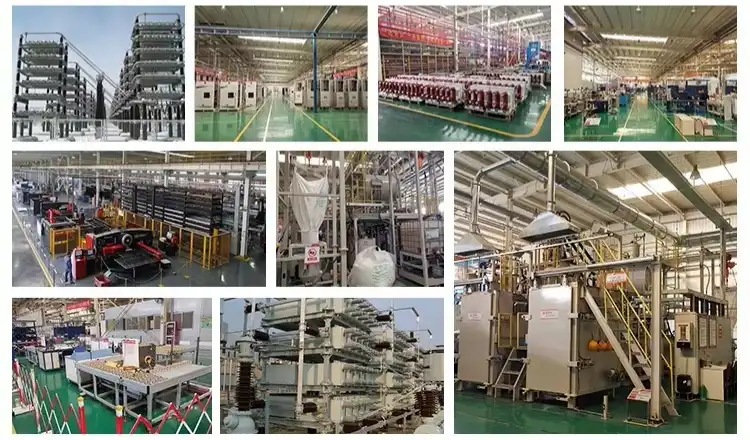
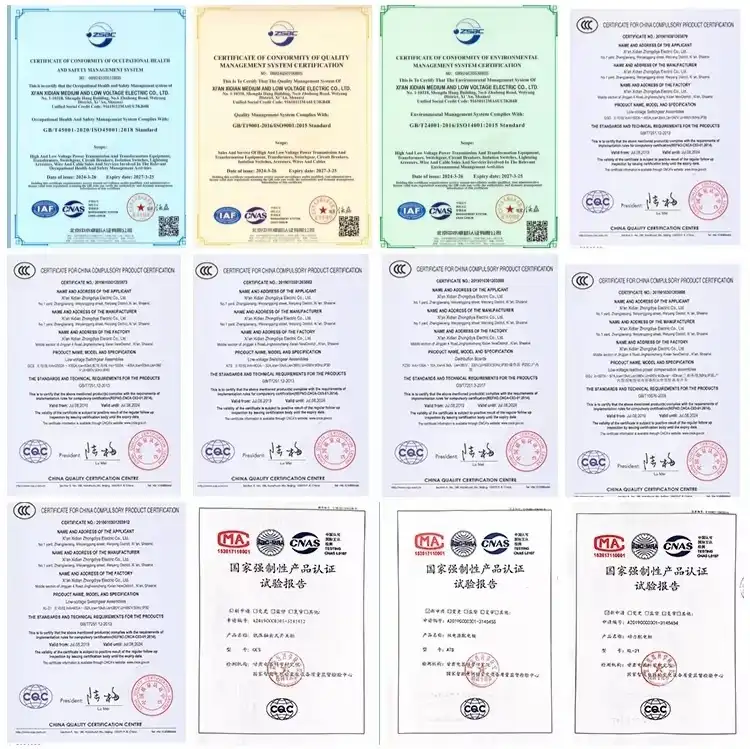
Ask for type test reports that cover lightning impulse withstand, temperature rise, partial discharge (target <10 pC), and short-circuit mechanical strength when looking at a dry-type air core series reactor supplier. For national grid projects, the manufacturing process must be certified by ISO 9001 and meet the standards set by IEC 60076-6. Xi'an Xikai has more than 12 international patents and is certified by ISO 9001, ISO 14001, and other standards. They can provide custom inductance tolerances of ±3% or ±1% for precision filter applications.
Procurement Guide for Dry-Type Air Core Series Reactors
Getting a dry-type air core series reactor for a big transformer job takes more steps than just buying any other piece of equipment.
Design Confirmation and Technical Review
A normal 110–330kV substation project takes three to six months to buy, and each deal covers three to fifteen units. In the first step, load-flow data, harmonic spectrum analysis, and capacitor bank ratings are sent to the manufacturer so that they can confirm the reactor's inductance, current rating, and BIL. During this time, Xi'an Xikai helps with engineering to make sure that the CKGKL dry-type air core series reactor design meets the needs of the project's grid code.
Quality Inspection and Factory Acceptance Test
Each unit goes through regular tests before it is shipped, such as measuring the winding resistance, checking the inductance, applying voltage, and testing for lightning impulses. Temperature rise tests make sure that the thermal design meets the insulation class that was stated. At the Xi'an site, partial discharge measurement and loss proof can be done as witnessed tests for clients with special needs. Before being sent out, every CKGKL unit also goes through 72 hours of temperature cycling between -40°C and +70°C.
Delivery, Installation Clearance, and After-Sales Support
Eight weeks is the standard lead time for the CKGKL dry-type air core series reactor for special voltage ratings up to 36kV or for changed shells with IP54 or IP65 ratings. Because the air-core design creates a stray magnetic field, the installation drawings show the minimum distances that must be kept between the device and metal structures to avoid induced eddy currents in the steelwork around it. Xi'an Xikai offers technical support 24 hours a day, seven days a week in English, Arabic, and Mandarin. They can help with installation, commissioning, and warranty claims.
Conclusion
In medium and high-voltage power systems, a dry-type air core series reactor is a scientifically sound and practically useful way to reduce harmonics, control inrush current, and limit fault current. It is a good choice for EPC companies and design institutes working on national grid and Belt and Road infrastructure projects because it has linear inductance behavior, is fire-resistant, and needs almost no upkeep. The Xi'an Xikai CKGKL model blends performance that has been type-tested with factory customization to meet the needs of 110–330kV substation contracts.
FAQ
1.Why does a dry-type air core series reactor require a magnetic clearance distance?
The stray magnetic field spreads out from the winding because the air core doesn't have any ferrous material to guide the flux. When metal structures like fences, cable trays, and structural steel loops are too close together, they can create induced eddy currents that heat up a certain area. The installation plans show the minimum clearance zones that are needed based on the coil shape and rated current.
2.Can a dry-type air core series reactor be repaired after internal winding damage?
In most cases, no. The fiberglass structure covered in epoxy is a solid block; problems with the internal windings can't be reached or fixed in the field. Any harm to the UV coating on the outside can be fixed, but a unit that has an interior fault is replaced instead of rewound.
3.What routine maintenance does an outdoor unit require?
When these units are in use, they don't need much maintenance. A visible check should be done every three to five years, with a focus on surface tracking of the winding body and cleaning of the support insulators to stop flashover caused by pollution.
4.Is aluminum winding acceptable for high-current applications?
This is correct. Aluminum is the usual material for conductors in air-core reactors. Its high strength-to-weight ratio makes it easier on support insulators when there is a fault. Copper has a lower resistance per unit volume, but aluminum is better when managing weight and electrodynamic force are important.
5.How do I specify inductance tolerance for a harmonic filter application?
In most cases, a normal inductance limit of ±3% is fine for detuning capacitor banks. Applications that need exact filter tuning, like 5th or 7th harmonic filters in factories, should ask for factory measurement records to be sent with the unit paperwork and indicate a limit of ±1%.
Request a Quote from Xi'an Xikai — Your Trusted Dry-Type Air Core Series Reactor Manufacturer
The CKGKL dry-type air core series reactor is designed and made by Xi'an Xikai. It is used in EPC projects for substations in China and the Belt and Road markets. Our engineering team helps with confirming the design, writing up the type test results, and commissioning on-site. Get in touch with us to talk about the details of your project and ask for a personalized proposal.
Please send your email to serina@xaxd-electric.com, amber@xaxd-electric.com, luna@xaxd-electric.com, or xaxd-electric.com.
References
1. IEC 60076-6: Power Transformers – Part 6: Reactors. International Electrotechnical Commission, 2007.
2. IEEE C57.16: IEEE Standard Requirements, Terminology, and Test Code for Dry-Type Air-Core Series-Connected Reactors. Institute of Electrical and Electronics Engineers, 2011.
3. IEEE 519: IEEE Recommended Practice and Requirements for Harmonic Control in Electric Power Systems. Institute of Electrical and Electronics Engineers, 2014.
4. Mohan, N., Undeland, T. M., & Robbins, W. P. Power Electronics: Converters, Applications, and Design. John Wiley & Sons, 2003.
5. Arrillaga, J., & Watson, N. R. Power System Harmonics. John Wiley & Sons, 2003.
6. Fuchs, E. F., & Masoum, M. A. S. Power Quality in Power Systems and Electrical Machines. Academic Press, 2008.