
Dry-Type Air Core Series Reactor in Renewable Energy Systems
2026-10-21 16:45:08
When engineers and procurement managers search for reliable inductive devices for grid-connected renewable projects, the dry-type air core series reactor consistently appears at the top of the shortlist. These devices connect in series with capacitor banks or transmission lines to suppress harmonic amplification, reduce waveform distortion, and limit inrush currents during switching events. Unlike oil-filled alternatives, they carry no flammable liquid, require minimal scheduled maintenance, and hold stable inductance across a wide current range—qualities that make them well-suited for 110 kV to 330 kV substations supporting wind, solar, and energy storage assets.
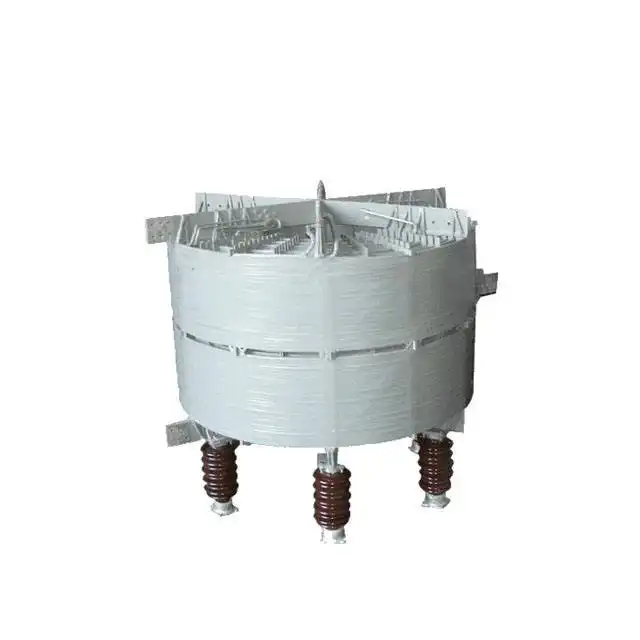
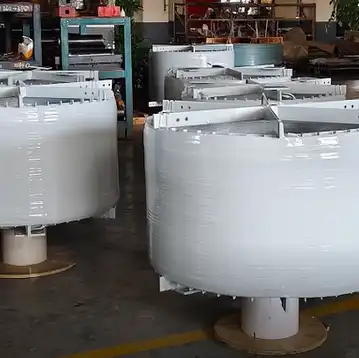
Understanding Dry-Type Air Core Series Reactors
What They Are and How They Work
There is no ferromagnetic core or oil in a dry-type air core series reactor. It is a static inductive device wrapped in aluminum or copper conductors and encased in glass-fiber reinforced epoxy resin. A tuned detuning filter is made up of a capacitor bank and concentrated coils that work together to create controlled inductive reactance. This setup stops high-frequency harmonics from spreading into the grid and slows the rate at which the capacitor charges when the power is turned on. This stops voltage spikes that damage equipment that is attached.
Key Technical Parameters
The CKGKL model from Xi'an Xikai has a maximum voltage of 3,464.1 V and comes with inductance limits of ±3% by default. For more precise uses, ±1% is also available. The air-core structure stops magnetic saturation, so inductance stays the same even when there is a fault. This is a feature that is important for both IEC 60076-6 and IEEE C57.16 when it comes to series-connected reactors.
Safety and Environmental Profile
Because the winding is solidly encased, there is no chance that oil will leak or the fire will spread. The noise level stays below 45 dB when the load is normal, which is well within the guidelines of IEC 60076-10. The fiberglass housing doesn't break down in UV light and can handle temperature changes from -40 °C to +70 °C. This makes it a good choice for outdoor substation bays in desert, coastal, or high-altitude settings up to 4,000 meters.
Comparing Dry-Type Air Core Reactors with Alternative Technologies
Dry-Type Air Core vs. Oil-Immersed Reactors
Oil-immersed reactors need to have their oil sucked out, their pressure reliefs fixed, and their fire control systems put in place on a regular basis. All three of these needs are met by a dry-type air core series reactor. Lifecycle cost analyses published in IEEE Transactions on Power Delivery show that not having to handle oil cuts the total cost of ownership for outdoor substations by 15–20% over a 25-year service period.
Dry-Type Air Core vs. Iron Core Reactors
When fault currents go over the rated levels, iron core reactors can experience magnetic saturation. This can change the inductance by 30% or more, making the device less able to limit current. A dry-type air core series reactor keeps its linear inductance no matter how much current it has. This is why SVC filter banks and HVDC harmonic filter circuits usually call for air-core construction.
Performance Summary by Reactor Type
The table below shows the main things that engineers look at when they're spec-ing:
- Oil-immersed reactor: High maintenance and there is a chance of a fire. It works well at low frequencies, but it can't be used outside without being surrounded by metal.
- Iron core reactor: It's cheaper, but it can't be used for precision harmonic filter circuits because it can become saturated when there is a fault.
- Dry-type air core series reactor: Linear inductance, maintenance-free, flame-resistant, suited for outdoor installation, and chosen for harmonic detuning and fault current limiting in high voltage substations.
These differences are not just ideas. When building 220 kV collector substations for wind farms, project teams always say that choosing air-core construction cuts down on the need for re-tuning during the completion stage compared to iron-core options.
Procurement Guide: How to Choose and Buy Dry-Type Air Core Series Reactors
Technical Specification Checklist
Before you send out a request for quotes, make sure that your design team agrees on the following: the rated voltage and BIL (Basic Impulse Level); the continuous current rating; the inductance value and tolerance; the short-circuit withstand current (both dynamic and thermal); the insulation class (Class F at 155 °C or Class H at 180 °C); and the pollution level for outdoor installation. These things have a direct effect on the type test scope under IEC 60076-6. Suppliers who can't provide certified type test reports for all parameters should be taken off the list of priorities.
Quality Validation and Factory Acceptance
Normal tests need to check the resistance of the windings, the amount of inductance, the voltage that is applied, and the lightning impulse. Ask for temperature rise test results to make sure that hotspot temperatures stay within the limits of the insulation class at the rated continuous current. Partially discharged electricity levels should be less than 10 pC; this is a good sign of long-term insulation health. For outdoor units, follow the manufacturer's written instructions to check the UV-protective coating's thickness and bonding.
Supplier Evaluation Criteria
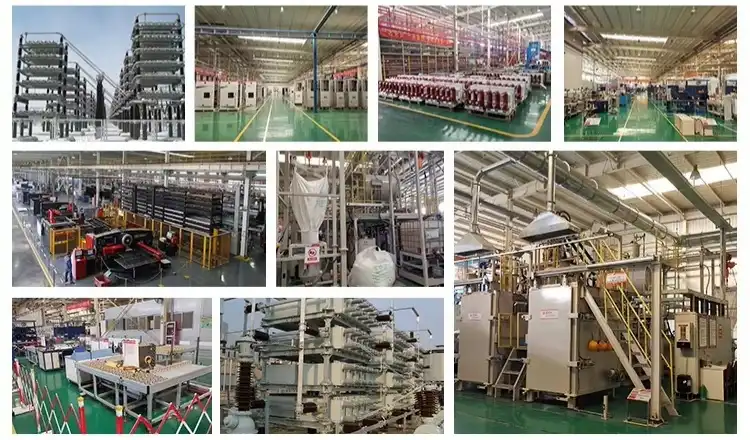
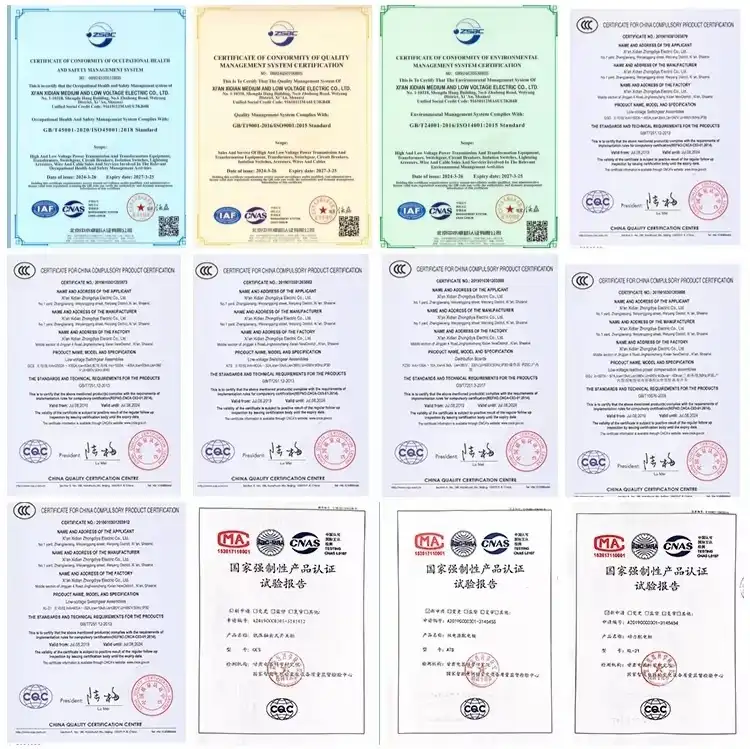
At this level of buying, certifications are important. Process control is generally guaranteed by suppliers who use the ISO 9001 quality management system and the ISO 14001 environmental management system. Xi'an Xikai has both certifications and more than 12 international patents on ways to build reactors. Talk to a dry-type air core series reactor provider about finished 110 kV–330 kV substation projects, delivery lead times for custom voltage levels up to 36 kV, and whether they have IP54 or IP65 outdoor cover choices that can be made within 8 weeks.
Maintenance and Practical Application in Renewable Energy
Routine Inspection Protocol
During normal service, these reactors don't need much maintenance. Visually checking the winding surface for tracking or cracks, cleaning the support insulators to stop pollution flashover, and thermal imaging of connection points are the only things that should be done on the site. Most operators schedule this review every three to five years, depending on the site's pollution classification. This is a lot less maintenance than keeping oil-filled equipment in good shape.
Stray Magnetic Field Management
Since air-core reactors don't have a ferromagnetic core to hold the flux, the winding sends out a random magnetic field. This field can create eddy currents in nearby steel buildings, which heats up that area. Installation standards say that metal enclosures, fencing, and cable trays must be kept at least 1.5 times the diameter of the reactor away from it. To avoid having to pay a lot of money for new civil work, EPC project managers should include this clearance in the design of the substation bay layout from the start.
Application in Wind and Solar Substations
In collector substations that serve wind farms, harmonics created by inverters (mostly 5th and 7th order) change the shape of the waveform, which makes it harder to read meters and coordinate safety relays. Adding a dry-type air core series reactor to the HV capacitor bank lowers the circuit's tuning below the main harmonic frequency, which stops resonance amplification. Total harmonic distortion (THD) dropped from over 8% to below 3% in wind substations in northwest China that were properly tuned. This is within the limits set by IEEE 519 and GB/T 14549.
Future Trends and Innovations
Smart Grid Integration
Grid managers want reactors with temperature sensors and tracking outputs for partial discharge that work with IEC 61850 substation automation protocols more and more. These channels let you check on the health of assets in real time without stopping service. This lowers the chance of unplanned power outages happening in substations that combine renewable energy.
Regulatory and Material Developments
As environmental rules get stricter in the EU, GCC, and ASEAN markets, oil-filled inductive equipment is being phased out faster in new substation projects. Also, improvements in Class H insulation materials that don't absorb water are making it possible for outdoor dry-type air core series reactors to last longer than 30 years.
Market Outlook
The International Energy Agency (IEA) predicts that by 2030, more than USD 1 trillion will be invested each year in utility-scale wind and solar power. Every new green energy project that connects to the grid needs to handle harmonics and protect against inrush currents at the connection point. This is exactly what dry-type air core series reactors are designed to do. Purchasing teams that build relationships with qualified suppliers now will be better able to meet project deadlines that are getting shorter.
Conclusion
Dry-type air core series reactors play a clear role in modern power systems, especially in renewable energy substations that have to deal with harmonic distortion, inrush currents, and installing equipment outside all the time. They have clear practical advantages over oil-immersed and iron-core alternatives because of their low maintenance, fire-resistant design, and linear inductance. When EPC contractors and design institutes need to buy equipment for 110 kV–330 kV substations, they should pay attention to type test results that have been verified, certified manufacturing processes, and a supplier that can meet specific project deadlines.
FAQ
1.What is the difference between a dry-type air core reactor and an oil-immersed reactor?
A dry-type air core series reactor has solid fiberglass windings that are encased in resin and doesn't have any oil in it. This gets rid of the risk of fire, the cost of handling oil, and the need to bundle things up. Transformer oil is used to cool and insulate an oil-immersed reactor. This oil needs to be tested and checked for leaks on a regular basis. When it comes to outdoor high-voltage substations, the dry-type design usually has lower lifecycle maintenance costs.
2.Why does stray magnetic field matter during installation?
Since there is no core in an air-core reactor to hold the flow, it creates a random magnetic field. Through generated eddy currents, this field can heat steel buildings next to it. This problem can't happen if the manufacturer-specified clearance distance is kept in mind during plan design.
3.What maintenance schedule applies to outdoor units?
The main tasks are to visually examine and clean the insulators every 3–5 years. During yearly substation inspections, it is best to use thermal imaging of the connections.
4.What partial discharge level should I require from a supplier?
Ask for PD values less than 10 pC. This threshold, which is mentioned in IEC 60270, is a good way to tell if dry-type inductive equipment's insulation will stay strong over time.
5.Can the CKGKL reactor be customized for non-standard voltage ratings?
Yes, Xi'an Xikai can change voltage ratings up to 36 kV and provide IP54 or IP65 outdoor shelters, usually within 8 weeks of design confirmation.
Connect with Xi'an Xikai for Your Next Reactor Project
The engineers at Xi'an Xikai are ready to help you with your substation requirements, from the first calculations of inductance to factory acceptance testing. We offer reliable solutions for 110 kV–330 kV projects as a dry-type air core series reactor maker with ISO 9001 and ISO 14001 approval and installations in more than 40 countries. Please email us at serina@xaxd-electric.com, amber@xaxd-electric.com, or luna@xaxd-electric.com to get professional advice or a quote. You can find full product documentation at xaxd-electric.com.
References
1. IEEE Transactions on Power Delivery — "Harmonic Resonance Assessment and Mitigation in Large Wind Power Plants," 2019.
2. IEC 60076-6 — "Power Transformers – Part 6: Reactors," International Electrotechnical Commission, 2007 (revised 2018).
3. IEEE C57.16 — "Standard Requirements, Terminology, and Test Code for Dry-Type Air-Core Series-Connected Reactors," IEEE, 2011.
4. International Energy Agency — World Energy Outlook 2023, IEA Publications, 2023.
5. IEEE 519 — "Recommended Practice and Requirements for Harmonic Control in Electric Power Systems," IEEE, 2022 revision.
6. Electric Power Systems Research — "Impact of Series Reactors on Harmonic Distortion in Grid-Connected Photovoltaic Systems," Elsevier, 2021.