
Iron Core Reactor for Solar Inverters: Benefits and Uses
2026-10-21 16:45:04
An iron core reactor is a magnetic component placed in series within a solar inverter circuit to filter harmonics, limit inrush current, and stabilize output voltage. By using a laminated silicon steel core with precision air gaps, it maintains consistent inductance across varying load conditions without reaching magnetic saturation. In solar applications, where grid-tied inverters generate significant harmonic distortion, an iron core reactor protects both the inverter and connected equipment. Compared to air core alternatives, it delivers higher inductance density in a smaller physical footprint, making it a practical choice for commercial and industrial photovoltaic installations.
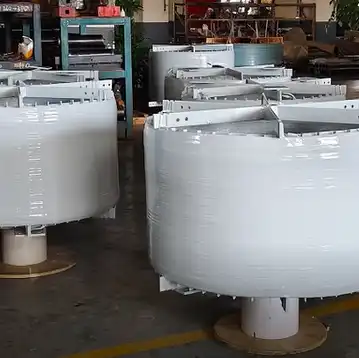
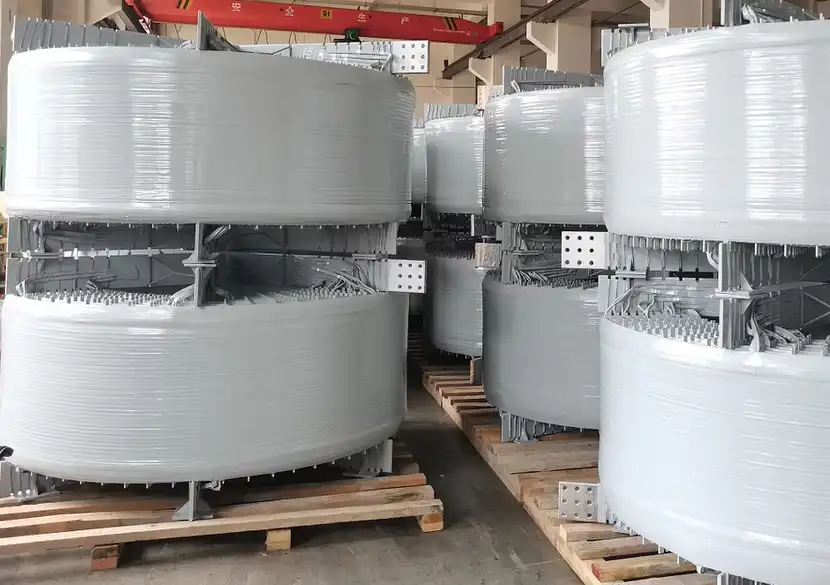
Understanding Iron Core Reactors and Their Role in Solar Inverters
How the Magnetic Core Works in Inverter Circuits
When a solar transformer changes DC power at high frequencies, it creates harmonic currents that go back into the grid. They are weakened by an iron core reactor, which works as a series impedance, before they cause interference. The silicon steel layers effectively direct the magnetic flux, and the air gaps keep them from getting too full during current surges. This mix makes the inductance steady over a large working range, usually staying linear up to 1.35 times the rated current.
Core Material and Construction Considerations
For building an iron core reactor, cold-rolled grain-oriented (CRGO) silicon steel is the best choice. It works at lower temperatures and lasts longer because it has low hysteresis and eddy current losses. Most windings are made of copper foil or wire that has been strengthened with glass fiber and filled with Class F or Class H glue under vacuum pressure (VPI). This way of making things turns the whole thing into a solid mass that doesn't move, which is great for solar setups on roofs or outside.
Iron Core vs. Air Core: Choosing the Right Type
Air core reactors take up a lot more room and send out magnetic fields that can mess up control panels nearby. Iron core designs keep the flux inside the core, which saves 40–50% cabinet room, which is very important for solar inverter systems that are shipped or used indoors. In grid-connected PV systems that need to filter harmonics, keep the voltage stable, and limit current, the iron core reactor always works better than air core options in terms of both space efficiency and electromagnetic control.
Benefits of Using Iron Core Reactors in Solar Inverter Systems
For solar inverter installations, iron core reactors offer a number of quantifiable benefits. The main perks for B2B procurement experts can be summed up in these points:
- Reduced energy losses: Optimized magnetic linearity cuts iron and copper losses by up to 30% compared to conventional reactor designs, directly improving overall system efficiency.
- Thermal stability: Class F insulation (rated to 155°C) handles the heat generated in harmonic-rich solar environments. Natural or forced-air cooling options keep operating temperatures within safe limits even at full load.
- Fire-safe construction: Epoxy resin casting or air insulation eliminates flammable liquids entirely. This makes the reactor suitable for indoor switchgear rooms, chemical plants, metro substations, and any fire-sensitive setting.
- Long service life: Epoxy-encased windings resist humidity, dust, and corrosive atmospheres, supporting a design life exceeding 25 years with minimal maintenance.
- Inductance precision: Air gap geometry is machined to hold inductance tolerance within ±3%, which matters when matching the reactor to specific capacitor bank or filter cabinet requirements.
Because of these benefits, the total cost of ownership is lower over the product's lifetime. A South Asian solar plant operator said that switching from oil-filled reactors to dry-type iron core units cut annual maintenance costs by about 18% and got rid of problems with fire safety in a rooftop installation above a building that was already occupied. If a purchasing manager looks at total cost of ownership (TCO) instead of unit price, they will always choose the dry-type iron core reactor because it is cheaper in the long run.
Iron Core Reactor vs. Other Reactor Types: Making the Right Choice
Comparing Magnetic Properties Across Core Types
Laminated iron cores are more permeable than air cores, which means they can reach the desired inductance level in a smaller package. When there are short periods of overcurrent, steel core designs that don't have air holes can saturate, which hurts both the reactor and the transformer. The iron core reactor with air gaps keeps the inductance-to-volume ratio good so that it can be integrated into a panel cabinet.
When Iron Core Outperforms Capacitor Banks
Harmonic distortion can't be fixed by capacitor banks alone in solar plants that need to fix the power factor. A tuned LC filter is made up of an iron core series reactor and a bank of capacitors. It targets certain harmonic orders, usually the 5th and 7th in three-phase inverter systems. This setup makes the inverter semiconductors last longer, keeps the transformer from getting too hot, and helps the system meet the IEEE 519 harmonic limits that most utility hookup agreements require.
Selecting the Right Reactor for Your System
The requirements for the inverter's output should be matched with the reactor's rated voltage (3 kV, 6 kV, 10 kV, 15 kV, 20 kV, or 35 kV), impedance percentage, and current rating. When the grids in South Asia and the Middle East don't use standard voltages or frequencies, it's important to find a supplier that can quickly change things to fit your needs. Making sure of the inductance tolerance, noise level (target below 60 dB), and terminal arrangement during the RFQ stage saves a lot of money on redesigning after delivery.
Procurement Guide for Iron Core Reactors in Solar Inverter Applications
Critical Specifications to Confirm Before Ordering
Before sending out a request for quote, engineering teams should make sure they know the rated voltage, rated current, impedance percentage, insulation class, cooling method, mounting direction, and terminal design. When it comes to solar inverter filter cabinets, the inductance range should be ±3% or less. For sites in high-altitude or desert settings, the noise level, working altitude (derating is needed above 2,000 meters), and temperature range are all very important.
Quality Control Checkpoints to Request from Suppliers
Insulation resistance tests (≥1,000 MΩ), DC resistance measures, and industrial-frequency withstand voltage tests at 85% of rated level are all done by reputable iron core reactor makers. As per ASTM A717 inter-laminar resistance testing makes sure that insulation coatings on steel sheets keep short circuits from happening between laminations. To keep the lamination from shorting out after the unit is clamped, the burr height on the edges must stay below 0.02 mm. Field failures can be avoided by asking for test reports for these checks before accepting shipment.
Managing Small-Batch Custom Orders
When looking for customized reactors, many panel makers can't because they have to buy a certain number of units. Mid-sized switchgear companies can make prototypes before committing to large orders from a source that can handle orders of 20 to 200 units with a first-sample lead time of four to six weeks. Making sure of the standards for core clamping and shipping fixtures ahead of time stops the core from moving during sea freight, which is a known problem for laminated core assemblies traveling long distances internationally.
Future Trends in Iron Core Reactor Technology for Solar Inverters
Advanced Materials Reducing Size and Weight
For reactor uses, amorphous iron alloys and nanocrystalline core materials are now being made commercially. At high frequencies, these materials have lower core losses than regular silicon steel. This is important for solar inverters that work at switching rates above 2 kHz. Early data from the field shows that compared to regular CRGO steel, there is 20–40% less core loss, and the working temperature goes down to match.
IoT Monitoring and Predictive Maintenance
Now, companies make iron core reactors that have temperature sensors built in and ports for partial discharge detection that can connect to SCADA systems at the plant level. Maintenance teams can schedule replacements based on real degradation rather than set time intervals when they keep an eye on winding temperature and insulation state all the time. This cuts down on unplanned downtime in utility-scale solar farms.
Grid Code Compliance and Digitalization
As utility interconnection standards get stricter around the world, especially IEEE 519 in North America and IEC 61000-3-12 in Europe, solar plants will need more harmonic filters that are finely tuned. For project developers working across multiple countries, the grid interconnection approval process is sped up by iron core reactor designs that come with test data and licensing records that can be tracked back to the factory.


Conclusion
An iron core reactor is not a common item; it is a precise magnetic part that affects the long-term cost of operation, the stability of the inverter, and compliance with grid code. The CKSC Dry-type Iron core reactor from Xi'an Xikai can handle voltages between 3 kV and 35 kV, is insulated with Class F epoxy resin or air, and is certified by both ISO 9001 and IEC 60076-6. It meets the needs of integrating capacitor cabinets and filter cabinets in business and industrial solar projects with an inductance range of within ±3%, noise levels below 60 dB, and a design life of more than 25 years.
FAQ
1.Why choose a dry-type iron core reactor over an oil-filled reactor for solar inverters?
Transformer oil is not used in dry-type designs; instead, epoxy resin casting or air insulation is used. This completely eliminates the risk of fire and explosion. This is important in places like chemical plants, indoor switching rooms, and rooftop sites where oil-filled equipment is restricted by law.
2.What inductance tolerance should I specify for a solar inverter filter application?
The standard goal for LC harmonic filter applications is a tolerance of ±3%. For sensitive SVG or active filter setups, you can get tighter limits.
3.Can the reactor operate at altitudes above 2,000 meters?
Yes, but the grade needs to be lowered. Air density drops as you go higher, which makes cooling less effective and shortens the lengths between things moving around outside. For solar systems at high altitudes, suppliers should change the clearances and temperature margins or switch to forced-air cooling.
4.What is the typical service life, and what causes early failure?
Under normal conditions, the design life is 20 years or more. The main way they break is when the insulation breaks down because of partial discharge or thermal aging from cooling ducts that are blocked. Checking the cooling tubes regularly and testing for partial discharge on a regular basis greatly increases the service life.
5.How do I prevent core displacement during sea freight?
Ask the supplier to use mechanical core-clamping fixtures and shock-absorbing packaging that is rated for the route of shipping. As part of the quality review process, ask for pictures of the packing that was done before the shipping.
Partner with Xi'an Xikai for Your Next Iron Core Reactor Order
The CKSC iron core reactor supplier team at Xi'an Xikai takes orders for at least 20 units, and the first samples are sent out in four to six weeks. Our goods are safe for 3 kV to 35 kV, follow IEC 60076-6 and ISO 9001 rules, and come with full test records from the plant. Get in touch with our team at serina@xaxd-electric.com, amber@xaxd-electric.com, or luna@xaxd-electric.com to talk about your needs and get a price. You can find full product documentation at xaxd-electric.com.

References
1. IEEE Std 519-2022, IEEE Recommended Practice and Requirements for Harmonic Control in Electric Power Systems, IEEE, 2022.
2. IEC 60076-6:2007, Power Transformers – Part 6: Reactors, International Electrotechnical Commission, 2007.
3. Mohan, N., Undeland, T. M., & Robbins, W. P., Power Electronics: Converters, Applications, and Design, John Wiley & Sons, 2003.
4. Blaabjerg, F., Teodorescu, R., Liserre, M., & Timbus, A. V., "Overview of Control and Grid Synchronization for Distributed Power Generation Systems," IEEE Transactions on Industrial Electronics, 2006.
5. Arrillaga, J., & Watson, N. R., Power System Harmonics, 2nd ed., John Wiley & Sons, 2003.
6. Yazdani, A., & Iravani, R., Voltage-Sourced Converters in Power Systems: Modeling, Control, and Applications, IEEE Press / Wiley, 2010.