
Indoor Current Transformer Burden: Why Does It Matter?
2026-10-30 17:36:14
Indoor current transformer burden is the total electrical load connected to the secondary winding, measured in volt-amperes. It matters because every meter, relay, terminal, and meter of wire adds to that load. When the load stays within the rated value, the indoor current transformer reproduces primary current accurately and keeps protection relays dependable. When the load climbs too high, ratio errors grow and the core can saturate during a fault. I wrote this guide for switchgear builders and engineers who need to size burden correctly before ordering.
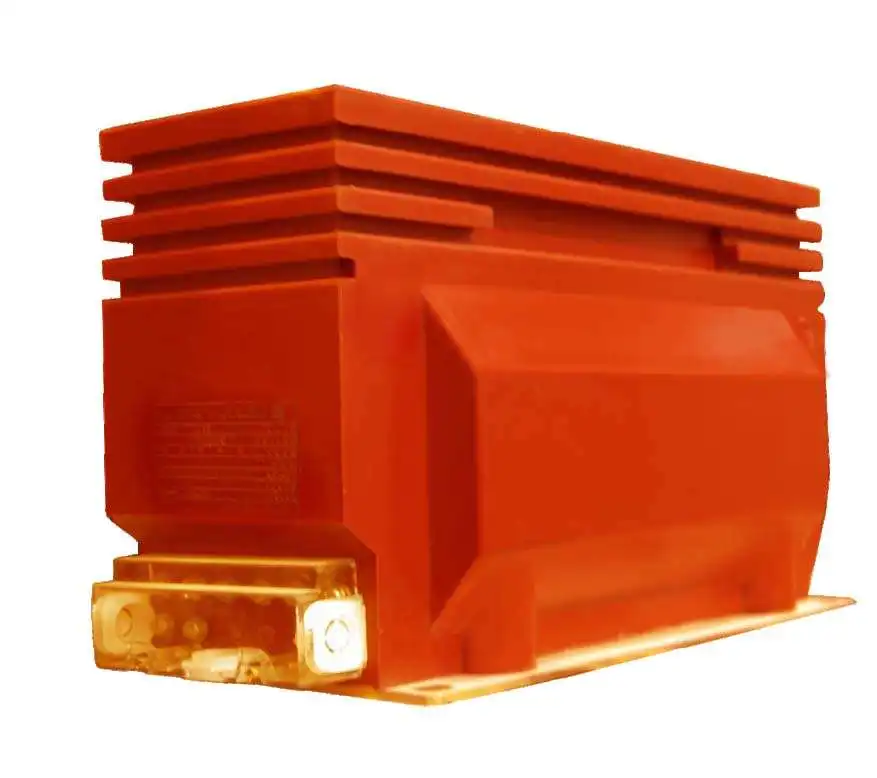
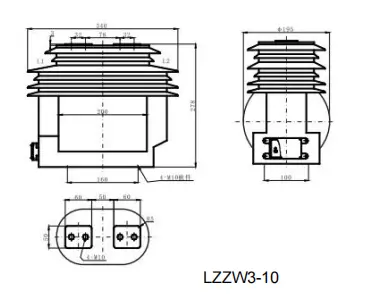
What Burden Means for an Indoor Current Transformer
What Burden Includes
The word "burden" refers to all the things that an indoor current transformer's secondary wire needs to power. Monitoring tools, transducers, protection relays, meters, terminal blocks, test switches, and wiring all play a part. Heavy loads are shown by engineers in two ways: as apparent power in volt-amperes or as impedance in ohms at the rated secondary current. The two are connected by S = Is² × Z. A 0.2 Ω load equals 5 VA at 5 A. The same 0.2 Ω only equals 0.2 VA at 1 A. For the same resistance, this is why a 5 A secondary causes more wire losses than a 1 A secondary. The rating is based on this math in medium-voltage switchgear, where meters and relays often share the same secondary loop.
Rated Burden vs. Actual Burden
The rated burden is the highest load that the maker will guarantee the accuracy class at. It is written on the label. The real load is what you connect after installation. They don't usually go together. It's fine for a CT with a 15 VA rating to only carry 8 VA of devices. IEC 61869-2 usually limits the accuracy of meters for loads to be between 25 and 100% of the rated value. Because of this, a number that is way too high can put a circuit that isn't busy very much outside the guaranteed range. In the US, IEEE C57.13 is widely used, and it has different names for normal loads, like B-0.5 and B-1.0 for 5 A secondaries. Before I look at the manual for an indoor current transformer, I make sure it follows the right format.
Calculating Burden Step by Step
This is an example of how to work with an indoor current transformer. A 100/5 A CT powers a meter and a relay that needs 6 VA at 5 A, which is equal to 0.24 Ω. The run to the panel is 10 m long and made of 2.5 mm² copper. Around 7.4 Ω/km for copper at 20 °C equals about 0.15 Ω for the 20 m round trip. The weight of the cable is 5² x 0.15 = 3.75 VA, which adds up to 9.75 VA. I would look at 15 VA instead of 10 VA because it leaves almost no room for error. The same cable's load drops to 1² × 0.15 = 0.15 VA on a 1 A secondary. Instead of guesses, you should always use the numbers from the datasheet, real wire lengths, conductor sizes, and the working temperature.
How Burden Shapes Indoor Current Transformer Accuracy and Protection
Burden and Metering Accuracy
Metering classes like 0.2, 0.5, and 1.0 show the biggest ratio error, in percent, at the rated current that doesn't go over the allowed burden range. Class 0.2S adds tighter limits that go as low as 1% of the rated current. This works well for revenue meters on feeds that aren't heavily loaded. When the load goes above the rated value, more primary current is used to magnetize the core. This makes the ratio error and phase displacement go up. Errors can also go too far if the load is much lower than 25% of the rated value. A few extra volt-amperes of wire on a 200/5 A feeder with an energy meter can make results not match the guaranteed class.
Burden and Core Saturation During Faults
Protection cores are used for something else. A 5P20 core can keep the total error to less than 5% at 20 times the rated current, while a 5P10 core can do the same at 10 times. To make a fault current happen again, the core needs to provide enough secondary voltage to power the whole load. The demand for voltage goes up as the load gets heavier. When demand is higher than what the core can handle, the core saturates and the secondary current gets messed up. Then, overcurrent switches might not trip on time, and differential protection might see the wrong amount of differential current. When there is a high fault level on a 100/5 A circuit, this risk grows quickly. That's why I compare the load to the accuracy limit factor before I approve a design.
Accuracy Class and Burden Comparison
The table below shows how popular classes relate.
| Class | Function | What it guarantees |
|---|---|---|
| 0.2S | Revenue metering | Tight error limits from 1% to 120% of rated current |
| 0.5 | Metering | 0.5% ratio error at rated current within the burden range |
| 5P10 | Protection | 5% composite error at 10 times rated current |
| 10P10 | Protection | 10% composite error at 10 times rated current |
A metering core is designed to stay accurate under normal load and to reach saturation early, which protects meters that are connected. It's important for a protection core to keep up with fault current. Since the goals are pulling in different directions, they are usually put on different cores in switchgear designs. Multi-ratio taps make changes easier in the future, but they also add terminals and make it more likely that the wrong tap will be chosen.
Specifying and Selecting the Right Burden
Choosing a Rated Burden
5 VA, 10 VA, 15 VA, and 30 VA are common rated values. Each one is paired with an accuracy class, insulation level, thermal current, and dynamic current. It's not always true that a higher VA grade means better. It often needs more copper and core material, which makes it bigger and costs more. Also, a lightly loaded circuit may fall below the 25% lower limit. For an indoor current transformer, I suggest figuring out the real load, adding a margin that fits the project, and then choosing the standard value that is closest to the real load. After that, ask the supplier to confirm the accuracy, protection performance, standards used, and test documents that were given.
Matching the Indoor Current Transformer to the Application
An indoor current transformer has to handle different tasks in switchgear panels, substations, busbar systems, and industrial distribution boards. First, I match the voltage class, like 11 kV, 24 kV, or 33 kV. Then, I match the primary ratio, secondary current, short-circuit level, and amount of cores. Numbers like 100/5 A and 200/5 A are just standard points of reference, not rules that everyone must follow. It's also important to think about the temperature, humidity, altitude, insulation coordination, and mounting space. Because it keeps the body small and closed, compact epoxy resin insulation works well for dry-type indoor equipment. For people who make OEM switchgear, the mounting dimensions have to fit the compartment before the electrical ratings are set in stone.
A Simple Selection Workflow
When I help OEM customers choose an indoor current transformer, I do it in five steps. First, write down the voltage, frequency, normal load, fault current, CT ratio, protection functions, and conditions at the site. Second, use the full loop to figure out the total burden from the actual device and cable data. Third, pick the accuracy class, safety level, maximum load, core count, and secondary current. Fourth, check the plans, the places of the terminals, the distance between the phases, the level of the insulation, and the clearances. Fifth, send a full technical question. When I compare quotes, I look at testing, delivery, customization, and engineering support. The unit price doesn't tell me much about whether the transformer fits the cabinet and meets relay requirements, so these are the things I look at.
Avoiding Indoor Current Transformer Burden Problems
Common Burden Mistakes
Three mistakes happen a lot in indoor current transformer projects. The first is choosing the one with the highest VA rating because you think that more is safer. That choice can make the circuit bigger and put it below the guaranteed load range. The second method only counts the conductor that goes out, which makes the cable about half as heavy for the same distances. There is the same amount of resistance and current in the return wire. Third, a metering Class 0.5 CT is being used instead of a 5P10 protection CT. The metering core might get too full at a low multiple of the rated current, sending a messed-up signal to the relay at the very moment it needs to detect something. It doesn't cost much to check these points during the quotation stage.
Open Secondary Safety
The secondary of an indoor current transformer that is turned on must never be open. Since there is no extra load to balance the main current, it keeps going through the core until it is fully saturated. When that happens, the voltage across the open terminals can get dangerously high, which can damage the secondary insulation, overheat the core, and put people in danger. I suggest that you use shorting-type test blocks, short the terminals before disconnecting any device, and clearly label any spare cores. According to site practice, cores that aren't being used should be shorted. These habits keep people and things safe, and they don't cost much to follow during setup and upkeep.
Tests and Documents to Request
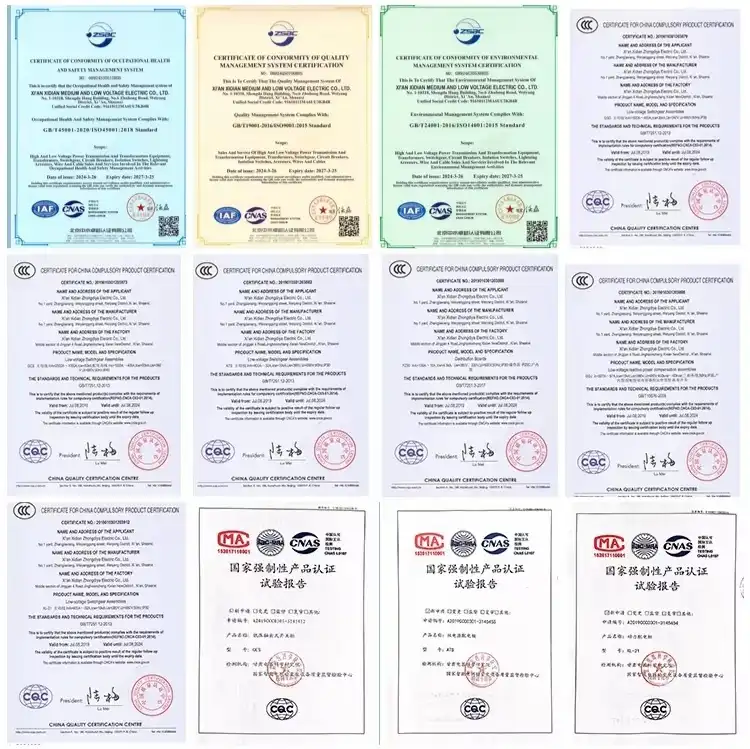
Usually, routine tests check for things like ratio error, phase shift, insulator resistance, power-frequency withstand, and partial discharge, if they apply. Reports from type tests show how well something can handle heat, short circuits, insulation coordination, and mechanical integrity. Before you place a large order, you should ask for datasheets, dimensional drawings, terminal diagrams, burden or accuracy curves, routine and type test results, any necessary certificates, guarantee terms, wait times, and information on how the goods will be shipped overseas. Your technical and purchasing teams can use these documents as a guide. When the transformer gets to the cabinet line, they cut down on the time it takes to get approval and make it easy to track.
Xi'an Xikai 35 kV Indoor Current Transformer and Supplier Selection
35 kV Product Data
Our 35 kV indoor current transformer is made of epoxy resin and is filled with electromagnetic fields all the way around. The voltage is 35 kV at 50/60 Hz, and the primary current ranges from 20 to 2500 A. The secondary current ranges from 5 A to 1 A. It's in line with IEC 61869-1 and 61869-2 and GB 20840.2-2014. For metering, the accuracy classes are 0.2 and 0.5, and for protection, they are 5P and 10P. The design is very accurate, has a lot of space, and works reliably. There are both 5 A and 1 A secondary currents, so you can pick the one that works best for your cable lengths and relay inputs.
Indoor vs. Outdoor and Toroidal Designs
Indoor current transformers are small, dry devices that can be used in protected electrical rooms, panels, switchgear, and indoor substations. Outdoor units need to be able to handle the weather better, so they are usually bigger and made to meet the needs of different environments. Toroidal CTs wrap around a cable or conductor, which is good for measuring residual current and tight installations. An epoxy indoor unit, on the other hand, can be mounted directly in a switchgear compartment. In all cases, the load relies on the whole setup: the layout of the terminals, the length of the lead, the resistance of the conductors, and the design of the core, not just the body or label of the transformer. Before I agree to a ranking, I always ask for the backup wiring route.
Working With an OEM Switchgear Builder
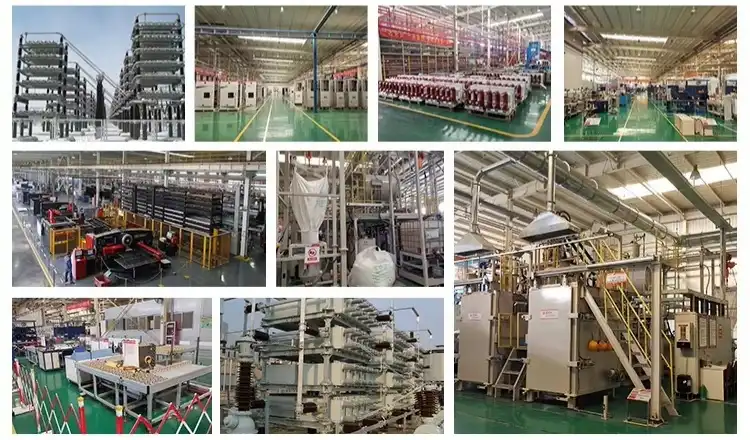
We at Xi'an Xikai make instrument transformers, dry-type transformers, vacuum circuit breakers, and high and low voltage switchgear, so we know how an indoor current transformer fits inside a cabinet. At heights of up to 4,000 meters, our plateau-type tools can work as needed. Our goods are used by State Grid systems and other power projects. Four things that OEM buyers usually worry about are core material, minimum order number, multi-winding customization, and shipping schedule. We talk with your technical team about ratios, secondary windings, dimensions, and core choice. Then we talk about samples, volumes, and lead times for each specification. The right core for you will rely on your accuracy and fault-current goals since silicon steel usually saturates at a higher flux density than microcrystalline metals.
Conclusion
The total secondary load, or indoor current transformer burden, determines how accurate the meters are and how reliable the protection is. There is a lot of load on the wire loop from meters, relays, terminals, test switches, and meters. The S = Is² × Z relationship explains why a 1 A secondary lowers cable losses. If there is too much load, the ratio error goes up and the core could become saturated. If the rating is too high, it can go outside the guaranteed range. A good specification is made by matching the accuracy class, rated burden, core count, and dimensions to the real circuit and then checking test documents. The best choice is not the highest VA number, but the plan that works with the circuit.
FAQ
1. How is indoor current transformer burden calculated?
The burden of an indoor current transformer is the overall load on the secondary circuit, including meters, relays, terminals, test switches and wire. It may be computed by S = Is2 * Z where S is burden in volt ampere, Is is secondary current and Z is total impedance.
2. What happens when an indoor current transformer burden exceeds its rated value?
If the actual load is more than the rated amount, the ratio error and the phase displacement may grow, and the core may saturate during a fault. This might generate incorrect meter readings and may impact the signal received by protective relays.
3. How do you select the right burden for an indoor current transformer?
First compute the real secondary load including linked equipment, cable length, conductor size and operating circumstances. Then choose a standard rated load that gives a suitable margin and matches the accuracy class, secondary current, core count and protection requirements.
Contact Xi'an Xikai for Your Indoor Current Transformer Quotation
Builders and dealers of switchgear who are looking for a maker of indoor current transformers are welcome to contact Xi'an Xikai. To order, email serina@xaxd-electric.com, amber@xaxd-electric.com, or luna@xaxd-electric.com with your rated voltage, ratio, accuracy class, load, secondary current, core number, and order volume. OEM specifications are met by our custom designs and State Grid project experience. To find out more, go to xaxd-electric.com.
References
1. IEC 61869-2: Instrument Transformers – Additional Requirements for Current Transformers, 2012
2. IEC 61869-1: Instrument Transformers – General Requirements, 2007
3. IEEE C57.13: Standard Requirements for Instrument Transformers, 2016
4. GB 20840.2: Instrument Transformers – Additional Requirements for Current Transformers, 2014
5. IEEE C37.110: Guide for the Application of Current Transformers Used for Protective Relaying Purposes, 2007
6. Protective Relaying: Principles and Applications (Blackburn and Domin), 2014