
Dry-type Iron Core Reactor Performance: Noise, Heat and Insulation Compared
2026-11-20 17:14:42
When you look at noise, heat, and insulation all at once, a dry-type iron core reactor works best. Core magnetostriction and loose parts are the main sources of noise, so it's important to have tight clamping and segmented air gaps. Heat comes from the core, the windings, and harmonic losses. The service life depends on how fast the temperature rises and how the heat is cooled. Insulation needs to be able to handle changes in temperature, voltage, and moisture. An epoxy-cast coil made of Class F materials meets this need. You can pick a dry-type iron core reactor that stays safe, cool, and quiet for years of capacitor and filter work by comparing all three in the same test conditions.
People who build capacitor and filter cabinets should read this guide, which I wrote for technical directors and purchasing managers. This article explains the three parts of a dry-type iron core reactor's performance and how they work together. It also talks about other types of reactors and what information you should send before you ask for a quote. This information about products comes from Xi'an Xikai's CKSC series.
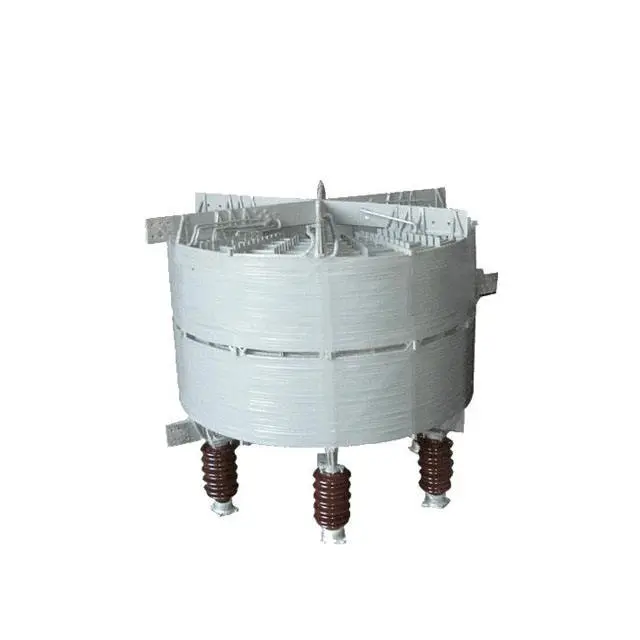
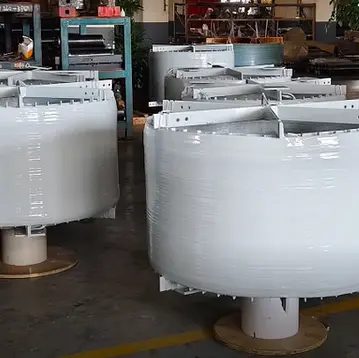
Dry-Type Iron Core Reactor Construction and Working Principle
What the Term Means
A dry-type iron core reactor is made up of coils wound around a core made of laminated silicon steel. For cooling and dielectric strength, air and solid insulation are used instead of oil. The phrase "line reactor" is not the same. That's not what it's called; it's a job, like keeping a drive safe on the AC input. An iron core or an air core can be used in a line reactor. When you compare quotes, it helps to keep "line reactor" and "dry-type iron core reactor" separate, since suppliers use these terms in a broad way. Write down the confirmation of the construction.
Core, Coil, and Air Gaps
In a dry-type iron core reactor, the magnetic flux moves through the core, and pieced-together air gaps keep the inductance constant as the current rises. Eddy current loss can also be cut down by dividing the flux into even segments. With glass fiber added for strength, the CKSC coil is vacuum-cast in epoxy resin, cured at high temperature, and then cooled. Hardware clamps the core and coil together so that they form a rigid unit. The whole thing is put together with terminals, sensors, and enclosures. Each part affects either sound or heat.
How Reactance Links to Performance
The reactor has inductive reactance, X_L = 2πfL, when alternating current flows through the winding. That reactance lowers the inrush current, moves the branch's resonance point, and soaks up harmonics. Noise and core loss get worse as flux density goes up. When air gap control is bad, inductance moves away from the target. When impregnation is weak, it leaves gaps that allow partial discharge to happen. Because of this, every result in the next section is shaped by how well the design and production were done. To find out whether your system works at 50 Hz or 60 Hz, you should tell your supplier.
Noise, Heat, and Insulation Performance Compared
Noise: Sources and Measurement
The first sound that you hear in a dry-type iron core reactor is magnetostriction. Core steel stretches and shrinks when it is exposed to alternating flux. It also makes a hum at twice the supply frequency, which is 100 Hz for 50 Hz systems and 120 Hz for 60 Hz systems. Moving windings, harmonic current, air gaps, and loose clamps all make it worse, and forced-air fans make it worse still. For example, IEC 60076-10 says that you should ask each supplier for sound data that lists the test distance, load, cooling mode, and method. You can't compare numbers that don't meet those conditions. A segmented air-gap design and high-temperature adhesives are used in the CKSC series to keep noise below 75 dB.
Heat: Losses and Cooling
There are four types of heat that can come from a dry-type iron core reactor: core loss, winding loss, and stray loss. More harmonic currents are added because skin and proximity effects make the conductor less resistant to higher frequencies. For harmonic RMS current as well as fundamental current, the reactor should be the right size. Natural air cooling (AN) doesn't need extra power and doesn't make noise from fans. With forced air cooling (AF), you can fit more in a smaller space, but you have to take care of the fans more often. Both choices are in the CKSC series. Its low-temperature-rise design keeps it below 95°C, and compared to other models, it has 30% less core losses. Check the temperature, altitude, and ventilation of the area as well.
Insulation: Strength, Class, and Environment
The insulation in a dry-type iron core reactor needs to be able to handle the rated voltage, switching overvoltages, thermal cycling, moisture, and dust. The temperature rise and the thermal class are not the same thing. IEC 60085 says that Class F (155°C) and Class H (180°C) are the highest temperatures that the material can handle. Temperature rise tells us what the reactor actually reaches. As a general rule, insulation life cuts in half for every 10°C above its rating that it stays above. When epoxy resin is vacuum cast into the CKSC coil, it resists moisture well, has a high mechanical strength, and doesn't crack when it gets hot or cold, and the partial discharge is less than 5 pC. Get reports on the temperature rise, partial discharge, dielectric, insulation resistance, and winding resistance.
How a Dry-Type Iron Core Reactor Compares with Other Reactor Types
Versus Air Core Reactors
As there is no iron in an air core reactor, its inductance stays linear at all currents. This means that it doesn't have any core magnetostriction noise. The price is a strong stray magnetic field that heats up metal nearby and needs a lot of space around it. Most of the time, these units are left outside on open racks. A dry-type iron core reactor keeps the flux inside the core, which lets it take up less space and be installed inside metal cabinets for switchgear. Check the range of lines, though. At high fault current, an iron core can get full, and the impedance drops.
Versus Oil-Immersed Reactors
With a lot of power, oil-immersed reactors are a good way to move heat, but they need to be handled with care and require containment pits, leak checks, and fire planning. A dry-type iron core reactor gets rid of the oil, which lowers the risk of leaks and soil contamination and makes it easier to get indoor substations approved. Visual checks, dust removal, and connection torque checks are all that's left for maintenance. If the voltage is very high, oil units are still a good choice. Choose the type based on your voltage and the rules of the site, not on what you usually do.
Where Line Reactors Fit
A quote for a "line reactor" should still list the type of construction, rating, and insulation class, even though the word "line reactor" does not describe a function. In a drive, the AC line reactor evens out the input current and lowers the number of harmonics. A series reactor in a capacitor bank stops the branch from becoming too resonance and limits the inrush current. 5.67%, 7%, and 14% are all common detuning ratios. Either a dry-type iron core reactor or an air core reactor can do the job. The iron core works best in small spaces. For the CKSC series, filter reactors are linked in series with capacitors. The 3rd, 5th, 7th, 11th, and 13th harmonics are absorbed depending on the conditions at the site.
CKSC Dry-Type Iron Core Series Reactor: Performance in Practice
Coil and Construction Features
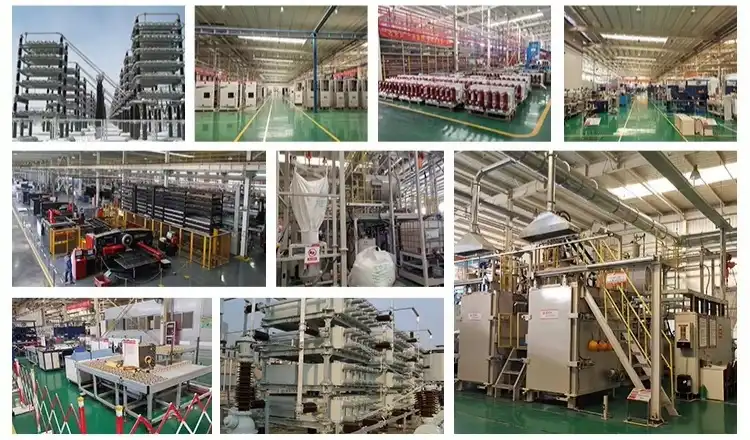
The CKSC series is a dry type iron core reactor. It is a flame-retardant epoxy coil, vacuum cast, high temperature cured and glass fibre reinforced. That construction can carry a heavy current, cracking from heat and cold, humidity, dust and chemical damage. The Xi’an Xikai manufacture each unit using Class F insulators and annealed silicon steel. The units are then wrapped and cured automatically at 160°C for 48 h. The final reactor is subjected to a 12-step inspection procedure, including impulse and temperature-rise tests.
Customization for Cabinet Builders
Panel builders may require non-standard voltages, highly restricted dimensions, or a specific arrangement for the outlets. We may alter the voltage rating, the cooling mechanism (AN or AF), and the size of the CKSC series. There are little ones for tight cupboards, and heated ones for desert areas. Xi'an Xikai plateau-type equipment is suitable for altitude of 4,000 meters, therefore tell us your site altitude. include your target for tolerance of the inductance, say ±3%. Also include your desired outlet location and your batch size, even if you just require 20 units. Our engineers will look at the request and ensure it matches the design.
Applications and Track Record
Industrial facilities use capacitors in parallel with the series to mitigate power factor penalties. Substations utilise it to hold the voltage against harmonics and the intermittent output of renewable inverters. Filter cabinets absorb harmonics from rectifiers and frequency converters. Xi’an Xikai backs the series with more than 30 patents for noise reduction and thermal management, more than 500 installations in 20 countries and help for setting up and repairing issues 24 hours a day, seven days a week. We also work on State Grid projects and with professionals in steel, petrochemical, rail and renewable energy on our broader switchgear and transformer lines.
Selecting and Verifying a Dry-Type Iron Core Reactor
Build a Complete Specification
Before you ask for a price on a dry type iron core reactor you need to indicate what it will be used for. Detuning capacitors, protecting drives, filtering harmonics, limiting current. Write later voltage, current, frequency, phase arrangement, inductance or impedance, harmonic spectrum, temperature increase limit, noise limit, insulation level, size, quantity and where the signal is going. Impedance. X = V/I. In three-phase systems V is the phase voltage. Z% = (reactor voltage drop ÷ system voltage) x 100. Write down the voltage basis just to be safe . Think about temperature and resonance and saturation and tolerance. Verify harmonic limitations using IEEE 519 if the project is in the US.
Avoid Common Mistakes
The majority of problems originate with inadequate data, not production faults. People pick solely for the price, the size or the basic current. They also take noise statistics without testing them or they choose an insulating class without evaluating the humidity, altitude or condensation. A cheaper reactor may run hotter and wear out quicker and require more downtime than it saves. Compare the quotations in the same manner. This includes fans, sensors, casings, connectors, schematics, test results and packing.
Verify Before Shipment and After Arrival
Check the winding resistance, inductance, insulation resistance, dielectric withstand, temperature-rise evidence, noise data, nameplates, and terminals before sending the item. Find out how the core and coil are held in place during transport, as movement during transport can cause noise later on. Before turning it on, check the site for damage from transport, moisture, loose parts, grounding, and air flow. Keep an eye on the current, temperature, vibration, and noise during the first operation. After that, use thermal imaging, check for dust, and check the torque. Also, look over the harmonics after any changes to the system. To back up these checks, ask Xi'an Xikai for test documents and drawings.
Conclusion
You should look at noise, heat, and insulation all at the same time when judging a dry-type iron core reactor. Noise comes from magnetostriction, air-gap design, clamping, and harmonics, and it's important to know the test conditions before comparing them. Losses in the winding, core, and harmonics all cause heat. The temperature rise and service life are determined by the cooling mode, the ambient conditions, and the harmonic RMS current. Insulation depends on the type of material, the quality of the casting, and the environment. Temperature rise and thermal class must not be mixed up. The iron core type has a smaller footprint and no oil risk compared to the air core and oil-immersed designs, but its linear range needs to be checked. With a full specification, an equal quote scope, and written confirmation, these factors make for a reliable choice.
FAQ
1. How loud is a dry-type iron core reactor?
Noise is different for each rating, load, test method, and flux density. The CKSC series doesn't get louder than 75 dB. Ask about the test distance and weather before you compare the numbers.
2. Why can a dry-type iron core reactor overheat in a harmonic-rich system?
Harmonic currents cause more winding loss through skin and nearby effects. Be sure to size the reactor for harmonic RMS current, not just fundamental current, and check that it cools down and the temperature rises.
3. What information do I send for a quote?
You can send tolerance, harmonic data, noise limit, insulation class, cooling mode, dimensions, quantity, and the destination along with voltage, current, frequency, inductance, or impedance.
Request a Dry-Type Iron Core Reactor Quote from Xi'an Xikai
Send Xi'an Xikai your voltage, current, frequency, inductance tolerance, noise limit, and quantity. They make dry-type iron core reactors and have more than 30 patents. You can change the voltage, cooling, and dimensions. Our engineers will look over your needs and get back to you with a datasheet and lead time. For more information, email serina@xaxd-electric.com, amber@xaxd-electric.com, or luna@xaxd-electric.com.
References
1. IEC 60076-6: Power Transformers – Part 6: Reactors, 2007
2. IEEE Std 519: IEEE Standard for Harmonic Control in Electric Power Systems, 2022
3. IEC 60076-10: Power Transformers – Part 10: Determination of Sound Levels, 2016
4. IEC 60085: Electrical Insulation – Thermal Evaluation and Designation, 2007
5. IEC 60270: High-Voltage Test Techniques – Partial Discharge Measurements, 2000
6. IEEE Std C57.16: Requirements, Terminology, and Test Code for Dry-Type Air-Core Series-Connected Reactors, 2011