
Indoor Current Transformer: Epoxy Resin Casting and Insulation Benefits
2026-11-23 17:27:23
An indoor current transformer lowers a main current that is very high to a standard 5 A or 1 A signal that meters and safety relays can use. An insulation body made of epoxy resin is wrapped around the core and windings. That body makes the dielectric stronger, keeps out dust and moisture, and protects the windings from stress and vibration. For people who build switchgear, the result is a small part that is accurate and doesn't need much maintenance. It tells you how casting works, what the insulation does, and how to choose and buy the right unit for your panels.
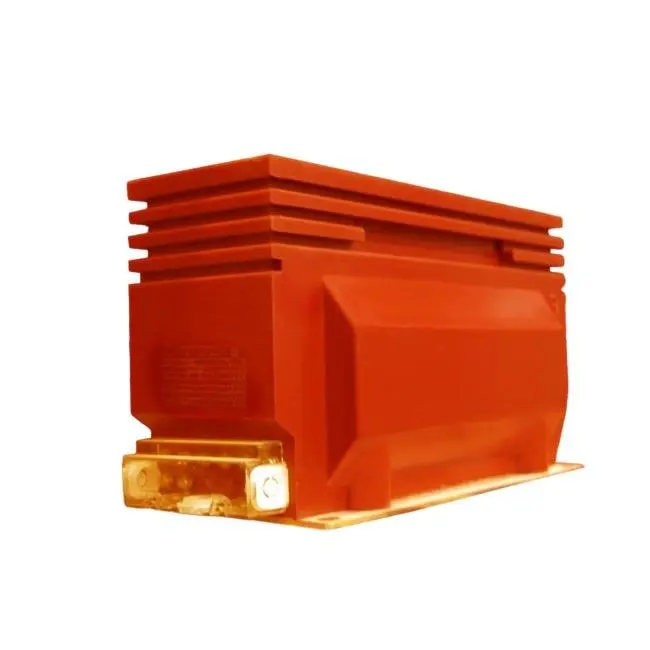
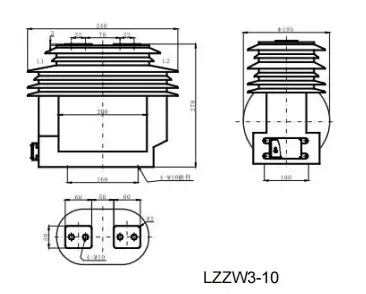
How an Indoor Current Transformer and Epoxy Casting Work Together?
What an Indoor Current Transformer Does in Switchgear?
An indoor current transformer has a magnetic core, a main wire, and a backup winding. The primary current makes a magnetic flux in the core, and that flux causes the secondary winding to have a proportional current. This small signal is read by meters, monitoring tools, and safety relays instead of the full line current. There are a lot of secondary ratings of 5 A and 1 A. These are the parts that are in medium-voltage switchgear, substations, breaker panels, and cabinets that measure energy use. Keep the secondary circuit closed or shorted whenever the primary current flows. This is a rule that never changes. A secondary that is not closed can build up dangerously high voltage and damage the insulation.
Common Indoor Current Transformer Designs: Ring, Window, Bar-Primary, and Multi-Core
Inside units come in different styles. Some, like the ring and window types, fit over a cable or bus bar. Fixed ratings can be used with bar-primary types because they have a conductor built in. When the current ratio is low, wound-primary types add primary turns. You can also order builds with more than one ratio or core, so one core can be used for monitoring and another for security. Measuring cores work best when they are close to normal load. When fault current goes up, protection cores must keep an output that can be used. Solid-core epoxy units tend to give better accuracy and mechanical strength, so OEM panel builders tend to specify them. Split-core designs make retrofits easier. Ring talks about shape, not insulation, so make sure that the mounting points and aperture match up with the drawings of your cabinet.
How Epoxy Resin Casting Builds the Insulation Body?
There is a set order to casting. Technicians get the core and windings ready, dry them under a vacuum, mix the resin and hardener, get rid of the air in the mixture, and carefully pour the mixture into the mold. The liquid then turns into a solid thermoset body when it cures. Each unit goes through an electrical inspection after it has been finished and taken out of the mold. Lack of curing, cracks, moisture, or voids can lower the dielectric strength and increase the risk of partial discharge, so it's important to keep an eye on the process. A good maker keeps track of the final dimensions, vacuum level, curing temperature, resin ratio, and viscosity. In contrast to air-insulated construction, a cast body holds the winding in place mechanically and keeps humidity away from it. Our 24 kV indoor current transformer is made of epoxy resin cast and is completely enclosed.
Key Insulation Benefits of Epoxy Resin-Cast Indoor Current Transformers
Dielectric Strength and Low Partial Discharge
A small spark of electricity inside insulation is called a partial discharge. Over time, it wears away the material. Most of the time, air gaps and voids are where things start. The space around the windings is filled with a cast epoxy body, so there aren't many gaps. That meets the levels set in the IEC 61869 series for power-frequency and impulse withstand. One of the specs for our 24 kV indoor current transformer says that the partial discharge is less than 10 pC at 24 kV. It tells you how to measure this apparent charge in IEC 60270. Low readings mean that the casting is dense and well-cured. Still, I tell buyers to ask for routine test reports for every batch because numbers on a data sheet are not the same as measured results.
Moisture, Dust, and Mechanical Protection
Rooms inside don't always stay clean and dry. Changes in humidity, dust, and condensation can make conductive paths through insulation that is left out in the open. A sealed epoxy body stops those paths and makes cleaning less necessary. The resin also holds the core and windings in place, which makes them better able to handle shocks, vibrations, changes in temperature, and short-circuit forces. From -40°C to +70°C, our data shows that it can handle a short-circuit of 25 kA for 3 s. The fully enclosed design keeps out dust, water, and corrosion, making it good for places near the coast or inside that are dirty. Since busbars and breakers add heat to the enclosure, compare the temperature range to how it really is inside the cabinet.
What Epoxy Casting Cannot Fix
Epoxy makes insulation better, but it can't fix a bad choice. Failures or errors can still be caused by an incorrect ratio, too much load, inadequate insulation, bad secondary wiring, too much voltage, or damage during installation. If the load is too much for an indoor current transformer, even one with perfect casting, it can saturate. Since resin grades vary from supplier to supplier, you should also look at how the fire behaves. Before giving your approval, ask for certificates of materials and the maker's quality control process. I think of casting as one part of making sure that the CT, relay, meter, wiring, and switchgear all work together well. With that point of view, most field complaints can be avoided, and acceptance tests can stay focused on the right parameters.
24kV Indoor Current Transformer Specifications and Selection
Core Data for the 24 kV Model
This is what our 24 kV indoor current transformer's data sheet says. At 50/60 Hz, the voltage is 24 kV. The primary current can be anywhere from 20 A to 3150 A, and the secondary current can be either 5 A or 1 A. The levels of accuracy are 0.2 and 0.5. IEC 61869-1, IEC 61869-2, and GB 20840.2-2014 were used to build the body, which is made of epoxy resin and is completely sealed. This electromagnetic design is very accurate, has a lot of power, and works reliably. High-quality silicon steel and copper windings are used as materials, and the quality system is ISO 9001 certified. Switchgear panels, substations, industrial plants, and commercial buildings like malls and hospitals are all places where it can be used.
Accuracy Class, Burden, and Core Material
If you want to meter an indoor current transformer, you need to begin by taking the lesson. There are IEC metering classes of 0.1, 0.2, 0.2S, 0.5 and 0.5S. There are three categories of protection, 5P, 10P and PX. We have classes 0.2 and 0.5 on our list. Just provide us the details on what you require (0.2S, 5P or 10P cores) and our engineers will check it. The secondary load consists of the relay, meter, connectors and lead wire. Do not run the CT over its rated power. This will prevent the CT from growing too hot or drifting. The core material is crucial as well. Silicon steel is widely used and handles strong currents well. Microcrystalline cores offer better permeability , which may aid with accuracy at low currents . Our typical unit is built of silicon steel. If you are in the U.S. and you utilise IEEE C57.13 classes such as 0.3 and 0.6, be careful to translate them to IEC classes before you place your purchase.
Matching the Unit to Your Switchgear Cabinet
Start with the electric match and then check to see if it fits. List the voltage, frequency, load current, fault current, and whether the CT is used for protection, metering, or both. Then, compare your cabinet drawings to make sure the aperture, mounting holes, terminal positions, phase spacing, insulation clearances, and polarity are correct. Indoor models work well in switchgear rooms that are kept safe, while outdoor models need to be built to withstand the weather. Two-ratio outputs or compact dimensions can be talked about if space is limited. Before approving, you should ask for dimensional drawings, test records, standards, and English documentation. A ratio that looks good on paper might not work with the space for the busbar inside the panel.
Installation, Testing, and Maintenance for Indoor Current Transformers
Safe Installation and Wiring
Before you connect any indoor current transformer, you need to turn off the power to the circuit, separate it, lock it out, and make sure it is dead. The job should only be done by qualified people. Check the marks for polarity (P1, P2, S1, S2) before you connect. Check the cable routing, conductor size, and how tight the terminals are. Connect each secondary to the right metering or protection core, and on your site, ground the secondary circuit at one point. Never leave a secondary open while the main current is running through it. Before turning it on, I think you should have someone else check the wiring against the drawing. This is because polarity mistakes often show up as incorrect power readings or relays that don't work right.
Routine and Commissioning Tests
Visual inspection, insulation resistance, power-frequency withstand, ratio, polarity, winding resistance, excitation, accuracy, burden, and partial discharge are some of the tests that are usually done on an indoor current transformer. IEC 61869-1 covers general requirements for current transformers, and IEC 61869-2 adds to those. For OEM batches, you should ask for routine test reports that are matched to each serial number. For new designs, you should ask for type-test documents. When you get there, a quick ratio and polarity check finds transport damage right away. When you turn on the unit, check the insulation, polarity, and ratio again after putting it in the cabinet. Those readings will be your starting point for later comparisons.
In-Service Inspection and Records
After service, check the epoxy surface for cracks, spots, and tracking marks. Look for heat marks on the terminals and make sure the grounding stays tight. Keep an eye out for measurement drift and strange relay behavior, as both can mean that the ratio has changed, there is a loose joint, or the load is too high. Follow your site's rules and schedule checks for insulation and ratios during planned outages. For each inspection, keep records with dates, and compare the new readings to the baseline from when the system was first turned on. Good records also help you find a problem in a certain batch, which speeds up and improves the supplier review process.
Supplier Evaluation and Procurement for Indoor Current Transformers
What to Check in an Indoor Current Transformer Manufacturer
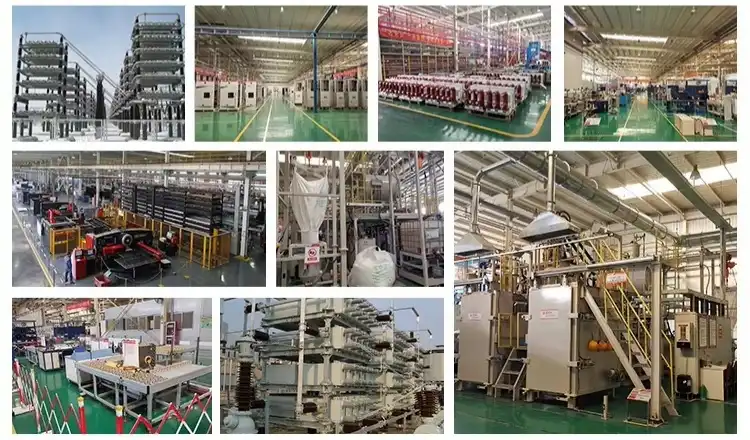
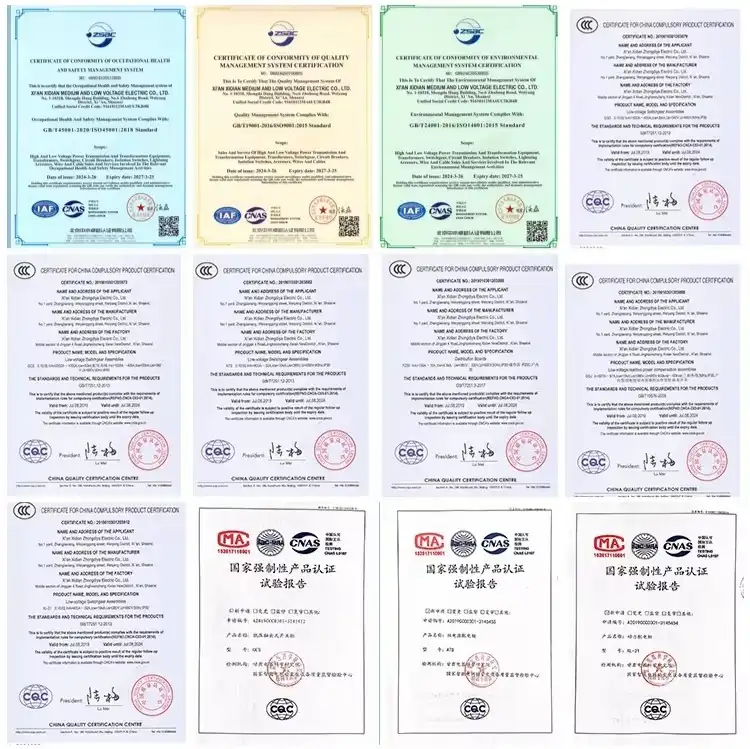
Price doesn't tell the whole story. You should look at how much experience the maker has with medium-voltage CTs, integrating switchgear, casting epoxy, curing, electrical testing, and keeping track of batches. Ask for proof of quality management, records of IEC compliance, records of routine and type tests, records of materials, wiring diagrams, and English manuals. Xi'an Xikai is a place where medium and low-voltage electrical equipment is made. It has 7 product categories, 34 series, and more than 100 variants, such as instrument transformers. Our goods are used by State Grid systems, steel and metallurgy, petrochemicals, rail transportation, and projects that use renewable energy. The 24 kV CT was created as part of China's National 863 Program and has more than 15 patents.
Writing a Clear Request for Quotation
Emails can be cut down by making the request for quotes for an indoor current transformer clear. It's important to include the primary and secondary ratings, as well as the load, rated voltage, insulation level, frequency, thermal and short-circuit withstand, core quantity, mounting details, order quantity, destination, certificates, and delivery dates. You should only compare prices when the products are technically the same. The price should cover things like testing, certificates, customization, shipping, packaging, and help after the sale. If a unit fails acceptance testing or needs to be redesigned to fit the cabinet, the low unit cost could go away. I tell people to look at the whole lifecycle value instead of just the first number on a quote.
Samples, MOQ, and Delivery Rhythm for Annual Supply
A lot of panel builders buy an indoor current transformer through a 12-month agreement to buy them every year. A sample stage is usually needed before new multi-winding specifications can be made. Before you make a decision, write down the steps for first-article approval, batch consistency checks, inspection points, Incoterms, payment terms, documents, and spare units. How does the lead time fit into your cabinet production schedule? Find out what the minimum order quantity is for custom windings. For U.S. projects, talk to the authority in charge early on, as some installations need to be listed by a third party or evaluated in the field. Our team goes over custom ratios, cores, and dimensions with your technical and purchasing staff. They also talk about sample and delivery plans with them.
Conclusion
An indoor current transformer converts a large current on the main into a safe 5 A or 1 A signal. The body is created by casting epoxy resin, making it sturdy and resistant to partial discharge, moisture, dust, vibration and short-circuit stress. To realise these advantages the process has to be regulated and the proper decision made. The meter, relay and switchgear should be matched in ratio, accuracy class, load, core material and cabinet fit. This model 24 kV primary current range 20 A to 3150 A secondary current range 5 A or 1 A accuracy range 0.2 to 0.5 to fulfil the criteria of IEC 61869 and GB 20840.2-2014. “Safe wiring, regular testing, inspections and clear records keep performance consistent over time.” With a thorough quote request and structured supplier analysis OEMs can purchase more correctly.
FAQ
1. What is an indoor current transformer used for?
It reduces the high primary current to 5 A or 1 A so that meters and protective relays may safely check for faults and monitor load. The second grade is selected depending on the linked equipment. They are often used in medium voltage switchgear, substations, industrial facilities and commercial structures.
2. Why choose epoxy resin casting for an indoor current transformer?
Cast epoxy makes a solid body for the insulation that doesn't let water or dust in and keeps the windings in place against vibration and short-circuit force. Choice is still important because it can't fix a bad ratio or an unfair burden.
3. Can you supply custom ratios or compact sizes?
We offer dual-ratio outputs and small sizes for cabinets with limited space. Our engineers also look at requests for other windings on an individual basis. To begin, send your drawing, ratio, class, and load. The sample must first be approved.
4. Which tests should I request before shipment?
You should get regular reports that cover things like ratio, polarity, accuracy, insulation resistance, and partial discharge. Ask for type-test documents and material records for a new design as well. Each report should be matched to a unique number.
Request an Indoor Current Transformer Quotation from Xi'an Xikai
Send your voltage, primary and secondary current, accuracy class, load, dimensions, quantity, and destination to Xi'an Xikai. They make indoor current transformer with more than 15 patents for their epoxy cast designs, including the 24 kV model. Our equipment for working on plateaus can also be used up to 4,000 meters above sea level. Review is faster when there are drawings or existing model numbers. For more information, email serina@xaxd-electric.com, amber@xaxd-electric.com, or luna@xaxd-electric.com, or go to xaxd-electric.com.
References
1. IEC 61869-2 Instrument Transformers – Part 2: Additional Requirements for Current Transformers, 2012.
2. IEC 61869-1 Instrument Transformers – Part 1: General Requirements, 2007.
3. GB 20840.2 Instrument Transformers – Part 2: Additional Requirements for Current Transformers, 2014.
4. IEEE Std C57.13 Standard Requirements for Instrument Transformers, 2016.
5. IEC 60270 High-voltage Test Techniques – Partial Discharge Measurements, 2000.
6. Protective Relaying: Principles and Applications (Blackburn and Domin), 2014.
