-square BKMJ_1758505876091.webp)
50KVAR Self-healing Capacitor for PFC(Power factor correction)-square BKMJ
Filter Capacitor Guide: Working, Calculation, and Failure Signs
2026-04-16 16:10:21
A Single-Phase Filter Capacitor is your first line of defense when electrical noise stops your production line or voltage changes put your data center's uptime at risk. In industrial and commercial electrical systems, these specialized parts even out voltage fluctuations, stop electromagnetic interference, and keep the power quality stable. Facility managers and engineers can protect important equipment, cut down on wasted energy, and avoid costly downtime by learning how filter capacitors work, how to figure out the right specifications, and how to spot impending failures. This complete guide tells procurement teams everything they need to know to choose, set up, and maintain these important power quality devices.
Understanding Single-Phase Filter Capacitors
Role of Single-Phase Filter Capacitors in Power Quality Systems
Single-Phase Filter Capacitor units are essential parts of modern electrical infrastructures. They deal with problems with power quality that make equipment less reliable. Unlike regular starting capacitors, which are only used for a short time when a motor starts up, these parts work all the time, making low-impedance paths for high-frequency noise and storing electricity to bridge gaps in rectified AC waveforms.
Real-World Harmonic Issues and Industrial Applications
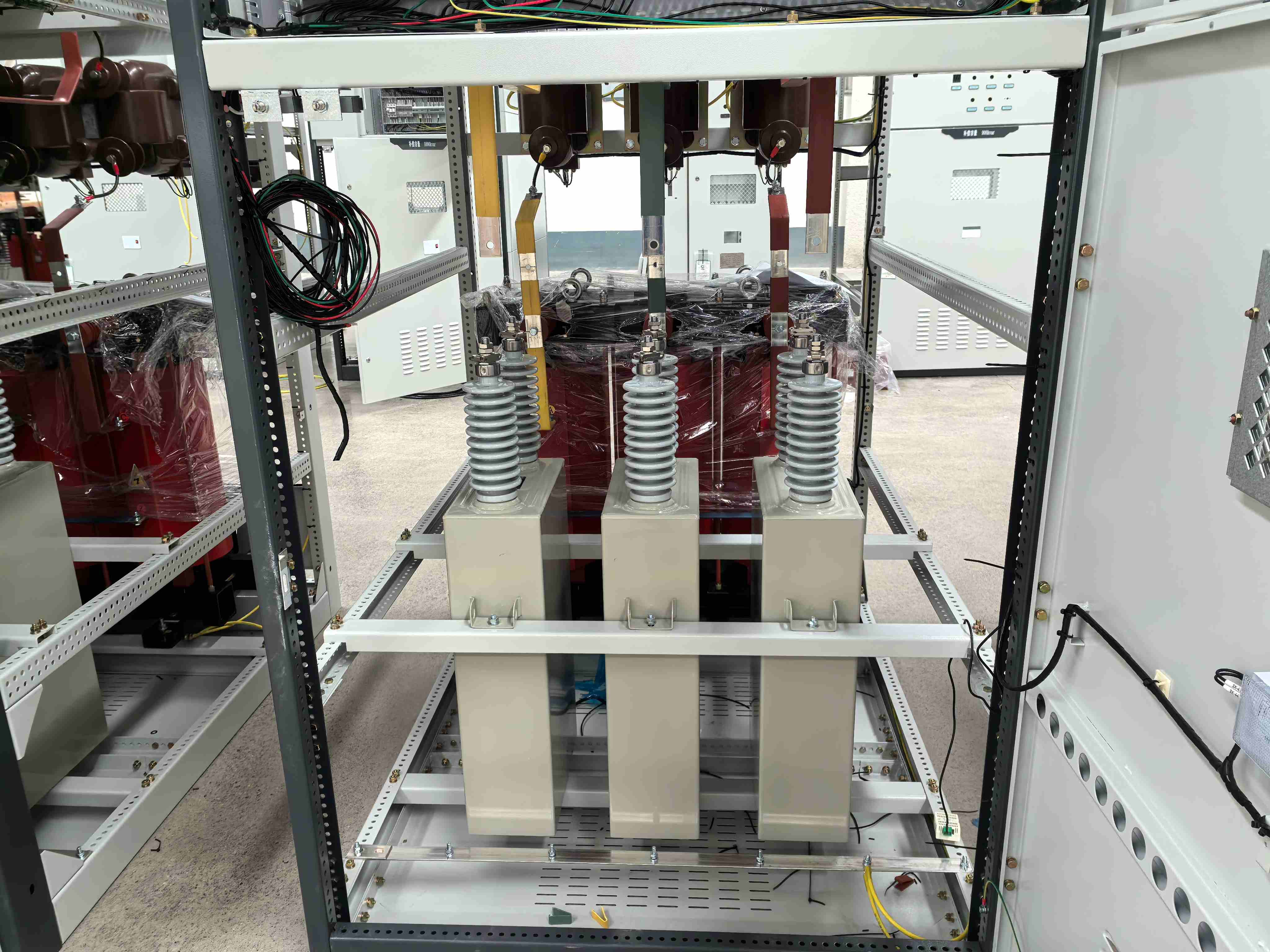
At Xi'an Xikai, we've seen how harmonic distortion in single-phase circuits causes neutral conductors to get too hot and inverter performance to drop in factories. These problems are fixed in the real world by our high-voltage filter capacitors, which use new materials and tried-and-true circuit designs.
Operating Principles and Electrical Performance Characteristics
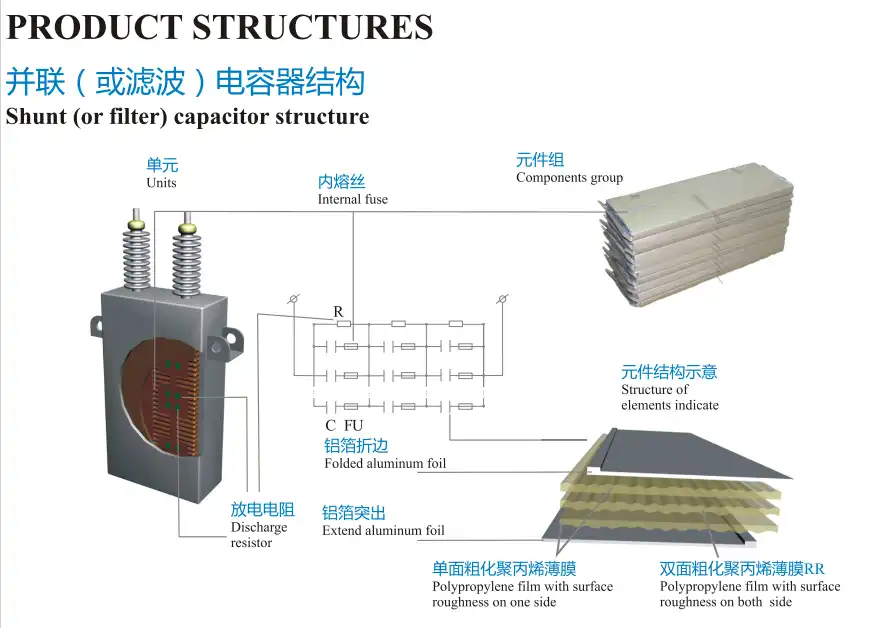
The Single-Phase Filter Capacitor operates by lowering impedance as frequency increases, diverting high-frequency noise while allowing normal power flow. Using MKP dielectric, low ESR reduces heating and low ESL suppresses switching noise, ensuring stable performance in rectification and power conversion systems.
Key Specifications and Material Selection Trade-offs
Key specifications include voltage rating, capacitance, tolerance, and temperature stability. Proper voltage margins handle transients, while capacitance determines ripple smoothing effectiveness. Tight tolerances and stable temperature coefficients ensure consistent filtering performance across varying industrial environments and operating conditions.
Film capacitors offer long life, self-healing, and high stability, making them ideal for industrial use. Electrolytic types provide compact size but shorter lifespan and higher losses. Ceramic capacitors excel in high-frequency noise suppression but lack precision for bulk filtering applications.
Calculation Methods and Design Considerations
To correctly size Single-Phase Filter Capacitor units, you need to know both the theoretical formulas and the limitations of the real-world application. Too small of capacitors don't filter well enough, and too big of units waste money and enclosure space. This part gives engineers frameworks for calculations that they can change to fit the needs of their system.
Fundamental Capacitance Calculations
The amount of capacitance needed for ripple filtering in single-phase rectifier circuits depends on the frequency, load current, and acceptable ripple voltage. The basic formula C = I / (2 × f × ΔV) gives you an idea of what the problem is. I is the load current in amps, f is the ripple frequency (usually 120 Hz for full-wave rectification in 60 Hz systems), and ΔV is the acceptable peak-to-peak ripple voltage.
Take a look at an industrial control system that is 5 kW, 480V, and has a 10A load current. To get a 5% ripple voltage (24V peak-to-peak), the math gives us C = 10 / (2 × 120 × 24), which is about 1,736 μF. Engineers would choose a 2,000 μF capacitor as a safety measure that takes into account the tolerances of the parts and the effects of age.
Depending on how much reactive power needs to be compensated, power factor correction applications need different calculations. C = Q / (2π × f × V²) tells us how much capacitance we need based on reactive power Q (in VAR), system frequency f, and voltage V. For example, a motor that needs 480V and 50 kVAR of reactive power needs C = 50,000 / (2π × 60 × 480²) or about 581 μF. Many times, several smaller capacitors are connected in parallel to get the total capacitance needed and make the system more reliable.
Voltage Rating Selection Strategy
It takes more than matching the nominal system voltage to choose the right voltage ratings. Overvoltages that happen quickly because of switching operations, lightning strikes, or capacitor bank energization can reach two to three times the normal operating voltage. As a general rule, voltage ratings should be at least 1.5 times the highest continuous operating voltage. For systems that experience a lot of transients, the margins should be even higher.
Our high-voltage filter capacitors have discharge resistors that safely release stored energy when the capacitor is disconnected. This protects workers and fixes problems with series-section overvoltage by making connections safer. This design factor comes from decades of experience in the field that have been turned into better products.
Optimal Placement and Circuit Integration
The physical placement has a big effect on how well filtering works. Putting capacitors close to noise sources lowers lead inductance, which hurts high-frequency filtering. Putting the capacitor between the motor terminals and the drive output is a better way to reduce harmonics in motor drive applications than mounting it far away.
Different uses call for different circuit configurations. To do simple filtering, connect simple shunt capacitors across power lines. When you put capacitors and series inductors together in an LC filter, you get sharper frequency cutoffs for demanding applications. When EMI compliance calls for strong noise suppression, Pi-filters and T-filters arrange many capacitors and inductors in a way that makes the attenuation even steeper.
Managing heat is often what makes or breaks theoretical designs in real life. Switchgear and control cabinets that are closed off trap heat, which speeds up the aging of capacitors. Providing enough air flow, heat sinking, or derating for parts that will be exposed to high temperatures greatly increases their service life. According to the Arrhenius Law, every 10°C drop in temperature doubles the expected lifespan. This is a strong reason to design with thermal awareness in mind.
These methods for figuring things out and design rules are what make filter capacitors work reliably. When engineers combine their theoretical knowledge with real-world experience, they make systems that work well for years without any problems.
Identifying Failure Signs and Maintenance Best Practices
Noticing that a Single-Phase Filter Capacitor is about to fail before something terrible happens saves time and keeps expensive equipment from getting damaged. Maintenance engineers who know how things break and how to inspect them can protect operations by replacing parts before they break instead of handling problems after they happen.
Early Warning Signs
Increasing electrical noise is one of the first signs that a capacitor is failing. As capacitor ESR rises and filtering efficiency drops, equipment that used to work quietly starts making humming or buzzing sounds that can be heard. Control panels that show electromagnetic interference, like sensor readings that aren't lining up, communication problems, or controller resets that you can't explain, often have filter capacitors that are failing and can't stop conducted noise.
Voltage measurements show that performance is getting worse before it fails completely. When the ripple voltage amplitude is 20–30% higher than what was originally planned, it means that either the capacitance is decreasing or the ESR is increasing. DC bus voltage drooping under load means that there isn't enough space to store energy. These electrical signs let replacements happen during planned maintenance instead of having to be done in an emergency.
Physical symptoms make it clear that the electricity is getting weaker. Cases that are bulging or swelling mean that there is extra pressure inside the body because of electrolyte breakdown or gas production. Discoloration, especially browning or blackening near the terminals, is a sign of too much heating from a high ESR. Leaking capacitors, which can be seen as crystalline deposits, oily residue, or corrosion on nearby parts, need to be replaced right away to avoid more problems.
Inspection Methods and Diagnostic Tools
During regular maintenance, visual checks find many problems before they become electrical problems. Technicians should check capacitors for deformation of the case, corrosion of the terminals, and damage to the mounting. When mounting hardware is too loose, it causes too much vibration, which speeds up the failure of internal connections. When dust builds up on the surfaces of capacitors, it makes it harder for heat to escape, which raises operating temperatures and shortens their useful lives.
Electrical testing gives a numerical evaluation of the health of a capacitor. LCR meters are used to measure capacitance and find parts whose values have changed too much to be considered acceptable. Measurements of the dissipation factor (tan ²) show that the internal resistance is rising before the capacitance degradation gets really bad. Using megohmmeters to test insulation resistance shows dielectric breakdown, which could cause disastrous shorts.
Using thermal imaging during operation can find parts that are overheating that can't be seen with the naked eye. Infrared cameras show hot spots that mean the ESR is high or there isn't enough air flow. Components that are 20 to 30°C above room temperature in properly ventilated enclosures should be looked into and might need to be replaced during the next planned outage.
Root Cause Analysis
Overvoltage events are the main reason why capacitors fail before they should. Voltages much higher than the parts' design ratings can happen because of lightning strikes, switching transients, and harmonic resonance conditions. Single events can destroy dielectrics completely, but moderate overvoltages that happen over and over again cause damage that shows up as a loss of capacitance and an increase in ESR.
All chemical reactions inside capacitors are sped up by thermal stress. When used at the highest temperature, electrolytic types are especially vulnerable; their lifespan is only a fraction of what it is at moderate temperatures. Film capacitors can handle heat better, but they still age faster when ventilation isn't good enough or when temperatures outside of the design range happen.
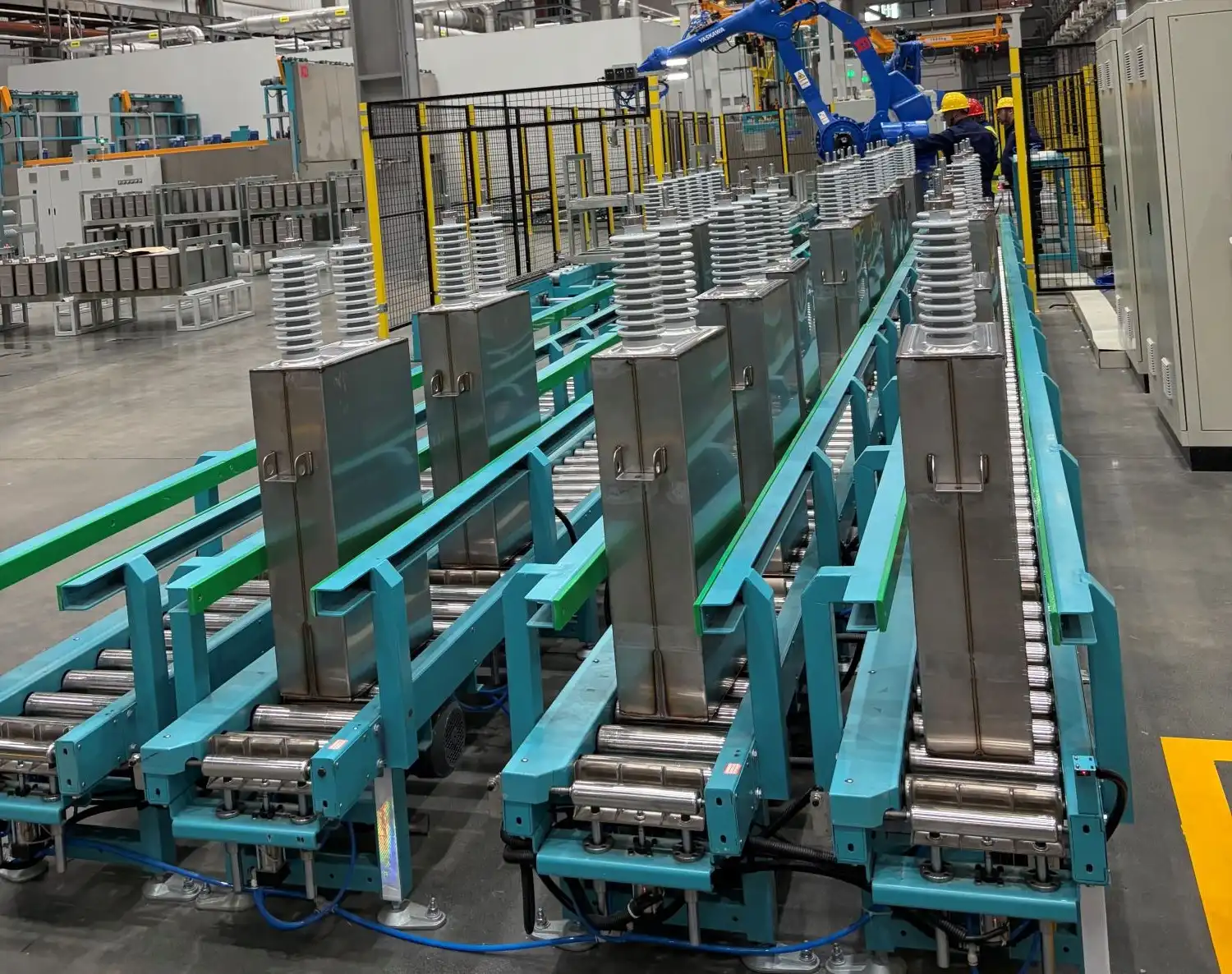
Even though they are tested very carefully, manufacturing defects sometimes get past quality control. Latent defects show up early in the service life because of contamination during production, incomplete impregnation of film capacitors, or metallization discontinuities. Manufacturers with a good reputation, like Xi'an Xikai, put their products through a lot of tests before sending them to customers. These tests include 72-hour load cycling, thermal shock trials, and impulse voltage tests.
Preventive Maintenance Protocols
Setting up regular inspection times based on what the manufacturer suggests and how the machine is being used can catch problems early. Important systems need to be visually checked every three months and electrically tested once a year. For less important applications, the time between checks may be pushed back to every six months or once a year, depending on how harsh the operating environment is and what happens if something goes wrong.
Recording baseline measurements during commissioning gives you a way to keep track of how degradation is changing over time. When you record the initial capacitance, dissipation factor, and insulation resistance, you can compare them in a meaningful way during future inspections. Trending data shows if parts break down faster than expected, which means that problems like poor cooling or too much voltage stress need to be looked into.
Environmental controls inside electrical enclosures keep parts from breaking down too quickly. Keeping the temperature below 40°C by using air conditioning or proper ventilation greatly increases the life of capacitors. Controlling humidity stops corrosion and dielectric tracking caused by condensation. Putting surge protectors upstream reduces short-term overvoltages that would otherwise shorten the life of capacitors.
With these diagnostic methods and maintenance routines, capacitor management goes from being a reactive firefighting to a proactive asset preservation. When companies use systematic programs, they save a lot of money because parts last longer and there is no unplanned downtime.
Comparative Analysis and Procurement Guide
Procurement decisions involve balancing technical needs, budget limits, and supply chain issues. This part gives purchasing managers frameworks for comparing options and picking the best solutions for certain uses. This guide is mostly about Single-Phase Filter Capacitor technology, but knowing when three-phase solutions are better will help you avoid making mistakes in your specifications.
Single-Phase Versus Three-Phase Considerations
Single-Phase Filter Capacitor units suit small systems and line-to-neutral loads, while three-phase solutions balance reactive power across phases. In large industrial environments with heavy motor loads, three-phase capacitor banks provide better efficiency, voltage balance, and overall system performance.
Material Technology Trade-offs
Film capacitors offer high reliability, long life, and stable performance, making them ideal for critical applications despite higher cost. Electrolytic types are compact and economical but less durable. Ceramic capacitors excel in high-frequency filtering but are unsuitable for large-scale energy storage.
Sourcing Strategy and Evaluation of Suppliers
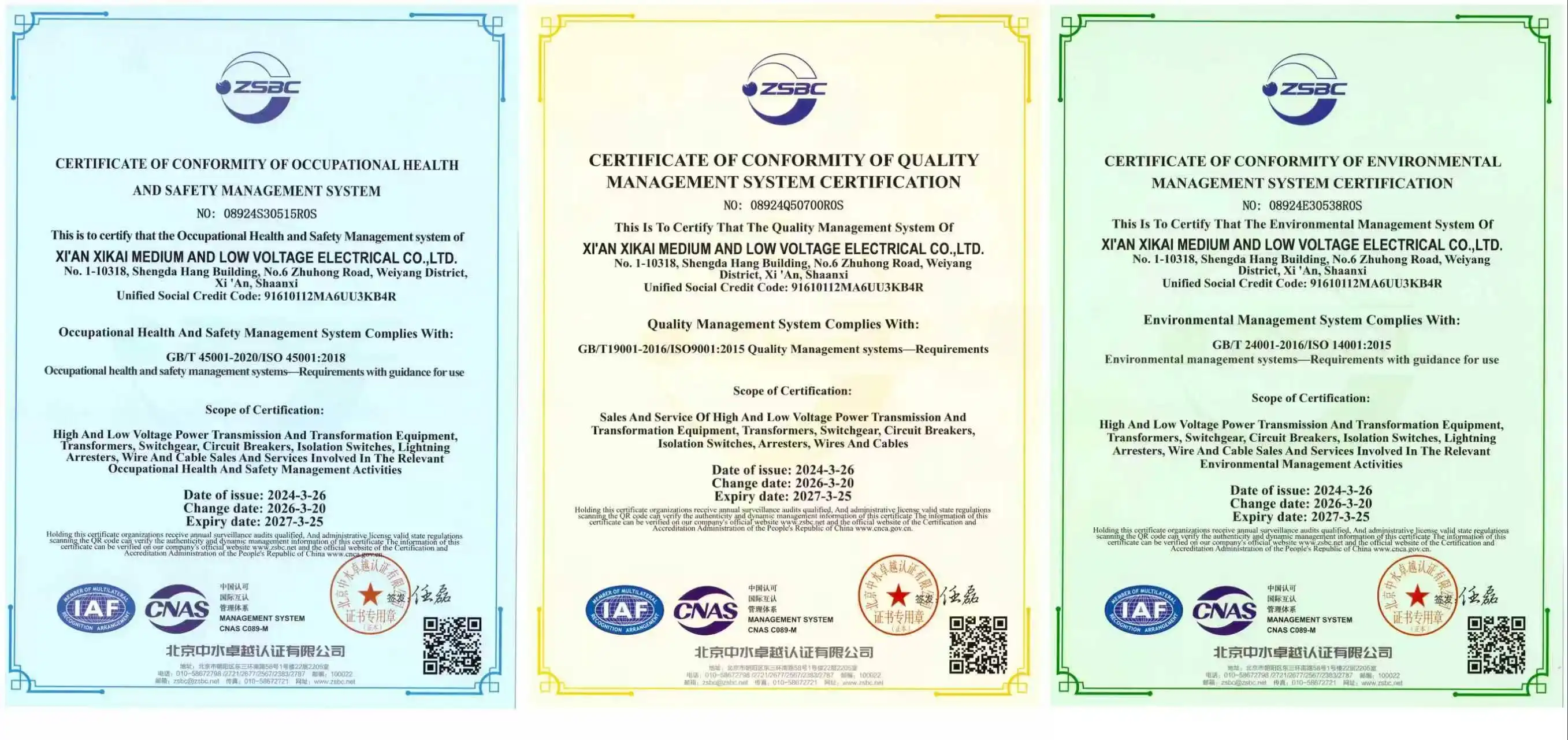
Supplier selection should consider certifications, testing capability, and production quality. Reputable manufacturers ensure consistent performance through strict quality control and innovation. Evaluating samples, lead times, and supply chain reliability helps reduce risks and ensures stable procurement for long-term projects.
Application-Specific Selection Guidelines
Capacitor selection depends on application needs. Industrial systems require durable, high-ripple designs, while renewable energy demands temperature-resistant units. Commercial retrofits benefit from compact, quiet, fire-safe designs. Matching specifications to real conditions ensures reliability and prevents performance issues over the product lifecycle.
Conclusion
For power quality management to work, Single-Phase Filter Capacitor units must be properly chosen, installed, and kept in good shape so they can protect sensitive equipment from electrical disturbances all the time. This guide has given engineers and procurement professionals a lot of information about how things work, how to calculate them, how to spot failures, and how to choose a supplier. By using these ideas, you can cut down on equipment downtime, make machines last longer, and make the whole system work better. As electrical systems get more complicated and stricter rules are put on power quality, the skills needed to choose and maintain the right filtering solutions become more valuable.
 |
 |
FAQ
1. What factors most significantly influence capacitor lifespan?
Temperature, voltage stress, and ripple current determine Single-Phase Filter Capacitor lifespan. Higher heat halves life, overvoltage accelerates dielectric aging, and excessive ripple current increases internal heating, reducing reliability.
2. How effective are filter capacitors in reducing electrical noise?
Single-Phase Filter Capacitor effectively reduces high-frequency noise (20–40 dB). Performance depends on impedance and placement; short leads and parallel smaller capacitors improve filtering, while high-frequency limits require low-ESL designs or damping.
3. What methods verify technical specifications before purchasing?
Verify quality using certified test reports, sample testing, and supplier certifications like ISO 9001. Third-party labs (ISO/IEC 17025) provide independent validation of capacitance, performance, and safety compliance.
Partner with Xi'an Xikai for Reliable Power Quality Solutions
Xi'an Xikai Medium & Low Voltage Electric Co., Ltd. has been making Single-Phase Filter Capacitor solutions for industrial facilities, utility companies, and system integrators all over North America for many years. Our high-voltage capacitors have discharge resistors, self-healing dielectric technology, and hermetically sealed construction that has been used in a wide range of settings, from factories to commercial building renovations. We know that power quality has a direct effect on your operational uptime and profits. That's why our engineering team is ready to offer solutions that are specifically designed to meet your voltage, capacitance, and environmental needs. You can email our technical experts at serina@xaxd-electric.com, amber@xaxd-electric.com, or luna@xaxd-electric.com to talk about your needs, get detailed datasheets, or set up a sample evaluation. Find out how the dedication of Xi'an Xikai to new ideas and high standards adds real value to your important electrical systems.
References
1. Institute of Electrical and Electronics Engineers (IEEE). IEEE Standard 18-2012: Standard for Shunt Power Capacitors. New York: IEEE Press, 2012.
2. McLyman, Colonel Wm. T. Transformer and Inductor Design Handbook, Fourth Edition. Boca Raton: CRC Press, 2017.
3. Mohan, Ned, Tore M. Undeland, and William P. Robbins. Power Electronics: Converters, Applications, and Design, Third Edition. Hoboken: John Wiley & Sons, 2003.
4. Hendershot, James R. and TJE Miller. Design of Brushless Permanent-Magnet Machines. Oxford: Motor Design Books LLC, 2010.
5. Paul, Clayton R. Introduction to Electromagnetic Compatibility, Second Edition. Hoboken: John Wiley & Sons, 2006.
6. Sarjeant, Walter J., et al. "Capacitors: Past, Present, and Future." Handbook of Low and High Dielectric Constant Materials and Their Applications. Cambridge: Academic Press, 1999.