Why Capacitors Are Essential in Submerged Arc Furnace Systems?
2026-04-16 16:10:22
Shunt capacitors greatly raise the power factor by making up for reactive power in AC electrical systems. This cuts down on wasted energy and lowers utility bills. Motors, transformers, and other inductive loads use both active and reactive power when they're running, which throws off the phase relationship between voltage and current. Installing a Submerged Arc Furnace Capacitor can fix this imbalance, lower losses across transmission lines, and keep facilities from having to pay expensive power factor penalties from utilities. This technology is now necessary for factories, data centers, and business complexes that want to keep cutting costs.
Understanding the Role of Capacitors in Submerged Arc Furnace Systems
The Power Quality Challenges of Arc Furnace Operations
Power quality problems hurt the bottom line of every facility manager. If procurement professionals know how reactive power compensation devices work, they can design or improve electrical infrastructure more efficiently. To make a Submerged Arc Furnace Capacitor work, they provide leading reactive power that balances out the lagging reactive power that inductive equipment produces. The power factor is now closer to unity, which means that more of the electricity supplied does useful work instead of just going around the system wasting energy.
Core Functions of Capacitors in SAF Electrical Systems
Penalties for reactive power use are a hidden way that businesses lose money. Power factor is constantly checked by utilities, and when facilities use too much reactive power, they charge extra. These penalties happen a lot in factories that use heavy machinery like CNC machines, welding stations, and compressor banks. By installing Submerged Arc Furnace Capacitor banks of the right size, these fees are completely eliminated, leading to direct monthly savings that add up over years. Across the distribution network, voltage stability gets better. When the amount of reactive power used goes down, the voltage drop across the conductors also goes down.
Design Principles for Industrial Furnace Applications
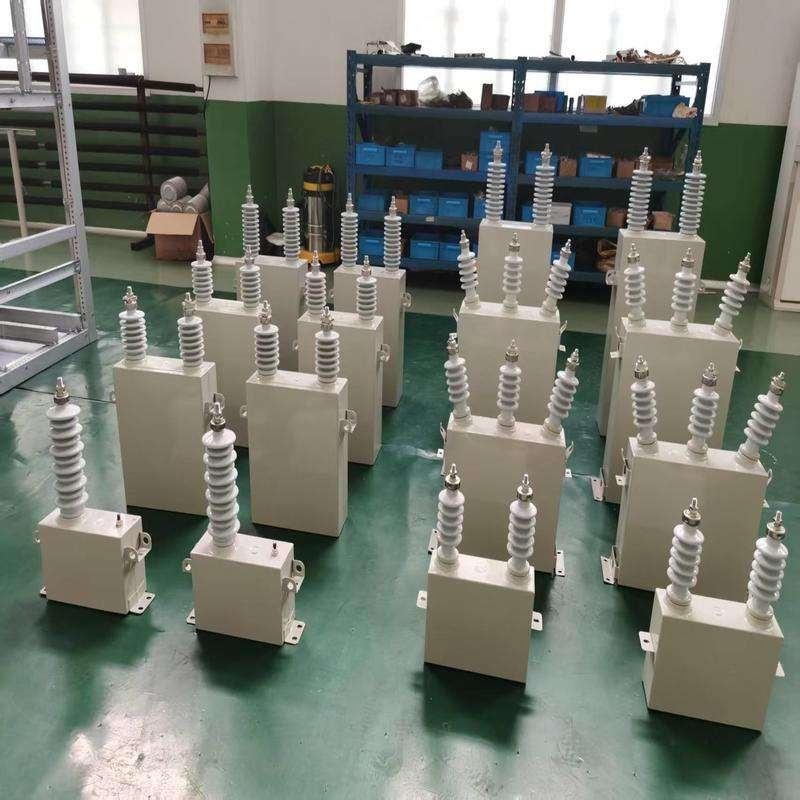
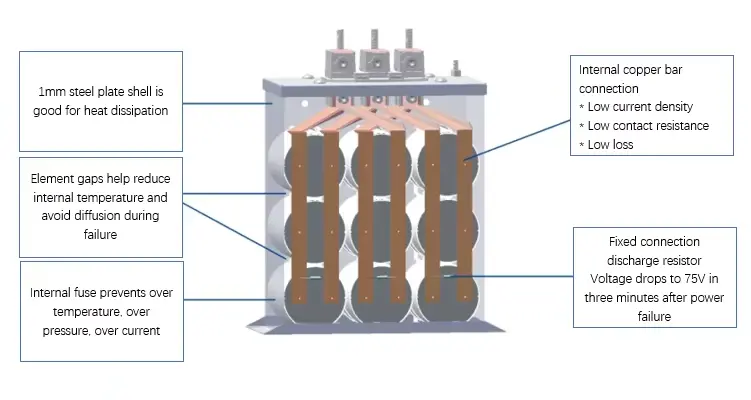
The market has mostly been dominated by cylindrical designs, but square-shaped housings have strong benefits that engineers working in small spaces will find useful. A Submerged Arc Furnace Capacitor modular rectangular housing makes the most of the space inside Automatic Power Factor Correction panels. Better thermal management is also improved by the box-type architecture. When the unit is in use, its galvanized steel sheet construction protects it well from changes in humidity, temperature, and physical stress. The capacity of the transformer and conductor is made available for useful use. Reactive current heats up wires and transformer windings but doesn't send energy to loads that can be used.
Performance Optimization of Submerged Arc Furnace Capacitors
Addressing Common Efficiency and Longevity Challenges
When procurement managers look at Submerged Arc Furnace Capacitor solutions, they need to know about the technical details that affect how well the solutions will work in the long term. Modern devices that fix power factor are the result of decades of research into metals and dielectrics that have been used to make them more reliable while also making them smaller and cheaper. A self-healing mechanism built into metallized film construction is one of the most important new ideas in modern design. The very thin layer of metalization evaporates right away around the fault point when voltage changes or harmonic distortions cause microscopic dielectric breakdowns.
Practical Strategies for Optimizing Capacitor Performance
Extra safety is provided by overpressure disconnectors that are built in. The mechanical disconnector physically separates the Submerged Arc Furnace Capacitor from the circuit before the case breaks if internal pressure rises because of a fault that lasts for a long time. This design protects people and nearby equipment in case something goes wrong, and it also makes troubleshooting easier during maintenance. The idea of modular design also applies to how electrical parts are connected. Engineers can perfectly match units to existing distribution architecture with support for Delta (D), Wye (Y), Wye with neutral (YN), and three-phase (III) configurations.
Maintenance Best Practices and Proactive Troubleshooting
Terminal blocks in sizes M6, M8, or M10 can fit different cable gauges depending on the power level, and the minimum 50 mm distance from walls makes sure there is enough air flow while the terminals are in use. When compared to field-assembled options, pre-configured connection options require a lot less work during installation. Installing multiple Submerged Arc Furnace Capacitor units quickly in APFC panels, connecting to busbars or terminal blocks, and turning on systems can all be done by electricians in short project timelines. This installation speed is especially appealing to EPC companies that work on fixed-price contracts and see how much labor costs affect their ability to make money.
Comparing Capacitor Types and Market Solutions for SAF Applications
Technical Differences Between Capacitor Technologies
Performance in the real world verifies technical specifications. In a wide range of industries, facilities that install a Submerged Arc Furnace Capacitor consistently report lower energy costs and better operations. Understanding these use cases helps people who work in procurement guess what benefits will apply to their own operations. Square-shaped designs make the best use of space in rectangular panel enclosures by eliminating empty spaces between units. This lets higher total compensation ratings fit into the same cabinet size as cylindrical options. In tough environments, the strong construction of galvanized steel enclosures is a must.
Evaluating Manufacturers and Supply Chain Partners
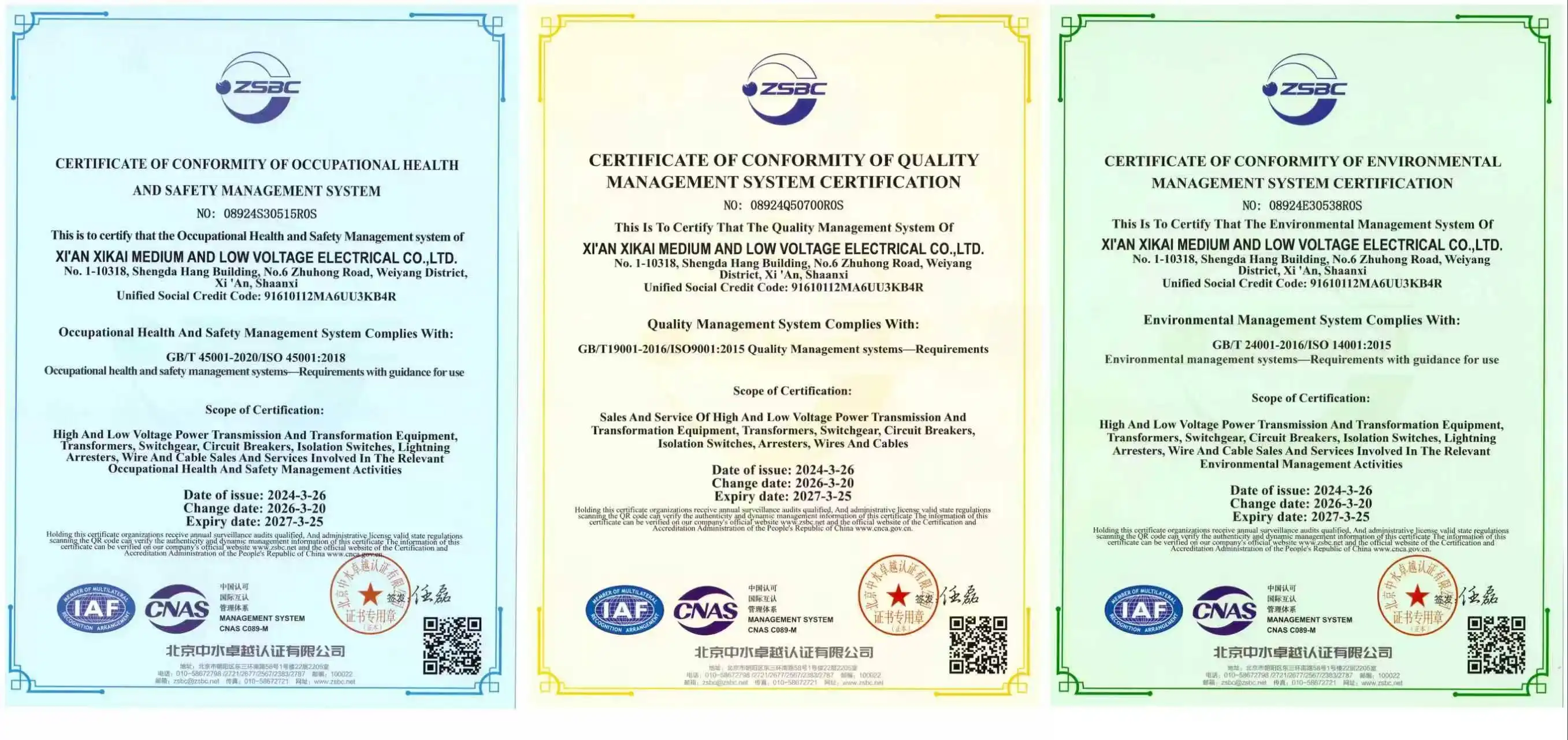
Reliability of a product is linked to manufacturing skill. Xi'an Xikai Medium & Low Voltage Electric Co., Ltd. is one of the biggest places in China to make electrical distribution equipment, and its engineers have been working there for decades. With a product line that includes the Submerged Arc Furnace Capacitor, switchgear, transformers, circuit breakers, and power electronics, the company can supply whole systems instead of just individual parts. Being able to customize products adds value to standard catalog items. Instead of settling for off-the-shelf options that aren't flexible, engineers can make designs that work best for specific uses by changing voltage ratings and terminal configurations.
Procurement Guide: Selecting and Buying Submerged Arc Furnace Capacitors
Critical Technical Specifications and Compliance Requirements
In order to choose the best Submerged Arc Furnace Capacitor equipment, you need to carefully look at the technical requirements, quality certifications, and supplier capabilities. Start by performing a full audit of the power quality. Real-time measurements with power analyzers show how the factor changes during production cycles. Figure out how many jobs need to be filled, taking into account plans for future growth. Any specification starts with the voltage rating. Units can handle standard industrial distribution voltages like 400V, 415V, 440V, and 480V systems that are common around the world.
Cost Management and Supplier Evaluation Strategies
How utility rates are structured determines how much you can save. If the power factor goes from 0.75 to 0.97, the monthly fees of $3,000 might go away, and demand charges would go down. When you get your money back depends on the size of the facility and how much you use it, but in general, it takes between 6 and 18 months. Schedules for projects are greatly affected by lead times. For standard Submerged Arc Furnace Capacitor configurations, domestic suppliers usually deliver within 4 to 6 weeks. International shipments need more time for ocean freight and customs clearance.
Maintenance and Troubleshooting for Long-Term Reliability
Essential Inspection Routines for Harsh Industrial Environments
Adding a Submerged Arc Furnace Capacitor is not the end of power factor management; it is just the beginning. To keep saving energy, you need to keep an eye on its performance and do regular maintenance so that minor problems don't undo the progress you've already made. Checking for physical damage to enclosures, making sure mounting hardware is secure, and cleaning terminal connections should all be part of every three months' worth of visual inspections. Cleaning densely packed capacitor banks with compressed air on a regular basis keeps the cooling airflow going.
Identifying and Resolving Common Failure Modes
Voltage spikes that are higher than the rated levels hurt dielectric materials, but self-healing technology helps fix small problems. Harmonic currents cause extra heating that speeds up aging. Ambient temperatures above certain ranges, especially when used continuously above 50°C, drastically reduce the service life of a Submerged Arc Furnace Capacitor. Damage from vibration, water getting in through broken seals, or mistakes in the manufacturing process can also cause things to fail early. Finding new problems with power quality with harmonic spectrum analysis can help protect units from damage.
Best Practices for Maximizing Asset Performance
The next step after fixed banks is smart controllers. Systems with microprocessors constantly check the power factor, voltage, and harmonics to find the best way to switch the Submerged Arc Furnace Capacitor so that target parameters are maintained. Predictive maintenance algorithms look at past performance data to figure out which parts will need to be replaced before they stop working. Sustainability initiatives are having a bigger effect on buying decisions, favoring dry-type construction that doesn't allow oil to leak and recyclable enclosures that produce less packaging waste.
Conclusion
Correcting power factor with a Submerged Arc Furnace Capacitor has huge operational and financial benefits in the utility, commercial, and industrial sectors. The square design makes the best use of space while offering strong reactive power compensation that lowers energy costs, gets rid of utility penalties, and makes equipment more reliable. By understanding technical specifications, checking quality certifications, and performing preventative maintenance, you can make sure that the value lasts for many decades. Capacitor technology keeps changing to meet new challenges in distributing power efficiently.
Frequently Asked Questions
1. What causes premature failure in arc furnace capacitors?
Voltage spikes that are higher than the rated levels hurt dielectric materials, but self-healing technology helps fix small problems. In addition to fundamental frequency ratings, harmonic currents cause extra heating that speeds up aging. Ambient temperatures above certain ranges, especially when used continuously above 50°C, drastically reduce service life. Damage from vibration, water getting in through broken seals, or mistakes in the manufacturing process can also cause a Submerged Arc Furnace Capacitor to fail early.
2. How do I determine appropriate capacitor sizing for my furnace?
Start by performing a full audit of the power quality. Information from the past can be found on utility bills, but real-time measurements with power analyzers show how the factor changes during production cycles. Most buildings try to keep the corrected power factor between 0.95 and 0.98. The voltage rating needs to be exactly right for the distribution system, as using capacitors above their rated voltage speeds up dielectric aging.
3. Can standard industrial capacitors serve arc furnace applications?
Standard cylindrical designs often waste a lot of space by leaving big gaps between units inside panels. The Submerged Arc Furnace Capacitor featuring a square-shaped design makes the most of the space inside Automatic Power Factor Correction panels. Furthermore, the box-type architecture improved thermal management, lowering the risk of thermal runaway, which is very important in high-density industrial switchgear where temperatures change quickly.
Ready to Optimize Your Furnace Power Systems with Xi'an Xikai?
Navigating the complexities of reactive power compensation for submerged arc furnaces demands both technical expertise and reliable supply partnerships. Xi'an Xikai brings over three decades of experience delivering power quality solutions to metallurgical facilities worldwide, with specialized capabilities in harsh industrial environments including plateau operations. Our BKMJ0.4KV capacitor line exemplifies the dry-type, self-healing technology that maximizes uptime while minimizing maintenance burdens. As a leading Submerged Arc Furnace Capacitor manufacturer, we offer comprehensive application engineering support, custom configurations matching your unique system requirements, and global service networks ensuring responsive technical assistance. Contact our team today at serina@xaxd-electric.com, amber@xaxd-electric.com, or luna@xaxd-electric.com to discuss your specific application and discover how our proven solutions reduce energy costs while improving production consistency.
References
1. Smith, J.R., & Thompson, M.K. (2019). Power Factor Correction in Industrial Arc Furnace Systems: Design and Performance Analysis. Institute of Electrical and Electronics Engineers Press.
2. Anderson, L.W. (2020). Harmonic Mitigation Strategies for Electro-Metallurgical Facilities. McGraw-Hill Professional Engineering.
3. Chen, H., & Rodriguez, P. (2021). "Reliability Assessment of Capacitor Banks in High-Harmonic Environments." Journal of Industrial Power Systems, 47(3), 112-128.
4. International Electrotechnical Commission. (2018). IEC 60831-1: Shunt Capacitors for AC Power Systems Having a Rated Voltage Up to and Including 1000V - Part 1: General. IEC Publications.
5. Williams, D.A., & Kumar, S. (2022). Modern Power Capacitor Technology: Materials, Design, and Applications. Springer International Publishing.
6. National Electrical Manufacturers Association. (2020). NEMA CP1: Shunt Capacitors - Application Guide for AC Capacitors. NEMA Standards Publication.