
Why Use an HV Shunt Capacitor Complete Set for Voltage Control?
2026-10-23 16:39:16
Voltage instability costs utility operators millions annually in equipment damage, energy waste, and regulatory penalties. An HV shunt capacitor complete set addresses these problems directly by injecting capacitive reactive power into the grid, correcting power factor, reducing transmission losses, and stabilizing bus voltage—all within a single, pre-engineered assembly. For procurement teams managing outdoor substations across demanding climates, selecting the right reactive power compensation system is not a minor equipment decision; it is a long-term infrastructure commitment with measurable financial and operational consequences.
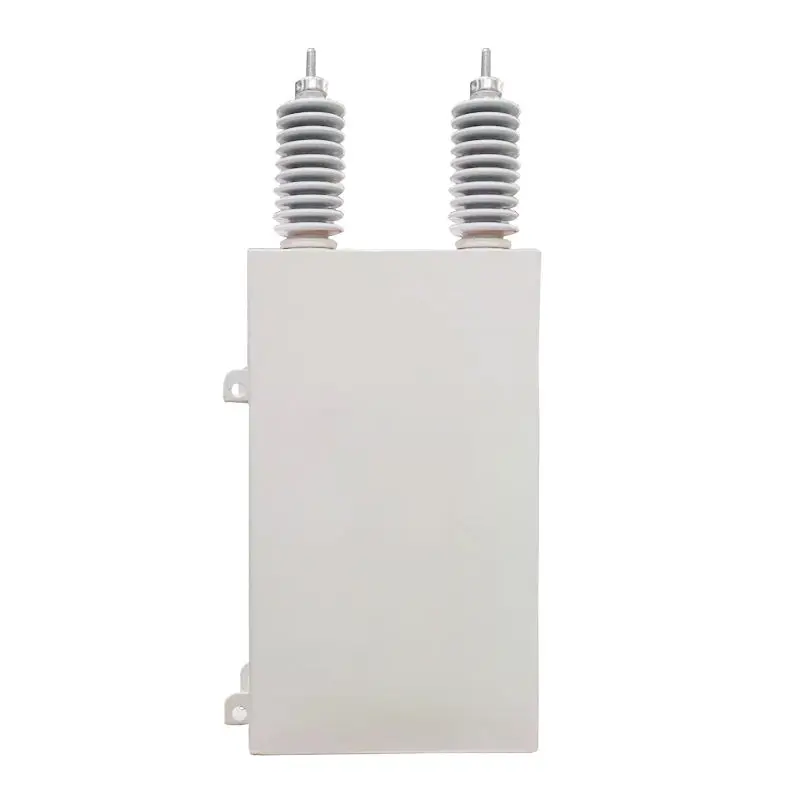
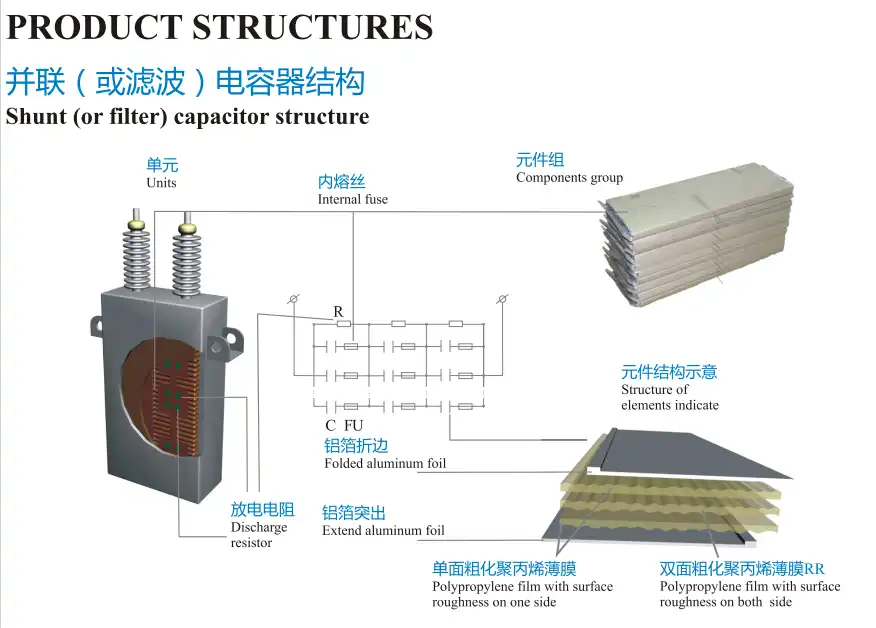
Understanding HV Shunt Capacitor Complete Sets and Their Role in Voltage Control
What the System Actually Contains
There is more to an HV shunt capacitor complete set than just a bank of capacitors. It combines discharge coils, discharge capacitor banks, series reactors, unbalance protection relays, grounding switches, and control panels into a single system that works together. Each part has a specific job to do, either to protect or to work. For instance, the series reactor is set to a certain reactance rate, usually 6% to block 5th-order harmonics or 12–14% for 3rd-order harmonic environments. This stops resonance that separate capacitors can't handle.
How Reactive Power Compensation Works
When reactive power from the grid is used by inductive loads like motors, transformers, and arc furnaces, voltage drops and current rises, which makes I²R losses higher. This is stopped by the HV shunt capacitor complete set, which provides reactive power locally and makes the transmission source less stressed. IEC 60871 says that shunt capacitor banks of the right size can raise the power factor from 0.75 to above 0.95, which can cut line losses in distribution-level networks by up to 30%.
Why a Complete Set Outperforms Individual Units
When you buy separate capacitors without matching safety and control parts, coordination holes appear. A full set makes sure that the discharge coil lowers the residual voltage to less than 50V within 5 seconds of disconnecting (as needed by IEC/IEEE), that unbalance protection separates failed capacitor cans before damage spreads, and that harmonic filtering is set up properly from the start. This streamlined method cuts down on the time needed for approval and the risk of mistakes in the field.
Benefits of Using an HV Shunt Capacitor Complete Set for Voltage Control
Voltage Stability Across Variable Loads
When the load changes, the power on the grid always changes. Bus voltage should stay within ±5% of normal with a reactive power adjustment system that is the right size. This is the level that most sensitive industrial equipment needs. In substations that serve green energy plants, where the inverter output changes every second, an intelligent processor guides the automatic switching of the shunt capacitor bank to avoid both overvoltage and undervoltage situations without any user input.
Power Factor and Cost Reduction
Utilities usually charge industrial customers between 1% and 3% of their monthly energy bills for every 0.01 unit below the goal power factor. When used correctly, an HV shunt capacitor complete set can fix the power factor to 0.95 or higher, which gets rid of these charges for good. Large grid users who buy between 3 and 20 units at a time will see a high overall return on their investment over the course of 15 years.
Reduced Maintenance Burden
Modern full sets use all-film dielectric capacitor units that are vacuum-impregnated with recyclable fluids that are not PCB-based (PXE or SAS type). At 20°C, the loss angle (tan µ) stays at or below 0.0003, which means that there isn't much internal warmth. With sealed construction and high-grade alloy housings, planned repair visits are now done once a year instead of every three months. This lowers the total cost of ownership across a large substation portfolio.
These benefits directly lead to fewer unexpected power outages, lower lifetime costs, and fewer field crew deployments. These are the things that procurement managers who are in charge of multi-site grid operations care about the most.
Comparing HV Shunt Capacitor Complete Sets with Alternative Solutions
Shunt Capacitors vs. Series Capacitors
In order to make up for line reactance over long transmission distances, series capacitors are put in line. On the other hand, shunt capacitor banks are linked to the bus in parallel to provide reactive power in the area. In places like distribution substations and factories where reactive load is the main issue, shunt compensation works better and is easier to turn on and off depending on need. Series systems need a lot more complicated safety plans and aren't usually needed below 110kV.
Complete Sets vs. Static VAR Compensators (SVCs)
In situations where voltage changes quickly and continuously, like in electric arc furnace plants, SVCs are better because they react faster than switched capacitor banks (on the order of milliseconds). A similar HV shunt capacitor complete set, on the other hand, costs three to five times as much as an SVC and needs special maintenance. The whole set gives the same level of voltage control at a much lower cost, making it a good choice for utility substations and large industrial users where load changes quickly.
Outdoor Frame-Type vs. Indoor Cabinet Systems
Outdoor frame-type designs, like Xi'an Xikai's AKW series, let air cool directly, take up less floor space, and don't need a separate building enclosure. Indoor closet units provide better environmental control, but they are more expensive to build and can't be expanded. For substations in desert, mountain, or coastal settings, an outdoor frame assembly with UV-resistant insulators and corrosion-resistant structural steel that is rated IP54 is the better and more cost-effective option.
Installation, Maintenance, and Specification Insights for HV Shunt Capacitor Complete Sets
Key Specifications to Verify Before Purchase
Teams in charge of buying things should make sure they know the rated voltage range (usually between 6kV and 110kV for distribution purposes), the total reactive capacity (which can be anywhere from 300 kV to 240 MVA in frame-type configurations), the reactance rate of the series reactor, and the insulation class. Units that are outside must have at least IP54 approval. For locations above 1,000 meters, insulators need to have a longer creepage distance to keep their pollution protection when the air pressure drops.
Installation Best Practices
Before turning it on, make sure that all of the connections on the busbar are torque-checked, that the setpoints for the relays are correct for unbalanced current and overvoltage safety, and that the discharge coil is wired properly. According to the local grid codes, the frame of the building must be grounded. Anchor bolt designs should match the site's peak ground acceleration rate when it is in an earthquake zone. Xi'an Xikai's AKW Outdoor Frame-type units come with labeled terminal blocks and base frames that have already been drilled. This makes them easier to put together on-site.
Ongoing Maintenance Schedule
The usual advice is to do upkeep once a year. Individual units' capacitance should be measured (within a range of −5% to +12% of their rated value is acceptable), the insulator should be cleaned to stop surface tracking, oil-filled capacitor cans should be checked to make sure they don't swell or leak, and the protection relay trip setpoints should be re-calibrated. Swollen capacitor units need to be changed right away because they show that the dielectric inside is breaking down and could break under high voltage.
Procurement and Supplier Selection for HV Shunt Capacitor Complete Sets
Evaluating Supplier Credentials
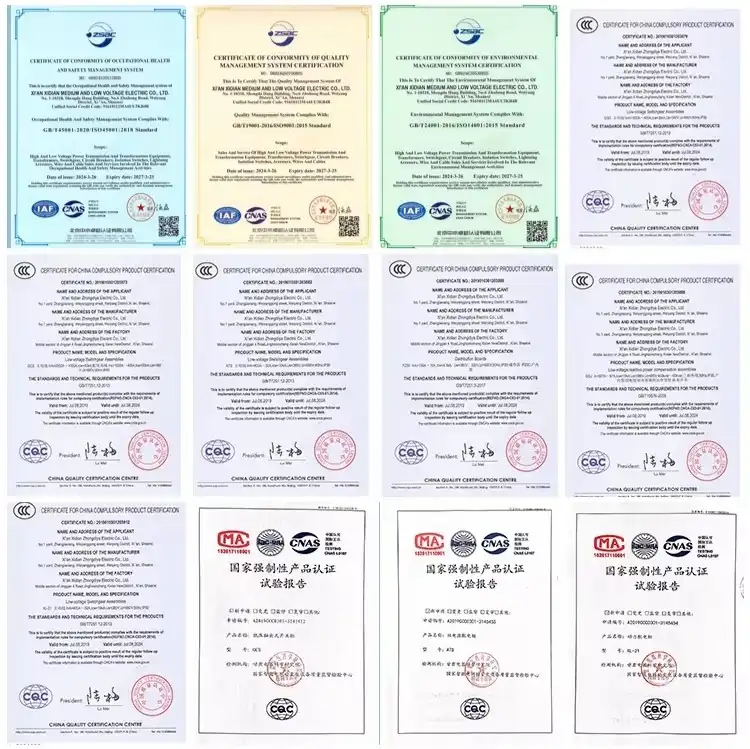
A trustworthy company that sells HV shunt capacitor complete sets should be ISO 9001 certified, offer third-party test reports according to IEC 60871 or IEEE 18, and have worked on big utility projects before. When buying in bulk, production capacity is important. Suppliers who can make 3 to 20 units per order cycle without needing long wait times greatly lower the risk of project schedule delays.
Batch Procurement and Total Cost Considerations
Unit price is just one factor that affects the equipment budgets of grid operators, which can be anywhere from tens of millions to hundreds of millions of dollars per year. When figuring out the total cost, lead time dependability, standard spare parts availability, and warranty coverage—especially for outdoor units that are exposed to sandstorms, heavy rain, or ice loads—are all given the same amount of weight. Asking for factory acceptance test (FAT) paperwork for every production batch adds an extra quality check that can be checked before the goods are shipped.
Why Xi'an Xikai Merits Consideration
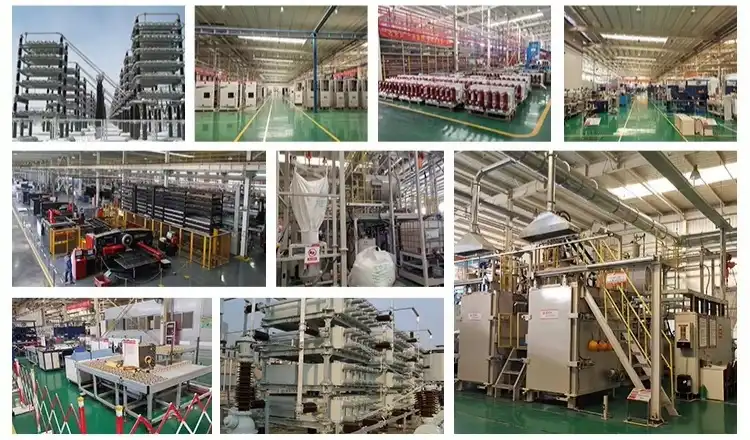
The AKW Outdoor Frame-type Reactive Power Compensation Device is made by Xi'an Xikai Medium & Low Voltage Electric Co., Ltd. and has the following verified specs: system voltage of 6kV or higher; capacity range of 300 kV to 240 MV; ambient operating temperature of -25°C to +45°C; and an IP54/IP55 rating for protection against the elements. The frame of the building is very strong and won't break during earthquakes. Its large creepage distance also keeps it from getting dirty when it's dusty or humid outside. During production, 23 quality checks are done on each unit, and the company has more than 15 patents for medium and low-voltage power tools. Xi'an Xikai's goods have been used in grid projects in over 30 countries, and the company is a part of State Grid procurement sites such as ECP2.0. Their small frame size makes installation easier and cuts down on the amount of space needed. This cuts down on both the time it takes to set up and the work that needs to be done for future upkeep.
Conclusion
In conclusion, an HV shunt capacitor complete set provides an effective and reliable solution for voltage control and power quality improvement in high-voltage power systems. By supplying reactive power locally, it helps maintain stable voltage levels, reduce transmission losses, improve power factor, and enhance overall system efficiency. A complete capacitor set also integrates essential components for safe and coordinated operation, making installation and maintenance more convenient. With proper selection, configuration, and protection, HV shunt capacitors can support more stable grid performance while reducing operational costs. As power networks continue to demand greater efficiency and reliability, HV shunt capacitor systems remain an important part of modern voltage regulation and reactive power management.
FAQ
1.How long does an HV shunt capacitor complete set typically last?
With all-film dielectric technology and vacuum-impregnated capacitor units, a well-maintained complete set can achieve 15 years or more of service life. Annual inspections and prompt replacement of any swollen or leaking capacitor cans are the primary factors that determine actual field longevity.
2.What reactance rate should I specify for my site?
Select 6% or 7% reactors if 5th-order harmonics dominate your grid, which is common in industrial facilities with variable frequency drives. Choose 12–14% reactors if 3rd-order harmonics are present, typically in systems with single-phase loads or specific transformer winding configurations. A harmonic survey before procurement prevents specification errors.
3.Can these units operate in sandstorm or heavy-snow environments?
Yes, provided the unit carries an IP54 or higher rating, uses UV-resistant insulators with extended creepage distance, and is constructed with corrosion-resistant structural steel. The AKW series operates reliably from −25°C to +45°C and is specifically designed for outdoor substation deployment in harsh climates.
4.What certifications should I require from the supplier?
Request IEC 60871 or IEEE 18 type test reports, ISO 9001 production certificates, and any regional grid compliance documentation applicable to your operating territory. For State Grid projects in China, ECP2.0 platform registration is an additional verification requirement.
Contact Xi'an Xikai for Your Reactive Power Compensation Needs
With vacuum-impregnated capacitor units and all-film dielectric technology, a full set that is well taken care of can last for 15 years or more with HV shunt capacitor complete set. The main things that determine how long a field actually lasts are annual inspections and replacing any capacitor cans that are swollen or leaking right away.
References
1. IEEE Standard for Shunt Power Capacitors (IEEE 18) — Institute of Electrical and Electronics Engineers, 2012.
2. IEC 60871-1: Shunt Capacitors for AC Power Systems Having a Rated Voltage Above 1 000 V — International Electrotechnical Commission, 2014.
3. Reactive Power Compensation: A Practical Guide — Mathur, R. M. & Varma, R. K., Wiley-IEEE Press, 2002.
4. Power Systems Analysis — Stevenson, W. D. & Grainger, J. J., McGraw-Hill, 1994.
5. Handbook of Electric Power Calculations — Beaty, H. W., McGraw-Hill, 2006.
6. Transmission and Distribution Electrical Engineering — Bayliss, C. R. & Hardy, B. J., Newnes/Elsevier, 2012.