How 10kV High Voltage Reactive Power Compensation Device Cuts Energy Costs
2026-05-26 15:59:21
Rising energy costs and fines for bad power quality make it harder for businesses, data centers, and industrial buildings across the US to make money. These problems can be solved directly by a 10kV High Voltage Reactive Power Compensation Device, which raises the power factor at the medium-voltage distributor level. This gear evens out the inductive reactive loads that come from motors, transformers, and variable-frequency drives. This cuts down on the lost energy that flows through your electrical network. When the power factor goes up, the energy bills go down, penalties for bad response performance go away, and technology lasts longer. Modern automatic adjustment systems adapt quickly to changing loads, which saves energy and keeps voltage levels fixed, which is important for sensitive electronics and high-precision manufacturing equipment.
 |
 |
Introduction
Industrial and business buildings that use 10kV distribution networks are under more and more pressure to keep prices down while keeping power quality high. Reactive power, which is the part of electrical current that doesn't do anything useful, causes heat loss in wires and transformers. When power factors drop below 0.90 or 0.95, utilities have to charge extra fees. More and more purchasing managers, building engineers, and EPC contractors are realizing that investing strategically in reactive compensation technology pays off in twelve to twenty-four months.
This detailed guide looks at how medium-voltage adjustment options lower transmission losses, keep voltage profiles stable when industry loads change, and avoid fines from the government. We look at technical specs, performance data from real-world situations, factors for choosing a provider, and servicing plans that guarantee long-term energy savings. Whether you're in charge of maintaining the stability of an aging hospital campus's infrastructure, making sure that utility operations don't affect the grid, or designing efficient power systems for factories, knowing how reactive power compensation works helps you make smart procurement decisions that protect operational reliability and bottom-line profitability.
Understanding 10kV High Voltage Reactive Power Compensation Devices
Core Function and Operating Principles
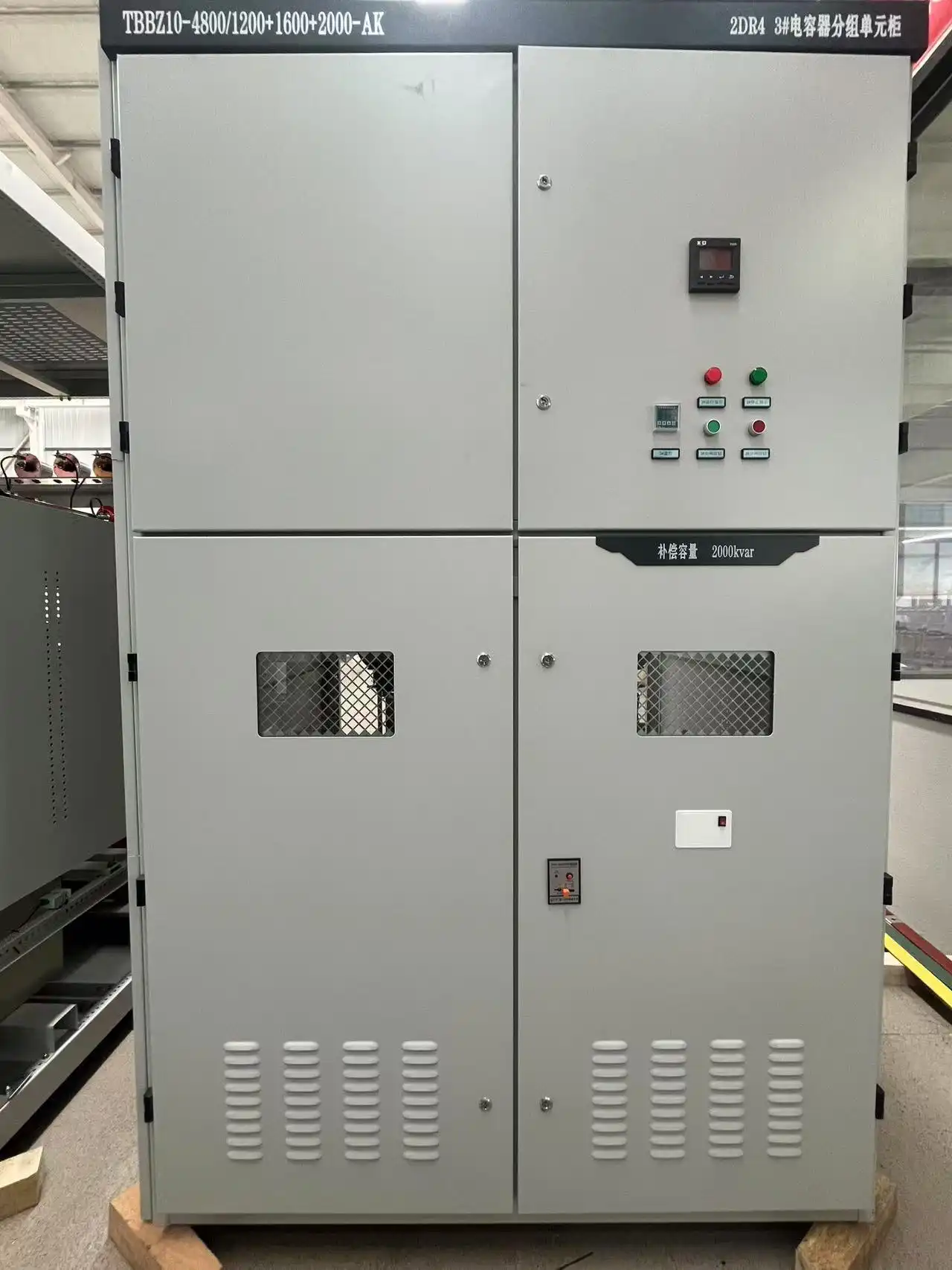
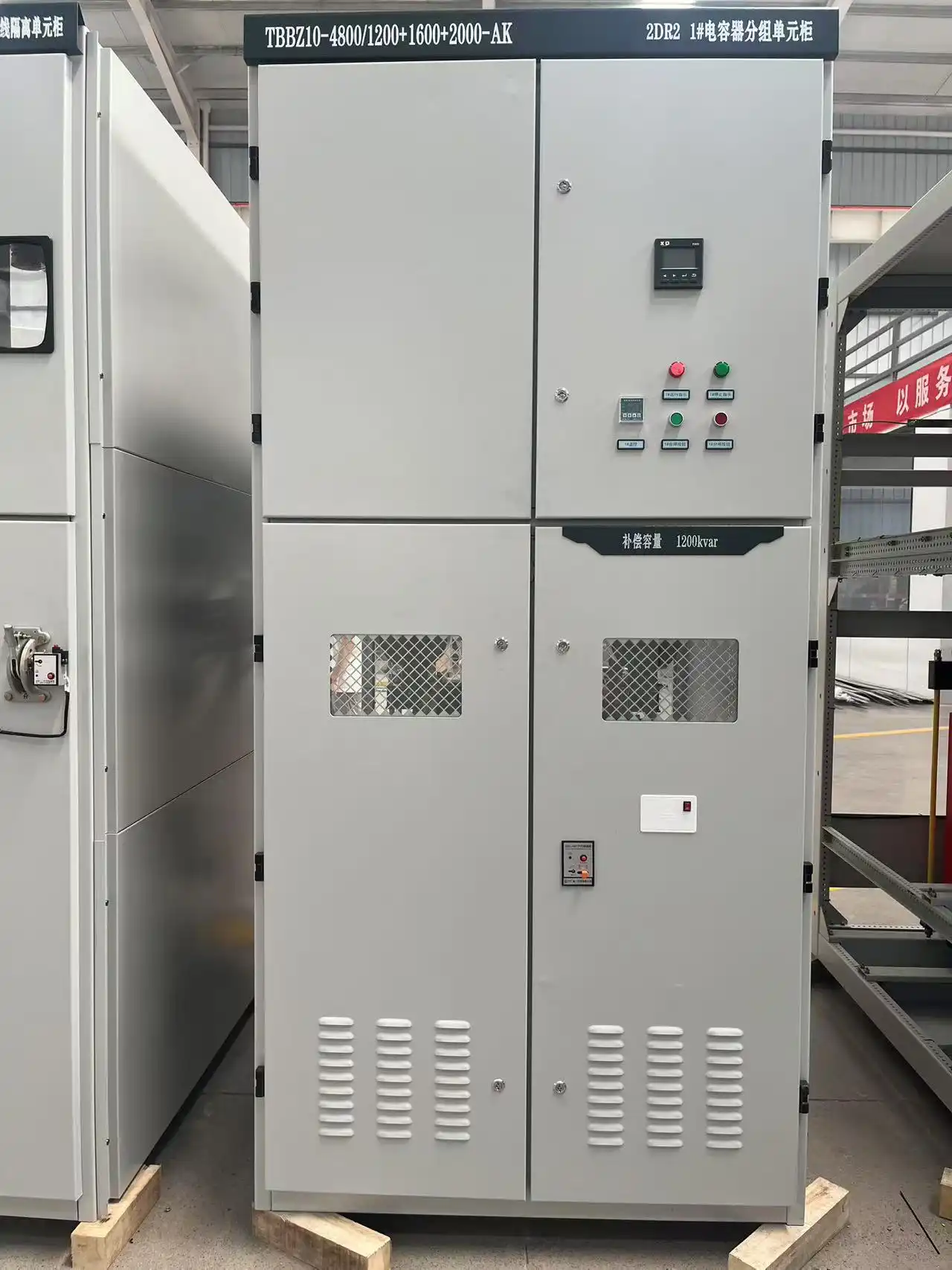
Medium-voltage reactive compensation equipment works in 6–10kV power lines to balance out the magnetic field energy that inductive loads use. These devices have to deal with higher insulation needs and fault current tasks than low-voltage systems rated below 1,000V. The main parts are capacitor banks that provide leading reactive power, current transformers that check the load situation, and microprocessor-based controls that turn on adjustment steps based on the demand in real time.
The controller finds the phase angle shift between the voltage and current patterns when heavy motors or welding tools draw delayed current. Within milliseconds, vacuum contactors or thyristor switches turn on the right capacitor steps. This adds compensation current to the system, which gets the power factor closer to 1. Modern units have discharge resistors that safely release stored energy when steps separate, keeping leftover voltages from getting too high. When capacitors are linked in series with harmonic filtering reactors, they block resonance frequencies that could harm sensitive equipment or cause annoying trips.
Device Categories and Technical Capabilities
Reactive compensation technology can be put together in three main ways. The 10kV High Voltage Reactive Power Compensation Device works best for different types of operations: Fixed Capacitor Banks are always linked to the network and offer real-time reaction help. These simpler methods work well for stable industrial processes where load patterns don't change very often. Installation costs are still very low, but there isn't much energy savings potential because pay can't change based on changes in demand.
Power circuits are used to connect switched capacitor banks and static voltage generators (SVG) in hybrid compensation platforms. SVG modules handle sudden changes in load and fine-tuning needs, while capacitor levels provide dynamic bulk support. This design works well for places with arc burners, big motor starts, or green energy sources that need millisecond-level reaction to keep the voltage stable. Choosing the right technology relies on the type of work, the budget, and the level of control and accuracy that is needed. For most industry and business uses, automatic systems strike a good mix between efficiency and cost-effectiveness.
How 10kV Reactive Power Compensation Devices Cut Energy Costs
Direct Energy Savings Through Loss Reduction
If you square the current and multiply it by the resistance of the wire, you get the formula for transmission losses in electrical networks: I²R. When reactive current flows through wires, transformers, and switches, it releases heat without doing any work. A 10kV High Voltage Reactive Power Compensation Device lowers the total amount of current by canceling out the reactive part. This lowers resistance losses directly in the distribution system. Take the case of a factory that needs 500kW of usable power at a power factor of 0.75.
It looks like the building needs 667kVA of power, which is 38.5 amps per phase at 10kV. Power factor goes up to 0.95 after the correction equipment is added, but perceived power drops to 526kVA and current drops to 30.4 amperes. This 21% drop in current means that I² losses in distribution lines and transformer windings are about 36% lower. At normal energy rates, a building that uses 5,000 MWh a year could save between $40,000 and $60,000 just by cutting down on costs.
Case Study: Steel Processing Facility
A steel production company with many heavy-duty presses and induction furnaces had problems with the power quality all the time and had to pay fines of about $3,200 every month. During production changes, baseline readings showed that the power factor changed from 0.68 to 0.82. To stop harmonic resonance from variable-frequency drives, the facility put in a 3,600kVar automatic adjustment system with 12% detuning reactors. After the placement, tracking showed that the power factor kept going up, reaching 0.96-0.98 in all load situations.
On average, monthly electricity bills went down by $4,850, with fines being removed, saving $3,200, and energy use going down by $1,650. The temperatures of the transformers were also 15% lower, and trips that were annoying and stopped output were no longer happening. The $87,000 system paid for itself in eighteen months, and it's expected to save more than $580,000 in total over the fifteen-year life of the equipment.
Selecting the Right 10kV Reactive Power Compensation Device for Your Business
Critical Technical Specifications
When buying something, the powers of the item must match the electricity features of the building and its working needs. The most important standard is the voltage limit. Devices must meet the system baseline voltage (6kV, 10kV, or 11kV) and have enough shielding coordination for short-term overvoltages. The TBB10 model works with networks from 6kV to 10kV, which gives sites with mixed voltage equipment more options. To choose the right capacity, you need to do a thorough study of the reaction power during high load situations. When engineers size adjustment equipment, they usually 10kV High Voltage Reactive Power Compensation Device aim for a 0.95 power factor at full load. This is because getting closer to a unity power factor lowers the equipment's benefits. Systems with voltages between 100kV and 10,000kV are used in a wide range of places, from small businesses to large industrial centers.
When the number of people using a facility grows, modular designs let it grow with them, protecting the worth of the initial investment. When a building has variable loads, harmonic filtering can help with power quality issues. Harmonic currents are introduced by variable-frequency drives, rectifiers, and switching power sources. These currents change the shape of voltage waves and cause correction capacitors to get too hot. When reactors are linked in a series, they make tuned filters that stop certain harmonic orders while letting the fundamental frequency current run easily. The TBB10 has three different reactor configurations: 0.1 to 1% reactance to stop inrush current, 6% reactance to stop fifth harmonics and higher, and 12% reactance to stop third harmonics in places with single-phase loads or DC drives. By choosing the right generator, you can avoid resonance situations that make harmonics stronger and damage equipment.
Vendor Evaluation and Brand Comparison
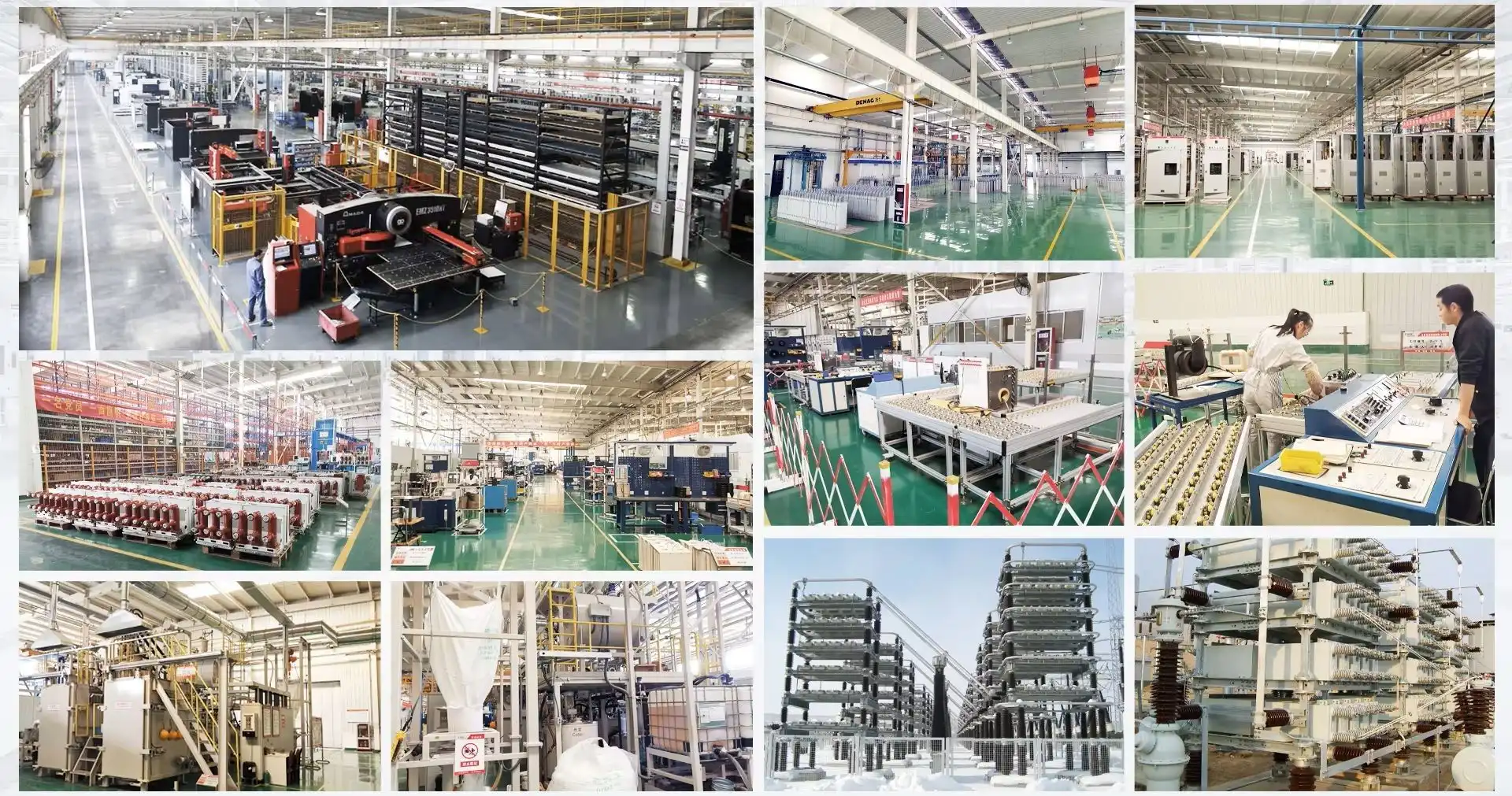
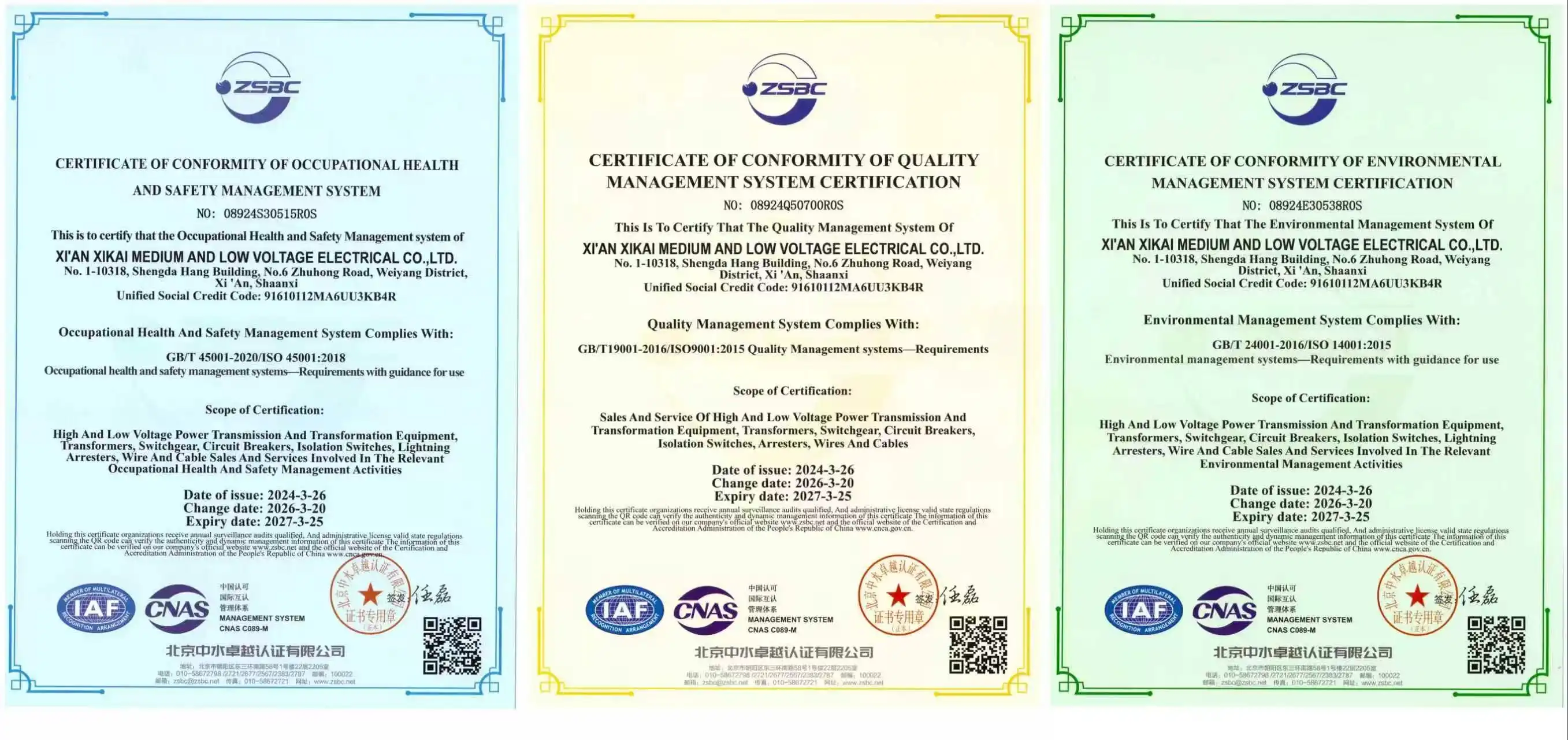
Picking dependable sources has an effect on how well a system works and how much it costs to own in the long run. The North American market is dominated by well-known brands such as Schneider Electric, ABB, Siemens, and Eaton, which have extensive product lines and well-established service networks. These global suppliers offer standard designs, lots of information, and guarantees that last for years and are backed by a lot of company resources. Local companies like Xi'an Xikai offer cheap options that can be customized and offer quick tech help. One of China's biggest factories for making medium-voltage equipment is run by Xi'an Xikai. It makes reactive compensation systems for State Grid substations and large industrial installations.
The company's plateau-rated equipment works effectively at heights of up to 4,000 meters, meeting the specific needs of mining activities and industrial sites in hilly areas. The buying price is only one part of the total cost of ownership. Other parts are the installation costs, the upkeep needs, and the expected service life. Systems that cost a lot more but have better parts and are built to last usually have lower lifetime costs because they don't need to be replaced as often and don't break down as often. Manufacturer flaws are covered by warranties that last between 18 months and five years. However, thorough upkeep is more important for long-term dependability than the length of the guarantee.
Maintaining Your 10kV Reactive Power Compensation Device for Long-Term Savings
Routine Inspection and Performance Monitoring
Maintaining energy savings requires proactive upkeep that finds problems as they arise before they lead to breakdowns or decreased performance. Visual checks of capacitor cans should be done every three months to look for bulging or leaking, which are signs of internal dielectric breakdown. Bus links that are discolored mean that the hardware is too loose or the conductors are not the right size. Cleaning ventilation systems is important to keep dust from building up and blocking the flow of cool air, and speeding up the aging of parts.
Electrical testing every six months checks the correctness of the correction and the tuning of the control system. Technicians check the real power factor under different load situations and compare the results to the controller's screens to find sensor drift or calibration mistakes. Capacitance tests on individual stages find units that have lost more than 95% of their maximum capacity, which is usually a sign that they need to be replaced. Harmonic spectrum research shows that filtering reactors continue to work even as the loads on the building change over time. Modern pay systems that are connected to the Internet of Things (IoT) allow for constant online tracking, which cuts down on the need for on-site inspections. Cloud-based systems keep an eye on power factor trends, switching cycle counts, and warning conditions. This lets site managers know about problems as they arise, before they affect operations. Predictive maintenance programs look at past data to guess how often parts will need to be replaced. This helps keep extra parts in stock and plans maintenance for planned shutdowns.
Troubleshooting Common Issues
Sometimes, practical problems with compensation systems make them less useful or cause annoying alarms. Most of the time, the sensor fails, or wrong setup settings are to blame for controller problems instead of computer problems. Current transformer connections need to be checked because controls separate capacitors when loads rise, when polarity is inverted, which makes the power factor worse instead of better. The voltage sensor sources need to be checked to make sure they have the right phase relationships and output values. Failures in the capacitor stage show up as lower adjustment capacity or three-phase currents that aren't balanced. Sometimes, individual capacitor cans short internally, which opens fuses and takes that stage out of service.
Facilities should keep extra capacitor parts on hand so that they don't have to be replaced for long periods of time. Series reactors don't usually break down, but they can get turn-to-turn shorts that change their inductance and detune filtering properties. When harmonic problems happen, inductance measures make sure the reactor is still solid. Mechanical parts that do the switching wear out over time. Vacuum contactors are rated for 100,000 to 500,000 operations, but this number depends on the quality and size of the switching current. Contacts wear out faster in high-cycling situations, so they need to be replaced earlier to avoid sparking or excessive arcing. Thyristor-switched systems get rid of mechanical wear, but they add new ways for semiconductors to fail, which means they need different ways of being maintained. Reviewing switching 10kV High Voltage Reactive Power Compensation Device cycle counts on a regular basis can help you figure out when to replace contactors before they break.
Future Trends and Innovations in 10kV Reactive Power Compensation
Smart Control and Digital Integration
New adjustment technologies use complex control methods that improve system performance in more ways than just fixing the power factor. Model-predictive controls look at past load trends to guess how much reactive power will be needed. They do this by placing capacitor steps ahead of time, before demand comes up. Machine learning algorithms that are taught on practical data from a facility are always improving switching strategies so that contact wear is kept to a minimum and power factor control is tight.
Digital communication methods let compensation systems use tools for managing energy in buildings. It is possible to connect to SCADA systems, building control platforms, and utility demand response programs using Modbus TCP, IEC 61850, and OPC UA. The sharing of real-time data makes joint control strategies possible. In these strategies, compensation equipment changes the reactive output in response to voltage signals from smart grids or changes in on-site green generation. Cybersecurity features keep networked pay systems safe from threats and people who shouldn't be able to get in. Critical equipment can't be hacked because of industrial filters, protected communications, and role-based access controls. As power systems become more digital, strong security measures are needed to keep them running smoothly and stop online threats from disrupting them.
Renewable Energy Integration
When wind and solar power are connected, it can be hard to handle reactive power. Modern adjustment systems solve this problem by controlling everything together. Photovoltaic inverters and wind turbine converters can help with reactive power, but how much they can do depends on how much power they are producing. Grid-connected adjustment equipment adds to the capabilities of green inverters and keeps voltage profiles fixed when production changes because of the weather. In microgrid uses, correction devices keep the power and frequency stable when the system is not connected to the main grid. During blackouts, when facilities are cut off from utility systems, local production and loads must balance without help from the outside grid. Reactive adjustment controls the power that was previously provided by the utility network. This makes switching between grid-connected and islanded modes smooth.
When you combine energy storage systems with adjustment equipment, you get reliable microgrids that can keep important loads running during long power blackouts. Energy-efficient technologies, such as reactive power compensation, are widely used because of environmental laws and business sustainability efforts. In places like California, New York, and Massachusetts, utility reward programs offer refunds for projects that improve power factor and lower grid losses and production needs. These financial benefits make projects more profitable by cutting down on payback times and supporting the use of compensation systems in more industry and business areas.
Conclusion
Using a 10kV High Voltage Reactive Power Compensation Device can save you a lot of money because it lowers the amount of energy you use, stops utility fines, and makes your equipment more reliable. Automatic adjustment systems like the TBB10 handle reactive power intelligently based on the load patterns of the building. This ensures long-term power factor growth that keeps profits high. Paying close attention to technical details, provider skills, and repair methods can help you save the most money and run your business more efficiently over time. As digital control technologies and the use of renewable energy grow, medium-voltage correction equipment changes to meet the needs of more complex power quality standards while also providing measurable economic results.
FAQ
1. What payback period can facilities expect from compensation equipment investment?
Depending on the average power factor, utility rate structure, and yearly energy use, most industrial and business systems pay for themselves in six to twenty-four months. When a facility has high reaction loads and heavy power factor fines, it sees faster returns, and in some cases, it can recoup its costs in less than twelve months. To make accurate predictions about how much money will be saved, energy bills, load patterns, and equipment specs need to be carefully looked at.
2. How do these devices contribute to reducing carbon footprints?
When the power factor is better, the total current going through electrical networks goes down. This directly lowers transmission losses, which waste energy as heat. Less energy use by generators means less burning of fossil fuels, which means less greenhouse gas emissions. A normal 2,000kVar compensation system installation could cut down on CO2 emissions by 100 to 200 tons per year by making the system more efficient. This would help companies meet their green goals and environmental regulations.
3. What maintenance intervals ensure sustained performance?
Visual checks every three months and electricity tests every six months keep most apps running at their best. Thermal imaging and dielectric strength tests done once a year can find problems before they break down. Contactors may need to be inspected more often in high-cycling setups that switch tasks often. Remote tracking systems cut down on the need for human inspections while still ensuring ongoing performance and finding problems early on.
Transform Your Power System Efficiency with Xi'an Xikai
Xi'an Xikai offers tried-and-true reactive power correction solutions that are backed by 25 years of manufacturing quality and application experience across State Grid systems and major industry sites around the world. Our TBB10 High Voltage Reactive Power Automatic Compensation Device is made with smart control technology and strong materials that can handle harsh situations. It works reliably from -25°C to +45°C. As a reliable company that makes 10kV High Voltage Reactive Power Compensation Devices, we offer full technical help from the start of system design to testing and upkeep throughout the product's lifetime.
Our expert team is ready to look at the power quality problems at your site and suggest the best pay options that will save you money. Send an email to serina@xaxd-electric.com, amber@xaxd-electric.com, or luna@xaxd-electric.com to talk to one of our application engineers about your needs.
References
1. IEEE Std 1036-2020, "IEEE Guide for Application of Shunt Power Capacitors," Institute of Electrical and Electronics Engineers, New York, 2020.
2. National Electrical Manufacturers Association, "Application Guide for Power Factor Correction of Industrial Loads Operating on Medium Voltage Systems," NEMA Standards Publication, Rosslyn, Virginia, 2019.
3. Electric Power Research Institute, "Voltage and Reactive Power Control in Distribution Systems: Technical and Economic Analysis," EPRI Report 3002014871, Palo Alto, California, 2018.
4. International Electrotechnical Commission, "IEC 60871-1:2014 Shunt Capacitors for AC Power Systems Having a Rated Voltage Above 1000V," Geneva, Switzerland, 2014.
5. Dugan, Roger C., McGranaghan, Mark F., and Beaty, H. Wayne, "Electrical Power Systems Quality, Third Edition," McGraw-Hill Education, New York, 2012.
6. American Society of Heating, Refrigerating and Air-Conditioning Engineers, "ASHRAE Handbook - HVAC Applications: Chapter 56, Electrical Considerations for HVAC Systems," Atlanta, Georgia, 2019.