
How 10kV outdoor line compensation Improves Grid Voltage
2026-10-12 17:27:24
Maintaining stable voltage across medium-voltage distribution networks is one of the most persistent challenges facing utility operators today. When reactive power demand rises unchecked, line voltage drops—especially at the far ends of long rural feeders. 10kV outdoor line compensation directly addresses this by deploying pole-mounted capacitor banks along the feeder itself, injecting capacitive reactive power at the point of need. The result is a measurable voltage lift, reduced I²R losses, and improved power factor—often reaching ≥0.95. For procurement teams evaluating outdoor reactive power compensation systems for 10kV or 22kV networks, this guide covers everything from working principles to ROI.
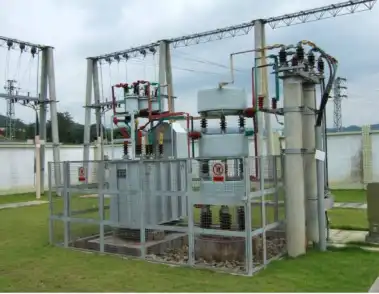
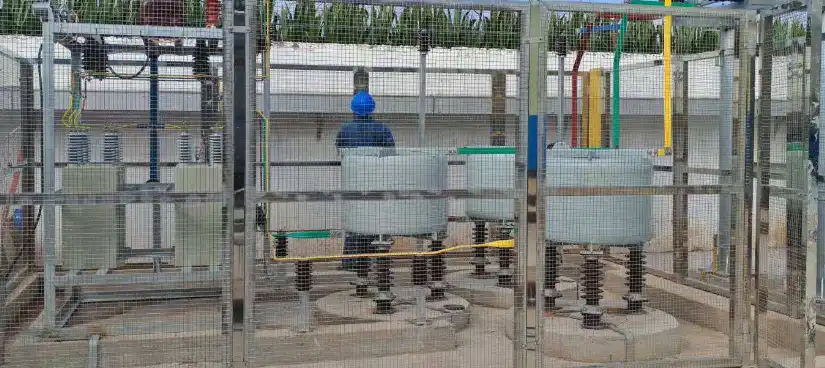
Understanding 10kV Outdoor Line Compensation and Its Role in Grid Voltage Improvement
What the Technology Actually Does
For 10kV outdoor line compensation, reactive power correction is done directly on the overhead feeder, usually at the two-thirds point of the line. This is instead of at the substation busbar. This placement goes after the real reason for the voltage drop instead of covering it upstream. The system takes real-time readings of voltage and current and instantly turns capacitor banks on and off to keep voltage within accepted limits when the load changes.
Core Technical Specifications
The outdoor line compensation units from Xi'an Xikai can handle rated voltages of 6kV, 10kV, and 35kV, and each bank can handle up to 100 Mvar. There is less than 0.2 W/kvar of loss in the all-film dielectric capacitors. Inrush transients are not seen with vacuum contactors that have zero-crossing switching. The enclosures are made of 304 stainless steel and meet IP54 or IP65 standards. They have built-in protection against over-voltage, under-voltage, over-current, and harmonic resonance through 6% or 12% detuned series reactors.
Outdoor vs. Indoor Compensation: A Practical Distinction
The whole stream is balanced from one central point by indoor transformer capacitor banks. On the other hand, 10kV outdoor line compensation works at the load end of the feeder. The distributed method can recover 5–10% of line-end voltage that centralized compensation can't reach for lines longer than 10 km, which is typical in rural electricity projects in Africa and Southeast Asia. When looking at options for long-distance delivery changes, this difference is very important.
Challenges in Traditional Voltage Compensation and How Outdoor Line Compensation Addresses Them
Limitations of Conventional Capacitor Banks
Inside, fixed capacitor banks can't adjust to changes in load during the day. A fixed bank keeps adding reactive power when loads drop at nite or during off-peak hours. This causes voltage to rise dangerously. Another problem is getting to the panels for maintenance. Indoor panels need planned outages, expert dispatch, and extra parts stockpiles, all of which raise the cost of ownership over a system's lifetime in remote places.
How Modern Outdoor Systems Solve These Problems
Modern 10kV outdoor line compensation systems use automatic, multi-step switching logic to make real-time changes to the compensation. During peak times for agricultural irrigation, full capacitor banks are used. During off-peak times, the controller steps them back to avoid overcompensation. The Xikai units can handle temperatures from -40°C to +55°C because they are made with a stainless steel case and silicone rubber insulation. This means they can be used in both the Sahel and highland Southeast Asia. Anti-theft locking systems on the enclosure panels make them safer in a way that indoor panels on remote pole mounts just can't.
Compatibility with Renewable Energy Integration
Solar and wind power generation cause short-term changes in reactive power that fixed compensation can't keep up with. Within milliseconds, these changes are picked up by IoT-enabled outdoor line compensation units that are connected to SCADA through DNP3.0 or IEC 60870-5-104 protocols. Because of this, distributed outdoor compensation is a good option for grids that already have distributed green power or plan to add it.
Selecting the Right 10kV Outdoor Line Compensation System for Your Grid
Key Evaluation Criteria
Before choosing a unit, procurement teams should look at four technical factors:
- Voltage regulation range: Confirm the controller can maintain ±5% voltage deviation under the worst-case feeder loading scenario specific to your network.
- Switching speed and life cycle: Vacuum switch mechanical endurance should be validated at >10,000 operations; zero-crossing switching protects capacitors from inrush damage.
- Environmental rating: IP65 enclosures are preferable for coastal or high-humidity deployments; IP54 suits inland or arid sites.
- Communication protocol: GPRS/4G modules supporting DNP3.0 or IEC 60870-5-104 are essential for integration with existing SCADA systems.
When you write your specifications, be sure to give these four factors a lot of thought because they have a direct effect on the total cost of ownership, not just the purchase price.
Certifications and Quality Verification
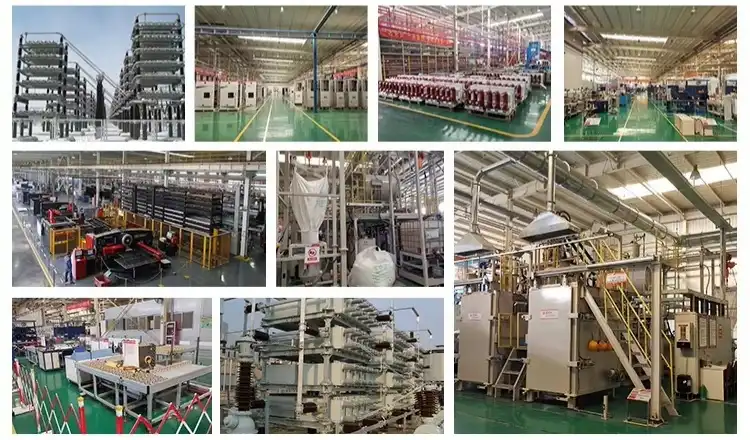
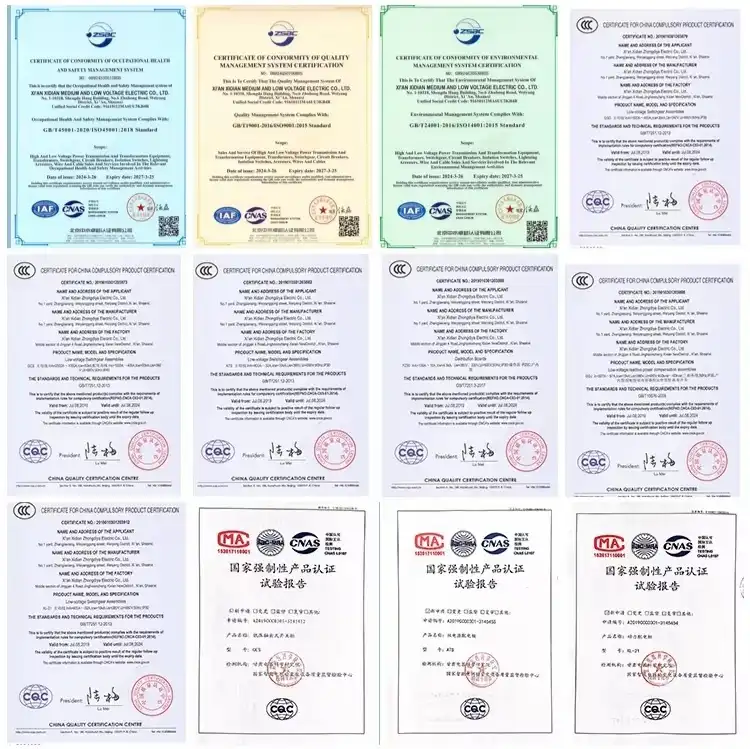
Before choosing a seller, make sure you have proof of the following test results: Check for lightning impulses withstand voltage (BIL) at 75kV or 95kV; measure capacitance and loss tangent according to IEC 60871; keep records of vacuum switch mechanical endurance tests; seal and rain tightness tests according to IP rating claims; and do a harmonic overload thermal stability test. Xi'an Xikai has been making products for more than 30 years and has 15 patents on reactive power technology. Its products are used by utilities in more than 40 countries.
Customization and Integration Considerations
Standard modular designs let you add more space without having to replace the base unit. This is helpful when the annual load growth means small changes are needed. For 22kV rural networks in developing countries, Xikai engineers can set the controller thresholds and compensation steps to match the local grid codes. This means that the equipment doesn't need to be reprogrammed on-site after delivery.
Best Practices for Installation, Maintenance, and Troubleshooting
Site Assessment Before Installation
Before putting up a 10kV outdoor line compensation unit, you should write down the length of the feeder, the load profile over a 24-hour cycle, the current power factor readings, and the names of any nearby variable-frequency drives or arc furnaces that are known to cause harmonics. The best setting, step size, and reactor resistance are chosen based on this data. Field activation delays are most often caused by skipping this step.
Routine Inspection Protocol
Even though Xikai's outdoor units are made to need little maintenance, it is still recommended that they be inspected once a year. Technicians should look for worn contacts on the vacuum switch, oil seepage or deformation in the capacitor housings, correct torque values at the terminals, and confirm the strength of the communication module signal. A yearly check for early signs of wear costs a lot less than an emergency repair during peak load season.
Common Troubleshooting Scenarios
If the controller logs multiple over-voltage alarms during low-load hours, it's likely that the compensation step size is too big for the feeder's minimum load. If you go to the controller parameter menu and lower the number of active steps, this problem goes away without having to change any hardware. If SCADA telemetry drops sometimes, check the antenna mount for corrosion (this is a frequent problem in marine locations) and change the gasket seal on the door to the communication compartment.
Business Benefits and ROI of Investing in 10kV Outdoor Line Compensation
Quantified Efficiency Gains
A study of similar country networks shows that properly placed "outdoor line compensation" cuts down on technical losses by 15–30% and raises line-end voltage from less than 0.9 per unit to within the 0.95–1.05 per unit range needed by most national grid codes. Low-loss all-film capacitors improve performance even more by lowering the amount of heat generated inside. This makes the capacitors last longer than 20 years under normal working conditions.
Regulatory and Financial Incentives
If a business customer's power factor is less than 0.90, many national companies charge them extra. Putting in distributed outdoor compensation on the supply feeder can get rid of these fees for good, with a payback time that can be easily calculated. In State Grid purchase frameworks, equipment that meets GB/T standards and has the right type-test certificates can be included in yearly technical improvement funds. This speeds up the approval process for power companies at the county level.
Long-Term Asset Value
Pole-mounted 10kV outdoor line compensation systems take reactive current off the feeder, which lowers the load on the transformer. This makes transformers last longer and puts off expensive projects to increase their capacity. When procurement managers are trying to balance a technical improvement budget of 10 million to 100 million RMB per year, putting off replacing one transformer usually covers the cost of installing a whole batch of compensations.
Conclusion
Distributed 10kV outdoor line compensation is a tried-and-true, low-cost way to raise the voltage at the source end, lower line losses, and boost the power factor on rural medium-voltage networks. The technology fixes the problems that come up with long-distance feeders, like voltage changes at the load end, reactive power penalties, and how hard it is to keep equipment in remote areas in good working order.
FAQ
1.What maintenance interval is recommended for pole-mounted outdoor line compensation units?
The units are designed for minimal intervention, but annual inspections are recommended industry practice. During each visit, check vacuum switch contact wear, inspect capacitor housings for deformation, verify terminal torque values, and test the communication module signal.
2.How does outdoor placement compare to substation compensation for rural feeders?
Substation compensation corrects the busbar but cannot recover voltage at the far end of a feeder longer than 10 km. Pole-mounted outdoor compensation placed at the two-thirds point of the feeder directly addresses the voltage drop at the load end—a distinction that matters greatly for rural electrification projects.
3.How does the system prevent harmonic resonance?
Series reactors with 6% or 12% impedance are integrated into the circuit to detune it against 5th and 7th order harmonics. This structural approach eliminates resonance risk without requiring additional external filters.
4.Can the units be monitored from a control center?
Yes. GPRS/4G modules supporting DNP3.0 or IEC 60870-5-104 protocols allow full SCADA integration, including real-time voltage and current telemetry and remote switching commands.
5.What temperature range do the units support?
Industrial-standard outdoor line compensation units are rated for ambient temperatures from −40°C to +55°C, covering desert, tropical, and highland operating conditions.
Get a Customized 10kV Outdoor Line Compensation Quote from Xi'an Xikai
The units are made so that they don't need much maintenance, but it is standard practice in the industry to check them every year with 10kV outdoor line compensation. Check the communication module signal, look for deformation in the capacitor housings, check the terminal torque values, and look for wear on the vacuum switch contacts during each visit.
- Email: serina@xaxd-electric.com | amber@xaxd-electric.com | luna@xaxd-electric.com
- Website: xaxd-electric.com
References
1. International Electrotechnical Commission. IEC 60871-1: Shunt Capacitors for AC Power Systems — Part 1: General. IEC, 2014.
2. IEEE Power & Energy Society. IEEE Std 1036: Guide for Application of Shunt Power Capacitors. IEEE, 2010.
3. Kundur, P. Power System Stability and Control. McGraw-Hill, 1994.
4. Hingorani, N. G., & Gyugyi, L. Understanding FACTS: Concepts and Technology of Flexible AC Transmission Systems. IEEE Press, 2000.
5. World Bank Group. Electricity Access in Sub-Saharan Africa: Uptake, Reliability, and Complementary Factors for Economic Impact. World Bank, 2019.
6. China Electricity Council. Technical Specification for Reactive Power Compensation in 10kV Distribution Networks (DL/T 1200). China Electric Power Press, 2013.