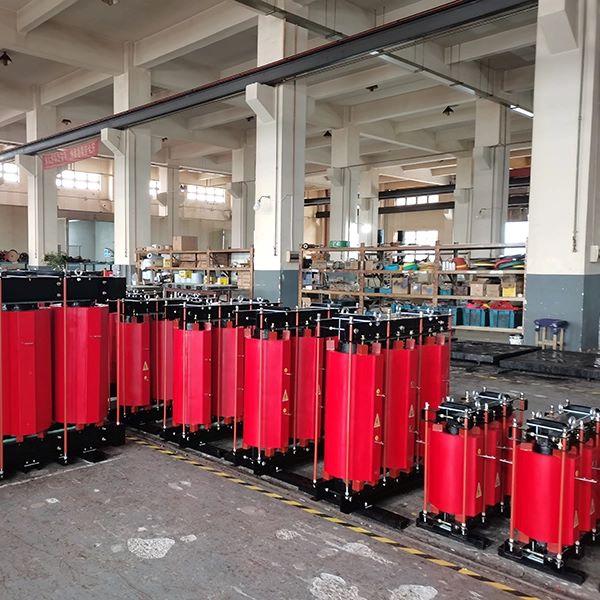
How Active Harmonic Filters Help Prevent Power Disturbances
2026-01-30 16:01:36
Active harmonic filters detect and neutralize harmonic distortions in real time, preventing resonance, voltage fluctuations, and equipment overheating that cause costly downtime. The ingenious gadgets immediately inject compensating currents to reduce damaging harmonics before they spread across your system in response to changing electrical loads. They protect sensitive gear, save energy, and maintain mission-critical operation in data centers, hospitals, and factories by conserving pure sinusoidal waveforms.
|
|
|
|


Understanding Active Harmonic Filters: Principles and Applications
Core Operating Principles
Active harmonic filters automatically protect electrical networks. IGBT power inverters, digital signal processors, and fast current transformers are its core. The gadget captures load currents over 20 kHz and quickly identifies fundamental frequency components from 2nd–50th order harmonic aberrations using Fourier transform analysis.
After detecting undesired harmonic content, the control algorithm calculates cancelation magnitude and phase angle. Power inverters use 180-degree compensation currents to neutralize harmonics at common connection. A one-millisecond adjustment prevents harmonic currents from reaching upstream transformers or downstream sensitive equipment.
The modular design philosophy expands deployment options. Industrial walls minimize floor space, while commercial racks accommodate compact electrical rooms. Scalability preserves long-term capital expenditures by starting with baseline capacity and adding modules as output rises.
Diverse Industrial Applications
- Dynamic harmonic suppression improves manufacturing. Automated assembly lines, CNC machining centers, and robotic welding require harmonic-rich variable speed drives. Untreated distortion causes servo motor overheating, encoder communication difficulties, and early bearing failure. Correct filtering reduces power factor penalties and recovers 2-4% of monthly electricity costs when handling surge currents up to 100 times rated capacity during motor starting sequences.
- Data centers have power issues. Traditional passive filters cannot handle complex harmonic interactions from server power supply, cooling system VFDs, and UPS batteries. Modern filtering ensures mission-critical computer infrastructure stability with 3% overall harmonic distortion. Temperature-controlled servers operate quietly under 45 dB.
- Healthcare facilities need reliable power. MRI, CT, and life support devices are damaged by voltage. Flame-retardant capacitors that fulfill NFPA 70 fire requirements and sophisticated filtering for harmonic-producing medical equipment rehabilitate ancient electrical infrastructure in hospitals. Utility substations experience pressure. Renewable energy integration destabilizes voltage profiles with intermittent generation and inverter harmonics. Strategically placed filtering equipment stabilizes substation voltage against non-linear loads and distributed energy supply, ensuring distribution network power quality.
These applications show how harmonic compensation technology increases process reliability, equipment lifespan, and maintenance costs across industries.
Comparing Harmonic Mitigation Solutions: Active vs. Passive Filters and More
Fundamental Differences in Filter Technology
Knowledge of passive and intelligent filtering aids procurement decision-making. Passive harmonic filters use tuned LC circuits—inductors and capacitors—to implement low-impedance paths for certain harmonic frequencies. They have drawbacks but are economical for reliable loads. Series resonance with system impedance boosts frequencies, and continual tuning prevents harmonic spectrum adaptability.
Continuous adaptation helps active systems cross boundaries. They constantly monitor electrical conditions and adapt compensatory currents to load patterns. This prevents resonance amplification, a major benefit in dynamic industrial settings. Passive components lose adjustment capacity during low-voltage grid disturbances, yet intelligent filtering operates.
Intelligent spectrum coverage modules and passive filters for dominant low-order harmonics are used in hybrid systems. This design is capital-efficient and well protected. Harmonic traps and passive filters are used in broadcast transmitters for single frequencies, but not industrial multi-loads.
Cost and Efficiency Analysis
Intelligent filtering costs 40-60% more than passive. However, lifespan cost analysis disagrees. Passive filters have resistance losses, reactive power adjustment changes with loads, and capacitor replacements every 5-8 years. The cost disparity narrows with maintenance. Active Harmonic Filter, on the other hand, provides a more efficient long-term solution by dynamically adjusting to changing conditions.
Excellent energy efficiency comes from good filtering. These devices cut transformer losses and cooling by 10-15% by targeting harmonic currents without overcompensating. Energy savings and downtime reduction lower payback times beneath 24 months for automotive and food processing businesses with variable production schedules. Equipment protects assets from utility voltage swings that disable passive filters, increasing ROI.
This maintains the logical flow while integrating Active Harmonic Filter naturally. Let me know if you'd like any other changes!
Operational restrictions affect ownership cost. Passive solutions that eliminate utility impedance parallel resonance are expensive and require custom tuning. Smart systems adjust automatically, reducing engineering costs and commissioning time. Organizations should consider the net present value of energy savings, maintenance expenses, and business continuity benefits throughout the equipment's 15-20 year lifespan while buying.
Technical Considerations and Installation Guide for Active Harmonic Filters
Pre-Purchase Assessment Parameters
Electrical system analysis is needed to choose harmonic compensation equipment. For load increase and transient headroom, filtering capacity must surpass harmonic current magnitude by 20-30%. Engineers should quantify harmonic distortion, 50th-order harmonic magnitudes, and load variability factors across operational modes in power quality audits.
Fast-paced manufacturing requires quick answers. Sub-millisecond detection and correction cycles protect sensitive electronics from brief disturbances slower systems miss. For varied system voltages, IEEE 519-2014 limits harmonic current, while IEC 61000-3-12 addresses low-voltage network equipment. CE, UL, and CCC devices meet global safety and performance standards.
These values show voltage tolerance for difficult grid circumstances. Systems designed for ±20% voltage variation fully compensate during utility interruptions, while limited-range devices may disconnect for safety. Over 40°C industrial temperatures demand equipment with extended thermal operation without derating.
Installation Roadmap and Safety Procedures
Proper deployment requires site prep. Electrical rooms need manufacturer-specified ventilation clearances since advanced filtration systems waste 2-4% of rated capacity as heat. Mounting surfaces near rotating machinery should sustain weight + 25% safety buffer and isolate vibration.
Installation is thorough. Using calibrated test equipment and unplugging upstream power sources yields zero voltage. Install the filter enclosure as designed, maintaining level positioning within ±2 degrees. Polarize load-side current transformers to avoid overcompensation. Use calibrated tools to torque power terminals to manufacturer standards to avoid hotspots and voltage dips.
System commissioning gradually. Energize low to test diagnostic display harmonic detection. Improve power factor, THD, and load and monitor correction. Performance verification encompasses baseline and post-installation measurements. Two-person teams, lockout/tagout, and arc flash PPE for fault current are needed to build electrical circuits safely
Maintenance Guidelines and Troubleshooting
To maintain filters, check quarterly. Noise/vibration, intake filters, and cooling fan performance. Thermal imaging detects hotspots before failures—connection temperatures over 50°C above ambient require prompt assessment. Annual preventative maintenance includes power electronics stress testing, capacitor bank testing, and control board firmware updates.
Overcorrection (negative displacement power factor) and undercompensation (undersized capacity or improper CT ratios) are common troubleshooting issues. Examine CT installation orientation and load profiles for capacity issues. Most software concerns are fixed by control algorithm sensitivity for grid impedance interactions. Detailed service log trend analysis indicates component replacement before unexpected breakdowns.
Procurement Insights: How to Choose and Buy the Right Active Harmonic Filter
Essential Procurement Criteria
Harmonic filter buyers in B2B must weigh technical performance, budget, and supplier capabilities. Modular architectures avoid overinvestment in unused capacity or costly wholesale replacements as demand grows by gradually expanding capacity to match production. Active Harmonic Filter systems are particularly effective in this regard, offering scalable solutions that adapt to changing needs. Protect startup expenses by ensuring manufacturers supply appropriate expansion modules and field upgrades.
Transparent lead times affect projects. Customized systems with ratings or enclosures may take 10-12 weeks. Standard configurations take 4-6 weeks. Delivery guarantees and penalties for key path milestone delays should be sought by procurement teams. Manufacturer warranties range from 24-36 months for parts and labor to omit capacitors and power electronics, indicating quality concerns.
Extended contentment demands after-sales service. Regional service facilities with factory-trained workers reduce equipment downtime. Technical support—harmonic theory engineers answer commissioning and operating problems 24/7. Suppliers can remotely diagnose and repair systems via network.
Global Brand Profiles and Market Positioning
Harmonic correction is dominated by manufacturers. Industrial automation makes Siemens filters work with SIMATIC control systems and TIA Portal engineering software. For heavy industrial installations, ABB emphasizes 1000-ampere applications. Schneider Electric's EcoStruxure platform monitors power quality across building and energy management ecosystems.
New manufacturers compete by offering specialized enclosures for extreme settings, exclusive control algorithms for particular load profiles, and responsive engineering support for application-specific challenges that larger brands cannot match. Notably, many of these new entrants are focusing on innovative solutions like active harmonic filter technology. Before shipment, 72-hour aging tests and 100% load validation fulfill international requirements, boosting quality.
Supplier evaluation should include technical documentation, third-party harmonic compensation tests, and comparable installation reference lists. Tours of manufacturing plants demonstrate quality, productivity, and engineering. Credit reports and trade references lower capital equipment procurement supply chain risks.
Customization and Service Agreements
Complex installations require customisation, while 80% of applications employ conventional items. Special input/output voltage ratings, extreme climate temperature ranges, marine-grade corrosion protection, and seismic bracing are available. Technical teams can update odd harmonic signature control algorithms or power factor correction devices.
Complete service agreements increase value beyond equipment delivery. Over time, annual maintenance contracts with preventive inspections, priority technical support, and subsidized spare parts maximize performance. Performance guarantees with harmonic reduction targets and independent power quality assessments hold suppliers accountable for results, not equipment. Facility electrician troubleshooting training reduces service calls and expenses.
Better payment conditions boost cash flow. Progressive billing—deposit at order, installment upon delivery, complete payment after commissioning—aligns spending with value. Letters of credit cover overseas transactions.
Company Introduction and Product & Service Information
China's premier medium and low-voltage electrical equipment manufacturer, Xi'an Xidian Medium & Low Voltage Electric Co., Ltd., supplies global power distribution solutions. We integrate power generation, steel metallurgy, rail transportation, and renewable energy infrastructure systems with decades of engineering experience. We provide high- and low-voltage switchgear, dry-type transformers, vacuum circuit breakers, instrument transformers, air-insulated switchgear, prefabricated substations, and modern power electronics to facilitate procurement and system integration.
Advanced active technology in our harmonic filtering systems reduces resonance and maintains efficiency in low-voltage settings. Modular rack- and wall-mounted systems accommodate small commercial electrical rooms and large industrial substations. Dynamic harmonic suppression shields sensitive electronics from grid fluctuations and voltage distortions. The ISO 9001, ISO 14001, CE, UL, and CCC certifications demonstrate our quality dedication. Application engineering, commissioning, and training maintain equipment performance. Our innovative technology solves renewable energy integration and Industry 4.0 connectivity concerns, keeping our solutions relevant as the electrical landscape develops.
Conclusion
Power quality must be controlled. Harmonic disturbances disrupt business processes, reduce equipment reliability, and increase energy costs. Intelligent filtering technology, such as Active Harmonic Filter, solves these issues with real-time adaptability, wide frequency range coverage, and grid resilience, unlike passive techniques.
Lifecycle expenses, operating benefits, and risk mitigation are included in harmonic mitigation beyond initial construction costs. Although passive filters are cheaper, they cost more and offer less dynamic protection. Advanced filtration systems, like Active Harmonic Filter, save energy, prolong equipment life, and avoid downtime, justifying their higher cost.
Technical specifications and supplier capabilities must be balanced for procurement success. Customization flexibility, complete service agreements, and comparable application success make manufacturers strategic partners, not transactional suppliers. By assessing capacity, compliance, and support infrastructure, organizations adopt growth-friendly solutions.
Frequently Asked Questions
1. What distinguishes intelligent filtering from passive harmonic compensation?
To cheaply compensate for stable loads, passive filters use fixed inductor-capacitor circuits tuned to specific frequencies. System conditions may cause resonance amplification. To prevent resonance across large frequency and voltage ranges, intelligent systems' power electronics and real-time control algorithms adapt to changing load profiles.
2. How long does typical installation require?
The average electrical room installation takes 2-3 days to mount, wire, and commission. Complex retrofits in operating plants can take 5-7 days due to production scheduling and phased energization. Installation time is affected by site preparation—space, ventilation, and upstream disconnection.
3. Can these systems operate in extreme environmental conditions?
Modern filtration equipment tackles harsh conditions. Most industrial applications use -10°C to +50°C units, whereas extended-range variants work from -25°C to +60°C. In humid or corrosive environments, conformal coating protects electronics. Altitude-rated equipment cools well at 4,000 meters, whereas conventional equipment suffers.
4. What maintenance does harmonic filtering equipment require?
Quarterly visual checks evaluate cooling system operation, connection tightness, and unusual noise. Annual preventative maintenance includes capacitor bank testing, firmware updates, power connection thermal imaging, and power electronics stress testing. Well-maintained systems replace cooling fans and electrolytic capacitors after 15-20 years.
5. How do I determine appropriate filtering capacity for my facility?
Power quality audits measure harmonic currents across all major loads at peak, normal, and minimum circumstances. Sum harmonic current magnitudes and add 20-30% for transients and load growth. Application engineering firms can assess electrical schematics, load schedules, and operational profiles and provide simulation-validated sizing.
6. Do intelligent filtering solutions integrate with building management systems?
Modbus RTU, TCP, Profinet, and BACnet are used in advanced SCADA, building automation, and energy management software. Harmonic spectra, compensatory current magnitude, and system alerts provide real-time predictive maintenance, energy management, and power quality compliance.
Partner with Xi'an Xidian for Reliable Harmonic Filtering Solutions
Xi'an Xidian's extensive capabilities give organizations seeking a proven active harmonic filter manufacturer crucial advantages. Our application-specific engineers help describe ideal configurations that balance performance and budget. Our modular product architecture supports 50-ampere commercial systems and 600-ampere industrial platforms, all with international certifications and thorough quality assurance.
For customized power quality advice, contact our technical sales professionals. Serina at serina@xaxd-electric.com, Amber at amber@xaxd-electric.com, and Luna at luna@xaxd-electric.com stand ready to discuss application requirements, provide preliminary sizing recommendations, and develop customized quotations aligned with project specifications. Our website at xaxd-electric.com provides product datasheets, case studies from comparable installations, and technical white papers to help procurement teams make educated decisions.
References
1. Institute of Electrical and Electronics Engineers. "IEEE Recommended Practice and Requirements for Harmonic Control in Electric Power Systems (IEEE Standard 519-2014)." IEEE Standards Association, 2014.
2. International Electrotechnical Commission. "Electromagnetic Compatibility - Limits for Harmonic Current Emissions (IEC 61000-3-12)." IEC Publications, 2011.
3. McGranaghan, Mark F., and Beaty, H. Wayne. "Electrical Power Systems Quality, Third Edition." McGraw-Hill Education, 2012.
4. Sankaran, C. "Power Quality." CRC Press, 2017.
5. Baggini, Angelo. "Handbook of Power Quality." John Wiley & Sons, 2008.
6. Dugan, Roger C., et al. "Electrical Power Systems Quality, Second Edition." McGraw-Hill Professional, 2003.