
How Does 22kV outdoor line compensation Improve Voltage?
2026-10-12 17:27:03
The 22kV outdoor line compensation works by adding the capacitive reactive power into the medium-voltage distribution feeders compensating the reactive power of the induced reactive power of the inductive loads and the impedance of the long conductors, which causes the voltage drop. The reactive current drawn by motors & transformers from the source is supplied by pole-mounted capacitor banks or Static Var Generators (SVG) deployed along a 22kV feeder. This local injection decreases the current magnitude flowing down the line which immediately reduces I2R losses and increases the delivery voltage at the load end typically recovering a 5-10% voltage shortfall back within regulatory limits.
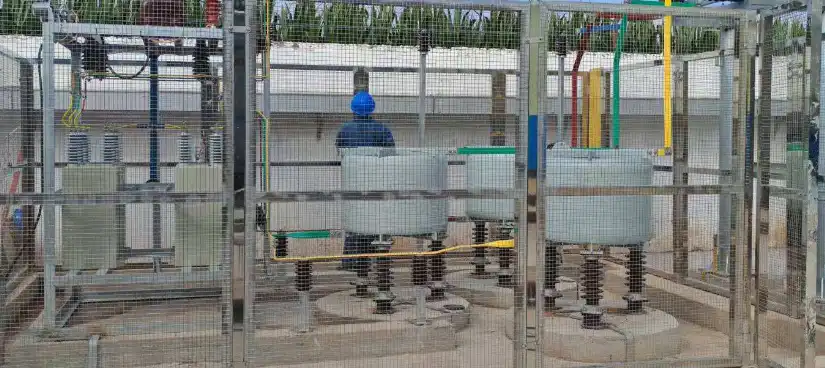
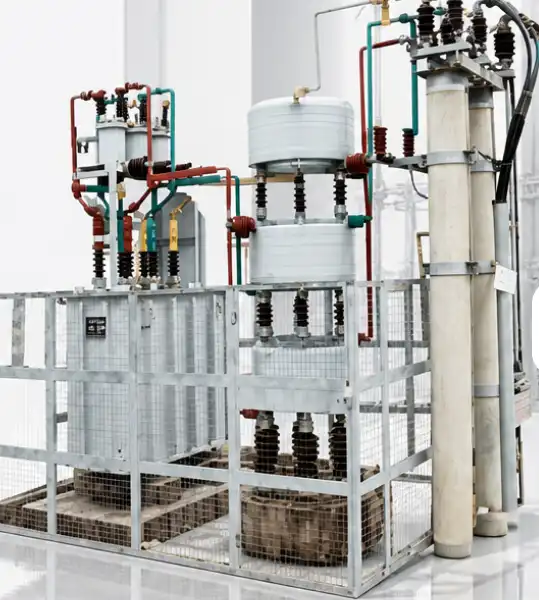
Understanding the Principle of 22kV Outdoor Line Compensation
What Reactive Power Actually Does to Your Voltage
There are two kinds of current that an inductive load, like a motor, transformer, or pump, needs: active current, which does work, and reactive current, which just makes the device magnetized. That reactive current flows along your whole feeder, causing a voltage drop that is equal to the line impedance. This drop can make the end-of-line voltage 8–12% lower than the standard number on a 22kV rural feeder that is 20 km long or more. This can make equipment stop working and lose energy.
How Capacitor Banks Correct the Deficit
There is a switched capacitor bank at the two-thirds point of a feeder that creates leading reactive current. This current cancels out the lagging reactive current from inductive loads. The net effect is that the total line current goes down. A lower current means a higher supplied voltage because voltage drop is equal to current times resistance. Xikai's pole-mounted units can handle rated voltages of 6 kV, 10 kV, and 35 kV, and each bank can hold up to 100 Mvar. This gives engineers full control over the amount of correction.
Operational Challenges and How to Address Them
Networks with a lot of Total Harmonic Distortion (THD) are really dangerous because regular capacitors can make harmonic voltages stronger instead of weaker. It is standard practice in engineering to add a series detuning reactor with a reactance of 6%, 7%, or 13%. This moves the resonance frequency away from the 5th and 7th harmonics that are most important. This step keeps the capacitor bank from failing too soon and stops harmonic amplification from reaching equipment further down the line.
Why 22kV Outdoor Line Compensation Is Critical for Voltage Improvement
Quantifiable Gains in Voltage and Loss Reduction
Field data from utility projects consistently shows that switched capacitor banks on 22kV feeders that are the right size raise end-of-line voltage by 5–10% and lower technical line losses by 15–30%. These aren't small improvements; on a line that serves 2,000 rural homes, a 7% rise in voltage can stop most equipment damage reports and cut down on monthly energy billing mistakes caused by meters under-reading at low voltage.
Outdoor vs. Indoor Compensation: Why Location Matters
You can fix the power factor at one central point with an indoor substation, but the reactive current still runs through every kilometer of the route between the substation and the load. Outdoor distributed compensation, which is placed on poles along the stream, stops reactive demand close to where it starts. This decentralized strategy frees up conductor capacity that would have been used to carry reactive current. This increases the feeder's active power throughput without having to replace a single conductor, making 22kv outdoor line compensation a practical option.
Suitability for Rural and Harsh Environments
Rural electricity in Africa, Southeast Asia, and China's interior counties all has a lot in common: loads that are spread out over long radial lines, and not a lot of resources for upkeep. Xikai's outdoor line compensation units are housed in 304/316 grade stainless steel cases that are rated IP54 to IP65. They are insulated with silicone rubber, which can handle humidity in tropical areas, salt mist along the coast, and temperature changes in the desert from -40°C to +70°C. The plan is meant to last for 20 years or more with little maintenance needed on-site.
Design and Installation Guidelines for Optimal Voltage Performance
System Configuration and Component Selection
The first step is to do a load-flow analysis. At different points, engineers look at the feeder's load profile, current power factor (cos φ), and voltage drop data. The usual range for compensation rates is 300 kVAR to 2,400 kVAR. They are usually set up with one fixed step and one or two split steps to track changes in the load. The vacuum switches that go with the capacitors must be rated for capacitive current switching. They must also work without interrupting to keep the capacitor and any loads connected from being damaged by transient overvoltages.
Step-by-Step Installation Overview
It is recommended to mount the device about two-thirds of the way along the feeder, as this creates the biggest voltage rise per kVAR installed. The automatic controller, safety switches, and transmission module are all inside the control cabinet, which has an IP54 rating at the very least. Neutral unbalance detection (which finds a failed capacitor element inside the circuit before a cascade), line overcurrent protection with expulsion fuses, and an overvoltage cutout are some of the most important safety functions. IEC 60871 and IEC 60071 set standards for how all wires and grounding must work together.
Common Installation Challenges and Solutions
When there isn't a stable backup power source, which happens a lot with country 22kV lines, the control system needs a built-in Potential Transformer (PT) to power itself. This feature is built into all of Xikai's units, so you don't need an external power source. For use near the coast, shelters must pass the ASTM B117 salt spray test to show that they will remain structurally sound for the expected 20 years. Thermal cycling tests from -40°C to +70°C make sure that the non-PCB dielectric fluid stays completely sealed even when the temperature in the field changes a lot.
Procurement and Supplier Selection: Ensuring Quality and Value
Key Quality Checks Before Purchase
If quality checks are missed, buying medium-voltage outdoor replacement equipment comes with real technical risks. It is important for buyers to make sure that the units have passed Basic Insulation Level (BIL) impulse tests at 125–150 kV and dielectric withstand tests at 50 kV for one minute. To keep the inside of the capacitor from getting too hot, the dielectric loss angle (Tan µ) must be less than 0.2 W/kvar. Ask for test certificates that are in line with IEC 60871 and make sure the vacuum switch can handle at least 50,000 switching actions.
When purchasing teams look at a 22kv outdoor line compensation provider, these are the main things they should check:
- Dielectric and Impulse Testing: The unit must withstand a 50 kV one-minute power frequency test and a 125 kV BIL lightning impulse without flashover, confirming insulation integrity for field conditions.
- Capacitance and Loss Angle Verification: Tan δ below 0.2 W/kvar prevents internal overheating and extends service life; this figure should appear on the manufacturer's factory test report.
- Sealing and Thermal Cycling: Thermal cycling tests across −40°C to +70°C followed by a leak check confirm that the non-PCB insulating fluid stays contained through seasonal temperature extremes.
- Salt Mist and Corrosion Resistance: Enclosures for coastal or high-humidity sites must pass ASTM B117 salt spray testing, confirming structural integrity across the unit's full 20-year service period.
- Communication Protocol Compatibility: Units intended for SCADA integration should support DNP3.0 or IEC 60870-5-104 natively, avoiding costly protocol conversion hardware in the field.
These criteria help purchasing managers compare suppliers in a structured way that is fair. They also lower the chance that products will fail in the field after they are sent out.
Evaluating Suppliers for Long-Term Value
Over the past 30 years, Xi'an Xikai has sold high-voltage equipment to power companies in over 40 countries. The company has 15 patents on reactive power technology and makes outdoor compensating units with biodegradable insulation fluid and polypropylene film capacitors. This choice of materials meets both long-term durability and environmental standards. IoT-enabled models allow for remote tracking through SCADA integration, which is very helpful for networks that don't need to be inspected often.
Future Trends and Performance Monitoring in Line Compensation
Smart Grid Integration and Remote Monitoring
Modern 22kv outdoor line compensation controllers can work without a permanent SCADA connection. They can switch based on voltage, time, kVAR, or power factor thresholds. Operators can see the flow of reactive power, voltage patterns, and the health of capacitors in real time when SCADA is available through DNP3.0 or IEC 60870-5-104. This information is used to plan preventative maintenance, which lets teams replace switches before they reach 50,000 to 100,000 operations, instead of after an unplanned outage.
Advanced Capacitor Technology and Longevity
Polypropylene film dielectrics now have internal discharge times of less than five minutes after the link is broken. This is safer than past designs that used paper-oil. Vacuum switches that are designed to switch capacitive current get rid of the restrike events that used to cause the most sudden capacitor failures. As distribution lines add more solar and wind power, fast-switching Static Var Generators at 22kV connection points offer voltage stability in the millisecond range that stepped capacitor banks can't match.
Aligning Upgrades with Grid Modernization Roadmaps
When utilities buy in bulk once a year (usually between 50 and 300 units), they can choose modular compensation systems that grow in stages. Putting in a new unit is more expensive than adding a second switched step to an old bank, and the modular design keeps the rest of the feeder running while the change is being done. This method lets grid workers at the county level in growing markets increase or decrease their reactive power resources based on changes in load, instead of having to make a big capital investment all at once.


Conclusion
There is a well-known way to solve the engineering problem of increasing voltage on medium-voltage feeders: put the reactive power compensation close to the load, make sure it's the right size by doing a load-flow analysis, and protect it from the environmental and electrical stresses of the installation site. Whether using switched capacitor banks or fast-response SVG units, 22kv outdoor line compensation results in measurable voltage recovery, lower line losses, and freed up conductor volume. As long as the equipment meets the above standards for insulation, sealing, and switching, the technology works just as well on a 25 km rural feeder in Africa as it does on a 22kV industrial ring in Southeast Asia.
FAQ
1.How does 22kV outdoor line compensation handle harmonics on the network?
Standard capacitors can amplify network harmonics. For feeders with elevated THD, detuned capacitor banks fitted with series reactors at 6%, 7%, or 13% reactance shift the resonance point away from the 5th and 7th harmonics, preventing amplification.
2.What is the expected service life of pole-mounted compensation units?
Units designed to IEC 60871 and built with polypropylene film capacitors in sealed stainless steel enclosures typically last 15–20 years. The vacuum switch is usually the first component to require attention, rated at 50,000–100,000 switching operations.
3.Can the controller operate without a SCADA connection?
Yes. The local controller switches automatically based on voltage, time, reactive power, or power factor thresholds. SCADA integration adds remote visibility and fault alerting but is not required for autonomous operation.
4.How is the correct kVAR rating determined?
A load-flow analysis of the feeder's load profile, current power factor, and voltage drop data determines the rating. Common values range from 300 kVAR to 2,400 kVAR, split into fixed and switched steps to follow the load curve through the day.
5.What protection functions are mandatory for outdoor 22kV installation?
Neutral unbalance protection, line overcurrent and short-circuit protection via expulsion fuses, and overvoltage cutout are the three mandatory protection layers for any outdoor medium-voltage capacitor bank installation.
Get a Customized 22kV Outdoor Line Compensation Quote from Xi'an Xikai
Xi'an Xikai plans and builds 22kv outdoor line compensation units that can withstand harsh weather, run on their own, and last for 20 years or more without major repairs. These are the things that utility buying teams care about the most. Our engineering team can look at your feeder data and tell you what kVAR rating, switching configuration, and communication setup will work best for your grid. You can email our sales team at serina@xaxd-electric.com, amber@xaxd-electric.com, or luna@xaxd-electric.com, or go to xaxd-electric.com to get a detailed datasheet or project quote.

References
1. IEC 60871-1: Shunt Capacitors for AC Power Systems Having a Rated Voltage Above 1 000 V, International Electrotechnical Commission, 2014.
2. IEC 60071-1: Insulation Co-ordination – Part 1: Definitions, Principles and Rules, International Electrotechnical Commission, 2019.
3. IEEE Std 1036: IEEE Guide for Application of Shunt Power Capacitors, Institute of Electrical and Electronics Engineers, 2010.
4. Arrillaga, J. & Watson, N.R.: Power System Harmonics, John Wiley & Sons, 2003.
5. Ghosh, A. & Ledwich, G.: Power Quality Enhancement Using Custom Power Devices, Springer, 2002.
6. World Bank Group: Rural Electrification: A Hard Look at Costs and Benefits, World Bank Energy Sector Working Paper, 2008.