
How Accurate Is an Outdoor Potential transformer in Power Systems?
2026-10-12 17:27:19
An outdoor potential transformer typically achieves accuracy within ±0.2% to ±0.5% of the true voltage value under rated operating conditions, depending on its accuracy class. According to IEC 61869-3, standard accuracy classes for voltage measurement include 0.1, 0.2, 0.5, and 1.0, while protection classes include 3P and 6P. In practical substation and switchgear applications, a well-specified outdoor potential transformer operating within its rated burden and temperature range will maintain this accuracy consistently — making it a dependable foundation for metering, billing, and protective relay systems.
Understanding Outdoor Potential Transformers and Their Accuracy
What Is an Outdoor Potential Transformer?
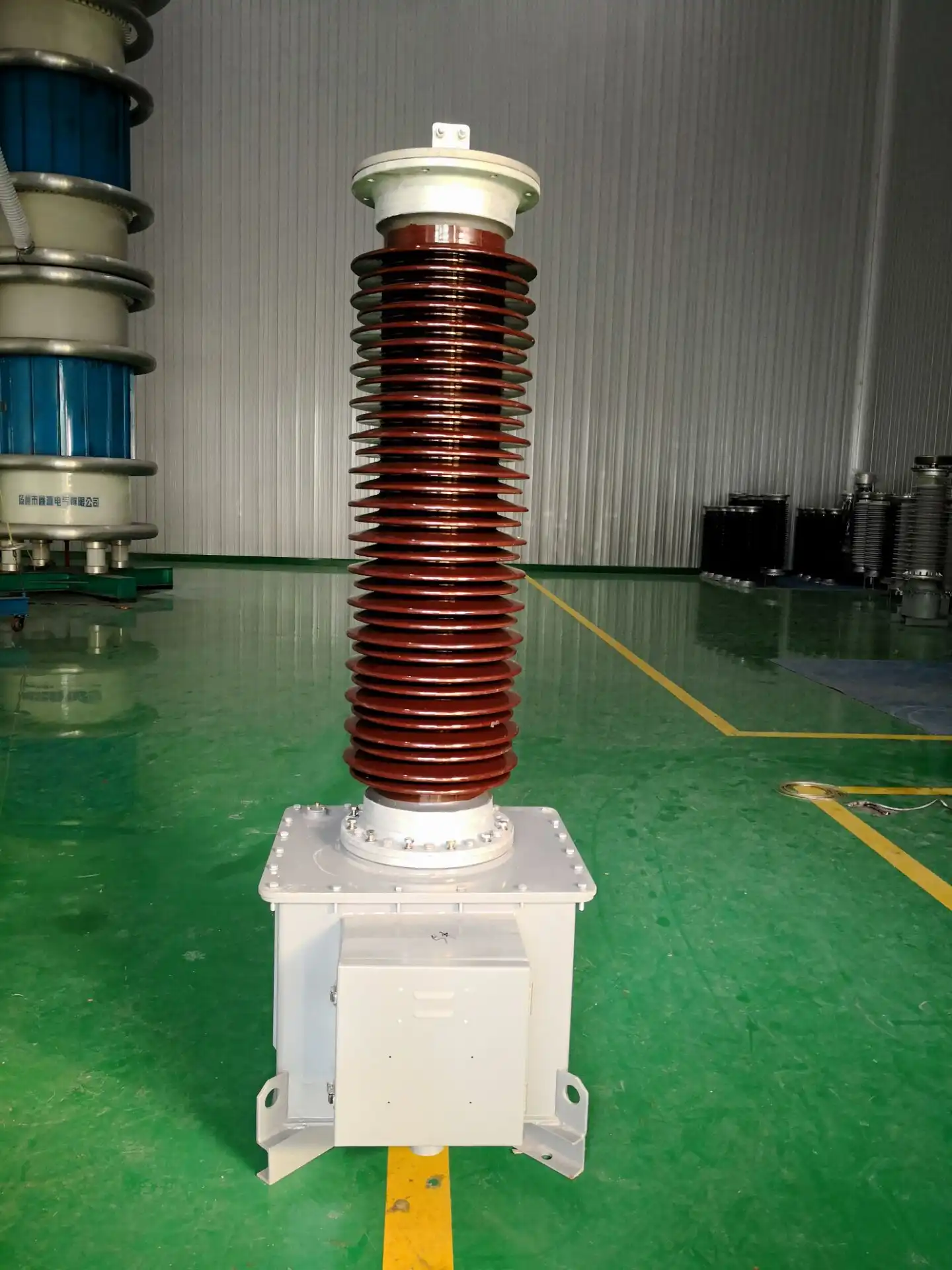
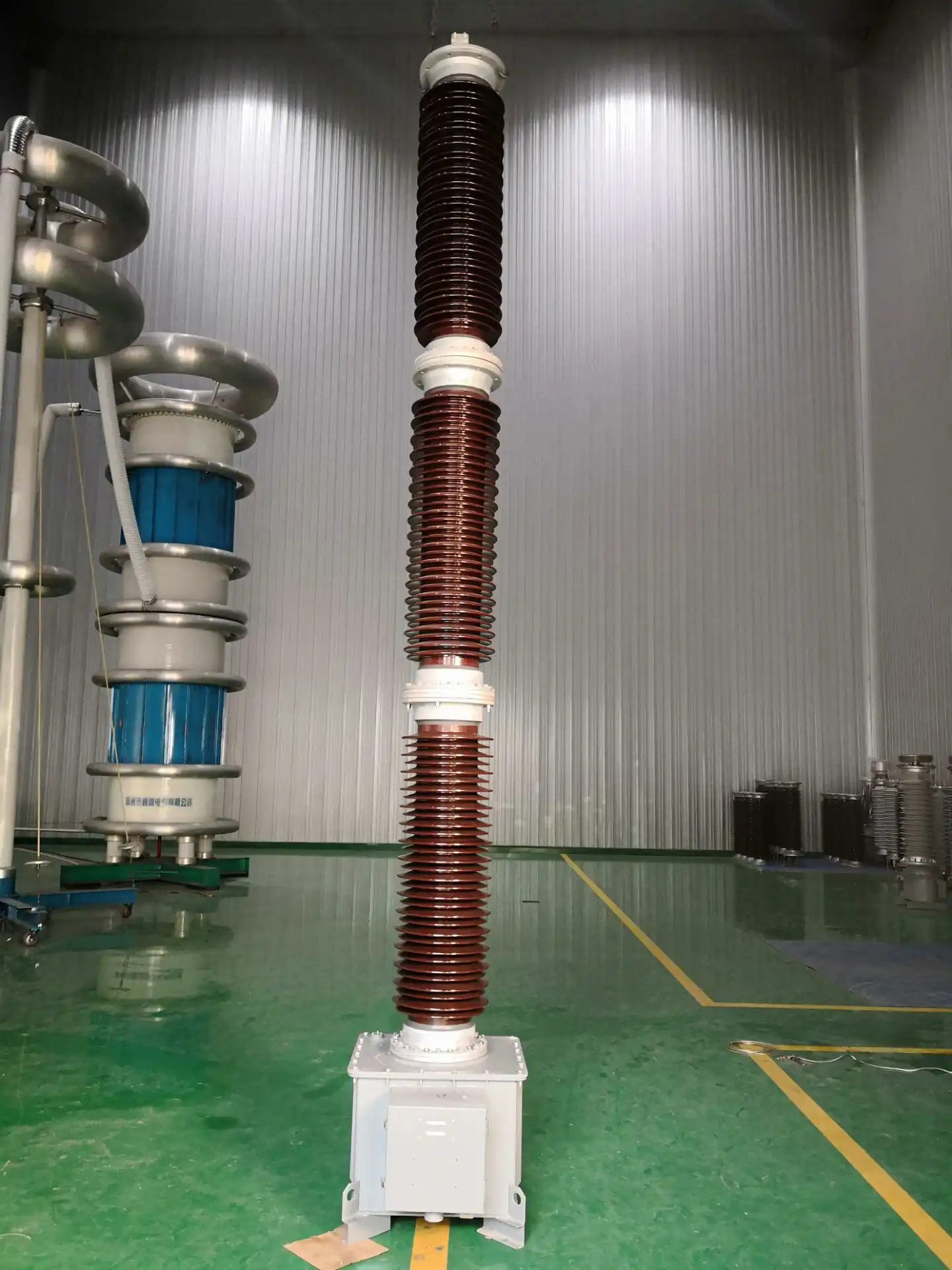
An outdoor potential transformer, which is also known as a voltage transformer (VT), lowers the high primary voltage to a safe secondary voltage that instruments and switches can read. The secondary voltage is usually 100V or 110V. Outdoor voltage transformers have extra waterproof housings and insulation systems that are made to withstand rain, dust, UV light, and big changes in temperature. These differences in design have a direct effect on how stable measurements are over time in power systems that are deployed in the field.
Accuracy Classes Explained
IEC 61869-3 lists 0.1, 0.2, 0.5, 1.0, and 3.0 as the accuracy classes for measuring VTs. These classes show the largest voltage ratio mistake that can be made as a percentage. Class 0.5 is best for general metering, while Class 0.2 is best for income metering and precise tracking. Protection classes like 3P and 6P can handle bigger mistakes, but they still need to be accurate enough when there is a fault to set off the protective relays correctly. If you pick the wrong class, you could lose money because of inaccurate bills or put the safety of the system at risk.
How Operating Principles Affect Accuracy
The electromagnetic induction principle is what makes a voltage transformer work. The primary winding is connected to the high-voltage circuit, and the secondary winding powers measuring tools. Any change in the phase angle or turns ratio between the primary and secondary voltages causes a measurement error. This difference is caused by core saturation, wire resistance, and leaking inductance. Understanding these mechanisms helps procurement engineers set reasonable expectations for accuracy and give the right burden rating up front, so that the system doesn't fail after installation.
Factors Affecting the Accuracy of Outdoor Potential Transformers
Environmental Conditions
Changes in temperature, high humidity, and surface contamination are the main outside factors that can affect the accuracy of measurements. According to the IEC 60068 environmental testing standards, insulation materials' dielectric qualities change in a way that can be measured when the temperature drops below -25°C or rises above +50°C. Pollution buildup on the surfaces of insulators causes more leakage current and phase angle errors. Degradation is most severe in coastal or industrial areas with salt fog or chemical emissions, which means that testing times need to be shortened by a lot.
Design and Core Material
The choice of core material between amorphous (nanocrystalline) materials and silicon steel has a direct effect on how accurate the outdoor potential transformer is. Amorphous cores have less hysteresis loss and more smooth magnetization curves, which helps them be more accurate when they are under light loads. Silicon steel cores have been shown to be cost-effective at standard levels of accuracy. How well the transformer keeps its ratio over years of temperature changes and shaking is also based on the quality of its winding construction, which includes the regularity of the wire gage, the integrity of the insulation layer, and its mechanical stability.
Maintenance and Calibration Intervals
An outdoor voltage transformer that is well-made will move over time if it is not serviced regularly. IEC 61869-1 says that insulation resistance tests and ratio verification checks should be done on a regular basis, depending on the installation climate. A dirty bushing or an adhesive surface that has been worn down can make partial discharge activity go up. This speeds up the aging of the insulation and makes measurement error bigger. The transformer stays within its rated accuracy class for as long as it is used as long as it is calibrated against a reference standard and regularly inspected for cracks, moisture intrusion, and terminal corrosion.
Comparing Outdoor Potential Transformers with Other Instrument Transformers
Outdoor VTs vs. Current Transformers
Current transformers (CTs) and voltage transformers do different but related jobs. CTs measure current by operating on the secondary side with a short circuit, while voltage transformers lower voltage by operating on the secondary side with an open circuit. Because of this basic difference, their accuracy changes when the load on them does. It is more important for a CT to have accurate secondary lead resistance than for a VT to have accurate linked load power factor. Both are defined by the IEC 61869 series, but the way they make errors needs to be looked at separately when the panel is being designed.
Outdoor VTs vs. Indoor Voltage Transformers
Most indoor voltage transformers are insulated with glue or air, which works best in controlled settings. When you take the same design outside without properly protecting it from the weather, surface tracking, partial discharge, and moisture absorption all speed up, which lowers the accuracy. Outdoor models protect themselves from this with cases that are IP65 or higher, materials that don't break down in UV light, and longer creepage distances according to the IEC 60071 insulation coordination guidelines. On paper, the accuracy class rating may be the same, but in the field, performance can be very different if environmental protection isn't good enough.
Dry-Type vs. Oil-Immersed Outdoor VTs
Outdoor voltage transformers that are submerged in oil have long been a popular choice for transmission-level substations because they have a high insulating strength and can effectively remove heat. Dry epoxy-cast designs, which are commonly used at voltages up to 35kV, don't need to be oiled and don't pose a fire risk. They also don't need to be checked for oil regularly. The 35kV epoxy resin-cast voltage transformer from Xi'an Xikai is accurate to class 0.2 or 0.5 and fully meets GB 20840.2-2014 and IEC 61869-1 & 61869-2 standards. It is a useful option for situations where oil-free operation is desired.
How to Choose an Accurate Outdoor Potential Transformer for Your Power System
Match Accuracy Class to Application
The first step is to make sure that the accuracy class is right for the measurement function. Class 0.2 or higher is needed for billing apps that handle money. Class 0.5 can be used for general equipment measuring. For protection relaying to work properly when there is a fault current, it needs to be accuracy class 3P or 5P. If you specify a higher accuracy class than what is needed, it will cost more without improving operations. If you specify a class that is too low, there could be payment issues or problems with the relay.
Evaluate Rated Burden and Secondary Output
The total impedance of the instruments and wires that are attached must be less than or equal to the transformer's maximum VA output. This is called the secondary burden. When the rated load is exceeded, the transformer moves outside of the accuracy range that was set. Xi'an Xikai's 35kV outdoor potential transformer has a secondary output of 5VA or 1VA with a primary input of 35kV and a secondary output of 10kV. It can handle 50/60Hz systems with a main current rating of 600A or 800A. These specs are exactly what medium-voltage switchgear safety and measuring circuits need to meet their load requirements.
Review Compliance Standards and Custom Options
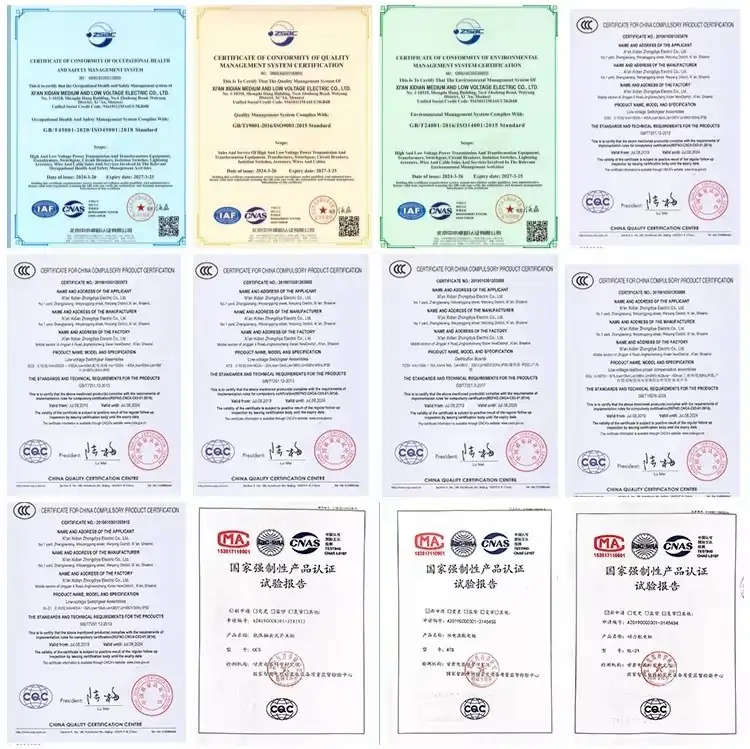
Teams in charge of buying things should make sure that the transformer is certified to meet the national or international standard for the market they want to sell to. IEC 61869-1 and 61869-2 are widely accepted in South Asia, Southeast Asia, and the Middle East. GB 20840.2-2014 is only used in China. When buying switchgear OEM uses that need custom winding configurations or enclosure dimensions, it is important to make sure that the maker can handle changed ratios and housing shapes without having to meet large minimum order numbers.
Best Practices for Maximizing Outdoor Potential Transformer Accuracy
Installation Guidelines
For a job to be done right, the terminals must be torqued correctly and the ground connections must be checked. When the secondary wire is free, the contact resistance goes up. This causes more voltage drop, which shows up as ratio error. The transformer needs to be set up level on a stable base so that the epoxy case doesn't get stressed out, which can cause tiny cracks to form over time. To reduce burden resistance, the lead lengths between the measuring tools and the secondary terminals of the transformer should be kept as short as possible.
Routine Inspection and Testing
These are the main care tasks that keep things accurate over time:
- Insulation resistance testing (Megger test): Perform annually or after significant weather events to detect moisture ingress before it causes measurement drift.
- Ratio verification: Compare secondary voltage output against a calibrated reference standard at least every three years, or after any suspected transient overvoltage event.
- Partial discharge check: Conduct at initial commissioning and after major thermal cycling to confirm the epoxy insulation remains void-free.
- Visual inspection: Check for surface tracking, cracks, corrosion on terminals, and seal integrity every six months in polluted or coastal environments.
If you do these things regularly, a high-voltage voltage transformer will keep working within its accuracy class for many years after the ten-year service period is over.
Safety Protocols During Maintenance
When a power transformer is on, you should never open the secondary line. In current transformers, an open secondary can cause dangerous overvoltage. But in VTs, the main danger comes from the high-voltage primary side. Follow lockout/tagout procedures at all times and use a valid voltage detector to make sure the area is safe before making any direct touch. Put the estimated burden limit in a clear place on the panel so that future techs don't overload the secondary circuit by accident.

Conclusion
An outdoor potential transformer's accuracy rests on choosing the right class, meeting the load correctly, using good core and insulation materials, installing it correctly, and keeping it in good shape with regular maintenance. Well-specified voltage transformers keep ratio errors within 0.2% to 0.5% for their entire estimated service life as long as they are used in situations that are within the limits of their design, according to IEC 61869 and GB 20840.2-2014. For switchgear makers who include measurement and protection circuits, these factors directly affect billing reliability and the integrity of the system protection. This makes the initial specification decision one of the most important steps in panel design.
FAQ
1.What accuracy class should I specify for revenue metering in a 35kV switchgear panel?
Class 0.2 is the standard requirement for revenue-grade metering per IEC 61869-3. If the application is general switchgear monitoring rather than billing, class 0.5 is acceptable and typically more cost-effective.
2.How does epoxy resin casting affect the accuracy of an outdoor voltage transformer?
Epoxy resin casting produces a void-free, moisture-proof insulation structure. This prevents partial discharge activity that would otherwise degrade the core and winding insulation over time, helping the transformer maintain its rated accuracy class throughout its service life.
3.What is the difference between protection class and measuring class in a voltage transformer?
Measuring classes (0.1, 0.2, 0.5) specify tight ratio accuracy for metering. Protection classes (3P, 6P) specify accuracy under fault conditions — they tolerate larger normal-state errors but must remain accurate enough at overcurrent levels to trigger protective relays correctly.
4.Can one outdoor voltage transformer serve both metering and protection circuits?
Yes, a dual-secondary winding design provides one winding at measurement accuracy (e.g., 0.2) and a second at protection accuracy (e.g., 3P). Xi'an Xikai offers multi-winding configurations to support this requirement in medium-voltage switchgear applications.
5.How often should an outdoor voltage transformer be recalibrated?
IEC 61869-1 does not specify a fixed recalibration interval, but industry practice for outdoor installation in moderate-pollution environments is ratio verification every three years, combined with annual insulation resistance checks.
Get a Quote from Xi'an Xikai — Outdoor Potential Transformer Supplier
The 35kV epoxy resin-cast voltage transformer from Xi'an Xikai has an accuracy class of 0.2 or 0.5, can handle 600A or 800A of primary current, works with both 50Hz and 60Hz, and fully meets GB 20840.2-2014 and IEC 61869 standards. As a well-known company that makes outdoor potential transformers, we can make unique winding designs and enclosure sizes to fit the shape of your switchgear panel. For details on specs and wait times for samples, please contact our expert team:
Website: xaxd-electric.com
References
1. International Electrotechnical Commission. IEC 61869-3: Instrument Transformers – Additional Requirements for Inductive Voltage Transformers. IEC, 2011.
2. International Electrotechnical Commission. IEC 61869-1: Instrument Transformers – General Requirements. IEC, 2007.
3. Standandardization Administration of China. GB 20840.2-2014: Instrument Transformers – Part 2: Additional Requirements for Current Transformers. SAC, 2014.
4. Kujur, S., and Verma, A. "Performance Analysis of Voltage Transformers Under Environmental Stress Conditions." IEEE Transactions on Power Delivery, 2019.
5. Mombello, E. E. "Impedances for the Calculation of Electromagnetic Transients in Transformers." IEEE Transactions on Power Delivery, 2002.
6. Faifer, M., Ottoboni, R., and Toscani, S. "Accuracy Testing Methods for Voltage Transformers Used in Smart Grids." Measurement, Elsevier, 2020.