
Self-healing Capacitor Failure Modes and Troubleshooting Tips
2026-10-10 17:01:13
When a self-healing capacitor fails in a live power factor correction bank, the consequences range from reactive power imbalance to tripped protection relays and unplanned downtime. Unlike conventional film-foil capacitors, a metallized polypropylene capacitor can clear localized dielectric faults automatically by vaporizing the damaged electrode area within microseconds. However, that self-repair ability has limits. Understanding the specific failure modes, their root causes, and the right troubleshooting steps is what separates a procurement team that keeps systems running from one that is constantly replacing stock. This guide addresses exactly that.
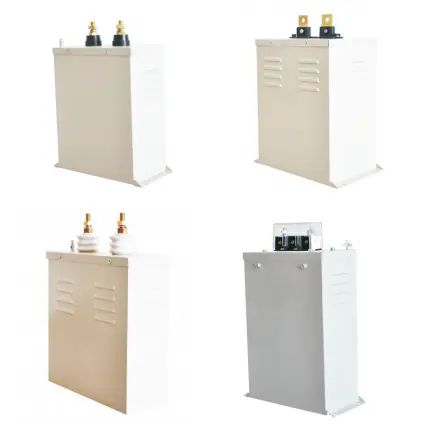
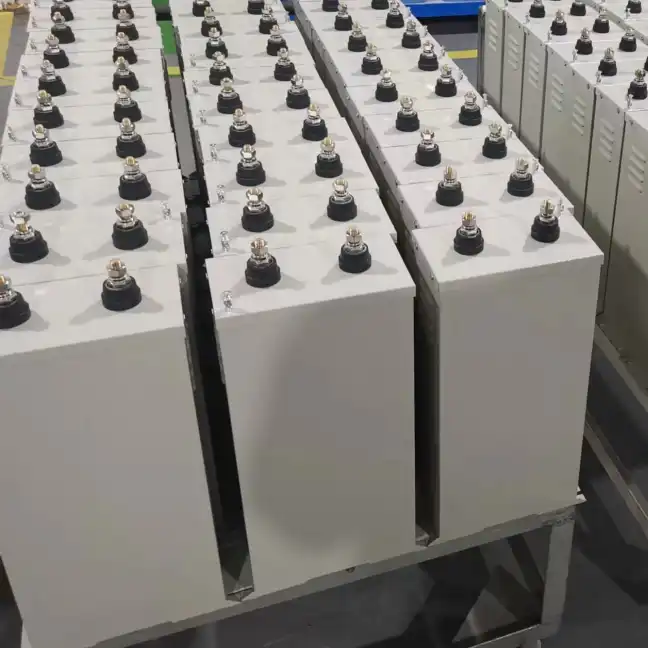
Understanding Self-Healing Capacitor Failure Modes
A self-healing capacitor works by adding a very thin layer of metal—usually a zinc-aluminum alloy—on top of a polyethylene film. When a sudden change in voltage makes a dielectric weak point, arc energy burns up the metal around it, separating the fault. Instead of a huge break, there is a small, lasting loss of electrode area. When thousands of these things happen, the total loss adds up to a lot.
Dielectric Breakdown
When the electric field across the polypropylene film goes over its withstand level, dielectric breakdown happens. Most of the time, this happens after a long period of overvoltage in a 400V/30KVAR unit like the BKMJ0.46-30-3, not all at once. Each clearing event lowers the capacitance that can be used. The unit is almost dead when the capacitance drops more than 5% below its rated value.
Partial Discharge and Thermal Degradation
When there are holes or layers of film that have come apart, partial discharge (PD) happens. This creates ozone and heat that speed up the aging process of polymers. The problem is made worse by thermal degradation. According to the Arrhenius model for polymer degradation, operating 10°C above the rated temperature class cuts the expected service life by about half. A dissipation factor (tan ε) rising above 0.003 at 1 kHz is a good early warning sign.
Mechanical and Environmental Stress
Vibration makes terminal connections less tight, which raises contact resistance and creates hot spots in certain areas. When moisture gets into the zinc electrode layer, it quickly oxidizes, which causes capacitance loss without starting any self-healing processes. Case bulging, resin splitting, or staining are all visual signs that chemical or internal pressure breakdown has already begun.
Root Cause Analysis of Self-Healing Capacitor Failures
Finding the cause of a failure stops it from happening again and helps make better procurement specifications. Electrical, weather, and industrial factors all play a part, but in different ways.
Electrical Stressors: Overvoltage and Ripple Current
Low-voltage PFC banks usually wear out faster when they are overvoltaged all the time. When put on a 400V grid, a 460V capacitor (BKMJ0.46-30-3) adds a voltage cushion, but harmonic distortion or series reactor resonance can make the real terminal voltage much higher than the standard voltage. High ripple current heats up inside the PU resin potting compound, which it needs to get rid of. If airflow around the unit is limited, the thermal load grows.
Environmental Influences
There are measured ways that extreme temperatures, high humidity, and airborne pollution can shorten the life of something. Moisture is especially bad because it directly oxidizes the zinc metallization, which lowers capacitance without setting off any self-healing capacitor self-healing mechanisms. Transport vibrations or mechanical shocks from nearby switchgear operation can break internal winding layers, making delamination zones that become PD sites.
Manufacturing Quality and Aging
Batch-to-batch capacitance deviation is a real issue for people who buy a lot of things. If a unit meets its stated KVAR at installation, it can be directly seen through automatic tension control for even film stacking and tight tolerance control during precision winding. The self-healing reserve is slowly used up by repeated thermal cycling, which makes the initial metallization profile a very important quality parameter.
Troubleshooting Tips and Preventive Measures
A structured diagnostic workflow cuts down on guesswork and the average time it takes to fix something by a large amount. Any metalized film power capacitor in a low-voltage distribution system can be used in this way.
When the performance of a capacitor bank gets worse, field engineers follow this useful three-step process:
- Stage 1 — Symptom identification: Check phase current balance. Rated current for a 30KVAR unit at 400V is approximately 43A per phase. A reading more than 10% below nominal on one phase points to capacitance loss in that unit. Zero current on a phase indicates the internal pressure disconnector has tripped.
- Stage 2 — Fault isolation: De-energize and discharge the bank (verify zero voltage with a calibrated meter). Measure capacitance with an LCR bridge and insulation resistance with a 500V megger. Capacitance deviation greater than 5% or IR below 1000 MΩ warrants replacement.
- Stage 3 — Root cause confirmation: Inspect the case for bulging, check terminal torque values, and review ambient temperature logs. Cross-reference findings with installation date to assess whether the failure is premature or end-of-life.
These three steps get rid of the guessing that leads to parts that aren't needed or, even worse, leaving a broken unit in use.
Three areas are the focus of preventative measures. First, choose a capacitor whose voltage rating gives you a real safety margin above the grid voltage, taking harmonics into account. Second, make sure there is enough air flow in the cabinet to keep the temperature below the recommended class. Third, do checks every three months: check the torque at the terminals, look for case deformation, make sure the discharge resistors are working, and write down capacitance readings to keep track of long-term trends.
Comparing Self-Healing Capacitors to Other Types and Market Solutions
For industrial power factor adjustment, not all capacitor technologies work well. Buyers can write better specifications when they know where metalized film designs work better than others.
Performance vs. Film-Foil and Ceramic Types
Because film-foil capacitors have different metal foil electrodes, a single dielectric hole makes a short that lasts forever. Ceramic capacitors have a high capacitance density, but they are sensitive to voltage changes and can break easily when put under mechanical stress. When there is a dielectric fault, metalized polypropylene designs turn it into small, recoverable losses instead of sudden fails. This makes them the best choice for AC power uses above 1KVAR.
Evaluating Suppliers for B2B Procurement
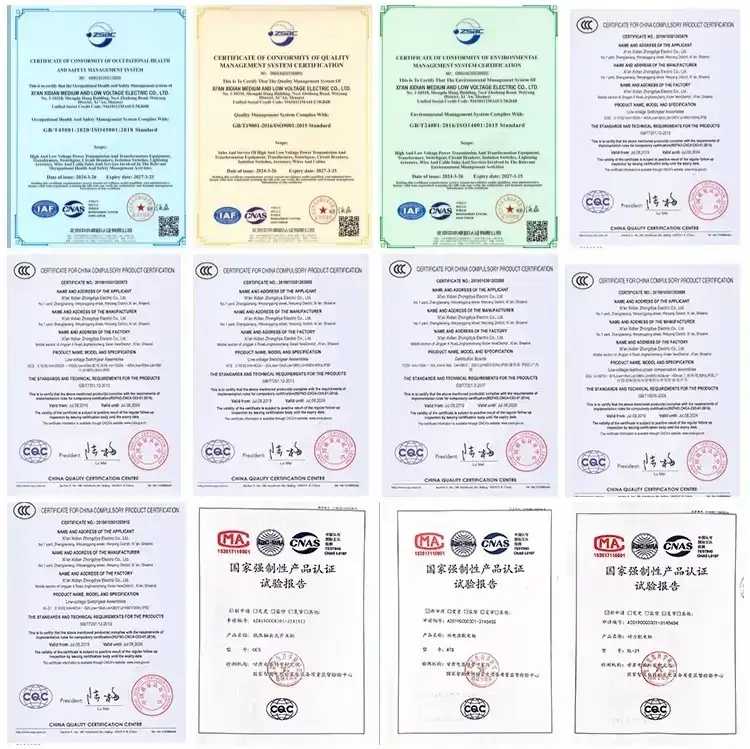
Vishay, KEMET, EPCOS, and TDK are some of the best foreign suppliers that put out thorough derating curves and IEC 60831-1 compliance data. When purchasing managers look for a self-healing capacitor provider, they should ask any vendor for proof of IEC or CCC certification, batch-level capacitance tolerance reports (usually ±5% for standard power capacitors), and proven wait times for monthly orders.
The BKMJ0.46-30-3 in Context
The BKMJ0.46-30-3 is a common cylinder unit on the market. It has a voltage range of 250V to 525V and is rated at 400V/30KVAR, 50/60Hz. Because it's small, has PU resin (soft resin) potting, a built-in grounding bolt, and doesn't need any maintenance, it's a good choice for companies that make capacitor cabinets and electrical wholesalers who sell to customers in Southeast Asia and China. The unit meets IEC and CCC standards thanks to ISO 9001-certified production methods, which is important when checking the reliability of a supply chain.
Best Practices for Long-Term Reliability and Performance Optimization
To make the service life last longer than the design goal of 100,000 hours, you need to make smart management decisions as well as good parts.
Inspection Schedules and Electrical Testing
The most cost-effective way to maintain a self-healing capacitor bank is to measure its capacitance every three months. Write down every reading in a log. If the readings keep going down by more than 1% to 2% every three months, that means the metallization loss is speeding up and the unit needs to be replaced before it unexpectedly trips its disconnector.
Load Derating and Voltage Stress Reduction
Based on inverse power-law aging models for polypropylene dielectrics, running a capacitor at 90% of its rated voltage for two years is twice as long as running it continuously at 100% of its rated voltage. Adding a series detuning reactor (usually with a 7% impedance) to PFC banks that are fed by harmonic-rich bus bars lowers the frequency of clearing events and limits voltage peaks at the capacitor terminals.
Thermal Management
The most common reason for early failure in humid sites is a cabinet temperature above 40°C. The PU resin potting stays within its design temperature range with the help of forced air flow, thermal shields between heat-generating parts, and the right amount of space between circular units in the bank. The IP54 rating on the BKMJ0.46-30-3's housing means that it is generally resistant to dust and water getting in. However, the panel designer is still responsible for managing the panel's external temperature.
Conclusion
Dielectric wear from overvoltage, thermal aging, moisture entry, and mechanical stress are all known causes of self-healing capacitor failures. A organized troubleshooting method can find early signs of each type of failure because they leave measured electrical or physical signs. By lowering the voltage correctly, checking the capacitance regularly, and keeping the environment under control, metalized polypropylene capacitors can work at full capacity for a long time, well within their rated service lives. When purchasing large amounts of standard units like the BKMJ0.46-30-3, the most common quality risks are eliminated before they reach the production floor by defining tight tolerance batches and checking IEC certification documentation during the buying stage.
FAQ
1.How does a self-healing capacitor restore itself after a fault?
When a dielectric weak point breaks down, arc energy vaporizes the thin metal electrode surrounding the fault within microseconds. This creates a small insulating gap that isolates the defect. The capacitor continues operating with a marginal capacitance reduction. The process repeats across the film's life until accumulated losses exceed the 5% threshold.
2.How do I know when a self-healing capacitor has reached end-of-life?
Measure phase current and compare it against the rated value (approximately 43A for a 30KVAR/400V unit). A reading more than 10% below nominal indicates significant capacitance loss. Zero current means the internal pressure disconnector has tripped. Physical case bulging confirms internal pressure build-up and requires immediate replacement.
3.Does every self-healing event damage the capacitor permanently?
Yes, each clearing event removes a microscopic area of electrode, slightly reducing capacitance. The loss per event is negligible, but cumulative losses over the operational life are measurable and predictable. This is why periodic capacitance logging is more informative than visual inspection alone.
4.Can the BKMJ0.46-30-3 handle harmonic-rich environments?
The unit operates on 50/60Hz systems with a voltage range up to 525V. In high-harmonic environments, pairing it with a series detuning reactor is the standard practice to limit voltage stress at the terminals and protect the metallized film from excessive clearing events.
Contact Xi'an Xikai for Self-Healing Capacitor Supply
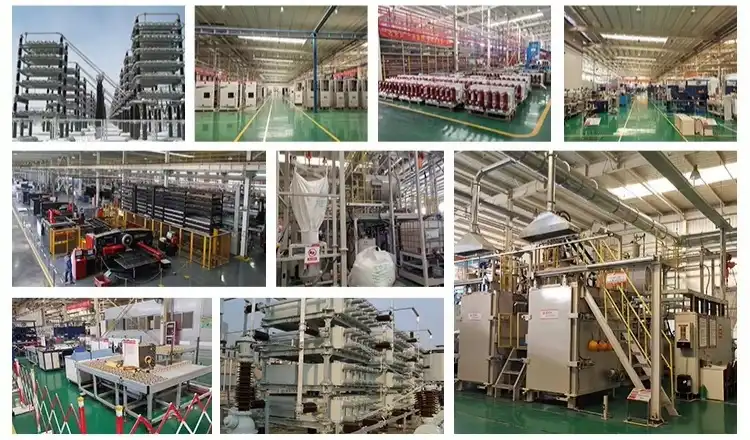
Power distribution equipment from Xi'an Xikai Medium & Low Voltage Electric Co., Ltd. has been used in State Grid systems, factories, and renewable energy projects for more than 20 years. The company has more than 15 patents and is ISO 9001 and ISO 14001 certified. As a maker of self-healing capacitors, we can make both normal BKMJ series units and custom designs for places with a lot of humidity or high elevation. Orders in bulk are sent out within four weeks. To get rates and details, you can email our team at serina@xaxd-electric.com, amber@xaxd-electric.com, or luna@xaxd-electric.com, or go to xaxd-electric.com.
References
1. IEC 60831-1: Shunt power capacitors of the self-healing type for a.c. systems — Part 1: General — Performance, testing and rating, International Electrotechnical Commission, 2014.
2. Montanari, G. C., & Dissado, L. A., "Electrical ageing and life models for polymeric insulating materials," IEEE Transactions on Dielectrics and Electrical Insulation, 2005.
3. Lahyani, A., Venet, P., Grellet, G., & Viverge, P. J., "Failure prediction of electrolytic capacitors during operation of a switchmode power supply," IEEE Transactions on Power Electronics, 1998.
4. Hammam, M., & Leijon, M., "Reliability and ageing of metallized polypropylene film capacitors in power systems," IEEE Electrical Insulation Magazine, 2007.
5. Wang, H., & Blaabjerg, F., "Reliability of capacitors for DC-link applications in power electronic converters — An overview," IEEE Transactions on Industry Applications, 2014.
6. Yializis, A., & Colpitts, B. G., "Self-healing metallized capacitor technology for high-voltage applications," Journal of Power Sources, 2003.