
SF6 Circuit Breaker Applications in Modern Power Grids
2026-10-09 17:29:58
SF6 circuit breakers have become a typical protective device in the international high-voltage transmission and distribution systems. Sulphur hexafluoride gas is used as the insulating medium and arc-quenching agent in these devices, enabling them to interrupt fault currents quicker and with higher reliability than the previous oil or air-blast systems. From 35kV outdoor substations in sub-Saharan Africa, to renewable energy tie-lines in Southeast Asia, to urban grid upgrades in China, the SF6 circuit breaker provides electrical endurance, mechanical durability, and low maintenance that few competing technologies can match in this voltage class.
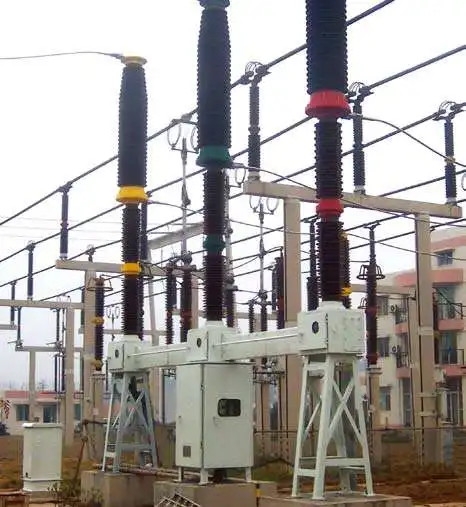
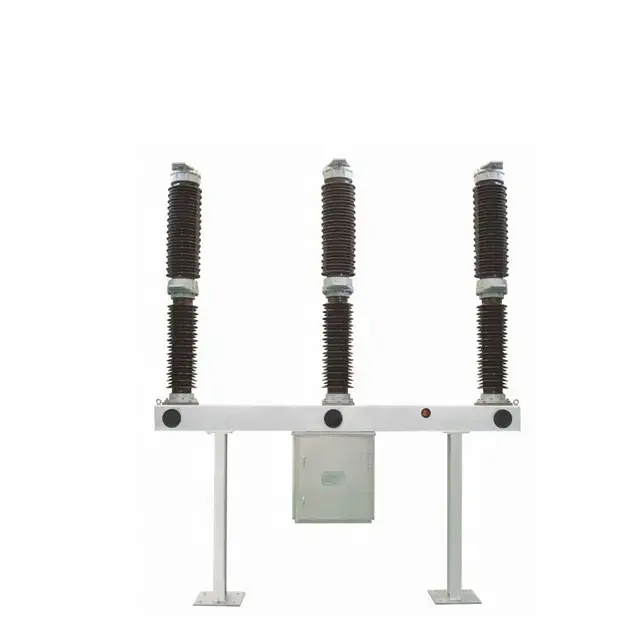
Understanding SF6 Circuit Breakers in Power Grids
To make a sensible buying decision, it's vital to understand how these devices function and why experts keep calling for them in medium and high-voltage applications.
How SF6 Gas Works as an Insulating Medium
Sulphur hexafluoride is a chemically stable gas that does not ignite. It has a dielectric strength roughly 2.5 - 3 times that of air, as long as the pressure remains the same. As an arc develops between two widely spaced contacts, the negatively charged SF6 molecules rapidly absorb any free electrons. This takes the arc out at or very near to zero current. This property allows the interrupter chamber to be tiny, yet still manage fault currents that would damage an air-blast unit of the same size.
Key Components That Drive Performance
A typical SF6 circuit breaker comprises an interrupter chamber, a support insulator and an operating means. The contacts split and a puffer barrel within the interrupter pushes gas into the arc zone. The LW8-40.5 is equipped with the CT14 spring-operating mechanism, which stores mechanical energy in a charged spring and releases it on demand. This ensures a uniform contact travel speed regardless of ambient temperature. For distant or unmanned substations, engineers rely on spring mechanisms because they operate the same way each time.
Why SF6 Outperforms Older Technologies
Oil circuit breakers may catch fire and should be checked regularly for oil levels. Air blast designs are noisy and need high pressure compressed air systems. Vacuum circuit breakers are suitable up to roughly 36kV, but may produce significant recovery voltages that stress transformer insulation when switching capacitive loads. SF6 circuit breaker, the difficulties are not there. It features a sealed, self-contained system, with minimal operating noise and performs well across a large range of voltages.
Practical Applications of SF6 Circuit Breakers in Modern Power Grids
Knowledge of the optimal use of these devices assists project managers and electrical engineers in proper allocation of them in a substation design.
High-Voltage Transmission and Substation Protection
The SF6 circuit breaker in 35 kV and 40.5 kV outdoor substations is used for the protection of bus sections, transformer feeders and line bays against fault currents. For example, the LW8-40.5 from Xi'an Xikai is able to interrupt 31.5kA at rated voltage 21 times without maintenance or gas replacement – a criterion that directly decreases lifetime servicing costs for transmission-class equipment. The IP65-rated shell protects internal connections and mechanism components from moisture, dust and salt-laden air, which is a boon for projects in tropical or coastal environments.
Renewable Energy Integration
Solar and wind farms have erratic switching patterns that put stress on traditional protective devices. An SF6 circuit breaker switches capacitive and inductive loads with comparable assurance because the gas recovers its dielectric strength within microseconds after arc extinction. This makes it a realistic solution for collector substations where the inverter output changes over the day and reactive power switching is frequent.
Smart Grid and Industrial Distribution
Today’s substations increasingly depend on remote monitoring and automatic protection measures. The LW8-40.5 may optionally include up to 12 current transformers per unit, providing SCADA systems with detailed current data without the need for additional external measuring equipment. In factories that operate large CNC machines or arc furnace loads, this level of monitoring helps operators spot errors in their infancy, before they get worse.
Selection and Procurement Considerations for B2B Clients
In an EPC project, selection of the proper SF6 circuit breaker is a match between the technical specifications and site circumstances and then the assessment of suppliers in terms of quality and support capabilities.
Here are the big things that experienced project managers look at when they are purchasing products:
- Breaking capacity and voltage class: Make that the rated short-circuit breaking current is equal to the highest projected fault level at the busbar. The LW8-40.5 has a rating of 31.5kA at 40.5kV, and is suitable for most 35kV system fault levels in the local and international markets.
- Mechanical Endurance: Mechanical life of more than 3,000 operations equals fewer scheduled replacement cycles throughout the 25-year substation design life. This minimises the risk of scheduling on projects in Africa or South East Asia where there are complicated spare parts logistics.
- Gas density monitoring The MKZ-type SF6 density gauge installed on the LW8-40.5 automatically adjusts for ambient temperature, so that the measurements represent genuine gas density instead of pressure changes caused by daily thermal cycling. This is important for large temperature swinging locations.
- Compliance with Standards: Procurement requirements for grid operators usually include conformance to IEC 56 or IEC 62271-100, or to national standards such as GB1984-89 in China. Both must be included in test results.
standards compliance: The grid operator’s procurement criteria normally comply with IEC 56 or IEC 62271-100 and national standards such as GB1984-89 in China. Be certain that the test findings cover both.
Lifecycle Cost and After-Sales Support
The cost of owning an SF6 circuit breaker is far more than what you spent for it. The actual cost of operating a substation is dependent on such factors as availability of replacement parts, training of local maintenance workers, and the time it takes for technicians to be in a position to assist with commissioning. Expert assistance from Xi'an Xikai is available 24/7, with organised spare-parts logistics and predictive maintenance programs. These are critical for projects where the closest skilled service personnel may be hundreds of kilometres distant.
Environmental and Safety Aspects of SF6 Circuit Breakers
The Intergovernmental Panel on Climate Change claims SF6 has a global warming potential 23,500 times that of CO2 over a 100-year period. Because of this figure the EU has tightened restrictions on gas management and other markets are watching more closely. The LW8-40.5’s factory-sealed design solves this problem with an annual leakage rate of less than 0.5%, which is below the level many operators deem acceptable for emissions.
Safe Handling Practices
SF6 is benign in tiny concentrations in air, but the products of arc breakdown, notably metallic fluorides and sulphur compounds, are hazardous. Maintenance personnel must wear the proper respiratory gear and utilise appropriate gas recovery equipment before opening any interrupter chamber. Two-stage density monitors provide a warning long before the gas pressure decreases to a level where the arc-quenching becomes less effective. This allows emergency personnel to have a heads up on an issue, rather than waiting for it to happen.
Regulatory Compliance in Export Markets
EPC contractors operating in Africa and South East Asia should verify whether there are any restrictions on the quantity of SF6 that may leak or if gas recovery is mandatory in the national grid codes of the target country. Local personnel training in gas handling and equipment with known leak rates may reduce the regulatory risk at the time of project handover.
Future Trends and Technological Innovations
It is clear that switchgear insulation is moving toward lower global warming potential media over the long term, but the change is happening slowly.
Hybrid and Alternative-Gas Breakers
Breakers with fluoronitrile or fluoroketone gas mixes mixed with CO₂ or air have been made by manufacturers. At slightly higher pressures, these mixtures reach a dielectric strength that is about the same as SF6. However, there aren't many products on the market that are rated for 40.5kV outdoors, and most grid operators' procurement specifications still list SF6 as the main insulating material for this voltage class.
Digital Monitoring and Predictive Maintenance
With the Internet of Things (IoT), sensors can now keep an eye on things like gas density, contact wear, and the charge state of spring mechanisms in real time, sending information to central maintenance platforms. This cuts down on the number of physical inspection trips needed by EPC workers who are in charge of multiple substations spread out over a large area.
Market Demand Outlook
The International Energy Agency thinks that grid spending in developing countries will grow a lot by 2030 to help with the integration of green energy and electrification. This directly increases the need for outdoor SF6 circuit breakers at the 35kV to 40.5kV level, where known gas-insulated designs are more cost-effective than newer options.
Conclusion
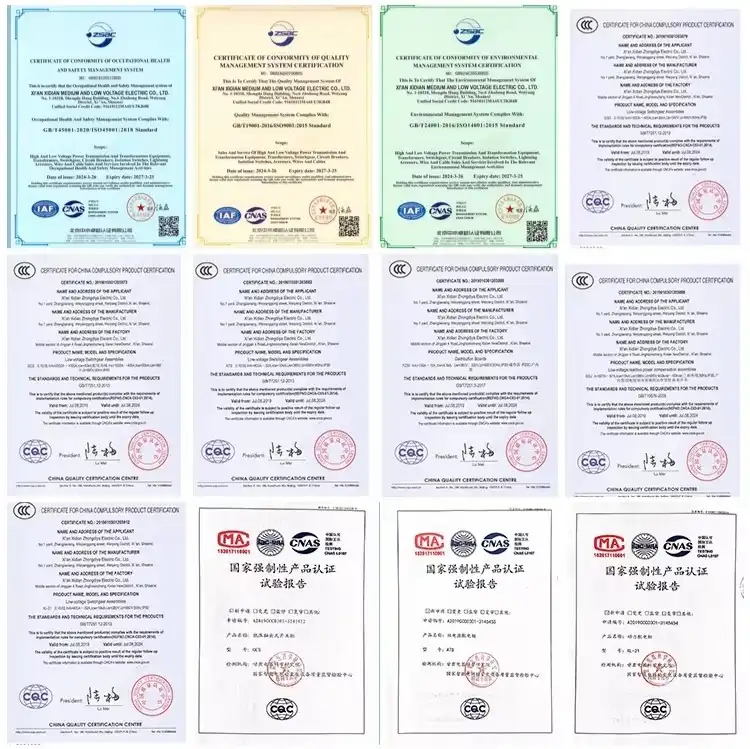
The SF6 circuit breaker is still the most common way to stop a fault in 35kV and 40.5kV outdoor substations in both local and foreign markets. Because it can handle harsh environments, has a high breaking capacity, and doesn't need much upkeep, it is the best choice for EPC companies working on transmission and distribution projects in China, Southeast Asia, and Africa. The Xi'an Xikai LW8-40.5 uses this technology in a way that makes it suitable for demanding grid applications. It comes with factory certification and structured support after the sale. As the modernization of the power grid speeds up, it will still be smart to choose equipment with documented endurance ratings and sealed gas systems.
FAQ
1.How often does an SF6 circuit breaker require maintenance?
Modern sealed SF6 circuit breakers typically require mechanism lubrication checks every 5 to 10 years and gas density verification at each scheduled inspection. The LW8-40.5 can perform 21 full short-circuit interruptions at 31.5kA before requiring internal inspection, which significantly extends service intervals compared to older oil designs.
2.What happens if SF6 gas pressure drops below the rated level?
A two-stage monitoring system responds first with an alarm signal and then with a mechanical lockout before the pressure falls to a level that could compromise arc extinction. The MKZ density gauge on the LW8-40.5 provides temperature-compensated readings, so operators receive accurate status data under all ambient conditions.
3.How does an SF6 circuit breaker compare to a vacuum circuit breaker at 40.5kV?
Vacuum technology performs well below 36kV and in frequent-switching applications. At 40.5kV, the SF6 design offers lower recovery voltage stress on connected transformers during capacitive switching and higher short-circuit breaking capacity in a compact interrupter, which is why most 35kV substation specifications continue to reference SF6 technology for this voltage class.
4.Can the LW8-40.5 replace an existing oil circuit breaker without civil modifications?
Yes. Xi'an Xikai supplies a transition base that matches the DW8-35 mounting footprint, allowing direct substitution of legacy oil breakers without changes to concrete foundations or busbar arrangements.
Partner With Xi'an Xikai for Your Next SF6 Circuit Breaker Project
Xi'an Xikai has been making medium- and high-voltage switchgear for more than 20 years. Their goods are used in State Grid systems, factories, and export projects on six continents. For technical information, personalized quotes, and help with application engineering, please contact us directly if your team is looking for an SF6 circuit breaker supplier for a 40.5kV outdoor substation. Email serina@xaxd-electric.com, amber@xaxd-electric.com, or luna@xaxd-electric.com to get in touch with our team. At xaxd-electric.com, you can find full product information.
References
1. International Electrotechnical Commission. IEC 62271-100: High-Voltage Switchgear and Controlgear – AC Circuit Breakers. IEC, 2021.
2. International Energy Agency. World Energy Investment 2023. IEA, 2023.
3. Intergovernmental Panel on Climate Change. Climate Change 2021: The Physical Science Basis. Cambridge University Press, 2021.
4. IEEE Power & Energy Society. IEEE Std C37.04: IEEE Standard for Ratings and Requirements for AC High-Voltage Circuit Breakers. IEEE, 2018.
5. Christophorou, L.G., and J.K. Olthoff. Fundamental Electron Interactions with Plasma Processing Gases. Springer, 2004.
6. CIGRÉ Working Group A3.28. Switching Phenomena for EHV and UHV Equipment. CIGRÉ Technical Brochure 570, 2014.