
How Does an Indoor Disconnect Switch Improve Electrical Safety?
2026-10-08 17:40:39
An indoor disconnect switch improves electrical safety by physically isolating a circuit from its power source, creating a visible break that confirms de-energization before maintenance begins. In high-voltage environments such as substations and switchgear cabinets, this isolation prevents accidental contact with live conductors. When used correctly and paired with lockout/tagout procedures, an indoor disconnect switch protects maintenance personnel, limits fault propagation, and gives engineers a reliable means to confirm that a section of the system is safely isolated before any hands-on work takes place.
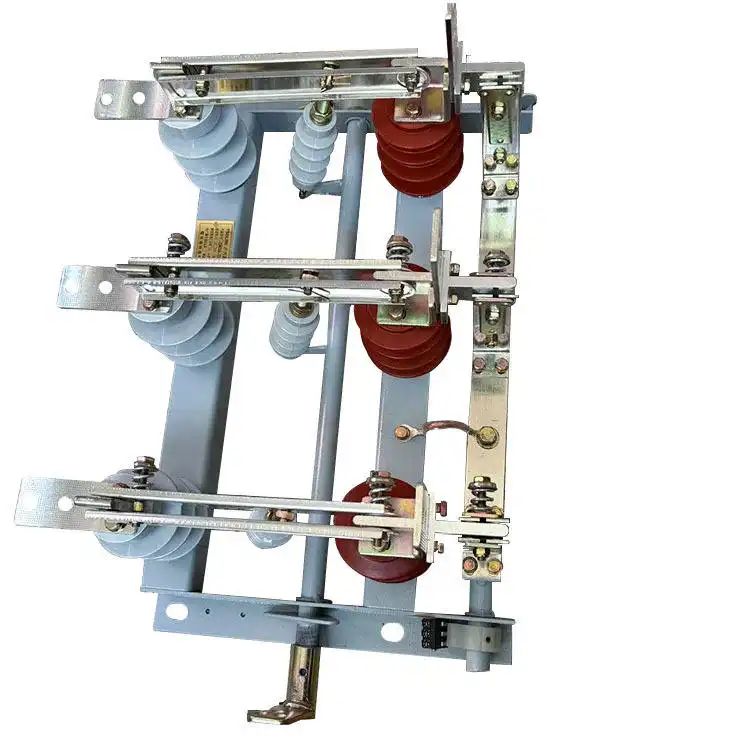
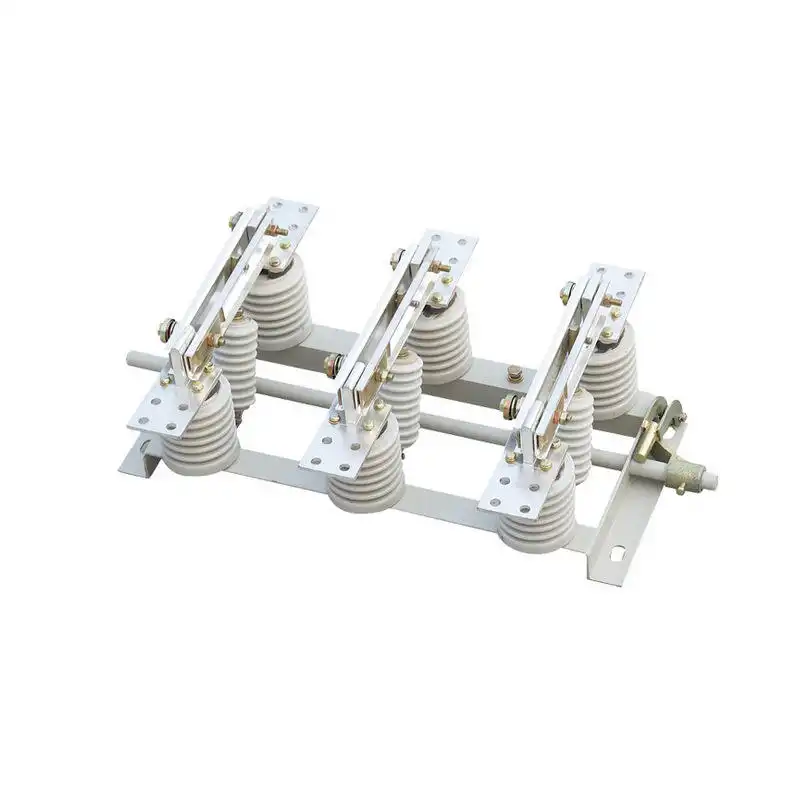
Understanding the Indoor Disconnect Switch
It's helpful to know what makes a disconnect switch different from other safety devices before looking at its safety role.
What It Is and How It Works
An off-load separation device is called an Indoor disconnect switch. It does not stop fault current; circuit breakers are responsible for that. As a result, it leaves a clear, obvious gap in the circuit after the breaker has already turned off the load. This clear gap is important for legal and operational reasons: it gives engineers proof that they are isolated.
Types Available in the Market
There are both fusible and non-fusible types of this product group, as well as load-break switches and high-voltage separating switches. Each type works with a certain range of voltages and types of applications. The GN27 High Voltage Disconnect Switch from Xi'an Xikai can handle up to 40.5 kV, which makes it a perfect choice for indoor medium-voltage switchgear and substation panels.
Key Internal Components
The majority of Indoor disconnect switches have the same rotating blade or swing-contact structure placed on post insulators. Blades made of copper that is plated with silver close onto fixed contacts under controlled pressure. Good ones keep the contact resistance below 50 so that the area doesn't get too hot when the current is at its recommended level.
Key Electrical Safety Benefits of Indoor Disconnect Switches
The safety benefits of using an Indoor disconnect switch go far beyond just cutting off the power to a circuit. Here are the main safety benefits that this type of gadget actually offers.
- Visible isolation confirmation: Unlike a circuit breaker, whose open/closed status depends on an indicator flag, a disconnect switch shows its open position physically. The blade gap is directly observable, giving maintenance teams a clear, non-ambiguous safety signal before they begin work.
- Lockout/tagout (LOTO) compatibility: Most modern indoor disconnect switches include provisions for padlocking the handle in the open position. OSHA 29 CFR 1910.147 mandates LOTO procedures for hazardous energy control; a disconnect switch with integrated lock points makes compliance straightforward.
- Arc flash boundary reduction: By isolating a section of the bus before maintenance, engineers shrink the arc flash incident energy boundary for the work zone. The 2021 edition of NFPA 70E recognizes isolation as one of the primary arc flash risk reduction methods.
When EPC project managers are putting switchgear into service, these benefits directly solve a problem they face: they need to repair individual panels without having to shut down the whole distribution system. Section by section maintenance can be done with a properly specified Indoor disconnect switch, cutting down on downtime without putting worker safety at risk.
Indoor Disconnect Switch vs. Other Electrical Safety Devices
A disconnect switch is different from a circuit breaker, a fuse, and a load-break switch. This is something that procurement engineers often ask. The answer is that it depends on what each device is meant to do.
Disconnect Switch vs. Circuit Breaker
A circuit breaker is a safety device that cuts off voltage to a fault within milliseconds. Only after the circuit has been turned off by the breaker should you use an Indoor disconnect switch, an isolation device. Using one without the other creates a danger. Using both together makes a layered safety design that is best for installations that meet IEC 62271-102 and GB 1985.
Indoor vs. Outdoor Disconnect Switches
Outdoor break switches are made to be installed outside and must be able to handle UV damage, rain, and dirt. Indoor models work in switchgear boxes or substations, where the enclosure keeps out the outside world. This makes it possible for indoor models to be smaller, which is very helpful for EPC projects that don't have a lot of cabinet space.
Disconnect Switch vs. Load-Break Switch
A load-break switch can open a circuit when it is loaded with a certain amount of power. A typical Indoor disconnect switch can't; it can only be used when there is no load. The difference is important for system design because load-break capability costs more and putting it where it's not needed wastes money without improving safety.
Installation and Maintenance Best Practices for Indoor Disconnect Switches
It's not enough to just know what the device is. The safety benefits will only be seen over the equipment's useful life if it is installed correctly and maintained regularly.
Follow Applicable Standards
Two rules called GB 1985 and IEC 62271-102 govern high-voltage isolation switches inside buildings in China. IEEE C37.32 must also be taken into account for installations in systems that support U.S. export projects. Always make sure that the disconnect switch's maximum voltage and current fit the system's factors, such as the short-time withstand current needs.
Critical Acceptance Tests
Buyers should check the following on every unit before turning it on:
- Contact loop resistance: Measure with a micro-ohm meter. Acceptable values are typically below 50 µΩ. Values above this threshold signal insufficient contact pressure or silver-plating defects that will lead to thermal issues under rated current.
- Power-frequency withstand voltage: For a 40.5 kV device, the insulation must hold at the prescribed test voltage for 60 seconds without flashover.
- Mechanical cycle test: Standard acceptance requires at least 2,000 open-close cycles without binding or misalignment. The GN27, for instance, is validated through 10,000+ mechanical cycles during factory trials.
Scheduled Maintenance Intervals
Inspections should be done once a year or every 100 mechanical cycles, whichever comes first. This is what the industry norm is. Cleaning the insulator, checking the state of the contact surface, lubricating the mechanical linkage, and checking the torque on the terminal nuts should all be part of every checkup.
Choosing and Procuring the Right Indoor Disconnect Switch for Your Business
Brand doesn't mean as much as what the product is. When looking for an Indoor disconnect switch for a Substation or Switchgear Project, consider the following factors:
Dimensional Compatibility with Cabinet Design
Disconnect switches must fit into metal-enclosed switchgear like XGN2-12 or GG-1A panels for EPC projects. The switch's actual size must match the compartment's dimensions. The GN27 from Xi'an Xikai can be mounted horizontally, vertically, or inclined. This lets design engineers fit the device into small cabinet plans without having to change the structure of the case.
Contact Resistance and Thermal Performance
The GN27 has a swing-contact design that keeps the pressure constant while reducing wear on the parts. This keeps the resistance of the contact stable over thousands of operations and can handle currents of 630 A and 1,250 A at 40.5 kV. Xi'an Xikai has special versions with better barriers and anti-pollution coats for projects that need to be done at high altitudes or in areas with a lot of pollution.
Mechanism Reliability and Operating Effort
When maintenance teams use manual break switches in small substations, they need a system that works well and is simple to use. The GN27 uses the CS6-2 operating mechanism, which has low operating torque. This means that switching requires less physical effort without sacrificing mechanical positivity or interlock integrity.
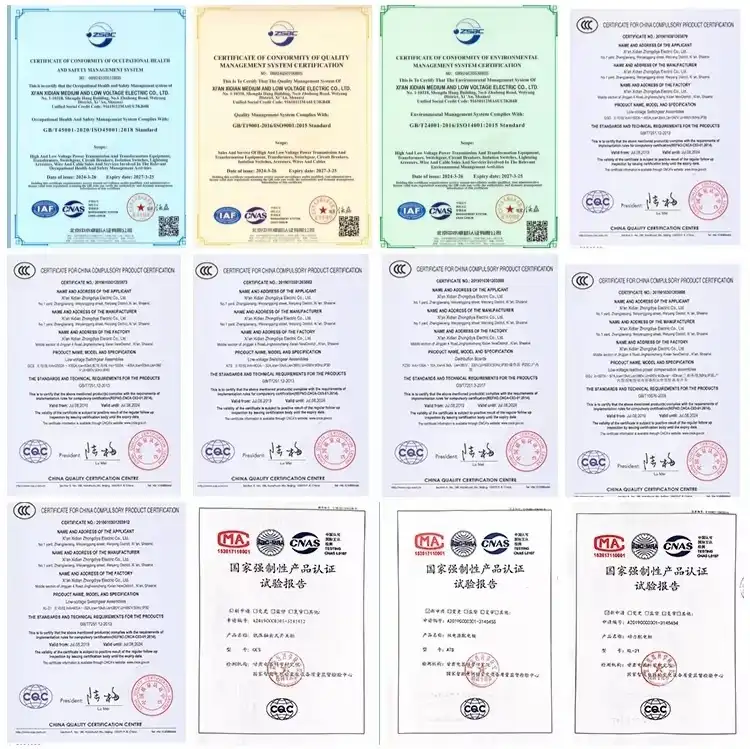
Medium- and low-voltage electrical equipment from Xi'an Xikai has been used in State Grid projects, rail transportation, petrochemical plants, and renewable energy installations. Each GN27 unit comes with ISO 9001 paperwork and has been through the full mechanical cycle validations, high-voltage resist tests, and salt-spray rust tests.
Conclusion
A circuit is disconnected from its power source so that people can work safely, and that is all an Indoor disconnect switch does. That switch is the basis of a good isolation safety program if it is properly defined, installed, and kept on a regular basis. When EPC companies are in charge of substation and switchgear projects, they need to choose a switch that has the right dimensions, low contact resistance, and a reliable way of working. This choice affects both the safety of workers and the cost of running the project in the long term.
FAQ
1.Can an indoor disconnect switch be operated while the circuit is energized under load?
Indoor disconnect switch is an off-load device, not a load device. When it's loaded, it creates a long-lasting spark that can damage the equipment and hurt people very badly. The design of the system must make sure that the upstream circuit breaker opens first, as shown by an interlock or a procedure, before the disconnect switch is used.
2.What causes contact overheating, and how is it addressed?
It's most often caused by surface rust, contact spring pressure loss over time, or blades that aren't lined up right. To fix the problem, you need to clean the contact surfaces, put on electrical contact grease, and replace any worn-out compression springs. During a regular check, the first sign to look for is a touch resistance test that is higher than 50 µ©.
3.How does altitude affect the rating of an indoor disconnect switch?
Standard units can be used in places up to 1,000 meters above sea level. Above that, less dense air lowers dielectric strength, so either clearance distances need to be widened or a high-altitude version with better insulation needs to be made. There is a high-altitude version of Xi'an Xikai's GN27 that can meet operational needs up to 4,000 meters.
4.What is the typical maintenance cycle for this type of switch?
In this field, inspections are done once a year or after every 100 motor actions, whichever comes first. The inspection should check the condition of the insulator, the quality of the contact surface, the lubrication of the linkage, and the torque on the terminal bolts.
Partner with Xi'an Xikai for Your Indoor Disconnect Switch Needs
The GN27, rated at 40.5 kV, is one of the many reliable Indoor disconnect switch items offered by Xi'an Xikai. Our team is ready to meet your needs, whether your project calls for a small-fit answer, a high-altitude version, or large supply for a program with multiple sites. You can email our sales team at serina@xaxd-electric.com, amber@xaxd-electric.com, or luna@xaxd-electric.com. You can get a price from a reliable Indoor disconnect switch maker at xaxd-electric.com.
References
1. IEEE Std C37.32 — IEEE Standard for AC High-Voltage Disconnect Switches, Interrupter Switches, Fault Initiators, and Grounding Switches — Schedules of Preferred Ratings, Construction Guidelines, and Specifications, IEEE, 2002.
2. IEC 62271-102 — High-Voltage Switchgear and Controlgear — Part 102: Alternating Current Disconnectors and Earthing Switches, International Electrotechnical Commission, 2018.
3. NFPA 70E — Standard for Electrical Safety in the Workplace, National Fire Protection Association, 2021.
4. GB 1985 — High Voltage Alternating Current Disconnectors and Earthing Switches, Standardization Administration of China, 2014.
5. OSHA 29 CFR 1910.147 — The Control of Hazardous Energy (Lockout/Tagout), U.S. Occupational Safety and Health Administration, 1989 (revised 2019).
6. Vijayaraghavan, G., Brown, M., & Barnes, M. — Practical Grounding, Bonding, Shielding and Surge Protection, Newnes/Elsevier, 2004.
