
Indoor Disconnect Switch: Complete Buyer’s Guide for Safe Selection
2026-10-08 17:40:42
Choosing the right indoor disconnect switch is one of the most consequential decisions in any substation or switchgear project. Whether you are specifying equipment for a 40.5kV distribution system or retrofitting an existing indoor switchgear cabinet, the wrong choice creates safety risks, compliance failures, and costly rework. This guide walks through everything a B2B electrical engineer or project manager needs to know—from basic operating principles to procurement best practices—with a focus on the GN27 High Voltage Disconnect Switch as a proven reference product.
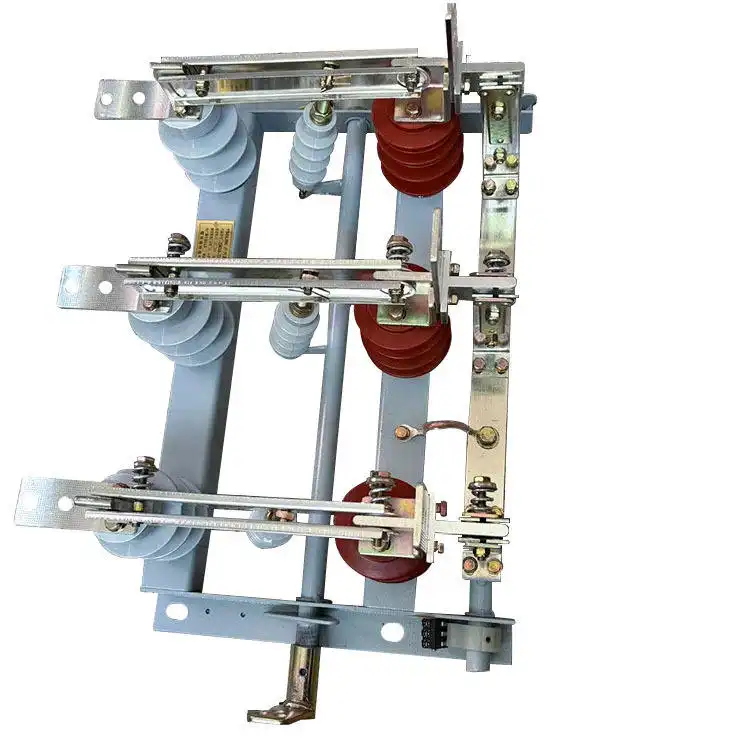
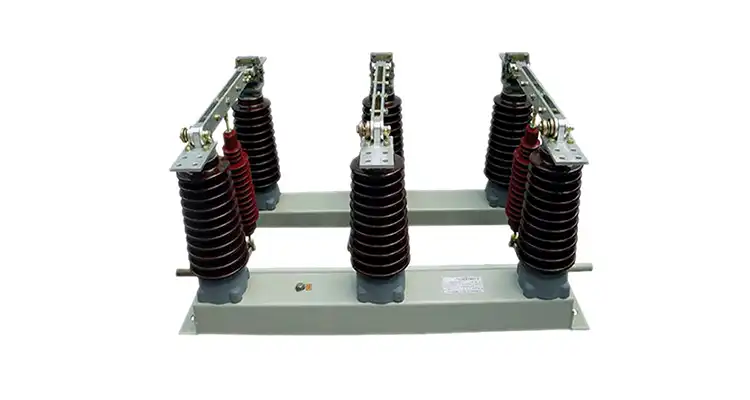
Understanding Indoor Disconnect Switches: Key Concepts and Benefits
What an Indoor Disconnect Switch Actually Does
A circuit is directly disconnected from its power source by an Indoor disconnect switch, which leaves a gap that can be seen to prove the circuit is off before maintenance starts. It can't stop like a circuit breaker can, and it should never be opened when it's loaded. IEC 62271-102 says that disconnect switches are "off-load" devices, which means that the breaker that goes with them has to open first. There are technical interlocks built into the panel or cabinet that make sure this process is followed.
Types and Ratings You Need to Know
There are different ways to set up indoor high-voltage isolating switches. Types that are fused have both disconnection and overcurrent protection in one unit, while types that are not fused use upstream breakers. Single-pole versions are good for simple tasks, while three-pole units are common in three-phase distribution. For indoor use, the voltage classes range from 12kV to 40.5kV, and the current classes range from 400A to 1250A. To avoid thermal failure, you must match these ratings to your actual load, which includes the short-circuit withstand current, which is usually 20kA to 31.5kA for 4 seconds.
Key Benefits for Switchgear Projects
The practical value of an Indoor disconnect switch can be measured. This is what switchgear integration projects do well:
- Safe isolation boundary: A visible open gap gives maintenance crews a physical confirmation that the circuit is dead, reducing arc-flash incidents during scheduled work.
- Interlock compatibility: Modern designs incorporate mechanical interlocks that prevent the switch from opening unless the associated circuit breaker is already in the open position, eliminating operator error.
- Long service life at low cost: Contact resistance below 50 µΩ, validated at acceptance, prevents thermal runaway and extends the maintenance interval to roughly 100 mechanical cycles or one year—whichever comes first.
These benefits directly lead to lower lifecycle costs and better safety records for EPC contractors who are in charge of many substation projects every year.
How to Choose the Right Indoor Disconnect Switch for Your Needs
Matching Dimensions to Your Switchgear Cabinet
When project engineers put equipment into fixed metal-enclosed switchgear like XGN2-12 or GG-1A cabinets, the most important thing is how well the parts fit together in terms of size. If a switch's phase spacing or mounting pitch is off, it needs to be changed in an expensive way and the commissioning process takes longer than planned. Before you place a large order, you should always ask for verified outline plans and check them against the internal clearance of your cabinet. The GN27 series, for example, lets you place it horizontally, vertically, or at an angle. This gives project teams options when cabinet layout is limited.
Evaluating Contact Performance
A key acceptance measure is contact loop resistance. At the incoming inspection, a micro-ohm meter test should show that the resistance across closed contacts is less than 50 µΩ. Higher values mean that the silver covering isn't good enough, the spring is worn out, or the surface is oxidized. All of these things cause overheating in one area at the rated current. When comparing goods from different sellers, don't just look at the specifications in the catalog; ask for third-party test results as well.
Operating Mechanism and Ergonomics
Most indoor high-voltage isolating switches come with ways to operate them by hand. Low working torque is a necessity for switchgear that is placed in tight areas or at high levels. It is not a nice-to-have. The GN27 has a swing-contact design that lowers the force needed to operate the handle and lowers the amount of mechanical wear. This solves a problem that repair teams often have in small substations. The GN27 can work as a stand-alone machine when switchgear coupling is not needed because it is compatible with the CS6-2 operating mechanism.
Installation Guidelines and Safety Compliance for Indoor Disconnect Switches
Pre-Installation Checks and Clearances
Verify that the installation environment satisfies the design criteria before installing an Indoor disconnect switch. For standard units, this means that the installation site must be below 1,000 m in elevation (high-altitude versions are available for sites up to 4,000 m), the ambient temperature must be within the rated range, and the IP protection class must be suitable for dust or moisture. One of the most common reasons for flashover during commissioning is not enough space between phases or between phases and earth. Check your work against IEC 62271-102 and any relevant national grid rules at all times.
Acceptance Testing Protocol
Field failures can be avoided with a thorough incoming inspection. For indoor high-voltage isolation switches, the following tests must be passed before they can be accepted:
- Contact loop resistance test: Verify <50 µΩ using a calibrated micro-ohm meter. This confirms adequate silver-plating thickness and correct contact pressure.
- Power frequency withstand voltage test: Apply the rated withstand voltage for 1 minute across the open contacts and between phases to earth. For 40.5kV-class equipment, this is typically 95kV.
- Mechanical operation cycles: Run at least 50 to 100 open-close cycles and inspect for blade misalignment, binding, or loosening of the operating linkage.
- Temperature rise confirmation: At rated current, contact temperature rise must not exceed 65°C above ambient for silver-faced contacts per IEC standards.
When you're done with these tests, write down the results and compare them to the manufacturer's sheet of specifications. Any difference must be returned or replaced right away before work can begin.
Routine Maintenance Schedule
How often maintenance is done depends on how hard the environment is and how hard the operations are. As a general rule, a full check should happen every 100 mechanical processes or once a year, whichever comes first. Cleaning the insulator surfaces, re-greasing the working linkages, re-torquing the terminal nuts, and doing the contact resistance test again are all things that need to be done for an inspection. Using original substitute parts, especially contact springs and silver-faced blade assemblies, protects your guarantee and makes sure that the electrical system always works right.
Indoor Disconnect Switches in Procurement: What B2B Clients Need to Know
Supplier Verification and Product Authenticity
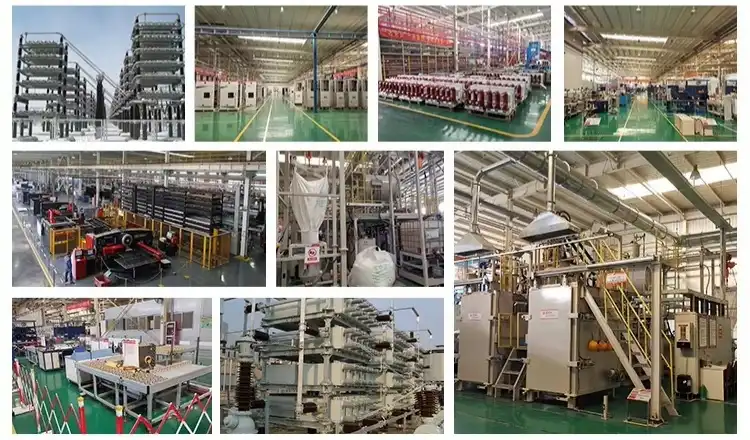
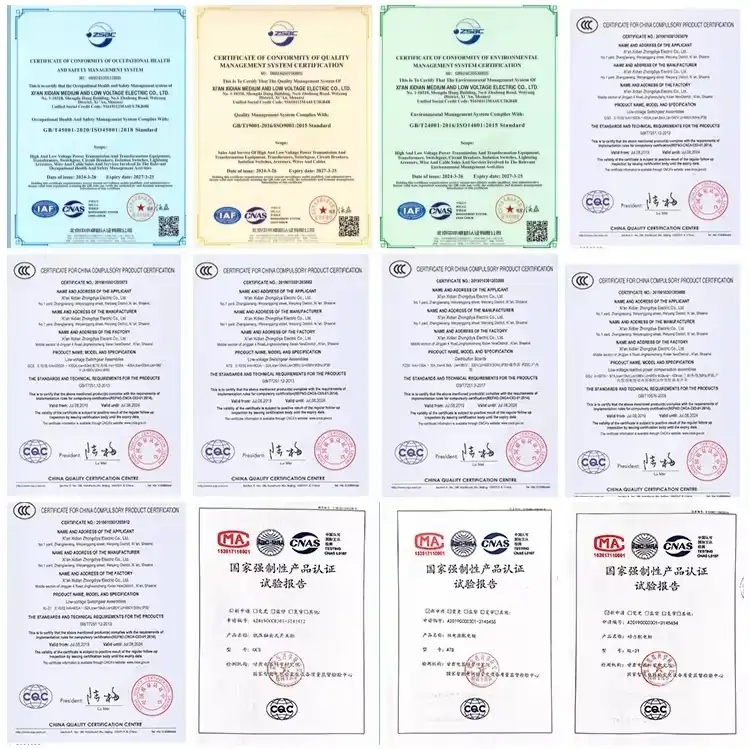
B2B purchasing teams looking for There is a real risk of faking Indoor disconnect switches for various power projects. Before giving a contract, you should ask for ISO 9001 certificates, type-test reports from a third party that reference IEC 62271-102 or GB 1985, and access to the factory for an audit. Indoor disconnect switch manufacturers with a good reputation keep records of every batch's production that can be checked after delivery in case there are any problems in the field.
Bulk Ordering and Lead Time Planning
In the EPC substation sector, single projects usually need between 5 and 50 units per order, and decisions are made every one to four months. Setting delivery dates early on keeps plans from getting pushed back during the licensing stage. Make sure the supplier can provide consistent dimensional tolerances across multiple production batches. For example, mounting hole positions that change from batch to batch have been shown to cause rework on large switchgear line-ups. Freight lead times for tools made in the United States are usually faster and more reliable than those for imported options. This is helpful for projects with tight handover dates.
Comparison Insights: Indoor Disconnect Switch vs. Alternatives
Disconnect Switch vs. Circuit Breaker
While an Indoor disconnect switch does neither, a circuit breaker stops fault current and works when it's loaded. The two devices are usually used together in a series, even though they do different things. It is against the rules and dangerous to use a stop switch instead of a breaker or the other way around. In switchgear panels, the disconnect switch creates the clear separation gap needed by maintenance safety rules, and the breaker protects against faults.
How the GN27 Compares on Key Parameters
The GN27 High Voltage Disconnect Switch can handle up to 40.5kV and 630A or 1250A of power. In two measurable ways, its swing-contact design makes it different from other rotary-blade products. First, the contact pressure is lower and more stable, which means that there is less wear and the loop resistance stays within the range of values for a longer period of time. Second, the geometry of the swing contact makes it easier for heat to escape because it exposes more surface area to air. The decisions made in this design have been tested for 10,000 cycles and are IEC 62271-102 type certified.
The GN27 also comes in versions that are resistant to pollution and that can work at high altitudes. This makes it a useful choice for projects in industrial zones along the coast or on plateaus up to 4,000 m above sea level. These choices can be made during the order process instead of having to be changed in a field after delivery.
Conclusion
Selecting the right indoor disconnect switch requires attention to rated voltage and current, dimensional fit within the cabinet, contact resistance performance, and mechanism ergonomics. For 40.5kV switchgear projects, the GN27 from Xi'an Xikai addresses these requirements through its swing-contact design, flexible mounting options, and verified compliance with IEC 62271-102. Conducting proper acceptance testing—loop resistance, withstand voltage, and mechanical cycling—before installation protects the project schedule and the end-user's operational safety. Procurement teams that align product specifications with site conditions and confirm supplier quality credentials at the sourcing stage will avoid the majority of field failures.
FAQ
1.Can an indoor disconnect switch be operated while the circuit is energized?
No. Indoor disconnect switches are off-load isolation devices. Opening a disconnect switch under load generates a sustained arc that will destroy the contacts and create a serious safety hazard. The circuit breaker upstream must be opened first. Mechanical interlocks in modern switchgear panels enforce this sequence automatically.
2.What contact resistance value should I specify at procurement?
For silver-faced contacts in 12kV to 40.5kV indoor applications, the accepted industry threshold is below 50 µΩ measured at the closed position with a calibrated micro-ohm meter. Values above this indicate poor contact pressure or surface oxidation and predict thermal problems at rated current.
3.How does altitude affect product selection?
Standard indoor disconnect switches are rated for altitudes up to 1,000 m. At higher elevations, reduced air density lowers the dielectric strength of air gaps, increasing flashover risk. Sites between 1,000 m and 4,000 m require high-altitude variants with increased creepage distances. Xi'an Xikai's GN27 series includes a certified high-altitude option for these applications.
4.What is the typical maintenance interval?
A full inspection—cleaning insulators, re-greasing linkages, re-torquing terminals, and re-testing contact resistance—is recommended every 100 mechanical operations or every 12 months, whichever occurs first.
5.What certifications should I require from a supplier?
At minimum, require ISO 9001 for the quality management system and IEC 62271-102 type-test reports from an accredited laboratory. For domestic Chinese projects, GB 1985 compliance is additionally required.
Request a Quote from Xi'an Xikai — Indoor Disconnect Switch Supplier
For switchgear integration and stand-alone substation uses, Xi'an Xikai Medium & Low Voltage Electric Co., Ltd. produces the GN27 Indoor disconnect switch Series. Our products are made to meet the standards of IEC 62271-102 and GB 1985, and they come in versions that are resistant to pollution and high altitude. For dimensional models, type-test results, and quotes that are unique to your project, please email serina@xaxd-electric.com, amber@xaxd-electric.com, or luna@xaxd-electric.com. Please go to xaxd-electric.com to see the whole catalog.
References
1. International Electrotechnical Commission. IEC 62271-102: High-Voltage Switchgear and Controlgear – Alternating Current Disconnectors and Earthing Switches. IEC, 2018.
2. IEEE. IEEE C37.32: Standard for Switches, Interrupters, Circuit Breakers, and Fuse Cutouts — Schedules of Preferred Ratings, Manufacturing Specifications, and Application Guide. IEEE, 2002.
3. National Fire Protection Association. NFPA 70: National Electrical Code. NFPA, 2023.
4. International Electrotechnical Commission. IEC 60265-1: High-Voltage Switches – Part 1: Switches for Rated Voltages above 1 kV and less than 52 kV. IEC, 1998.
5. Electricity Consumers Resource Council (ELCON). High-Voltage Equipment Procurement Guidelines for Industrial End Users. ELCON, 2020.
6. Chinese National Standards Committee. GB 1985: High-Voltage Alternating Current Disconnector and Earthing Switch. SAC, 2014.
