
How Does Metal-Clad Withdrawable Switchgear Prevent Electrical Faults?
2026-11-24 17:17:42
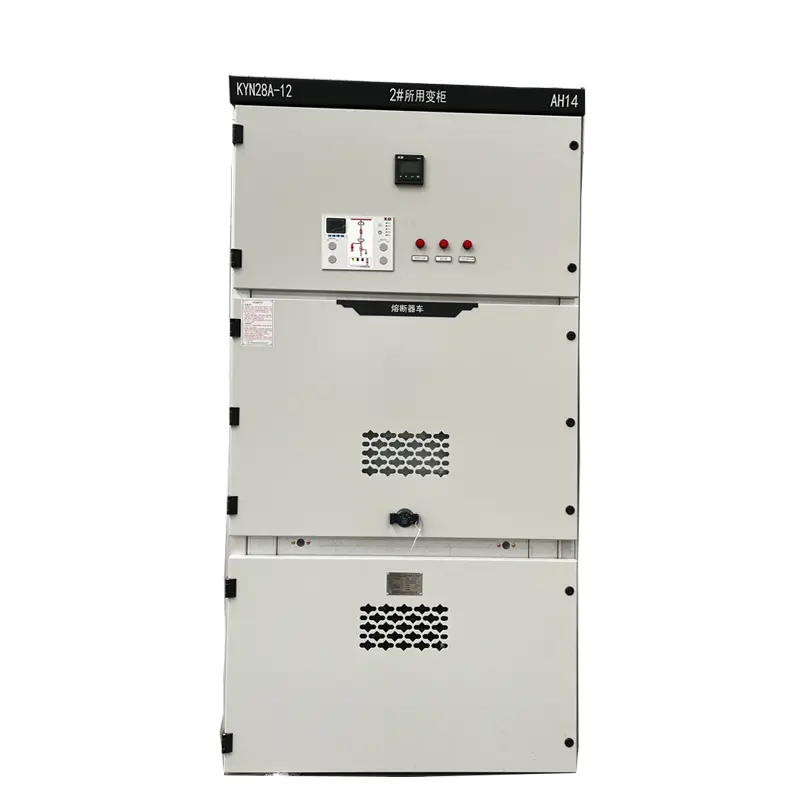
Through five interconnected layers, metal-clad withdrawable switchgear stops electrical problems. Protection relays and sensors find current or voltage that isn't normal. The fault is stopped by a vacuum circuit breaker. Metal compartments that are grounded keep energy in and stop it from spreading. The breakers that can be taken out make a clear isolation point. Interlocks stop operations that aren't safe. We use these ideas to build the KYN28-12 Removable Metal-Clad Switchgear at Xi'an Xikai. It has a 12 kV rating, a 50 Hz frequency, and five safety interlocks. This guide tells you what to look for before you buy and how each layer works.
Why Electrical Fault Protection Matters in Medium-Voltage Distribution?
Common Causes of Medium-Voltage Faults
Faults in medium voltage don't usually start with one big event. Short circuits, earth faults, overloads, old insulation, contamination, loose connections, and switching that isn't done right can all cause this. Over time, dust and water can weaken insulation, and a loose cable termination will make heat long before it breaks. A lot of the time, all of these things happen at the same time in EPC projects in mines, plants, and power plants. A good protection design should be able to find abnormal current quickly, get rid of it, and keep the damage contained within a clear area. That is the function of metal-clad withdrawable switchgear, which is why construction is just as important as relay settings.
What a Single Fault Costs a Project
A fault costs more than a panel that is broken. It can lead to fires, injuries from arc flashes, lost work, and maintenance that wasn't planned. The electrical safety standard for the workplace, NFPA 70E, lists arc flash as a known danger because of the heat and pressure that a fault creates. Each of the three people who make decisions about a project sees a different cost. The project manager sees delays in commissioning, the procurement manager sees problems with warranties, and the electrical engineer for the owner sees the risk of power outages. All three interests are safeguarded by a metal-clad withdrawable switchgear design that reduces fault energy and spread.
Why Design, Equipment, and Procedure Work Together?
It's not enough for hardware to stop errors. The outcome depends on the right ratings, the coordination of protection, the quality of the installation, and the training of the operator. Just because a breaker has the right short-circuit rating doesn't mean it will protect a system if the relay settings don't match the device that comes before it. While crews are locked out, an interlock can only help if they follow the steps. When you specify metal-clad withdrawable switchgear, look over the equipment, the protection study, and the operating procedure all at the same time during the technical bid evaluation. There are often gaps where they meet.
How Metal-Clad Withdrawable Switchgear Prevents Electrical Faults in Practice
Construction and Main Components of Metal-Clad Withdrawable Switchgear
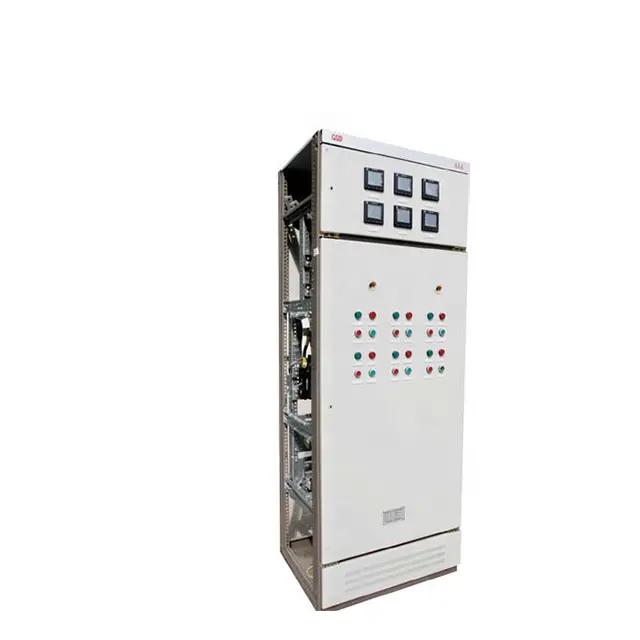
The metal-clad switchgear in IEEE C37.20.2 has grounded metal barriers around the breaker, busbars, and cable connections. The compartments for the breaker, busbar, cable, and low-voltage control are typically divided by a metal-clad withdrawable switchgear panel. The breaker is on a truck that can be pulled out and can be put in service, test, or disconnected positions. There are voltage transformers, current transformers, and numerical relays that keep an eye on the circuit. To find out how well the insulation holds up, look at the clearances, creepage distances, and termination quality. There are limits on how far a fault can go in each compartment. This way, one failure doesn't affect the whole lineup.
Five Protective Layers in Action
How to stop faults is like having five layers. First, relays find problems like too much current, earth faults, or strange voltage. Second, the trip command is sent to the vacuum circuit breaker, which stops the current, usually at a natural current zero. Third, the truck that can be pulled out makes a clear isolation point for maintenance. Fourth, energy is kept in grounded compartments, shutters, and pressure relief paths. Fifth, after isolating, earthing switches release any remaining energy. When one layer of metal-clad withdrawable switchgear encounters an unexpected circumstance, the subsequent layer still limits the damage.
Interlocks That Block Human Error
Mistakes with switching happen a lot, so interlocks are important. There are five safety interlocks on the KYN28-12 Removable Metal-Clad Switchgear. They stop mistakes in how the circuit breaker works, keep people from getting into live areas, and stop grounding faults. These functions include opening a door that leads to an energized area, racking a closed breaker, and closing an earthing switch that leads to a live circuit. When crews are tired or in a hurry, interlocks in metal-clad withdrawable switchgear provide a built-in check.
Metal-Clad Withdrawable Switchgear Safety Features, Operation, and Maintenance
Safety Features and Protection Levels
Don't just look at the product name. Position indicators, primary-contact shutters, door interlocks, mechanical locks, anti-pumping functions, trip-free operation, and earthing switches are some of the useful features. According to IEC 60529. an IP rating like IP4X or IP54 shows that the device is protected against solid objects and water, but it doesn't confirm how well it works with internal arcs. Check IEC 62271-200, which describes internal arc classification, when you examine metal-clad withdrawable switchgear. Ask for a test report that matches the way you plan to install it, the areas where people can get to it, and how you set up the pressure relief. IEEE C37.20.2 and IEEE C37.20.7 can also be compared by projects with ties to the US.
Operating Sequence from Service to Safe Maintenance
The breaker stays connected during service, and protection, metering, and monitoring all stay in place. When there is a problem, the relay turns off the power and saves information about what happened so that it can be figured out later. When performing maintenance on metal-clad withdrawable switchgear, operators make sure the breaker is open, rack it to the test or disconnected position, and look at the indicators and interlocks. After that, the shutters close. Next, the crews make sure there is no voltage, turn off the earthing switch, and use lockout/tagout. Restoration works backward: check, test, take away tools, and then re-energize while being careful. When crews follow written steps, they stay the same from shift to shift.
Maintenance That Keeps Protection Working
Planned maintenance keeps the original design intent alive. Check for corrosion, dust, moisture, overheating, broken seals, worn-out racking mechanisms, and connections that don't connect well to the ground. As part of electrical checks, insulation is checked, contact resistance is measured, breaker timing tests are done, and relay secondary injection is done. Thermal imaging finds connections that are loose or overloaded, and torque checks keep hot spots from happening. The manufacturer's recommendations, operating duty, humidity, dust, salt, chemicals, and altitude must all be taken into account when maintaining metal-clad withdrawable switchgear. Keep extra parts for important feeders on hand so that a broken part doesn't cause a long power outage.
Choosing the Right Metal-Clad Withdrawable Switchgear
How Metal-Clad Withdrawable Switchgear Compares with Other Designs
When compared to fixed or metal-enclosed designs, metal-clad withdrawable switchgear typically provides better compartment separation and makes testing and replacing breakers simpler. Some of the trade-offs are higher cost, bigger size, and more moving parts. Air-insulated switchgear (AIS) takes up more floor space than gas-insulated switchgear (GIS), but it is often easier to access and has different lifecycle costs. The decision should not be based only on the equipment's label or price, but also on its voltage, fault level, space, environment, maintenance approach, budget, and crew skill.
Selection Parameters to Define Early
Start by looking at the voltage, frequency, continuous current, short-circuit level, grounding method, feeder functions, duty cycle, and the place where the installation will take place. Then check the insulation level, altitude correction, pollution conditions, breaking current, short-time withstand current, and peak withstand current. Check how well the cables and transformers work together, and decide if you need SCADA links, arc-flash detection, temperature monitoring, or options for partial discharge. There should be a direct check on frequency. The KYN28-12 is rated at 50 Hz, which means it works with 50 Hz networks but not 60 Hz ones.
KYN28-12 Specifications and Applications
The answer here is the KYN28-12 Removable Metal-Clad Switchgear. It’s rated at 50 hertz, 12,000 volts and 5 safety interlocks. It may be utilised with ABB VD4 and VS1 breakers, trucks and transformers. It is widely used for power distribution, motor starting and grid monitoring in industrial facilities, substations and infrastructure projects. 42 kV dielectric tests are carried out at power frequency withstand voltage. Xi'an Xikai's plateau-type equipment can run at altitudes up to 4000 meters, therefore please be sure to include plateau configuration when you email your query.
Buying Metal-Clad Withdrawable Switchgear for EPC Projects
What to Include in Your RFQ
When suppliers quote on a full package, they can all use the same terms. You should send these three types of information:.
- Electrical data: Send the single-line diagram, system voltage, frequency, short-circuit requirement, panel quantity, feeder schedule, busbar arrangement, and protection functions. These items fix the panel configuration early, so the supplier avoids redesign after the order and your drawing approval moves faster on the first round, which protects the delivery date.
- Site and standards data: List cable entry details, dimensions, altitude, humidity, dust, applicable standards such as IEC 62271-200 or IEEE C37.20.2, type-test requirements, and local utility or grid acceptance rules. Early clarity on these points prevents permit delays and lets the supplier prepare the matching test reports before production starts.
- Commercial scope: State Incoterms, destination, delivery schedule, and whether the offer covers relays, CTs, VTs, metering, factory acceptance testing, packing, shipping, commissioning, and spare parts. Clear exclusions let you compare offers fairly and avoid surprise costs after award. Warning signs include inconsistent datasheets, missing type-test evidence, and unclear interlock descriptions.
When you compare technical scope before price, you keep the evaluation honest.
Reducing Design Revisions and Delivery Risk
Manufacturing slows a project down, yet design changes again and over. Freeze the one-line diagram and feeder schedule before the supplier starts to draw. Provide the owner with one technical contact. If you have a drawing approval schedule with dates, please ask for it. Transport damage may possibly disrupt the timeframe. Make sure that the order includes the packing method, lifting places and unloading directions. Request type-test findings and local grid permission papers before you bid – missing paperwork might delay the power going on. “We are happy that our engineers have this review as part of the technical bid evaluation process.
Factory, Site, and Long-Term Verification
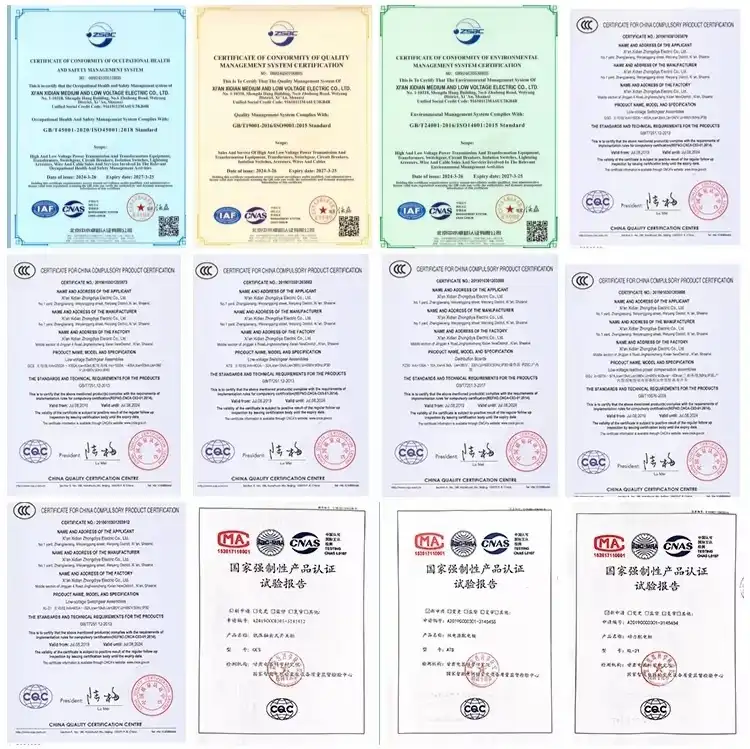
Factory acceptance testing includes checking the dimensions, wiring, mechanical operation, interlocks, dielectric tests, breaker timing, contact resistance, and secondary injection of the relay. Before turning on the power, engineers check the alignment, grounding, cable terminations, clearances, protection settings, alarms, and trip circuits on-site. The paperwork that is handed over should include approved drawings, reports on routine tests, relay settings, coordination studies, manuals, certificates, and schedules for spare parts. If the metal-clad withdrawable switchgear operates as intended, event logs, outage data, operating cycles, and thermal trends can be examined after startup.
Conclusion
With its detection, interruption, isolation, containment, and procedural control all built into one assembly, metal-clad withdrawable switchgear stops electrical faults before they happen. Relays and sensors look for problems, the vacuum circuit breaker cuts the current, the withdrawable truck provides a clear isolation point, grounded compartments stop the fault from spreading, and interlocks lower the chance of operator error. For these layers to perform as they should, the ratings, protection coordination, tested internal arc classification, installation quality and maintenance need to be correct for the location. Comparing designs , early decisions on parameters , examining features like 50 Hz rating of the KYN28-12 helps prevent mismatches . The outcome will then be validated by examinations at the plant, site and in the long term. EPC teams are better off choosing a system that is technically matched and has documented testing and lifecycle support rather to choosing solely on pricing just.
FAQ
1. What is metal-clad withdrawable switchgear?
It is medium voltage distribution equipment with a withdrawable and insertable vacuum circuit breaker. It's metal. And it's grounded. IEC 62271-200 : This applies to metal-enclosed switchgear with a rated voltage above 1 kV and up to 52 kV. The removable design enhances safety while testing and changing breakers.
2. How do relays and breakers limit fault damage?
The relays detect a strange current or voltage and provide a trip instruction. Then the circuit breaker interrupts the current flow. This stops the heat and mechanical stress, and prevents the fault from propagating to other sections of the system. Earthing switches discharge any residual energy when the circuit is switched off.
3. Which standards and tests should I request?
If US practice is to be followed, request type-test reports to IEC 62271-200 and IEC 62271-100 and compare to IEEE C37.20.2. Include normal factory tests, interlock checks, relay injection results and an internal arc report that corresponds to your arrangement.
4. Why compare the full supply scope instead of price?
Final pricing will depend on breaks, relays, testing, documentation, delivery, commissioning, replacement parts and warranty. First thing you do is look at scope. Then you can see which offers are truly the same. Learn who pays for damage in shipping. Help with commissioning.
Request a Metal-Clad Withdrawable Switchgear Evaluation from Xi'an Xikai
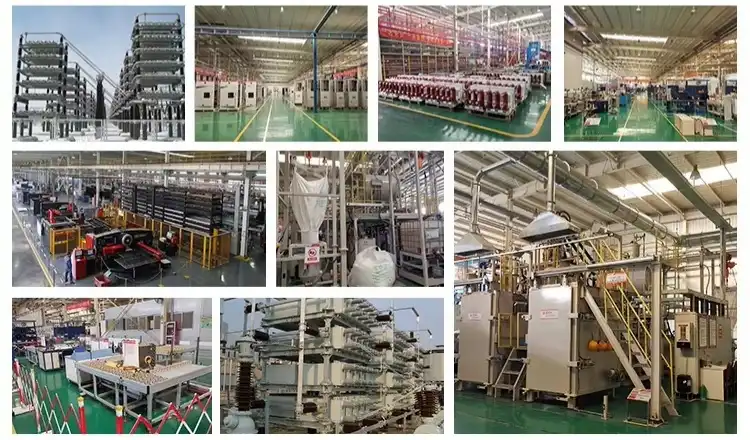
Xi'an Xikai is a metal-clad withdrawable switchgear manufacturer with 7 product categories, 34 series, and plateau-type equipment for heights up to 4,000 meters. Send them your single-line diagram, feeder schedule, and site conditions. Our engineers will look over your project and get back to you with a technical proposal. For more information, email serina@xaxd-electric.com, amber@xaxd-electric.com, or luna@xaxd-electric.com, or go to xaxd-electric.com.
References
1. IEC 62271-200: High-Voltage Switchgear and Controlgear – AC Metal-Enclosed Switchgear and Controlgear for Rated Voltages Above 1 kV and Up to and Including 52 kV, 2021
2. IEEE C37.20.2: IEEE Standard for Metal-Clad Switchgear, 2015
3. IEEE C37.20.7: IEEE Guide for Testing Metal-Enclosed Switchgear Rated Up to 52 kV for Internal Arcing Faults, 2017
4. IEC 62271-100: High-Voltage Switchgear and Controlgear – Alternating-Current Circuit-Breakers, 2021
5. IEC 60529: Degrees of Protection Provided by Enclosures (IP Code), 2013
6. NFPA 70E: Standard for Electrical Safety in the Workplace, 2024