
How Does Polymer Housing Improve Lightning Arrester Performance?
2026-11-11 17:21:13
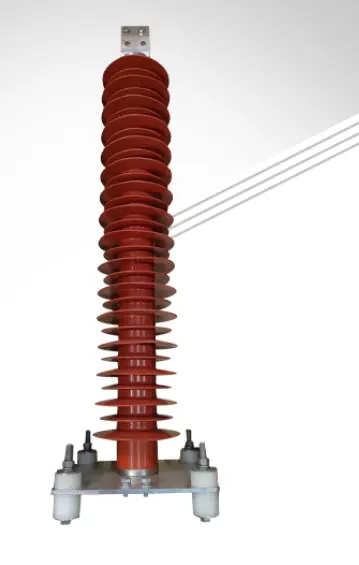
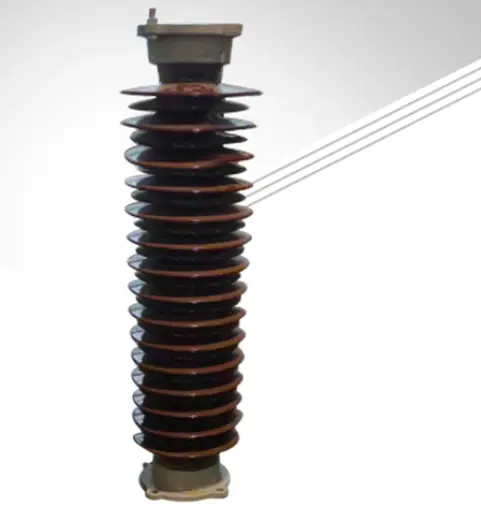
Polymer housing improves lightning arrester performance by shedding water, extending the leakage path, sealing the varistor stack, and reducing weight. In a polymeric lightning arrester for ac system, the zinc oxide blocks limit the overvoltage, while the silicone rubber shell keeps rain, salt, dust, and sunlight away from those blocks. The result is steadier leakage current, lower flashover risk in polluted air, and easier handling during shipping and installation. I wrote this guide for traders, EPC teams, and buyers who need clear selection criteria. It also covers the YH10W-216/562W model from Xi'an Xikai.
How a Polymeric Lightning Arrester for AC System Works
Zinc Oxide Blocks Clamp the Overvoltage
Zinc oxide varistor blocks stacked on top of each other protect a gapless metal-oxide design. When the line voltage is average, the blocks stop current flow, and only a small amount of stray current gets to ground. When lightning or switching raises the voltage, the blocks conduct electricity almost right away. The polymeric lightning arrester for ac system then sends the impulse current to ground and limits the voltage that can reach transformers, cables, motors, and switchgear. The blocks go back to a high-resistance state after the event. The polymer housing does something different: it keeps the stack warm, keeps out the weather, and supports it mechanically. There are two different quality checks I do on the housing and the blocks. This is because a strong varistor inside a weak shell will still fail early.
Ratings That Define Protection
Every choice is based on four ratings. Rated voltage (Ur) is the highest power-frequency voltage that the arrester can handle and still do its job. The voltage it can carry without stopping is called its continuous operating voltage (Uc, also written as MCOV). The ability to impulse is shown by the nominal discharge current and the line discharge class. The voltage across the arrester when there is a discharge is called the residual voltage. IEC 60099-5 tells you how to choose, and IEC 60071-2 talks about how to coordinate insulation. It is also important to ground the network. At the same nominal voltage, a network that is effectively grounded and a network that is isolated and neutral may need different ratings. Before you compare prices on any polymeric lightning arrester for ac system, make sure you check for temporary overvoltage. It might look like a lower rating is cheaper, but it can get too hot when used.
Stresses the Housing Must Handle
A lightning arrester outside has to deal with more than just lightning. Moving switches, humid sea freight, rain, condensation, seaside salt, industrial dust, UV rays, and changes in daily temperature all have an effect on the shell's outside. If water gets in through a weak seal, the stack inside gets hot, and the leaking current goes up. That is a common reason why arresters don't work. Surface pollution can make a conductive film that can cause flashover. Normal working conditions are set by IEC 60099-4 for heights up to 1,000 meters. This means that external insulation needs to be checked more often at high-altitude places. Because of these stresses, the design of the housing in a polymeric lightning arrester for ac system needs just as much attention as the electrical ratings.
How Polymer Housing Improves Electrical and Environmental Performance
Hydrophobic Surfaces Break Up Leakage Paths
Silicone rubber doesn't let water stick to it. Since rain doesn't fall in a smooth film, it forms beads. This makes it harder for leakage current to move along the surface. Silicone also moves a thin layer of low-molecular-weight oil into the dirt on the surface. This makes the dirt layer itself less likely to absorb water. This effect is known as hydrophobicity transfer by researchers. In a polymeric lightning arrester for ac system, it reduces the chance of tracking, dry-band arcing, and flashover in fog along the coast, monsoon rain, and dusty industrial areas. Instead of just relying on the material name, I suggest asking suppliers for aging and tracking test results. This is because surface hydrophobicity can decrease over time.
Shed Shape and Creepage Distance
The creep distance is the shortest path between the live end and the grounded end along the surface of the housing. Flashover can't happen on a longer path. Pollution sites are put into classes by IEC TS 60815-1. The very heavy class uses a creepage distance of 31 mm/kV. A polymeric lightning arrester for ac system can have a long creepage path in a small body thanks to molded polymer sheds. The shape of the shed also changes how water flows and how dirt sticks to it. Putting on weight also helps. An equal-sized polymer unit is a lot lighter than a porcelain unit, so it can be moved and put in place with less tools. That's important for export projects that are far away and don't have many cranes.
Sealing and Pressure Relief
The housing must keep the stack dry for years. Good designs either mold the silicone right onto the core or use bonded connectors and sealed end fittings so there are no gaps in the design where water can gather. IEC 60099-4 has tests for exposure, short-circuiting, sealing, and water getting into polymer-housed arresters. When there is an internal failure, pressure relief is important. The arrester lets the fault arc escape along planned paths, and the polymer shell doesn't throw ceramic pieces around. Check the seal test method, the gluing process, and the batch records on a polymeric lightning arrester for ac system for wet ports before you buy it. It's not possible for one weak link to ruin the others when it comes to material quality, shed shape, bonding, and uniform molding.
Polymer vs. Porcelain Arresters for AC Systems
Where Polymer Fits Best
Polymer designs are lighter, don't absorb water well, and are easier to work with. These benefits are important for transformers that are mounted on poles, small substations, retrofit projects, and sites that are polluted. A lighter arrester also means less freight and support structures that are easier to build. If a polymer unit fails, the housing is made to let air out without sending ceramic shards flying across the yard. This keeps people and things nearby safe. Traders who send transformers, switchgear, and isolators to remote substations all at the same time also make money. A polymeric lightning arrester for ac system is less likely to break while being shipped than a ceramic unit, and it costs less to ship from the port to the job site.
Where Porcelain Can Still Suit
There are some utilities that keep porcelain in their specs because they keep service records and standard spare parts for decades. Porcelain has a rigid body and doesn't age like polymers do. When selecting a ceramic or polymeric lightning arrester for ac system, consider the cantilever strength, pressure-relief behavior, UV aging, salt-fog performance, moisture sealing, installation gaps, and maintenance requirements. The choice may depend on local rules rather than technical merit, so read the tender text first. If the end user names a material, it should meet their needs. If the bid is open, polymer often gives you more options when it comes to weight and pollution performance.
Total Cost Beyond the Purchase Price
The bill is only one line in the budget, though. Over the life of the arrester, it costs more because of transportation, labor, lift time, breakdowns, inspections, and replacements. Less work and less freight can be moved with a lighter polymer unit. A better-sealed unit is less likely to break after shipping in humid conditions. So you can compare goods that are the same, ask each seller to give you the same ratings, the same creepage distance, and the same books. If you get a low quote for a polymeric lightning arrester for ac system without test reports, it could cost you a lot more if the customer rejects the shipment at the substation.
How to Select and Verify a Polymeric Lightning Arrester for AC System
Start With System Data
Five things are needed to make a choice: the nominal and maximum system voltages, the phase-to-ground voltage, the frequency, the neutral grounding method, and the temporary overvoltage level. You pick Ur and Uc from those, then compare the remaining voltage to the insulation level of the transformer or switches you're protecting. Add the following site conditions: pollution level, height, UV exposure, terminal layout, mounting space, and clearances. Voltages and heights vary from country to country, which is why one model doesn't always work for all orders. Before you ask for a polymeric lightning arrester for ac system, ask the end user for a short data sheet. That one step can keep people from going back and forth for weeks.
Compare Specifications Side by Side
Put the datasheets in order and compare them side by side. Ur, Uc, nominal discharge current, line discharge class, residual voltage, power-frequency withstand, short-circuit grade, and energy capability are some of the electrical things that are listed. Some mechanical factors are the type of polymer, the creepage distance, the shed design, the cantilever strength, the sealing method, the operating temperature, the terminals, the size, and the weight. Check each creepage number to make sure it is based on the right voltage. Some suppliers give prices per kV of rated voltage, while others give prices per kV of highest system voltage. Also, look at the configuration: whether it's a station or a distribution class, whether it's for indoor or outdoor use, disconnectors, monitors, mounting brackets, labels, and packing. A red flag is fields that are missing from the description of a polymeric lightning arrester for ac system.
Verify With Test Evidence
Without a report, a claim doesn't mean much. Ask for type test reports based on IEC 60099-4 and routine test records for your batch. These should include checks for the sealing, reference voltage, residual voltage, leakage current, and partial discharge. Check the test currents, units, and to see if the whole assembly was used in the test. For polymer housings, ask for data on salt fog, UV, moisture entry, increased aging, and short circuits. In the field, check for cracks, broken sheds, tracking marks, discoloration, loose leads, and grounded connections. Also, keep track of trends in leaking current. After a big lightning strike, check the arrester again. If there is a problem with a polymeric lightning arrester for ac system, you can trace it back to a specific production lot. This is important for big substation orders.
YH10W-216/562W Polymeric MOA From Xi'an Xikai
Key Specifications
One of the YH10W-216/562W polymeric lightning arrester for ac system units can handle 216 kV of energy and at least 314 kV of DC reference voltage. The listed creepage distance is 31 mm/kV, which is the same as the very heavy pollution value in IEC TS 60815-1. It has two units. The temperature range that is listed for use is -40 °C to +85 °C. We created this polymeric lightning arrester for ac system to protect, seal, perform well over time, and allow safe pressure relief. Before you place your order, I think you should check the current datasheet to make sure the nominal discharge current, residue voltage, and constant working voltage are correct.
Fit for Humid, Polluted, and High-Altitude Exports
People who buy from you in Africa, Southeast Asia, and South America face high heat, salt, and heavy rain. That's why this model's silicone housing and sealing design work, and the 31 mm/kV creepage distance gives polluted sites a long way to reach the surface. You can look at the serial number and test record for each unit when you get to the arrester because it has two of them. For jobs at high elevations, please tell us how high the spot is. Our plateau-type equipment can work at heights of up to 4,000 meters, and before giving you a quote, we can look at your site and see what kind of external insulation you need. We can also talk about the papers your target market needs, such as IEC 60099 test records.
Applications and Supplier Checks
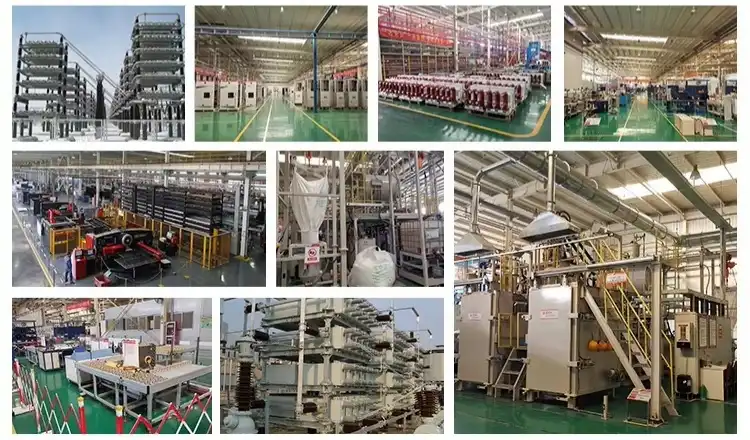
Depending on the system study, this 216 kV arrester can be used in high-voltage substations to protect transformers and circuit breakers, as well as in renewable energy projects that connect to high-voltage lines. Xi'an Xikai makes medium and low voltage electrical equipment in over 100 different types and 7 main categories. Our products and services help State Grid systems, the steel and metallurgy industry, the petrochemical industry, rail transportation, and clean energy. Before you rate a provider, make sure you get proof of a type test, information on how they get zinc oxide blocks, records of regular tests, information on how they package exports, and clear terms for OEM labeling and change control. A supplier's quick and clear answers to these questions show how they will handle your job.
Conclusion
The lightning arrester works better because the polymer shell protects the zinc oxide stack, which stops overvoltage. A long creepage distance stops pollution flashover, hydrophobic silicone sheds water, and a sealed, pressure-relieving shell keeps moisture out and safely vents internal faults. Less weight also makes moving and installing easier. Still, a polymeric lightning arrester for ac system needs to be compatible with the grid's rated voltage, continuous operating voltage, residual voltage, grounding method, pollution class, and height. For the full cost, you should include freight, work, inspection, and repair. Polymer and porcelain are each good for different uses. The claims are backed up by type-test and routine-test evidence under IEC 60099-4. It has a 216 kV rating, a 314 kV DC reference voltage, two units, and 31 mm/kV creepage. The YH10W-216/562W listing shows how these points look on a datasheet.
FAQ
1. When is polymer better than porcelain?
Polymer is often used for polluted sites, small substations, equipment that is mounted on poles, retrofits, and projects that are hard to lift or need to be moved for a long distance. It's possible for porcelain to work with services that have set legacy requirements or heavy mechanical loads. For your specific polymeric lightning arrester for ac system order, I suggest that you look at the creepage distance, cantilever strength, pressure-relief test results, and tender rules.
2. What is residual voltage?
The voltage that shows up across the arrester while it lets out a certain amount of surge current is called the residual voltage. A lower value means there is more space below the insulation level of the equipment being protected. Because different test conditions make datasheets look different, you should always compare numbers at the same current and wave shape.
3. What affects service life and OEM options?
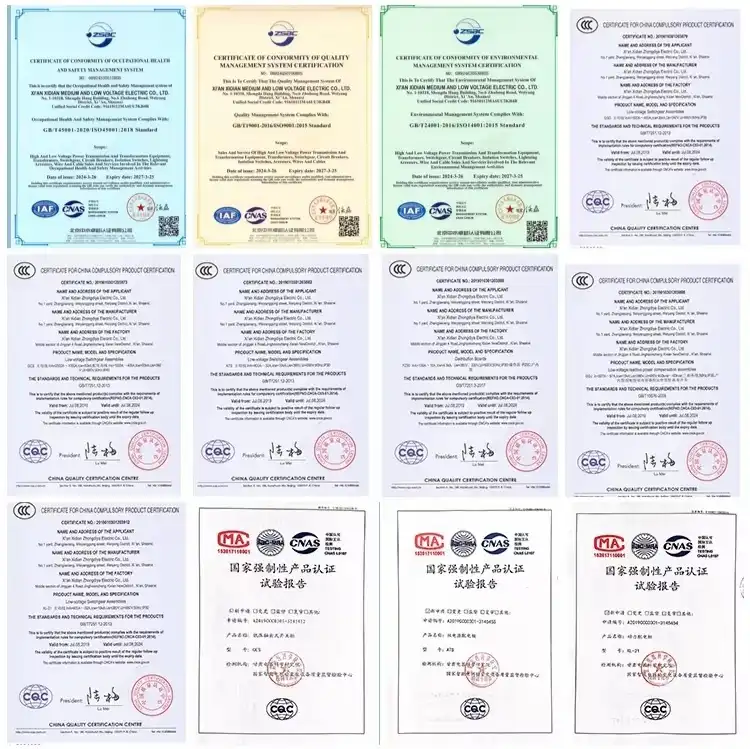
How long a varistor lasts depends on how well it seals, how polluted it is, how hot it is, and how many and what size discharges it makes. After looking over your ratings and drawings, Xi'an Xikai can talk about OEM labeling, packaging, and mounting accessories. Before giving samples the go-ahead, ask for datasheets and test records.
Request a Quote for a Polymeric Lightning Arrester for AC System From Xi'an Xikai
Xi'an Xikai is a manufacturer of the polymeric lightning arrester for ac system. Send them your system voltage, grounding method, pollution level, altitude, and number. Our plateau-type equipment can work at heights of up to 4,000 meters, and our services are used by State Grid and for renewable energy projects. The IEC 60099 documents, the YH10W-216/562W datasheet, and the creepage distance will all be looked over with you. You can email serina@xaxd-electric.com, amber@xaxd-electric.com, or luna@xaxd-electric.com, or you can go to xaxd-electric.com.
References
1. IEC 60099-4: Surge Arresters – Part 4: Metal-Oxide Surge Arresters Without Gaps for A.C. Systems, 2014
2. IEC 60099-5: Surge Arresters – Part 5: Selection and Application Recommendations, 2018
3. IEC TS 60815-1: Selection and Dimensioning of High-Voltage Insulators Intended for Use in Polluted Conditions – Part 1: Definitions, Information and General Principles, 2008
4. IEC 60071-2: Insulation Co-ordination – Part 2: Application Guide, 2018
5. IEEE C62.11: Standard for Metal-Oxide Surge Arresters for AC Power Circuits (>1 kV), 2020
6. IEEE C62.22: Guide for the Application of Metal-Oxide Surge Arresters for Alternating-Current Systems, 2009